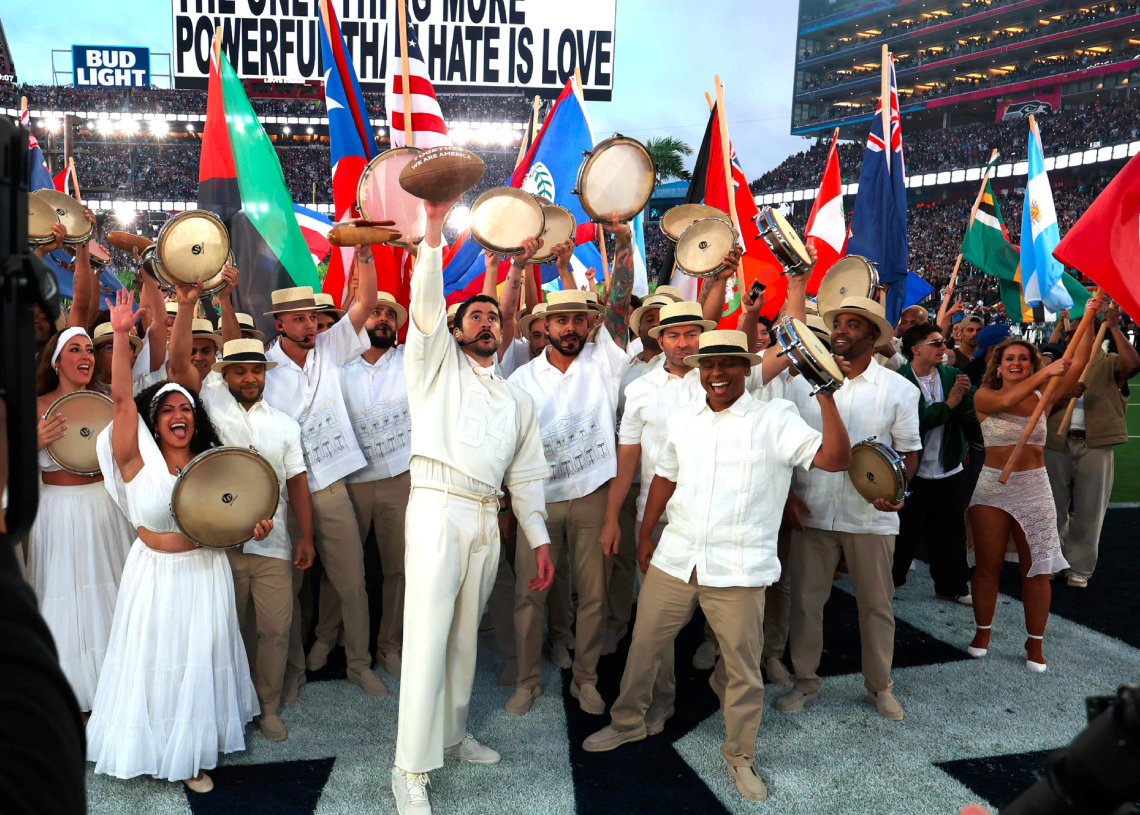
The sun was fading in Santa Clara, California, and at Levi’s Stadium, a “God Bless America” was heard that had a symbolic twist.
As had rarely happened before, the traditional American patriotic phrase was transformed into a prayer for peace, protection, blessings and unity not of one country, but of an entire continent, just as the curtain fell on the most Latino halftime show in Super Bowl history.
In the NFL Super Bowl, one of the five sporting events with the greatest global reach, the game between the New England Patriots and the Seattle Seahawks almost took a back seat for millions of viewers who, after marking February 8th on their calendars, were definitely not disappointed.
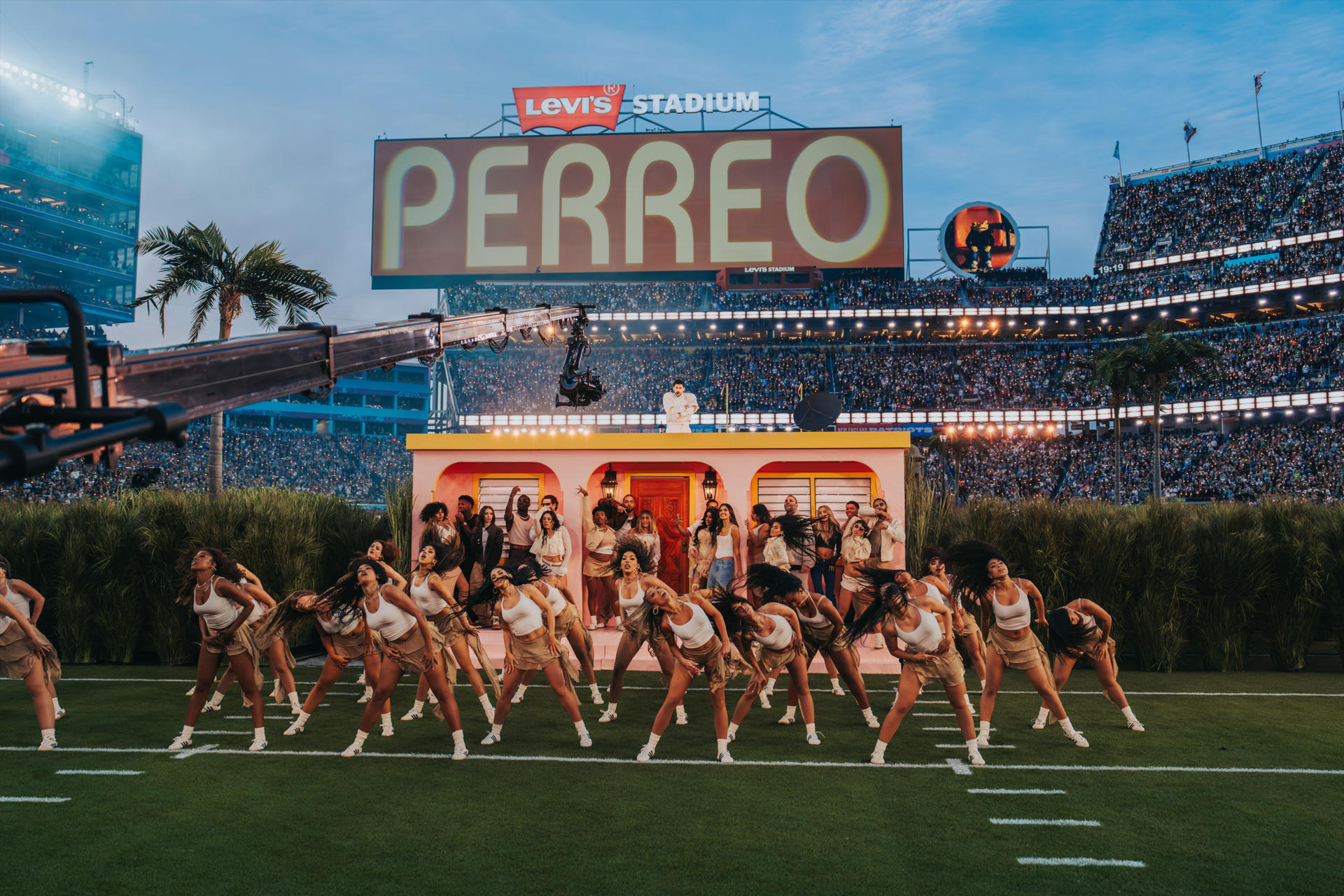
The reason? Simple: Benito Antonio Martínez Ocasio, also known as Bad Bunny. “If I’m here today at the Super Bowl 60, it’s because I never, ever stopped believing in myself. And you should believe in yourself too. You’re worth more than you think. Believe me,” said Bad Bunny on a stage full of Puerto Rican symbols and customs, from sugarcane fields to domino games, barbershops and dancers dressed as jíbaros (Puerto Rican farmers).
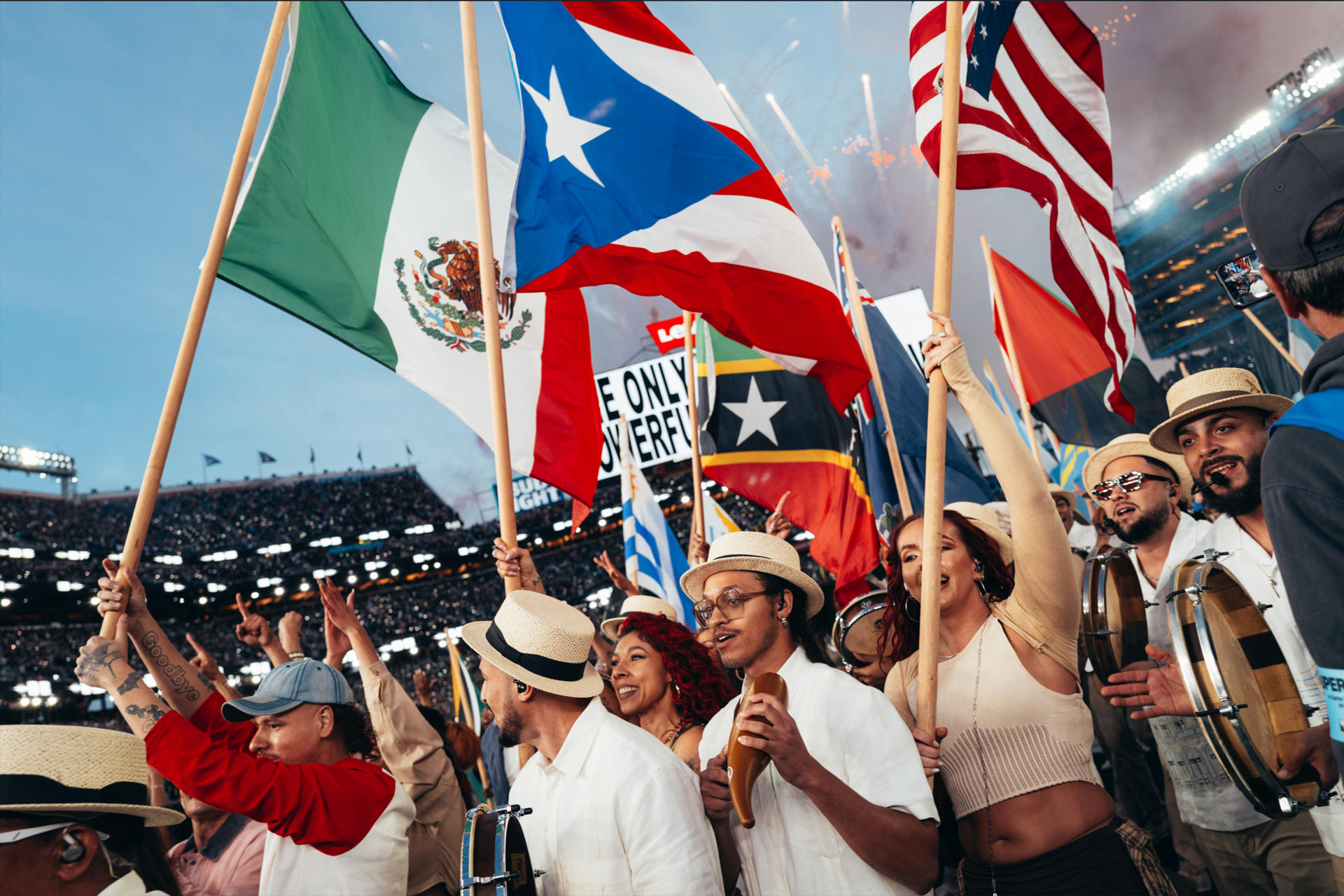
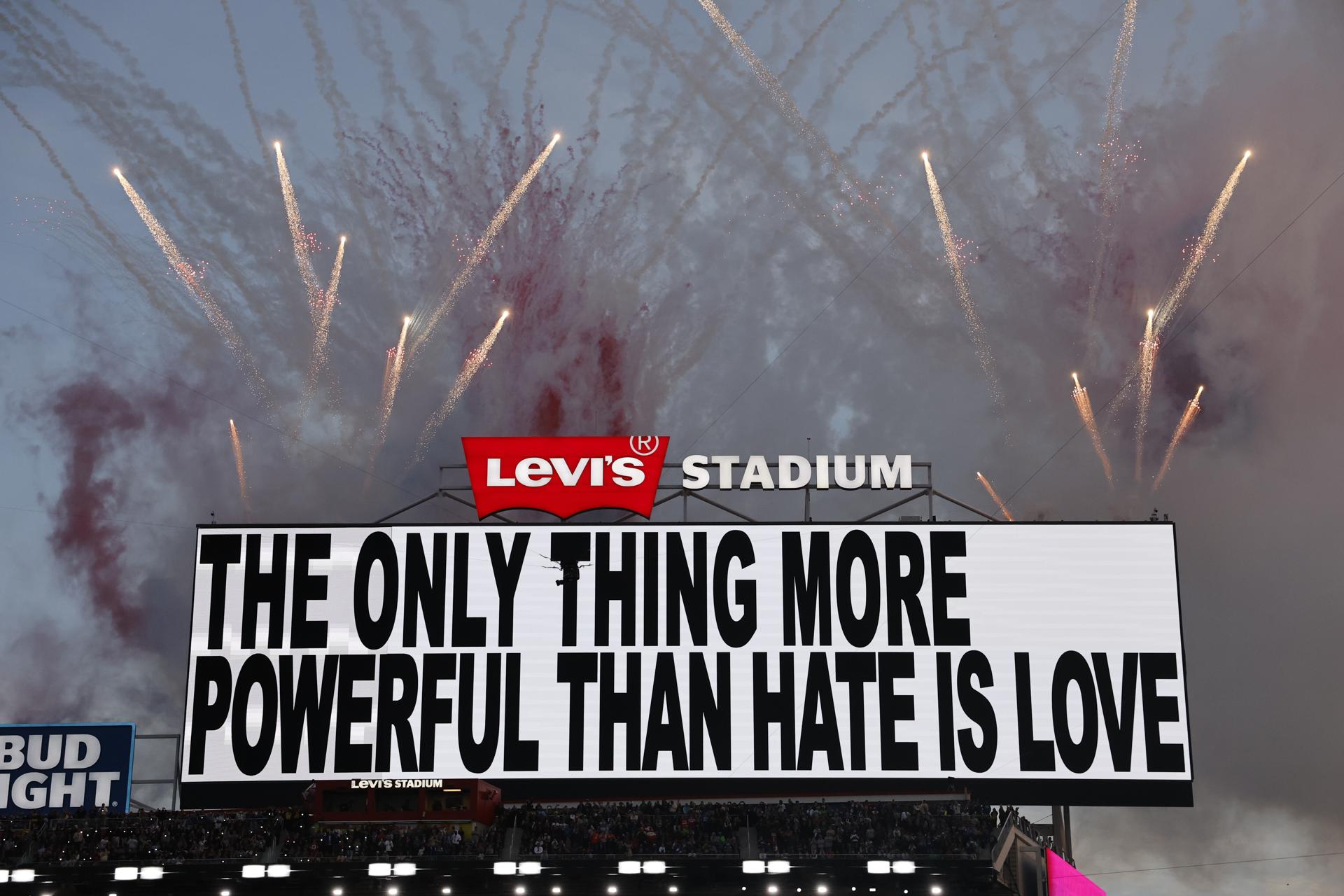
His message, singing in Spanish from beginning to end at the quintessential “gringo” show, transcended U.S. borders with a dedication to all the countries of the continent, which he mentioned one by one in a parade of flags that ended right at the stadium’s end zone, which displayed on one of its screens the powerful phrase with which Benito rocked the Grammy ceremony last week: “The only thing more powerful than hate is love.”
There, Bad Bunny then showed the “Together we are America” engraved on the football ball he was holding, which he threw against the ground like someone scoring a winning touchdown in the face of the most powerful rival that has ever existed.
Cuba in the house
“Whether it’s Chile, Argentina, Uruguay, Paraguay, Bolivia, Peru, Ecuador, Brazil, Colombia, Venezuela, Guyana, Panama, Costa Rica, Nicaragua, Honduras, El Salvador, Guatemala, Mexico…Cuba, Dominican Republic, Jamaica, Haiti, the Antilles, United States, Canada and my motherland, my homeland, Puerto Rico. We are still here.”
Bad Bunny didn’t leave anyone out. All the countries of America were reflected in the most watched Super Bowl show in history.
Cuba was one of the nations that received a nod, not only for the parade of the lone star flag at Levi’s Stadium, but also for the direct invitation to a son of Havana.
We are talking about Juan Carlos Piñeiro, a professional basketball player and owner of a shaved ice cart in San Juan, who served a shaved ice (iced drink for Cubans) to Bad Bunny at the beginning of the show, when the Puerto Rican star was singing “Tití me preguntó.”
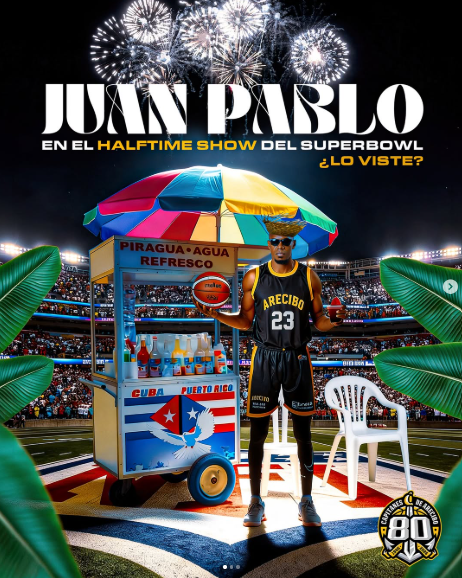
Piñeiro left Cuba in June 2012 to participate with the national team in the Central American Basketball tournament held in Hato Rey, north of the Puerto Rican capital. He stayed there and embarked on a professional career that has taken him through the Brujos de Guayama, the Caciques de Humacao, the Cangrejeros de Santurce (the team owned by Bad Bunny), the Cariduros de Fajardo and the Capitanes de Arecibo, his current club.
“More than an athlete, Juan Pablo is family, he is culture and he is pure heart. Today we celebrate his versatility: from being a player for our Capitanes team and a shaved ice vendor, to shining in front of millions of people,” the club posted on its Instagram account.
Piñeiro was not the only athlete invited to participate in Bad Bunny’s Super Bowl show. During his performance on the stage that recreated a very Puerto Rican setting, Puerto Rican boxer Xander Zayas, the unified super welterweight champion, and Mexican-American Emiliano Vargas appeared boxing, while Venezuelan baseball player Ronald Acuña Jr. was in “La Casita” (part of the stage design for Bad Bunny’s current world tour).
Patriots-Seahawks, in the shadow of Bad Bunny
When Bad Bunny appeared at Levi’s Stadium immaculately dressed in white, with the number 64 on his chest and his mother’s last name (Ocasio) on his back, the Seahawks were firmly in control of the Super Bowl against the Patriots.
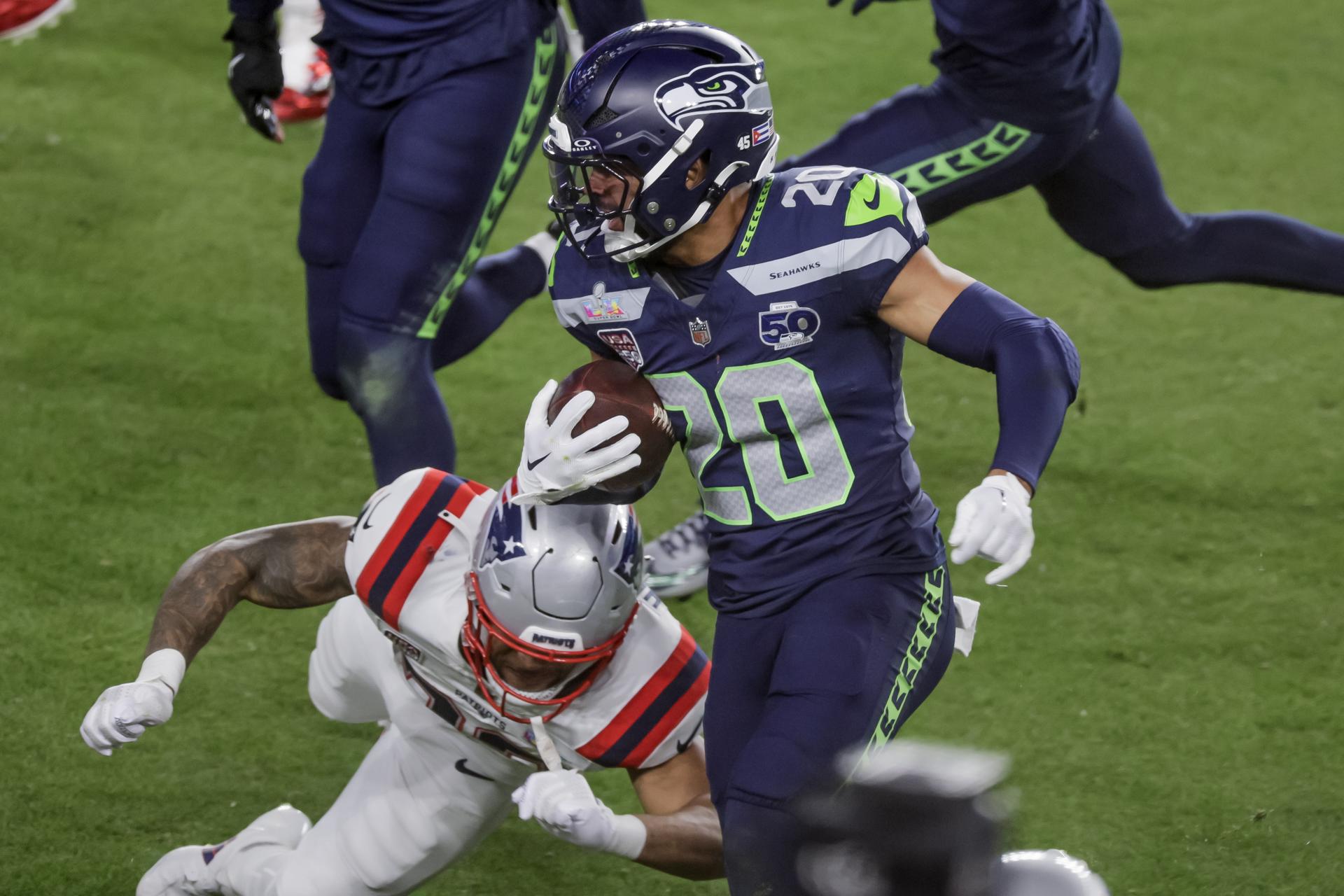
Seattle’s defensive line, with a player of Cuban-Mexican descent (Julian Love) in its ranks, had completely stifled the attack of the talented quarterback Drake Maye, who at halftime still had zero points for New England.
The Patriots lacked spice and flavor, precisely what Bad Bunny’s show had in abundance, transforming the stage into emotion, love and Latino pride every second with a performance of 13 of his most popular songs, one of them (LO QUE LE PASÓ A HAWAII) sung by Ricky Martin, another Puerto Rican star. And speaking of legends, there were also flashes of homage to classics by Tego Calderón, Don Omar, Héctor “El Father” and Daddy Yankee.
Even Lady Gaga dancing salsa — we never saw that coming — with her hit “Die With a Smile” had more rhythm than the New England players, stuck in a failed strategy, without spirit, without spark and, above all, very repetitive, although perhaps not as much as the attacks on Bad Bunny.
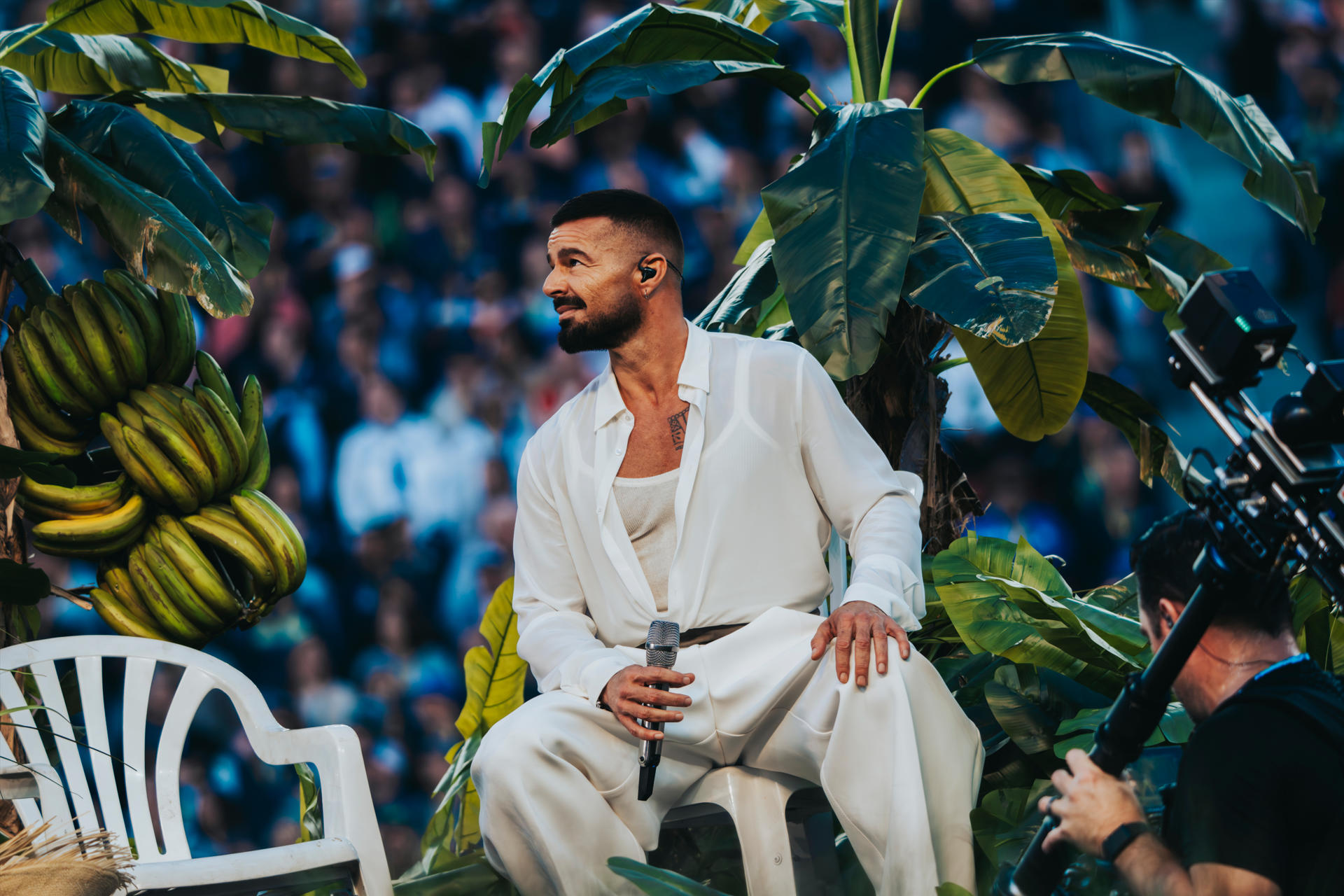
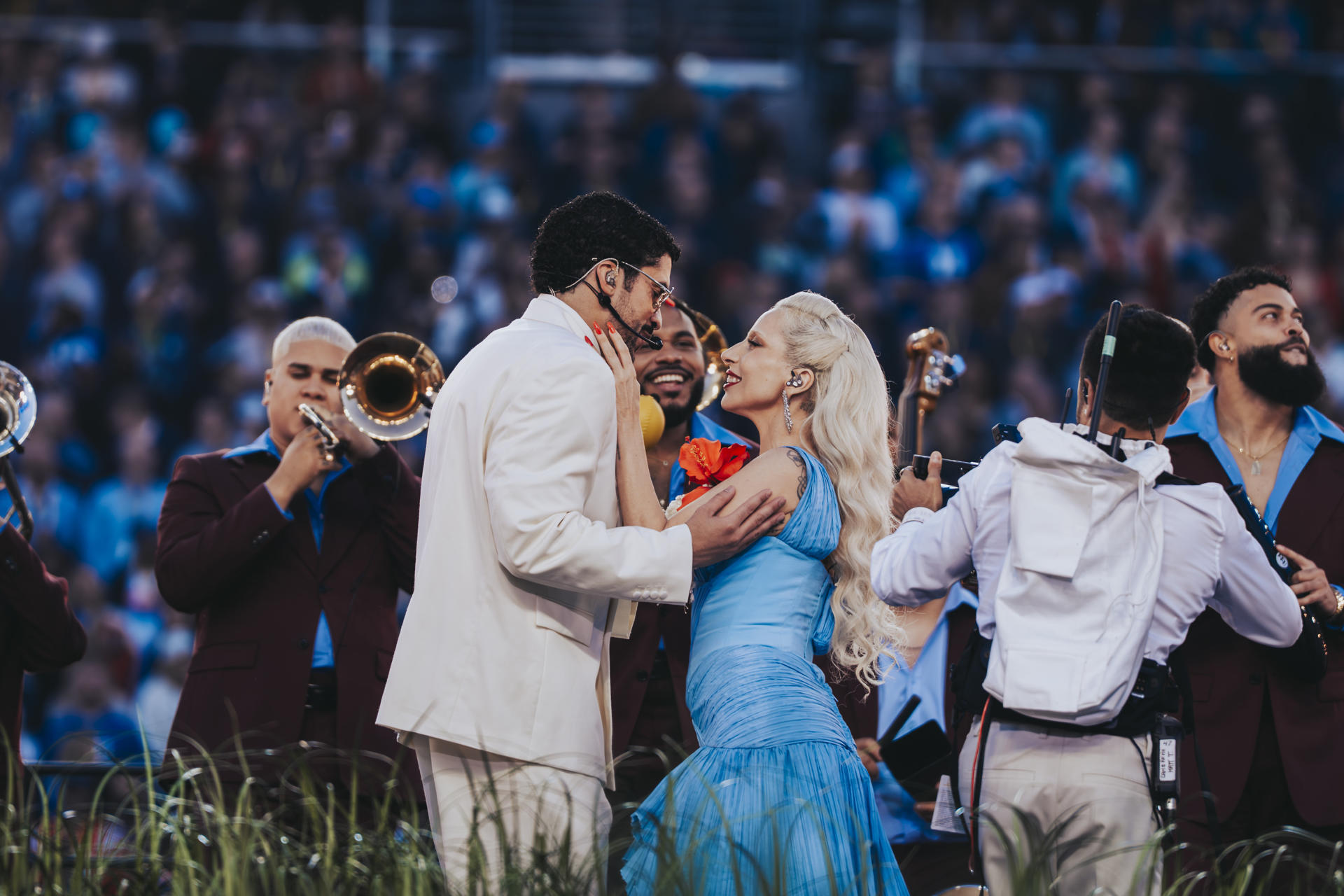
The leader of this offensive against the singer could be none other than Donald Trump, clearly annoyed, judging by his posts on his Truth Social media network: “The Super Bowl halftime show absolutely terrible, one of the worst, EVER. It makes no sense, is an affront to the Greatness of America, and doesn’t represent our standards of Success, Creativity, or Excellence.”
What remains unclear is whether Trump wrote this speech before the Super Bowl or if he betrayed himself and ended up “enjoying” Bad Bunny’s show just so he could criticize it. If so, then he must have missed the performance of his admirers Kid Rock, Lee Brice, Brantley Gilbert and Gabby Barrett at the alternative show organized by the conservative organization The Turning Point USA.
Incidentally, this show had just over six million viewers. Meanwhile, Bad Bunny had a Super Bowl audience of 135.4 million viewers, surpassing the previous record held by Kendrick Lamar (133.5 million in 2025). Such a fan of numbers, Trump must have had trouble sleeping.
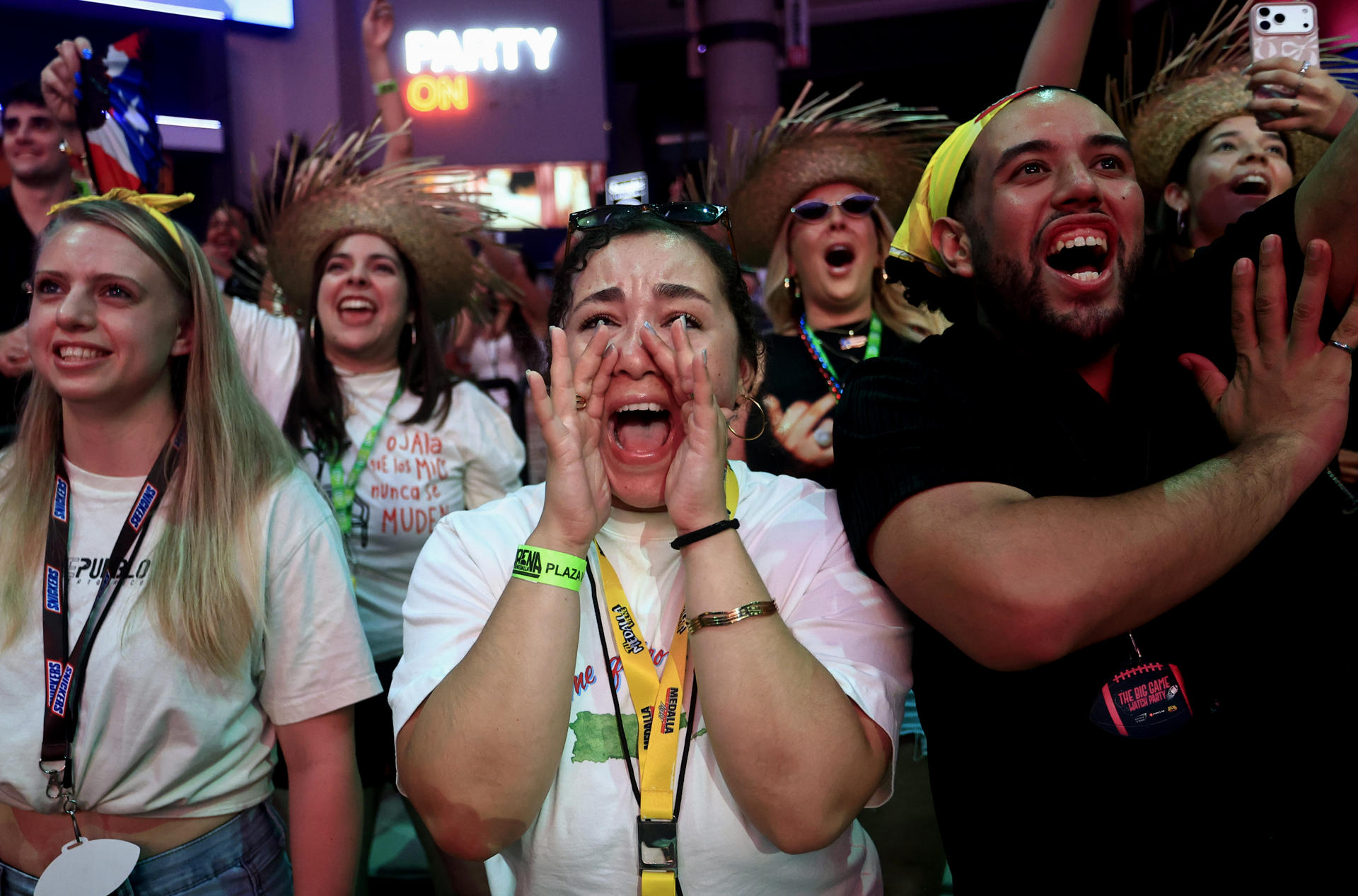
The same applies to Laura Loomer, a far-right activist known for her racist and homophobic online posts, who lashed out on X against the NFL, demanding an apology to the American people “for flooding the Super Bowl with foreign flags. Totally disgraceful.”
“How wonderful it is to be Latino!”
“As Latinos, we should be proud that Benito sang in Spanish at the most important U.S. event. Viva Bad Bunny!” exclaimed Mexican reporter John Sutcliffe during ESPN’s live broadcast from Santa Clara. Almost in tears and with a trembling voice, the journalist delivered a message that is a small example of how deeply Bad Bunny’s performance resonated.
The praise poured in. “I’m with you the same way you were with me. So proud to be Puerto Rican!” wrote Jennifer Lopez, who had invited Bad Bunny to the 2020 Super Bowl show. A legend of Puerto Rican music like Gilberto Santa Rosa also made his view clear: “Congratulations, Benito! Your performance was unbeatable!!! Thank you for making all of us Latinos look good and for showing the detractors that what unites us should always be stronger than what separates us…and that without a doubt, PR is something else.… Keep it up!!!”
Bad Bunny met expectations and delivered a show full of symbolism, love and positivity. The entire performance was a tribute to Latino roots, to the adversities of our people and to the need to unite in these turbulent times. From the nail salon, the coconut stand, the blackout, the unprecedented — but real — wedding of two strangers or the Grammy award given to a child (perhaps a reminder of who he once was) watching the ceremony on an old television with his family, everything fit together in a big party of just over 13 minutes.
The reggaeton was infectious, the music boomed and set the rhythm, but Benito definitely didn’t intend to use the stage only to promote his work. His goal went far beyond that; it was about making everyone enjoy themselves together, those who understand and sing along to his lyrics and those who don’t know a word of Spanish.


After announcing his Super Bowl performance several months ago, he said that people in the United States had little time to learn Spanish and be able to sing her songs. But last week, in an interview with Apple Music, he hinted that this wasn’t the most important thing: “It’s going to be easy. People just have to worry about the dancing. I know I told them they had four months to learn Spanish. They don’t even have to learn Spanish. It’s better if they learn to dance.”
And he was absolutely right.