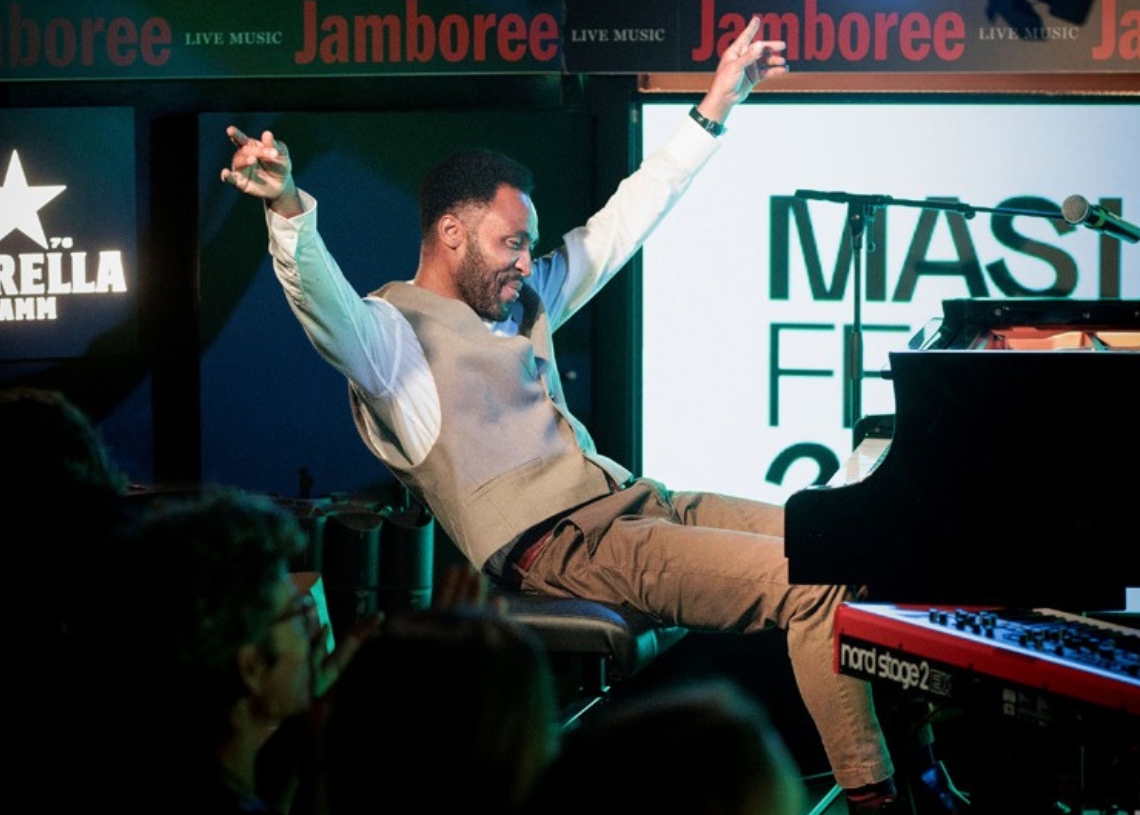
The Jazz Plaza International Festival is the largest music gathering in Cuba. Every year, hundreds of foreign artists attend the event, a greater number of Cuban musicians participate and, among them, there are many creators from the island who live and pursue their careers abroad and who find in this intense week of music a reason to return to their native stages.
This is the case of Dayramir González, who in 2010 became the first Cuban to receive the Presidential Scholarship at Berklee College of Music and has since settled in New York, where he has carried out most of his career.
Before that, the pianist, composer, arranger and music producer had already won the JoJazz competition, an event that for decades was the breeding ground for Cuban jazz, and had released his first album in Cuba, Dayramir & Habana enTRANCé, which won three Cubadisco awards.
Dayramir returned to Jazz Plaza this year, as he has been doing in recent years, always with a proposal that has been an important part of the event’s program, as was his 2020 concert in tribute to Juan Formell; but he has also become a collaborator of the event, facilitating the participation of important U.S. pianists such as Emmett Cohen, Aaron Goldberg and Christian Sands at the Cuban event.
This year, Dayramir has given several performances, accompanied by different musical ensembles; he has given workshops in art schools, as he usually does; and this Sunday, February 1st, on the last day of the event, he have a grand concert in the Covarrubias Hall of the National Theater in tribute to Arsenio Rodríguez.
Why Arsenio Rodríguez?
The project came about through an idea given to me by José Dumet, the director of the Arsenio Rodríguez ensemble, and also because this year marks his 115th birthday. So we wanted to make an album, a documentary and give a concert that could balance what Arsenio was like in the 1950s, what he experienced from a social perspective and how Dayramir sees him today.
From a musical standpoint, it’s important to emphasize, both for those who know and those who don’t, that Arsenio Rodríguez marked a turning point in Cuban music. He had the vision, as a social chronicler, to add the piano to the traditional septet’s tres guitar, with Lilí Martínez; he incorporated congas into the bongos; he added more trumpets to a single trumpet, and thus created what is known as the emsemble’s sound.
In the late 1940s and 1950s, Sonora Matancera formed a musical movement that later, when they moved to New York, along with Tito Puente and other musicians, gave rise to the New York salsa movement. And, on the other hand, here in Cuba, there was Chucho Valdés and Irakere. So, all that Black social identity, that social effervescence, was a wonderful symbiosis of colors and sounds, but Arsenio Rodríguez was the creator of it all.
When I started working more deeply on the experience of who Arsenio was, I thought this was a golden opportunity for young people to better understand who the precursor of the salsa sound and the sound of today’s more contemporary Cuban music was.
Why always return to Cuba and especially to Jazz Plaza?
Every year I create four big projects that keep me up at night and motivate me, because one’s career, if not nurtured in a very conscious and careful way, can be abandoned.
The need to earn money, the need to survive, often leads you to take jobs like teaching that consume many hours, and you have to do it to secure that little bit of money. But, at the same time, you have to remember that you are an artist and that soul cannot be lost. I nurture it by undertaking at least three or four big projects a year, and I always reserve one of them for my Havana Jazz Plaza, with my people, with my fellow Cubans, with my own.
It’s like a moral commitment, a spiritual connection, because I’ve always worked very hard and consciously to be an artist who has a voice in his own country.
Like every artist, one dreams of traveling the world, succeeding in New York, in Paris, being welcomed in international spaces, but the spiritual joy I feel when I arrive in my country and am recognized by young people, playing for my neighbors and seeing that all generations of Cubans give me and my art a place is wonderful.
It’s about being myself again and not forgetting who I am, wherever I am. Sometimes work forces you to stay away longer than you would like; so, this Jazz Festival is the perfect opportunity to reconnect with the essence of Dayramir.
And although you receive the blessing of being able to live in a different society, in New York, which is so musically rich, it’s still not your home. That’s why I always say that New York is a place of work and Havana is my home.
Part of your programs in Cuba is dedicated to music students. Do you seek to teach on the island as you do in the United States?
I always had the vision that all the opportunities I had — I was selected from among so many young people who, like me, have the same talent — was a commitment: if I was absorbing all that jazz from the highest level, with Bobby McFerrin, with Joe Lovano, with Danilo Pérez, receiving the specific nuances of how a big band sounds, all that wonderful spirituality that was given to me, I had a duty to give it back to the young people who didn’t have that opportunity.
The educational aspect is also a very important element for me, because whoever teaches reinforces what they know and is also a way of sharing with young people how to organize the study process. Music can be quite demanding in terms of the time and dedication it requires. If you don’t have an ecosystem that helps you stay focused, it’s very easy to get off track.
An ecosystem means having an instrument, having parents who make sure that the child has the peace and space to be able to study. It means having a music conservatory, with the necessary elements for that talent to flourish. An ecosystem also implies having access — like us, who are so privileged — to culture without it costing a fortune. So, our privilege as Cubans is that we have an ecosystem ready for those talented children to continue their journey.
To this, we must add that a balance is needed, because, for the most part, our educators are not necessarily performing artists. They are very good educators, but they haven’t experienced being artists on a stage. That’s why it’s also important to share with young people that when you sit down to play, you have to command the stage with confidence: you arrive, you make eye contact with your audience, who have come to see you and welcome you; you welcome them, you pick up your instrument and that entire space is yours, and you’re going to play with mastery and preparation. When you finish playing, you wait for the audience to applaud you, because you gave your all, and you receive that applause with great humility, but also with pride, because blessings are meant to be received. You thank the audience for coming and you return.
Remember — I always tell my students — that you have to be musically prepared, because you’re only as good as your last concert. The way you take care of your music, it will take care of you.
In recent years, you’ve been acting as a kind of mediator, encouraging U.S. artists to visit the Festival. Why take on that task?

I’m fortunate to listen to many geniuses around the world who have a very strong voice, and I want my fellow Cubans to also have the opportunity to hear the talent of Christian Sands, Aaron Goldberg or Emmet Cohen.
It’s a golden opportunity to bring them to Havana and share those harmonic colors, those composers and pianists who already have a recognized voice and artistry around the world.
You have a very broad academic background and, at the same time, that pedagogical connection that you maintain to this day. Do you consider formal training or practical experience to be more important in music?
You have to find a balance between the two. Having formal education is important. I say you need 60% formal education, because training gives you critical thinking, organization, vocabulary, attention to phrasing and different types of techniques; for any instrumentalist, the conservatory provides that.
But the street gives you the ability to make decisions when what you plan doesn’t go as you want. That’s when you have to use it: harmonically, you were playing a solo, you made a mistake and you found another way. The street teaches you that if you’re playing with three congas and one is missing, then you do it a different way. It also gives you the structure of the dance, because there’s no way you can play Cuban music if, as a creator, composer, arranger, orchestrator or conductor, you don’t know or feel those sounds.
How did you envision being a Cuban artist when you were in Cuba and how do you envision, understand, and defend it today as a Cuban artist outside the country?
When you’re in Cuba, you dream. My vision was always to be a leader in Havana. Unfortunately, neither La Zorra y el Cuervo nor the Jazz Café on Paseo exist anymore. They were the two most important venues at the pinnacle of jazz in Cuba. We all grew up there, and at that time, many foreigners came, and we had that dream of playing from Cuba and wondered what kind of music we would make so that foreign listeners would hear the best from here.
Now that I experience it from the outside, I feel I have an even greater responsibility, because I’m like a conscious ambassador of Cuban music. I’ve embraced it that way.
Being an ambassador depends on how you define your homeland, because we all have our own Cuba, with everything that entails. But when you ask me what I think of Cuba, I focus on all the beautiful things the country still has.
From the people, who remain wonderful, to its food, its music, its schools, its resilience, its ability to overcome what we have and what we don’t have, and to create more with what we do have.
Your country is what represents you in Paris, in New York. You are a Cuban pianist, you are Cuban. And that Cuban identity also means that when you are asked about your Cuba, about your love for it, it’s like talking about your mother. Our Cuba is us, our identity is what defines us. So, if that defines you, you have to keep nurturing it.
What do you wish for the future of Cuban music?
Today it is in very good health from a creative point of view: many very original projects continue to exist. The only thing we lack is for the world to continue opening up so that our music is on platforms supported by major record labels.
That wonderful catalog of so much talent only lacks a platform and to be heard in a more commercial way. That’s why I’m committed to bringing U.S. musicians to Cuba every year, so they can experience firsthand what Cuban music is like and how young people are playing today.
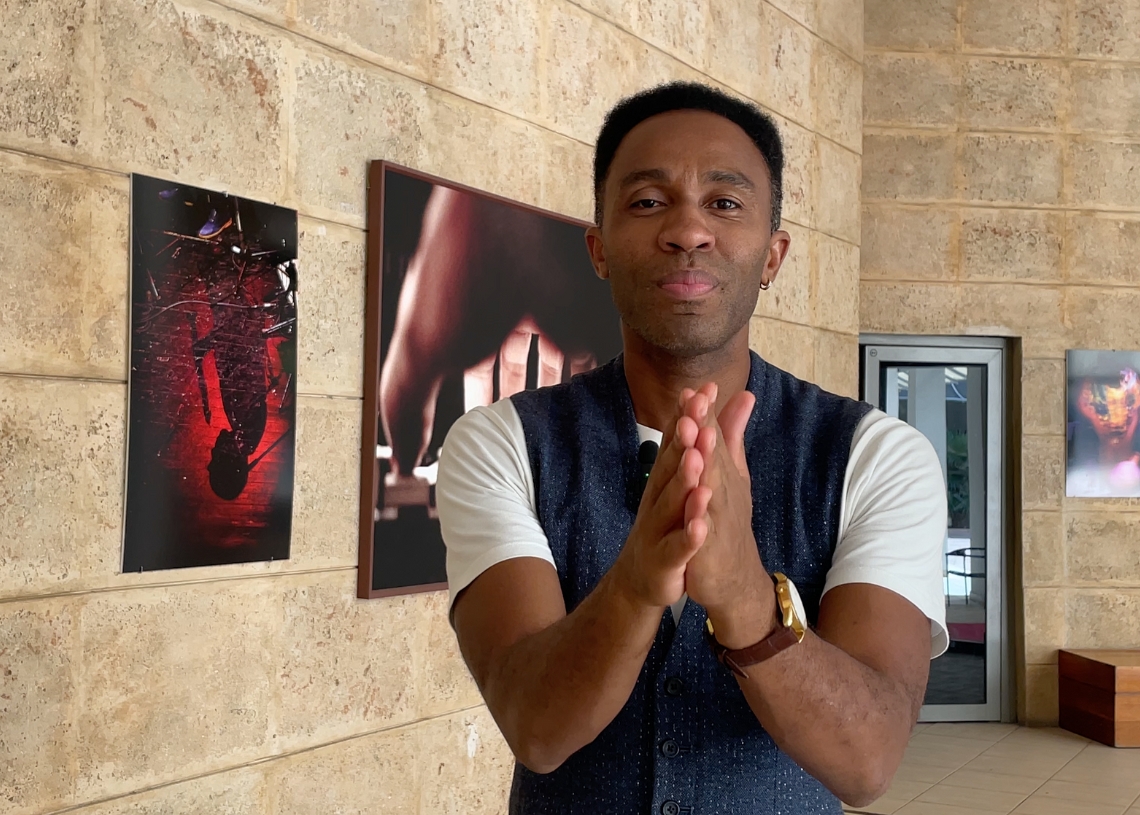
What has been the hardest thing about being a Cuban artist outside of Cuba?
The hardest thing for me has been not letting myself be influenced by so many people who tell you: “Stay here, forget about that, speak badly of Cuba.” The most difficult thing has been maintaining that level of cultural and social commitment to myself: I chose to be a Cuban who visits the island, who drinks from it firsthand, not a Cuban who dissociates himself. I’m not criticizing those who become uprooted from the country, but since I chose to be a voice within Cuba and someone who has influence in my own country, the most difficult thing has been defending my position with honesty.
No one can criticize you for being honest with yourself, for defending your own voice and what Cuba represents to me, what my music teachers represent, my native Cerro neighborhood.
You can’t be afraid to say that everyone has their own experience with Cuba. I had the experience of a different Cuba. I was privileged. I’m a privileged Black man. I had a talent that found an ecosystem in which it could flourish, and somehow I always had the vision that Cuba and I are one, wherever I am.