

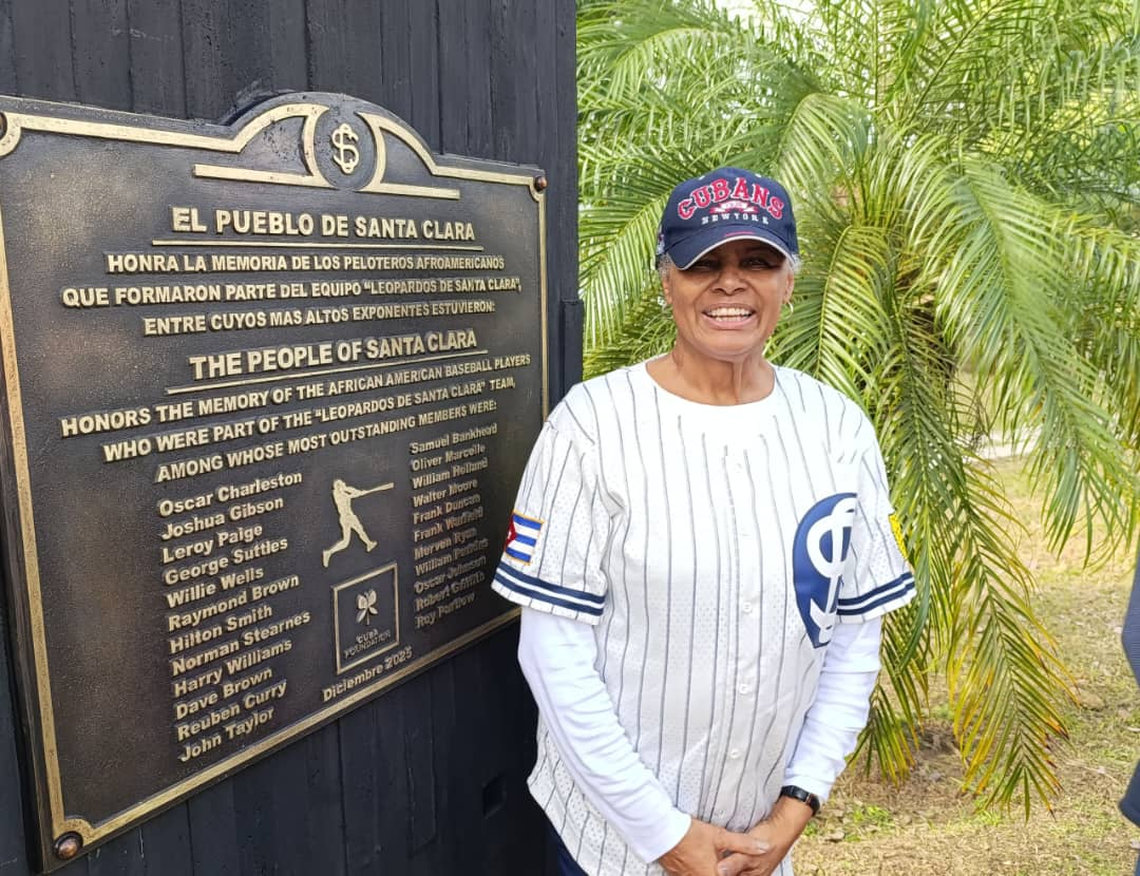
Memory, fortunately, is always ready to be revived. It can linger for centuries in archives or manifest itself quietly in commemorative plaques or monuments. Sometimes it is embodied in a journey; in a recreated photograph; in the emotion of returning to a stadium that no longer exists, but which, in some way, transcends the tricks of time.
This interview has much of all of that. It takes us through the voice of a retired woman who, at 75, decided to travel to Cuba from her native United States to follow the traces of her father, John Taylor, a celebrated pitcher in the Negro Leagues and a star of the Cuban Winter League in the 1930s.
Beyond nostalgia, what emerges in this conversation — via WhatsApp — is a story of legacy, identity and gratitude. A bridge between generations, racialized cultures and countries in historical conflict that, happily, have found in the common ground of baseball a language that allows them to understand and respect each other. For this purpose, nothing is better than the game, in which, whether you win or lose, it always rewards us with an exquisite appropriation: the opportunity to be authentic.
Expectations fulfilled
How’s life treating you, Ms. Maureen?
At 75 years old, I am happily retired. I worked as a Human Resources professional for more than a decade after graduating from college, dedicating much more time to my family and decades to community volunteering.
What did you know about Cuba and what did you find on this trip to the island?
Related Posts



Friends and family who have visited Cuba on vacation in previous years spoke very fondly of their experiences, enjoying the art, music, good food and hospitality of the Cuban people. My husband, a now-retired emergency room physician, attended a medical conference in 2003 in Havana, Cuba, and spoke highly of the program, his hotel experience and the hospital and clinic visits included in the agenda.
From the moment of my arrival until my departure, I experienced the same warm hospitality, wonder and excitement that I had been told to expect and appreciate. For me, there was a more personal connection and purpose to my visit.
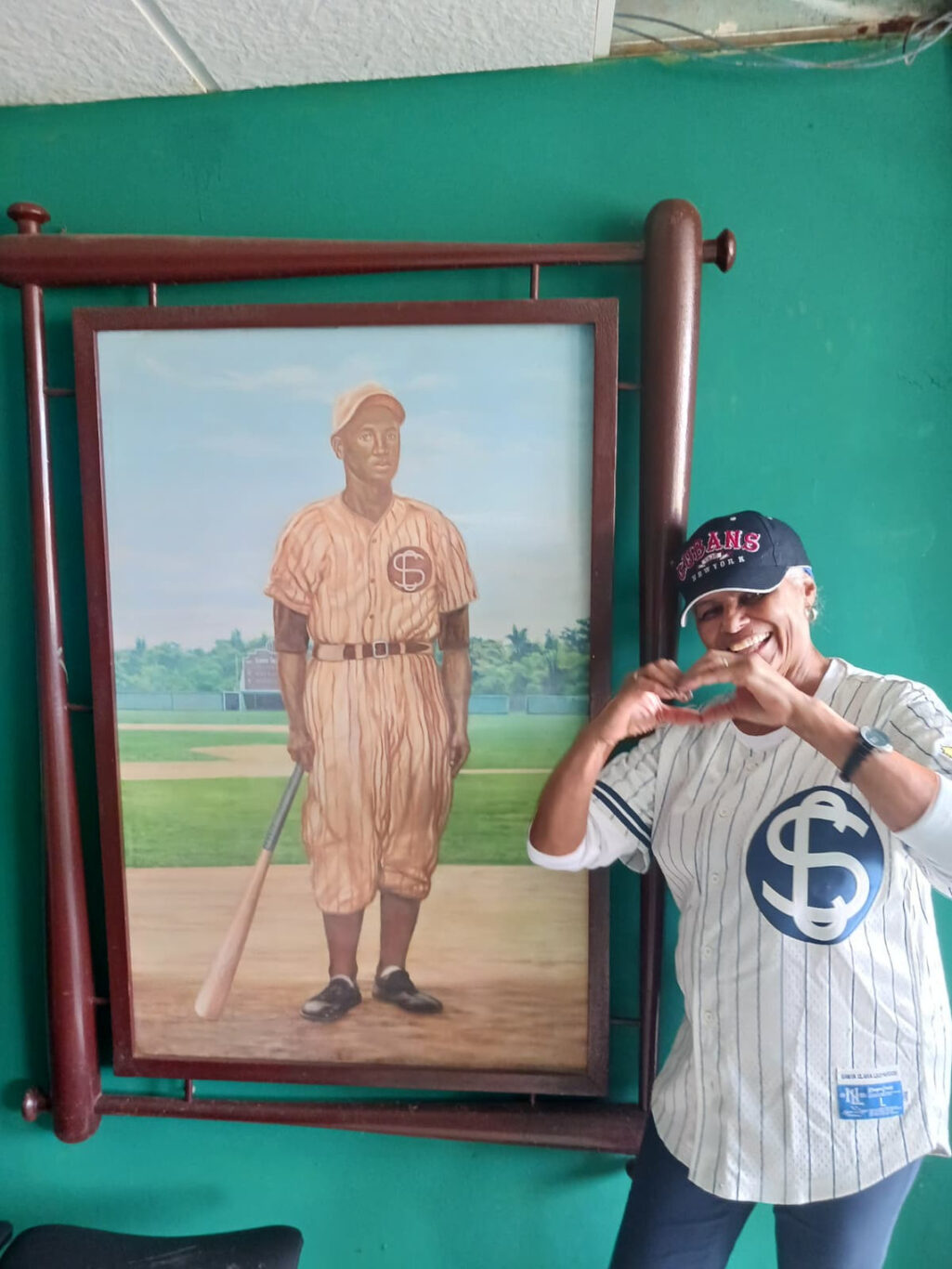
My father, John Taylor, was a celebrated pitcher in the Negro Leagues of American baseball in the 1930s and 40s, and he played in the Cuban Winter League in 1937 with the Marianao Club, and in 1938-39 with the Santa Clara Leopardos. This trip was my opportunity to follow his traces in Cuba.
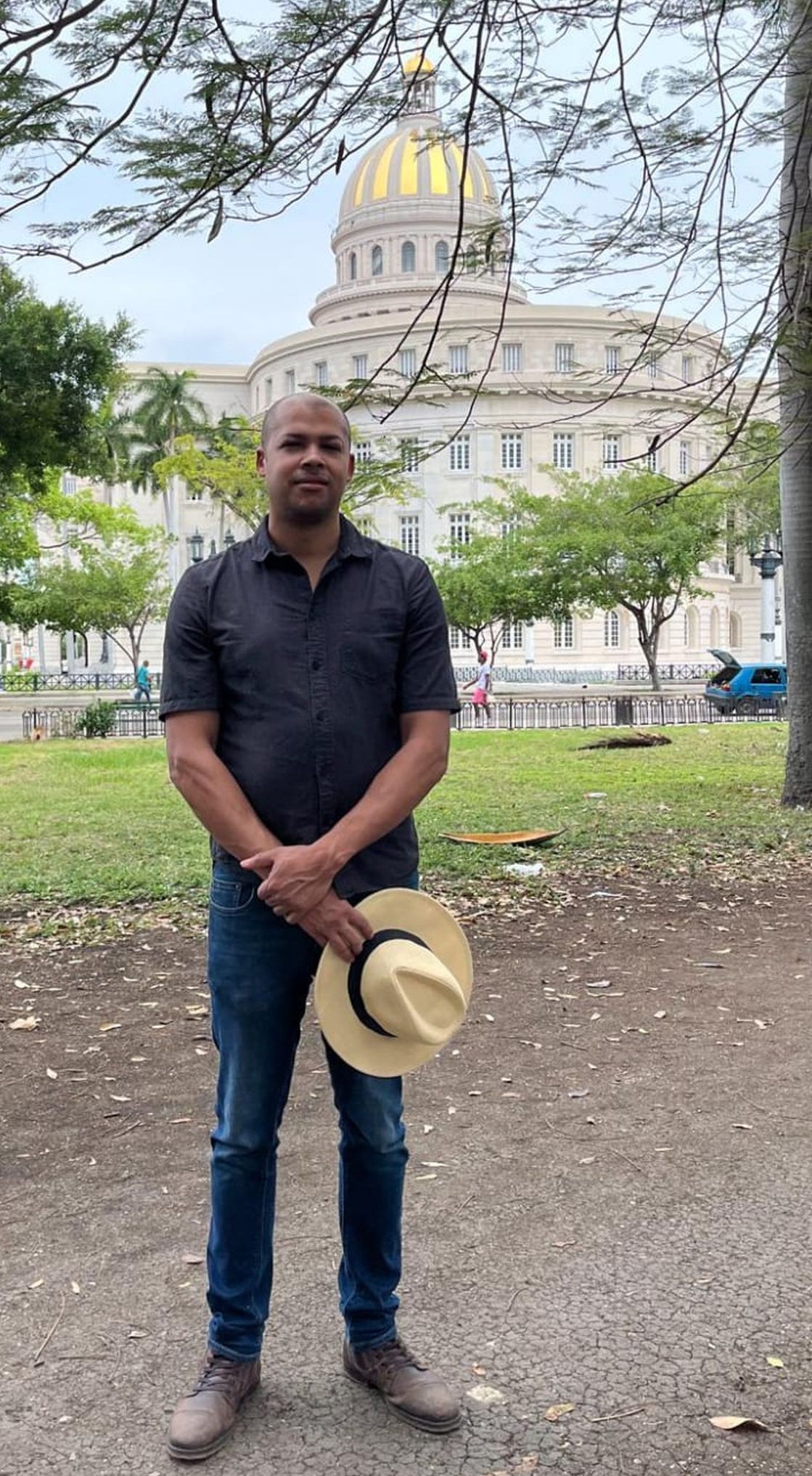
A photo in front of the Capitol building and a soon return
What emotional experiences did you take away from this stay in Cuba, which I don’t know if it’s your first, although I hope it won’t be your last?
This was my first trip to Cuba, and we decided to make it a family trip with my husband, my adult daughter and my adult son. As I mentioned earlier, my husband had already visited Cuba, but it was also the first time for my daughter and son. We came to explore my father’s history as a baseball player in Cuba, and we left with a legacy of cherished memories that will be passed down to my siblings and future generations of our families.
While in Havana, we took a moment to recreate an old photograph of my father from 1937 in which he poses in front of the Capitol building. My son, who bears a striking resemblance to his grandfather, stood in the same position. Seeing the photographs side by side brought tears to my eyes, and we all felt my father’s presence in that moment.
The tour organized by CIT (Cultural Island Travel of New York, which was based on a “general license for support of the Cuban people”), took us to many historical and significant places and museums in Havana and Santa Clara, with expert guides accompanying us. The National Museum of Fine Arts in Havana was impressive, as it was our first introduction to great Cuban artists.
Also included in the itinerary was a visit to Las Terrazas, the UNESCO-designated biosphere reserve. Our guide there arranged for us to sample wonderful honey directly from the hive of the unique Cuban bee. We enjoyed the beauty and tranquility of the mountains, forests and river, and connected with resident artists Ariel and Lester Campa.
My wish is to return to Cuba with more family members to share our personal connection to the country and recreate these special experiences from this trip.
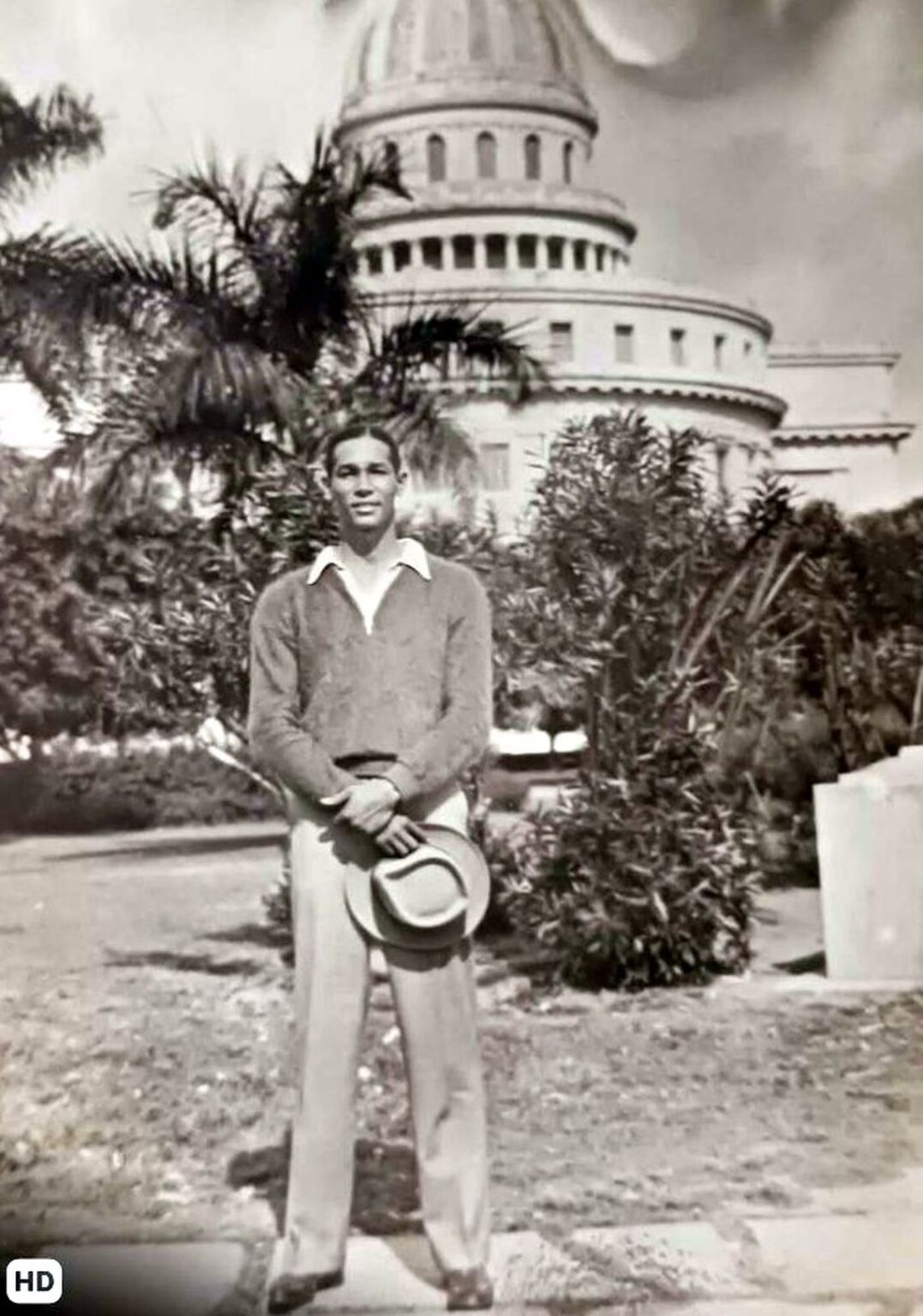
Baseball in Maureen’s life with a loving father, fortunately
Are you a baseball fan?
Yes, very much so.
How much of a fan?
I must admit that I follow many teams during the playoffs and the World Series more than during regular season games. I live in Philadelphia, and the Phillies are my favorite team, win or lose. Of course, I’m a big fan of pitchers.
Could you describe what your father was like and if he ever told you anything about his Cuban days, any anecdotes or stories?
To be honest, I didn’t know John Taylor the baseball player. My father had retired from his baseball career in 1949. I am his third child, born in 1950, and the father I knew had left the world of sports behind to raise four strong, self-assured children: John Arthur Taylor III, Lynette Taylor Grande, myself and Kathie Taylor. He was a devoted father who instilled in his children the value of education, responsibility and a commitment to excellence. He supported my mother so she could pursue her dreams as a maternity nurse, a career she pursued for 32 years.
John Taylor was a strong and handsome man his entire life, working and retiring from the construction industry alongside his father. He was a proud union member, a loyal friend and a skilled sportsman who enjoyed hunting, fishing and excelled at golf. He loved dogs. He sang beautifully and played the piano by ear, as he did not read music. He lived long enough to know and deeply cherish six of his eight grandchildren before passing away far too soon at the age of 71.
My father kept his baseball career in the past and didn’t speak of it directly with the family. He was well-known in our community as a local sports hero from his high school days and his early semi-professional baseball career in Connecticut, but we only knew what the sports writers continuously wrote about his record.
We are grateful to Jon Holway, an American sports historian, for his extensive interview with my father conducted just months before his death. That published interview opened a path of research for me, and I have since created an archive of newspaper articles, historical materials and photographs that preserve my father’s sports history.
From these materials, I can share that my father joined the famous New York Cubans team, owned by Cuban-American Alejandro Pompez, in 1935, when he was just 19 years old. He was so young that his mother had to co-sign the contract. From his first successes, sports writers enthusiastically wrote about this talented young athlete and nicknamed him “Schoolboy” because of his youthful, slender appearance. That year, Taylor forged connections with his celebrated Cuban teammates: Alejandro Oms, Lázaro Salazar, Martín Dihigo, Manuel “Cocaína” García, Luis Tiant Sr. and Rodolfo Fernández. These relationships would eventually lead him to the Cuban Winter League.
A guest of the great Martín Dihigo
I can only imagine the awe he felt when he first arrived in Cuba in 1935-36, invited by Martín Dihigo to play with Marianao. In a letter he wrote to a Connecticut sportswriter, Taylor said the Tropical Stadium was the most beautiful baseball field he’d ever seen…with 12,000 seats and a diamond like green velvet…and best of all, from a pitcher’s standpoint, a 20-foot fence 400 feet down the right field line, even further down the left, and 505 to center. A crosswind also kept the fly balls in. Back then, no one had ever hit a fair ball out of the park, and there was a standing offer of $1,000 for anyone who could.
As Johnny recalled, no one had ever done it, although Buck Leonard came close. With Marianao at the top of the league that winter, Taylor became “Schoolboy Taylor-The King of Hartford” in the Cuban sports headlines. On a lighter note, Taylor mistook the loud, energetic whistling of the Cuban fans as a sign of approval, until he discovered it was the equivalent of booing in the United States.
In the 1938 and 1939 seasons, Lázaro Salazar recruited Taylor to play with the Santa Clara Leopardos, where he had the legendary Josh Gibson as his catcher, whom my father considered his hero. Taylor was part of an exceptional pitching staff that included Armando Torres, Manuel García, Lázaro Salazar and Ray Brown, and with their powerful offense and defense, they won consecutive championships in those years.
I hope to continue discovering more about my father’s time in Cuba, now that I have established connections with Cuban baseball historians during this trip.
A bronze plaque and the role of the Cuba Foundation
What is the significance of this tribute from the Cuba Foundation for your father and for the shared history of baseball between Cuba and the United States?
I must express my gratitude on behalf of my family to the Cuba Foundation and its president, Gustavo Arnavat, for this historic event and commemoration.
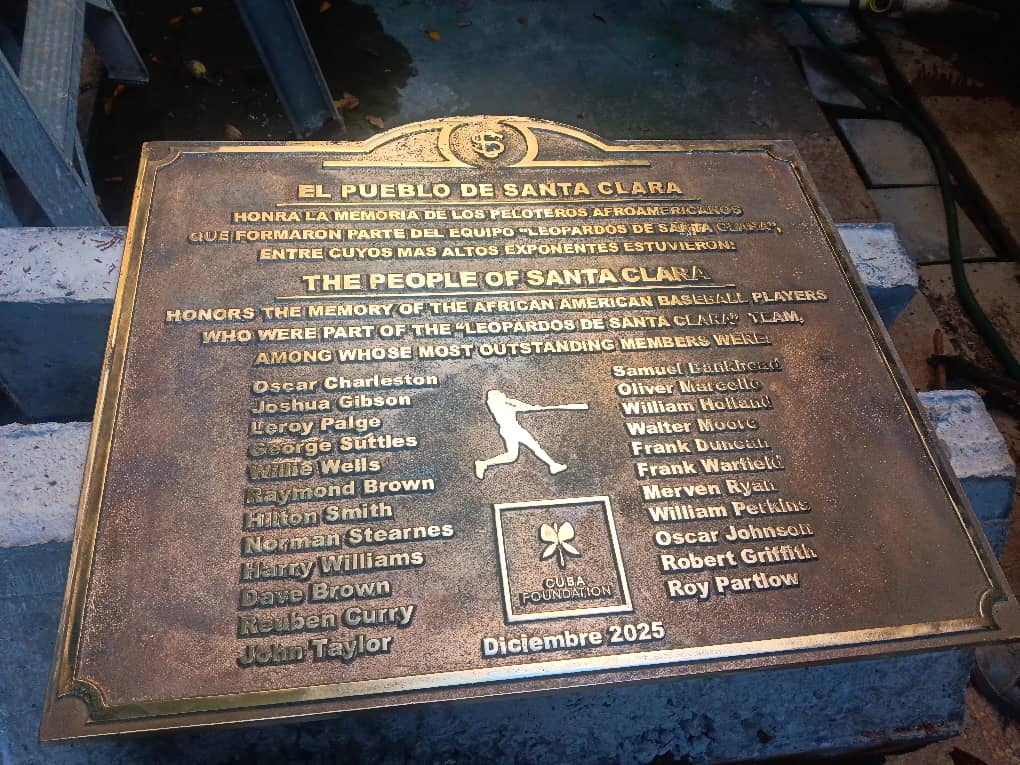
The beautiful bronze plaque that enshrines my father’s name along with those of twenty-two icons of the Negro Leagues, placed in Santa Clara, Cuba, is now a permanent record in Cuban sports history and in the universal history of baseball. Commissioned by the Cuba Foundation and cast by the renowned artist Mario Fabelo, this piece is a glorious addition to my family’s history and an indelible tribute to these great athletes.
I had only dreamed of visiting the places where my father played baseball; places that are no longer physical stadiums, but rather sites of great historical significance. My dreams came true when the Cuba Foundation offered me the opportunity to attend and participate in the great symposium: “The Shared History of Baseball in Cuba, the Caribbean and the United States: Identity, Society, Culture,” held in Havana and Santa Clara from December 9 to 12, 2025. Few other moments in my life have been as meaningful as these.
I understand that the Cuba Foundation will continue to focus on baseball as a cultural institution and I hope that the families of other American players, including those from the Negro Leagues, will be able to participate in future programs to have similar experiences.
I also want to highlight that I found the emergence of a private sector in Cuba particularly interesting. We were impressed by three talented Afro-Cuban entrepreneurs we met at a dinner organized by the Cuba Foundation at a private restaurant. Their resilience and dedication, despite the many obstacles, are admirable.
Favorite memory and preserving history
If I were to ask you what your favorite memory of Cuba would be, which would you choose?
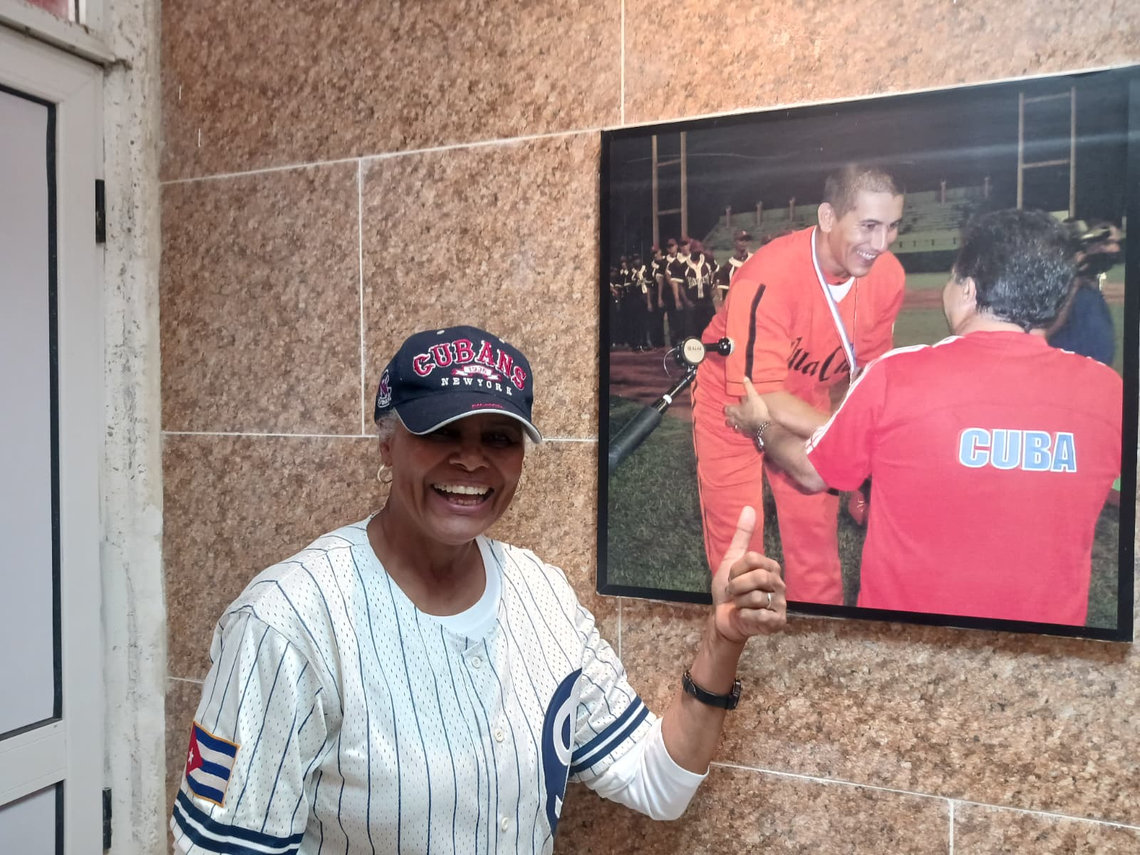
Cuba’s passion for baseball! It was an honor to meet and speak at length with historian Félix Julio Alfonso López. The Cuba Foundation program began with a wreath-laying ceremony at the Emilio Sabourín monument in Havana and culminated with the dedication of the historic plaque in Santa Clara. I thoroughly enjoyed the guided tours of the historic baseball stadiums in Havana and Santa Clara, and I loved attending a Little League game in Santa Clara. It was easy to imagine the next generation of talented Cuban players already mastering the fundamentals of baseball at such a young age.
If you would like to add anything else, I would love to hear it.…
As many in sports often say, “leave it all on the field.” I would like to think that I shared my deep gratitude for this opportunity to visit Cuba and to express my appreciation for being able to speak with you. Thank you so much for your interest in my story. To quote Gustavo Arnavat: “If history is not recovered and pres
erved, it is lost, and its lessons go unheeded.”






