ES / EN
Angel Marqués Dolz

Angel Marqués Dolz

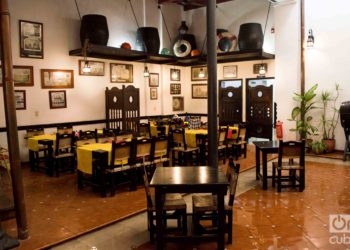
El Mesón de la Flota. Photo: Otmaro Rodríguez.

El Mesón de la Flota: Passion Is Always True

It is necessary to agree with Federico García Lorca. “There is no map or exercise to search for magic.” Described in Andalusia as a mysterious and ineffable charm, the magic ran away to America more than five centuries ago in Columbus’ expeditions and right now we detect it, very much alive, in the musicians and dancers that liven up the evenings and nights in El Mesón de la Flota. Do they fan the guitar? / Yes. / And they play the string guitar? / Also, and without capo. / And do they sing without music? / Well, sometimes. / And the cante jondo? / That’s always present. Soleares, seguiriyas or tonás, whatever you want. / With jaleo or without jaleo? / With a lot of jaleo. / And the dancers? / The magic is always with them. That could well be the imaginary dialogue between a connoisseur of flamenco music and the group performing a season at El Mesón de la Flota flamenco bar. Located at 257 Mercaderes Street, on the first floor of the small hostel (bearing the same name) with five spacious rooms, the Mesón evokes the traditional Spanish inn that proliferated in the accesses to the port...
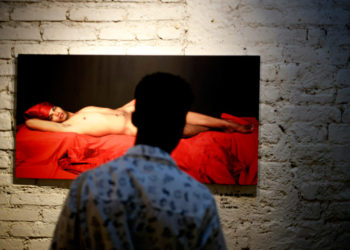
“Los hijos de Onán” exhibit, by Yanahara Mauri. Photo: IPS.

The children of Onan live far from Chechnya

In Chechnya there is no homophobia. Rule out a miracle. The thing is that there are no homosexuals, the authorities allege, making them invisible with one rhetoric swipe in that Russian republic of the Muslim Caucasus. In Cuba there is homophobia, because of different reason, and certain art areas are helping to combat the phenomenon, delegitimizing it and placing it at the level of the social view, making it visible. “The spaces and manifestations where a different sexuality can be expressed are scarce and have their very defined borders,” complains Yanahara Mauri Villarreal (La Salud, 1984), in the middle of a vertigo of mass photos from her homoerotic phantasies and taken with “a semi-pro Nikon D3100 and some Russian flashes” in an exercise of scenic minimalism set up at home. “There are photos I have shot in the street, using a wall as a background.” “With these images I try to erase those borders, to free the individual of the weight of a tradition plagued by heterosexist formulas of seeing pleasure, the erotic and interpersonal relations,” says Mauri, a queer art activist, in an exclusive for OnCuba. It’s Los hijos Onán, a fleeting 10-day personal exhibit in the discreet studio...

Page 2 of 2 1 2