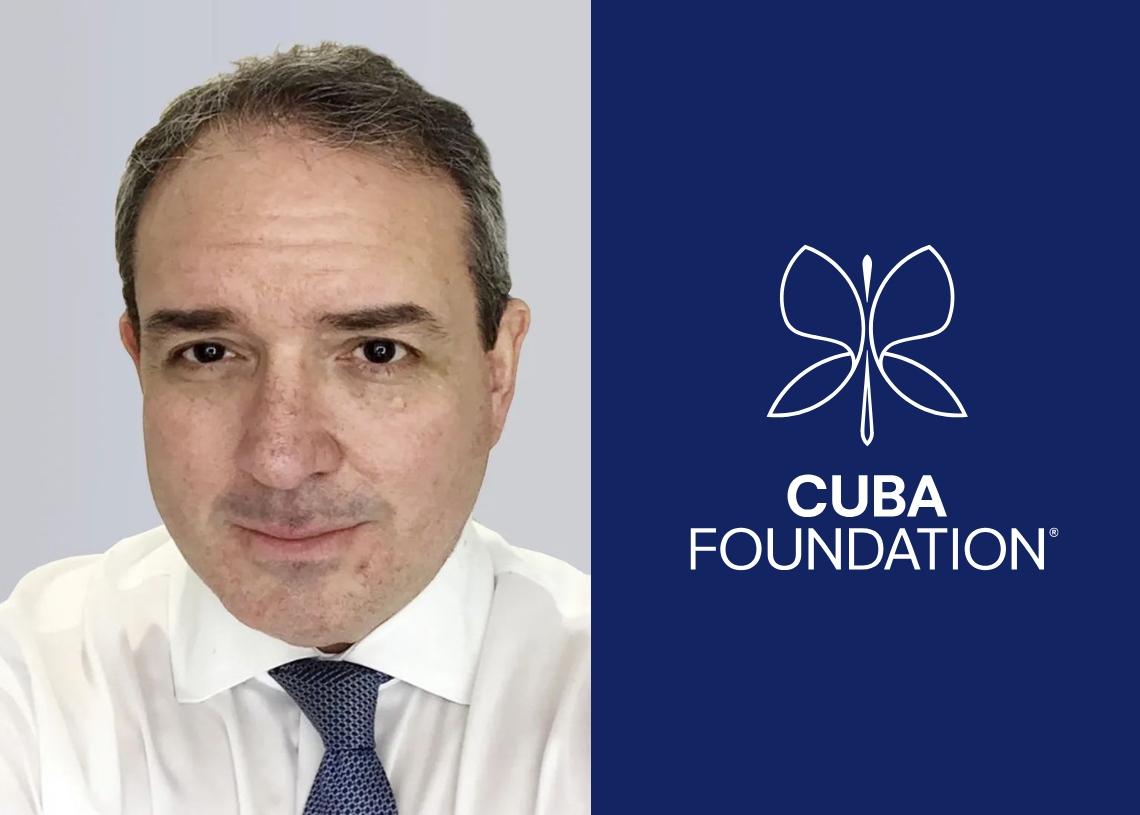
In Gustavo Arnavat’s (Havana, 1962) memory, his father’s figure evokes a sense of enchantment. He saw before him a creator of realities: blueprints under his arm, a large drawing table, T-squares, scales and the conviction that baseball was more than a sport; it was part of the architecture and soul of the nation.
“My dad was an architect and civil engineer, and he designed two stadiums in Cuba: the Sandino in Santa Clara (1966) and the Cándido González (1965) in Camagüey, when he was only 25 or 26 years old,” he recalls. “Perhaps that’s part of the reason why I’m so interested in baseball on the island,” he adds in a measured voice during a WhatsApp conversation with OnCuba from New York. That’s where he resides, as does the Cuba Foundation, a non-profit organization conceived by this finance expert to help the emerging private sector anchored on the island.
That youthful work of his father — building temples for baseball — left a lasting impression on Gustavo’s brief childhood in his country. It also marked his father’s professional life. The stadium was not just a sports venue; it was a symbol of progress and belonging to a beloved place of games, passions and a boisterous group of people that united the fans. Baseball, as historian Félix Julio Alfonso would say, was “the gallant game” that accompanied the formation of the Cuban nation as of the second half of the 19th century.
The departure: Goodbye to Cuba
Gustavo barely had time to get to know the island before leaving for exile. In 1968, at the age of six, his family emigrated to the United States. The destination was Hialeah, Florida, then a city of barely 15,000 inhabitants that was transforming at a dizzying pace (“The city that progresses,” the slogan read), leaving behind its peripheral and semi-agricultural condition. “At first it was about 50/50 between white Americans of English descent and Cubans. Over the years it changed to basically 100% Cuban,” he recounts jokingly.
The massive migration of the sixties turned Hialeah into a Cuban enclave, a laboratory of identity in exile. There, Gustavo grew up between two worlds: the memory of a Havana that was fading in his memory and the famous stadiums his father had built, and the reality of a community that was rebuilding and expanding Cuba in the diaspora, fueled by domino games, strong coffee and pork sandwiches, but also with class prejudices, frustration and resentment from those who, in a way, had been cast out of paradise after losing their place in it.
2015, the return
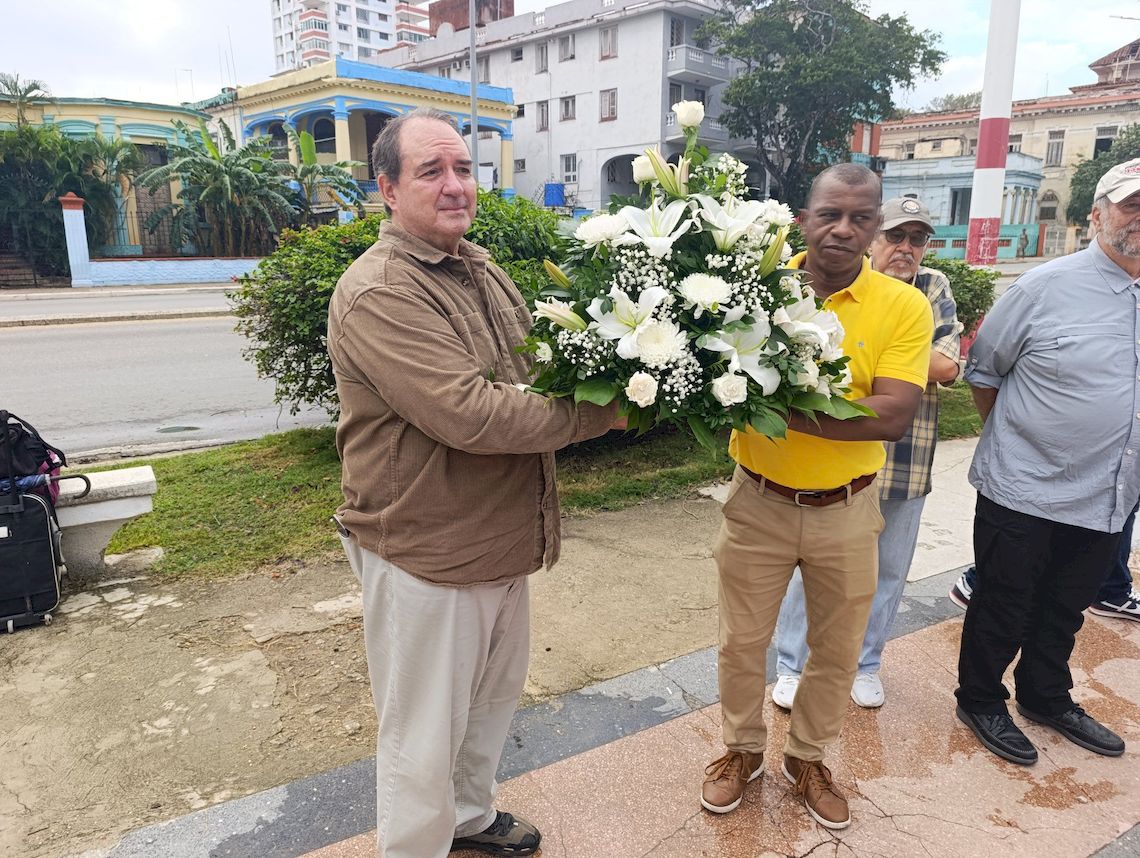
After decades in exile, Gustavo returned to Havana in 2015, coinciding with the diplomatic thaw between Barack Obama and Raúl Castro. “It was the first time I returned since I left in 1968. I’ve always had the dream of being able to help Cuba in some way,” he explains. That return was the seed of the Cuba Foundation, a non-profit organization he created with his financial expertise to work on the economic and social development of the island.




The Foundation focuses on five areas: culture, sports, the private sector, education and art. “At the end of the day, what we want to do is help Cuba by supporting the private sector, always within the legal framework of Cuba and the United States,” he emphasizes.
A member of the establishment seizes the historical moment
For years, Gustavo Arnavat worked as the United States representative to the Inter-American Development Bank (IDB), “the most important multilateral development bank in the region.” Cuba, he clarifies, was never a member of that institution, but it was there that he was inspired to think “about how to contribute to his native country.”
The Foundation’s website showcases an impressive resume: U.S. Executive Director at the IDB during the Obama administration, overseeing more than $50 billion in financing for 26 countries in Latin America and the Caribbean.
With more than 30 years of experience in investment banking, economic development and national security, he has distinguished himself through his commitment to sustainability and impact investing. He is a cum laude graduate of Cornell University, holds a Master’s degree in Public Policy from the Harvard Kennedy School and a doctorate from the University of Pennsylvania Law School.
The rapprochement between Havana and Washington in 2014 led him to rethink his career. “At that moment, I changed what I had in mind and decided to become part of that process,” recalls this financial analyst who worked at a very young age in the belligerent Reagan administration in the 1980s, during the last years of the Cold War.
Although he acknowledges that the Obama period was “a bit frustrating for many people,” for him it meant the opportunity to return to Cuba for the first time since 1968. “I returned in 2015 and have continued traveling many times to better understand my native country. I have always had the dream of being able to help Cuba in some way.”
From that experience, the Cuba Foundation was born, conceived to institutionalize his commitment.
“Everything we do has to have some kind of private sector angle,” he emphasizes. Culture and sports are two of those areas, and the events that the Foundation has organized in Cuba are precisely at the intersection of both.
Baseball as shared memory
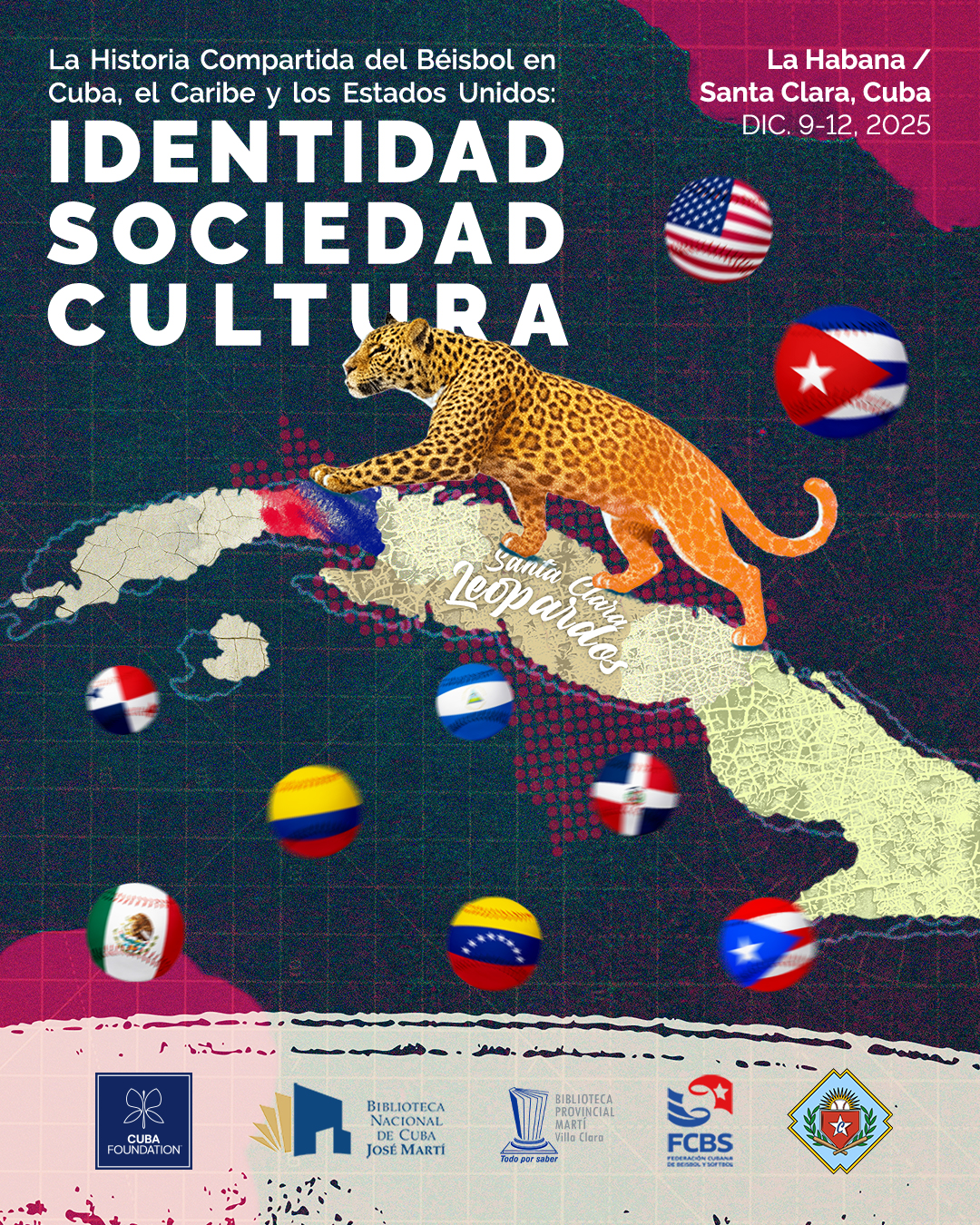
Arnavat explains that this was the Foundation’s third intervention in the field of baseball. The first, in 2024, was a scientific conference on the origins of baseball in Cuba, commemorating the 160th anniversary of its arrival. The second, held last March in the city of Santa Clara, paid tribute to the 130th birthday of Alejandro Oms, “one of the most important players not only in Cuba, but also in the Negro Leagues.”
The third conference, held recently, focused on the links between Cuba and the Caribbean Basin, and in particular on the relationship with the Negro Leagues in the United States.
“Because of discrimination, the players couldn’t play in the U.S. leagues and ended their season in Cuba,” he explains. “Incredibly, of the 123 players of the Santa Clara Leopardos, 53 were from the Negro Leagues. Among them, the best,” Arnavat points out.
One of those names was Johnny Taylor. The Foundation had the opportunity to host his daughter, Maureen Taylor Hicks, in Santa Clara.
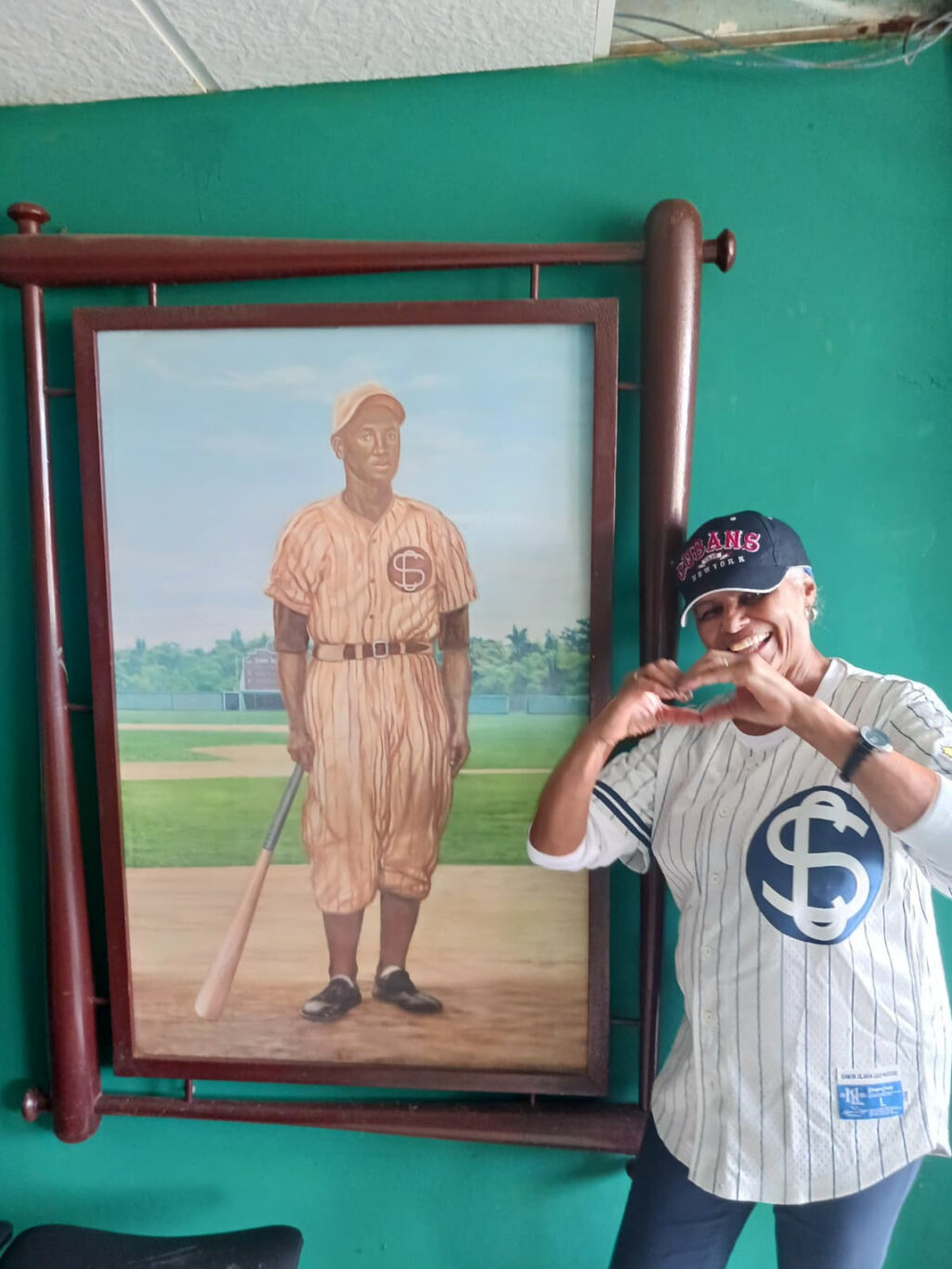
“She came with her family, and that turned a scientific event into something more personal,” Arnavat recounts. “She talked about her father, what he meant to her, even though he didn’t like to talk much about baseball. He was a humble man.”
For the family, the trip was deeply impactful. Along with the legendary retired Cuban catcher Ariel Pestano, of the Cuban national team and Villa Clara, Hicks unveiled the historical plaque that the Foundation placed in Santa Clara, created by sculptor Mario Fabelo and declared a cultural heritage monument. “That’s the kind of impact we’re looking for,” says Arnavat. The plaque lists the most outstanding Black American baseball players who played for the Leopardos.
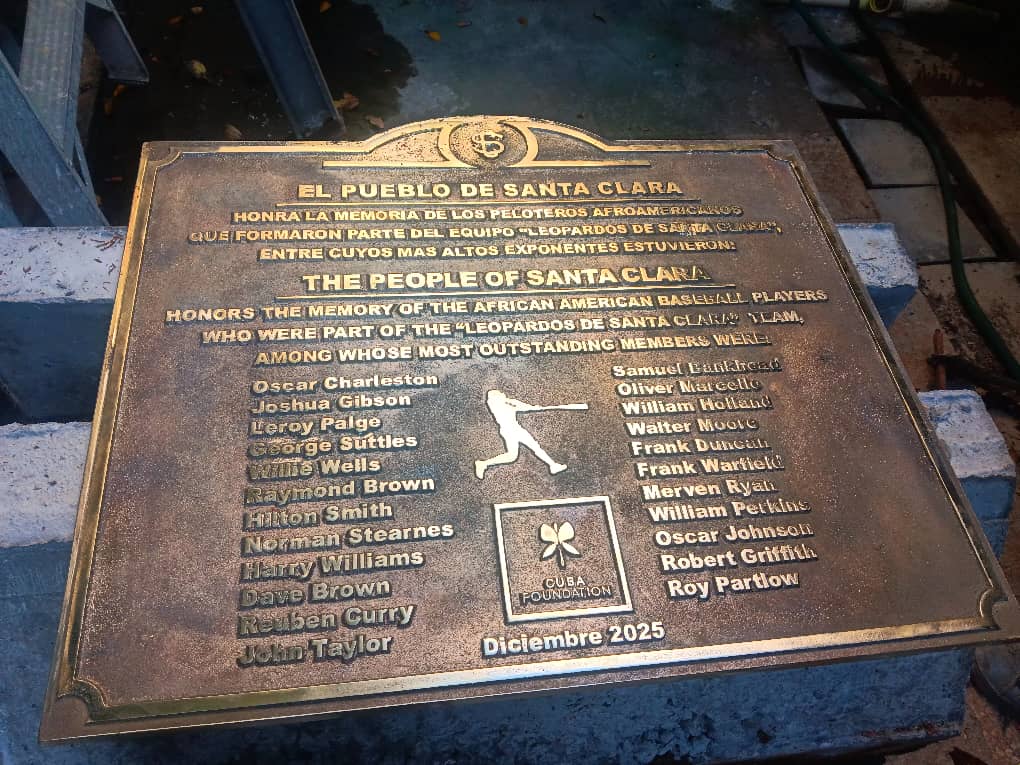
For him, the Foundation’s work is also an exercise in historical preservation. “If baseball had come from Germany, that would have been the focus. But it came from the United States,” he reflects. “It’s a way of emphasizing that these connections existed, exist and will continue to exist. That will never change.” The intention is to identify and preserve a “very noble, very beautiful” history, especially for the new generations.
Among the most significant actions, he recalls the donation of 40 gloves to children in Villa Clara. “Just seeing the faces of those children, who were between five and seven years old, when they received those gloves…it was incredible,” he says emotionally. One of them, minutes after receiving it, asked: “Are they really for us?” For Arnavat, that scene summarizes the purpose of the Foundation: to sow the seeds of the future in Cuban baseball.
Another initiative was to finance the printing of Félix Julio Alfonso López’s book, El juego galante (The Gallant Game). “It’s a way of ensuring that this history is documented and disseminated in Cuba. In the future, hopefully we can do an English translation to distribute it in the United States as well.”
Beyond baseball
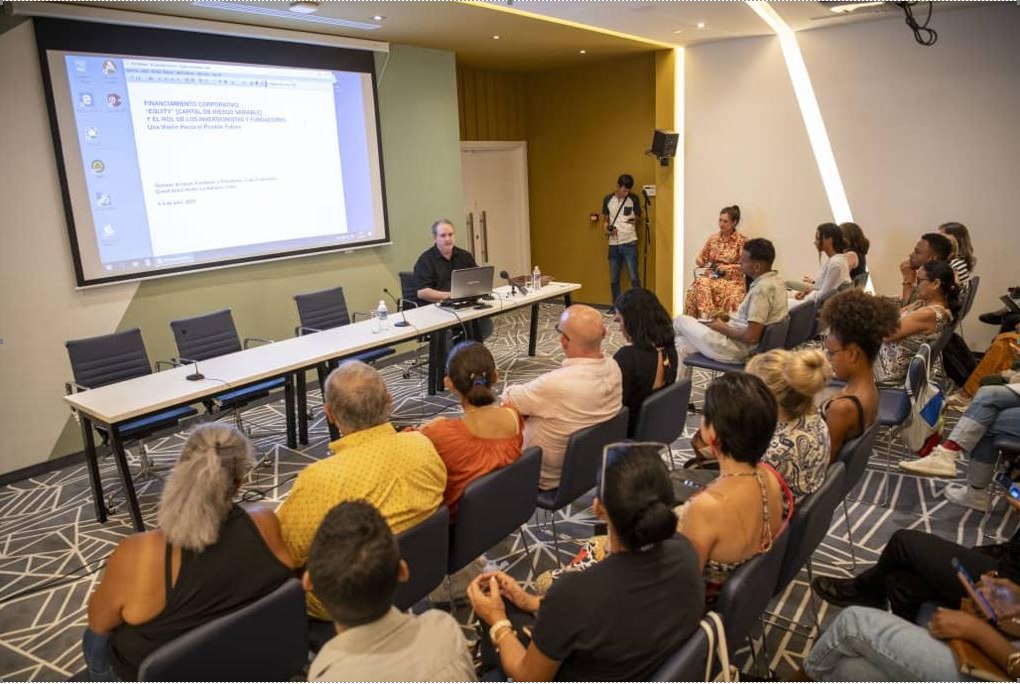
The Foundation has also ventured into other areas. “We are producing a documentary about Afro-Cuban entrepreneurs,” he says. It consists of interviews that seek to highlight the challenges and needs of those involved in these small businesses, which have been allowed since 2021 and now number around 11,000 throughout the country.
“It’s important to support the private sector and emphasize that they exist, that they have unique needs and even more significant challenges. We want the public in the United States to be aware of this,” insists a persistent Arnavat.
Although he acknowledges that they haven’t done much in other areas of engagement with the United States, he reaffirms that the main focus is the private sector in Cuba. “Our funds come from private individuals in the United States. This promotes connections between people from both countries, although that is not our main focus. Our objective, without question, is economic development in Cuba through the private sector.”
The Foundation has also awarded scholarships to music students to study at Berklee. “There is a lot of talent in Cuba and we want to help develop it,” he affirms. A young flutist, prevented from traveling to Boston by the immigration regulations of the current Republican administration, was able to begin her studies in Spain thanks to the Foundation’s support.
Crossfire
The context is not easy. “It’s undoubtedly a complicated environment,” Gustavo admits. The U.S. blockade/embargo makes transfers and donations difficult, while obstacles to the private sector persist in Cuba. “We have two options: do nothing, or see what we can do. I made the decision to do things, always within the legal framework,” he warns.
The Foundation maintains transparency with the embassies of both countries and works with law firms to ensure the correctness of its operations. “I always say: the Mambí forces had it worse. In comparison, we are living lives of luxury,” he says ironically.
Martí, Mandela and Obama on the same website
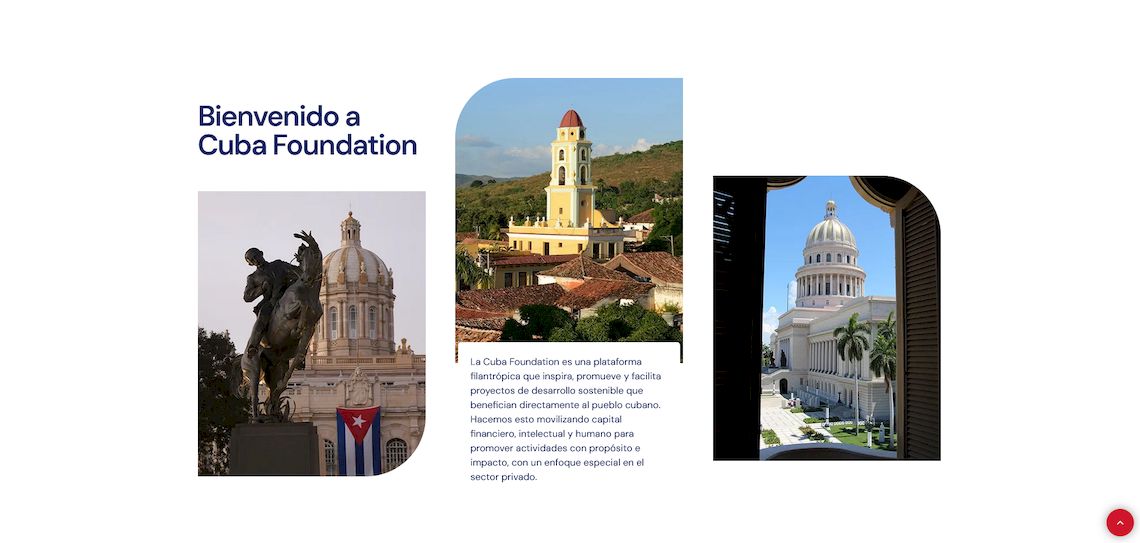
On its website, the Foundation displays symbols that summarize its philosophy: José Martí, Nelson Mandela and Barack Obama.
“Martí is perhaps the most important Cuban in history. He is a person who unites all Cubans,” he explains. The quote from “Cultivo una rosa blanca” is central: cultivating for both friends and enemies.
From Mandela, there is the lesson of forgiveness: “When he got out of prison, he said that if he didn’t leave the hatred behind in his heart, he would never be free.” And from Obama, the idea that every citizen is the solution to the problems. “That made me think a lot. He was right,” Arnavat concedes.
Biden: promises and lies
The disappointment came with Democratic President Joe Biden, who snatched the consecutive succession from Trump in 2020. “I had a face-to-face conversation with Biden in 2019 and I asked him if we were going to return to Obama’s policies. He told me that we were not only going to return, we were going to do much more.”
The inevitable question: And what happened?
According to Gustavo, political advisors convinced Biden not to change policy for electoral reasons in Florida. “It was a big mistake. One of the consequences was that more than 800,000 immigrants of Cuban origin entered the United States in less than two years. That caused political problems for Biden,” he affirms.
Final dialogue
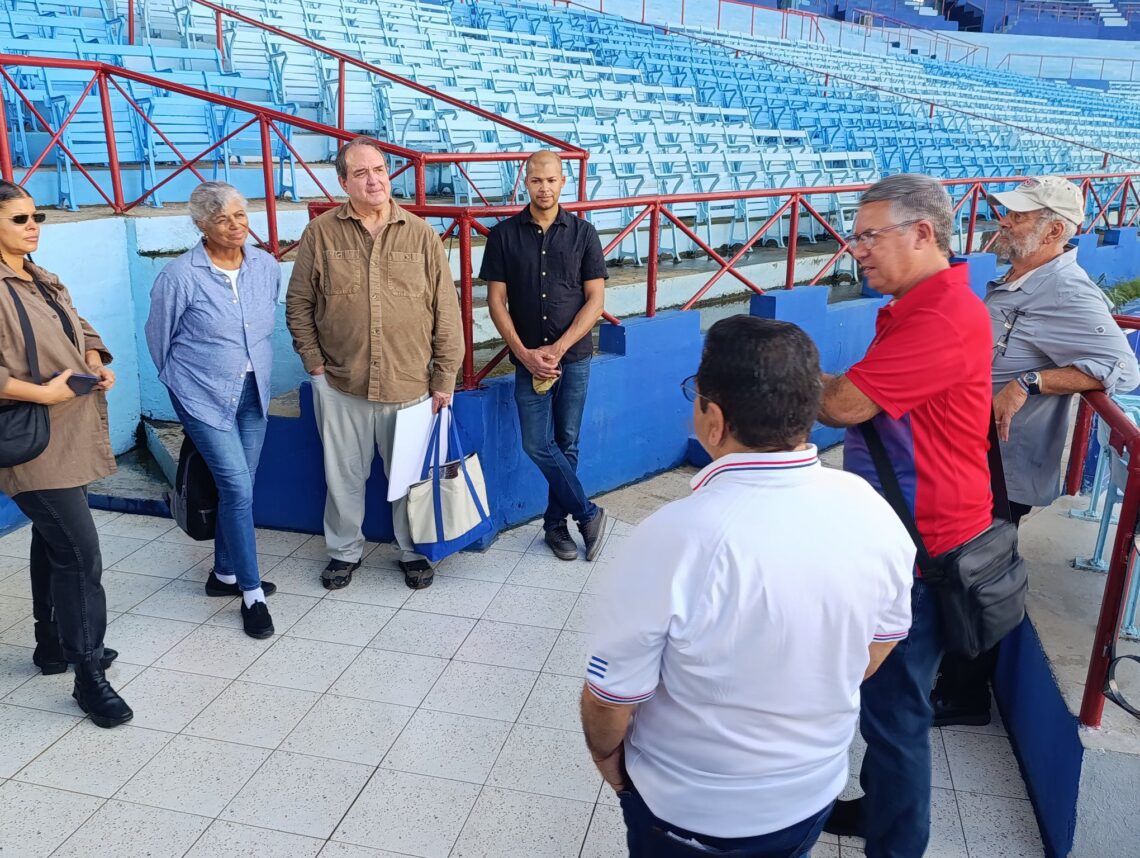
Well, Gustavo, so as not to abuse your time, let’s take a bold look at the future. The present, as we know, is extremely discouraging for this country. We are immersed in a structural crisis from which we cannot escape. ECLAC places us below Haiti in labor productivity and Cuba’s resources do not seem sufficient even to stop the deterioration, much less to overcome it. For more and more experts, the only way out is a change of political and economic paradigm on the island and for the United States to ease the pressure and reach an understanding while respecting the sovereignty of this country. Do you have faith in a solution and within what timeframe? I always remember that quote from Keynes, which you, as an economist, will surely know: “In the long run, we are all dead.” So, how do you see that immediate future?
First, I want to clarify that I don’t think Cuba should be compared to Haiti. I’ve been there several times, and it’s a country with a very different history, marked by long periods of violence and instability in all areas. I’m not so pessimistic as to put Cuba and Haiti in the same sentence.
What I can say is that the solution is in the hands of both the Cuban and U.S. governments. On our website, the first figure that appears in the principles section is Marcus Aurelius.
I was struck that you quoted an emperor on your website.
Marcus Aurelius, Emperor of Rome, was perhaps the most powerful man of his time, but also a philosopher renowned for his wisdom. He maintained that the solution begins in the mind: one must learn to control it.
Despite his power, he never thought he could force others to do what he wanted. He said that intelligent leadership doesn’t waste time on fantasies of a world without problems or on the illusion of dealing with perfect people. He recognized that there are no perfect solutions.
We cannot expect ideal conditions or saintly people. There will always be dissatisfaction, risk of failure and obstacles. That’s why the most important thing is to be clear about the objectives and what needs to be done to achieve them.
The solution is in our hands, but we must accept that there will be compromises. In English, compromise means giving up a part of what one wants to reach an agreement that benefits both parties. That’s the key.
Returning to what we say on our website: we have a long-term vision. I am deeply saddened by what is happening in Cuba and also in the Cuban-American community. I know that many want to return, live there, work there, and have not been able to do so. It’s a Greek tragedy: nobody comes out of it well.
I don’t think anyone can feel happy right now, neither in Cuba nor in Florida. Our commitment remains to help the Cuban people and the private sector, whenever legally possible. History will tell who was right and who was wrong.
Well, you are one of those challenging people who embody what Lezama Lima said: “Only what is difficult is stimulating.”
That’s right. It’s a combination of vision and willpower. Often, that vision is the only motivation needed. You think: If I can do this, it would be magnificent. And then you decide to do it. It’s not easy, but it’s not impossible either.