Jack London was a man of many talents. Talented at writing as well as generating controversy. Also famous for his oratory, on December 21, 1905, he took to a podium at Harvard to speak to more than a thousand students on the topic of revolution. The 29-year-old Californian author had begun a series of lectures on socialism at different universities in the United States since January.
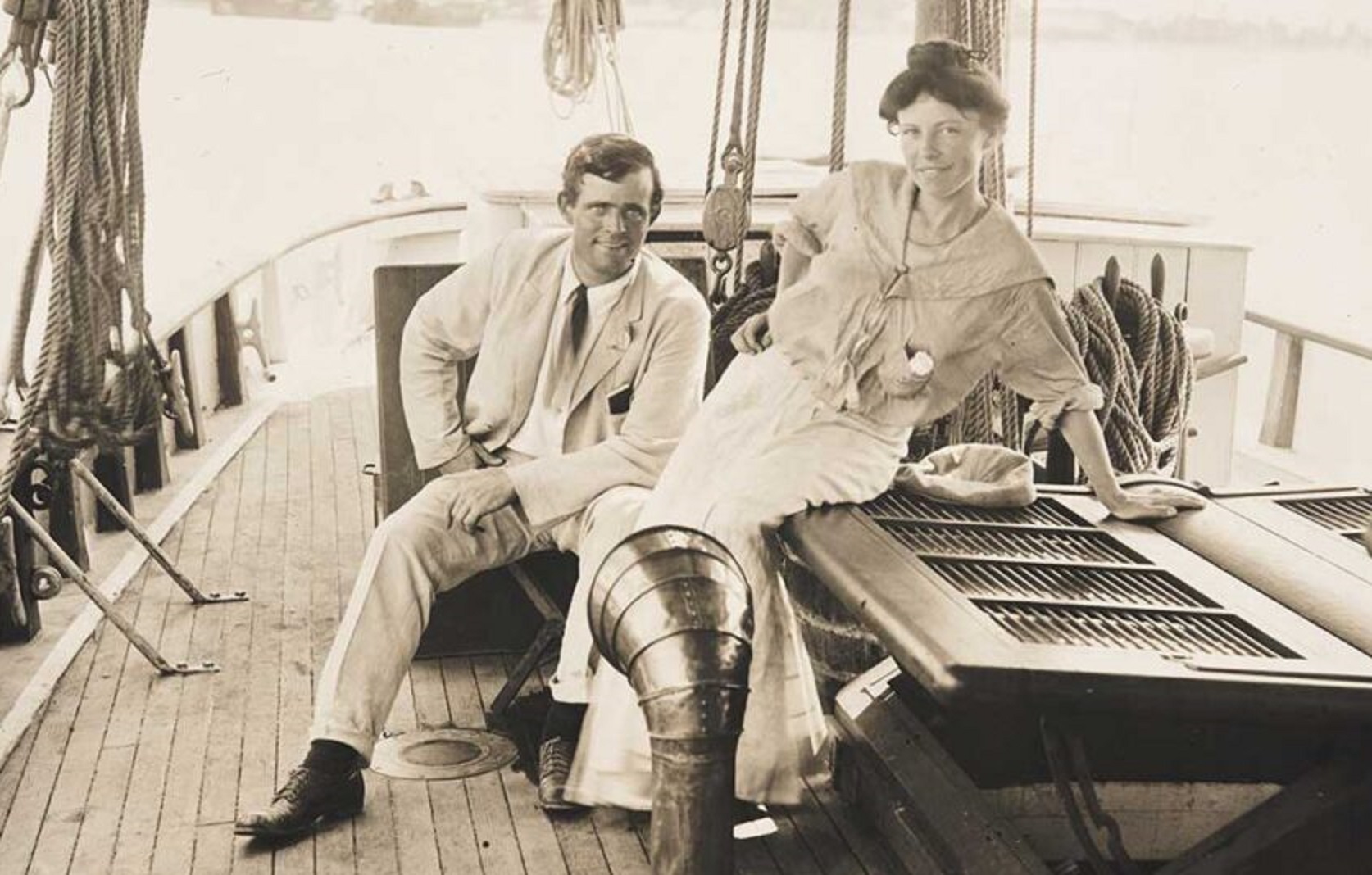
It was a turbulent year. On the one hand, he was enjoying the sales success of Call of the Wild and The Sea Wolf, while in his personal life his marriage to Bessie London was hitting rock bottom. On November 19, the week after his legal divorce from his first wife, he celebrated a second marriage to the feminist, writer and his former secretary, Charmian Kittredge.
London’s biography is full of shadows, stumbles and leaps. From a young age, the need for work pushed him from one place to another, in increasingly worse conditions. He was a newspaper vendor, an ice delivery man, a merchant seaman, a laborer at a railroad power plant, a cannery worker, an oyster pirate, a train hobo, a gold prospector, and even a correspondent for the Russo-Japanese War.
His years of wandering, misery and exploitation resulted in constant pain that led him to rely on morphine as a sedative. Given up for hope for recovery by doctors, on one of those occasions he administered an overdose that his battered body could not withstand, and he died on November 22, 1916, at barely forty years of age.
***
Jack was a sailor. He couldn’t help but talk about ships and voyages. “The sky, the sea, the hills, the wilderness…I love them and I must have them,” he would say. The sea captivated his innermost being, and it became as much a part of his public image as his wide-brimmed cowboy hat and his adventure stories. He traveled extensively around the world. Then he thought that nothing would make him happier than traveling with his new wife. “Let’s do it,” he told her. “When do we leave?” she simply replied. The moment seemed too wonderful to be true.
They were due for a honeymoon. Six days after appearing in a white silk shirt at Harvard Auditorium, Jack paused his lecture series and boarded a United Fruit Co. ship south to the Caribbean. In 1921, Charmian — by then London’s widow — published a memoir that included their trip to Jamaica and Cuba.
Related Posts



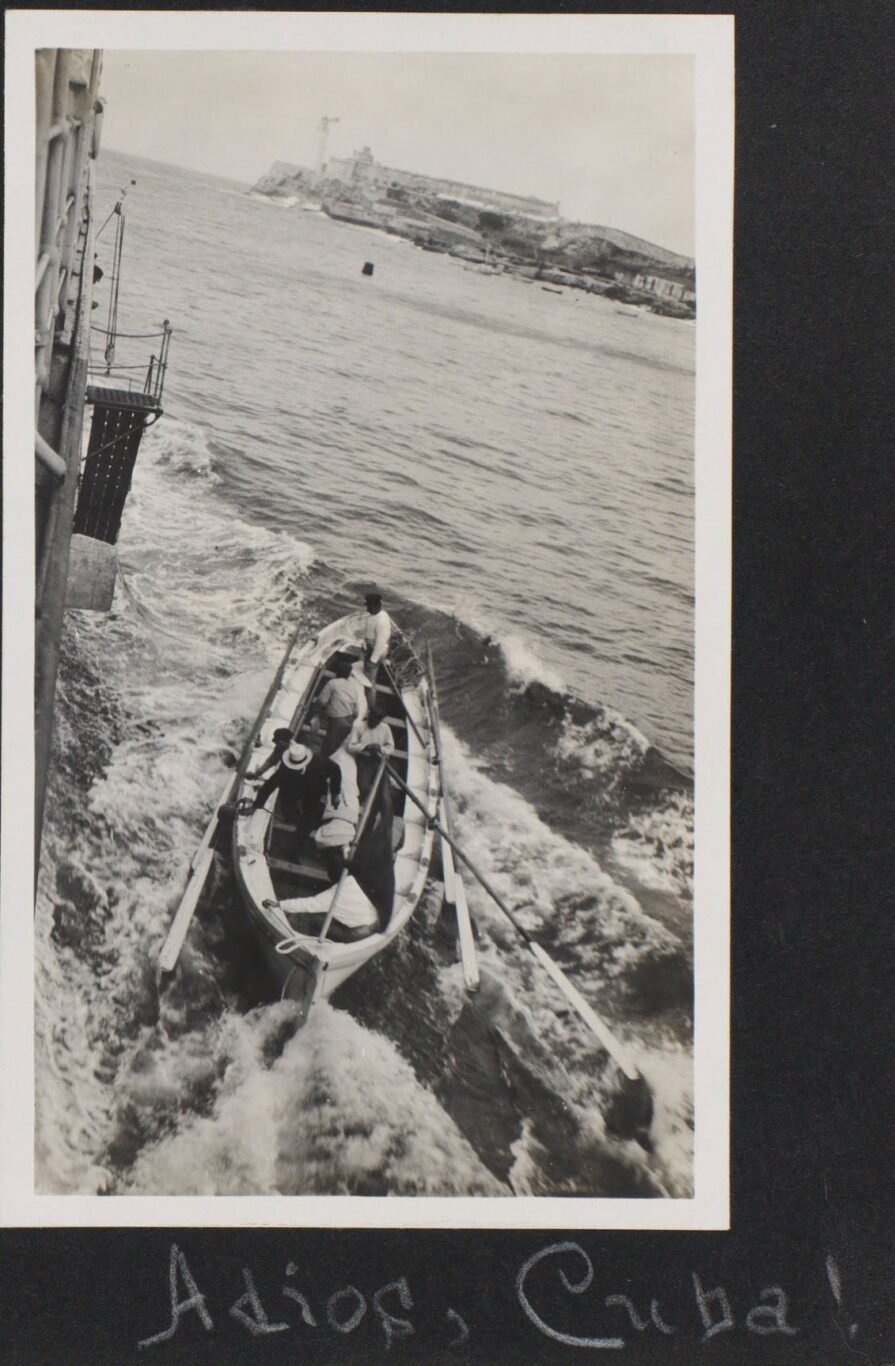
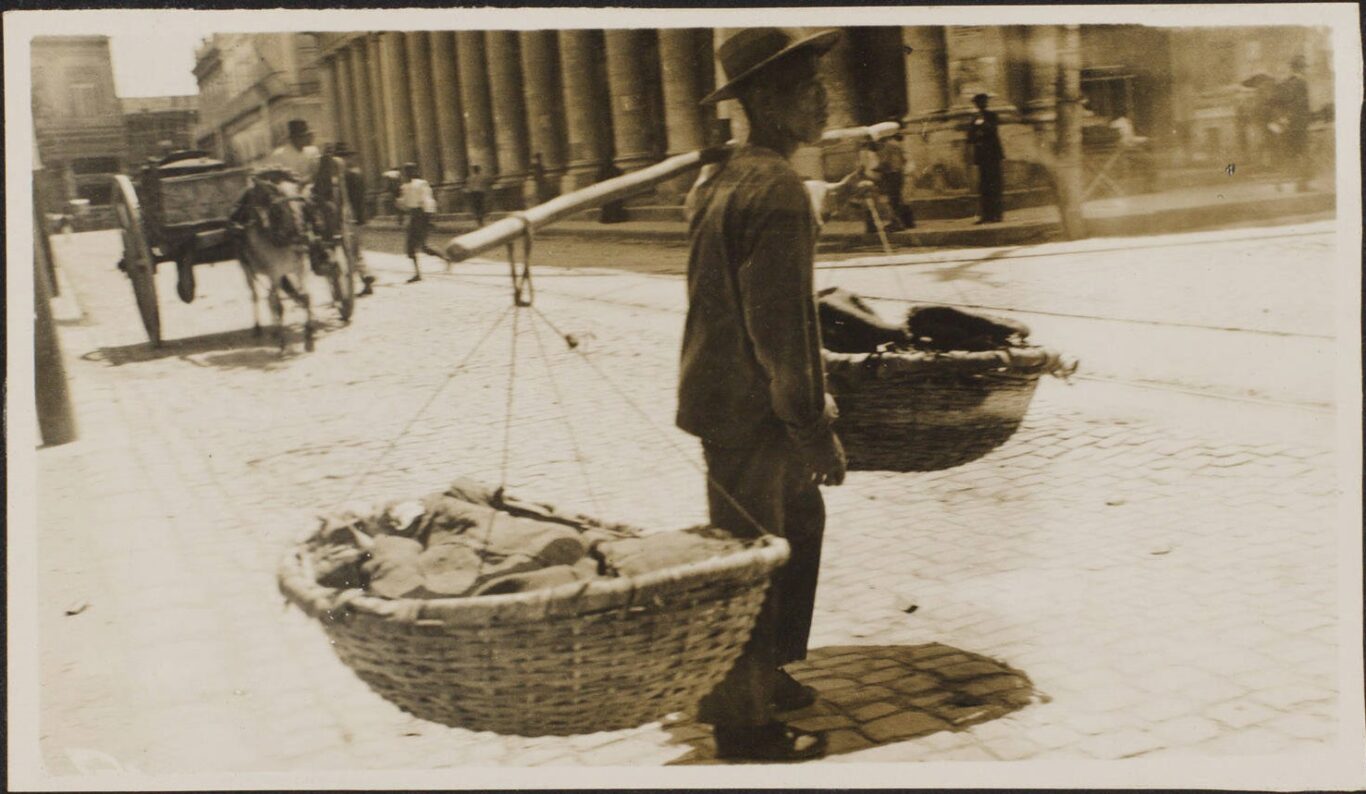
From that visit, an album with hundreds of photographs taken by London during his honeymoon is preserved in the Huntington Library collection in California; more than seventy of them correspond to their time in Cuba. It’s worth noting that, in addition to his fifty books, the man best known for The Call of the Wild and White Fang demonstrated skills as a photojournalist. Camera in hand, he documented his globetrotting experiences, and it is even said that he left a monumental archive of 12,000 negatives. Therefore, the photographic record of his romantic journey is eloquent enough in its impressions and information to complement this story.
The honeymoon’s first stop was Kingston, the capital of Jamaica. After spending four days there, they departed for Santiago de Cuba on the Spanish steamer Oteri, which was so “small and dirty” that it left them both stunned. Due to the ship’s fragility in the face of the waves, “Jack himself collapsed…over the stern railing, completely seasick for the first time in his nautical history,” Charmian recounts in her narrative.
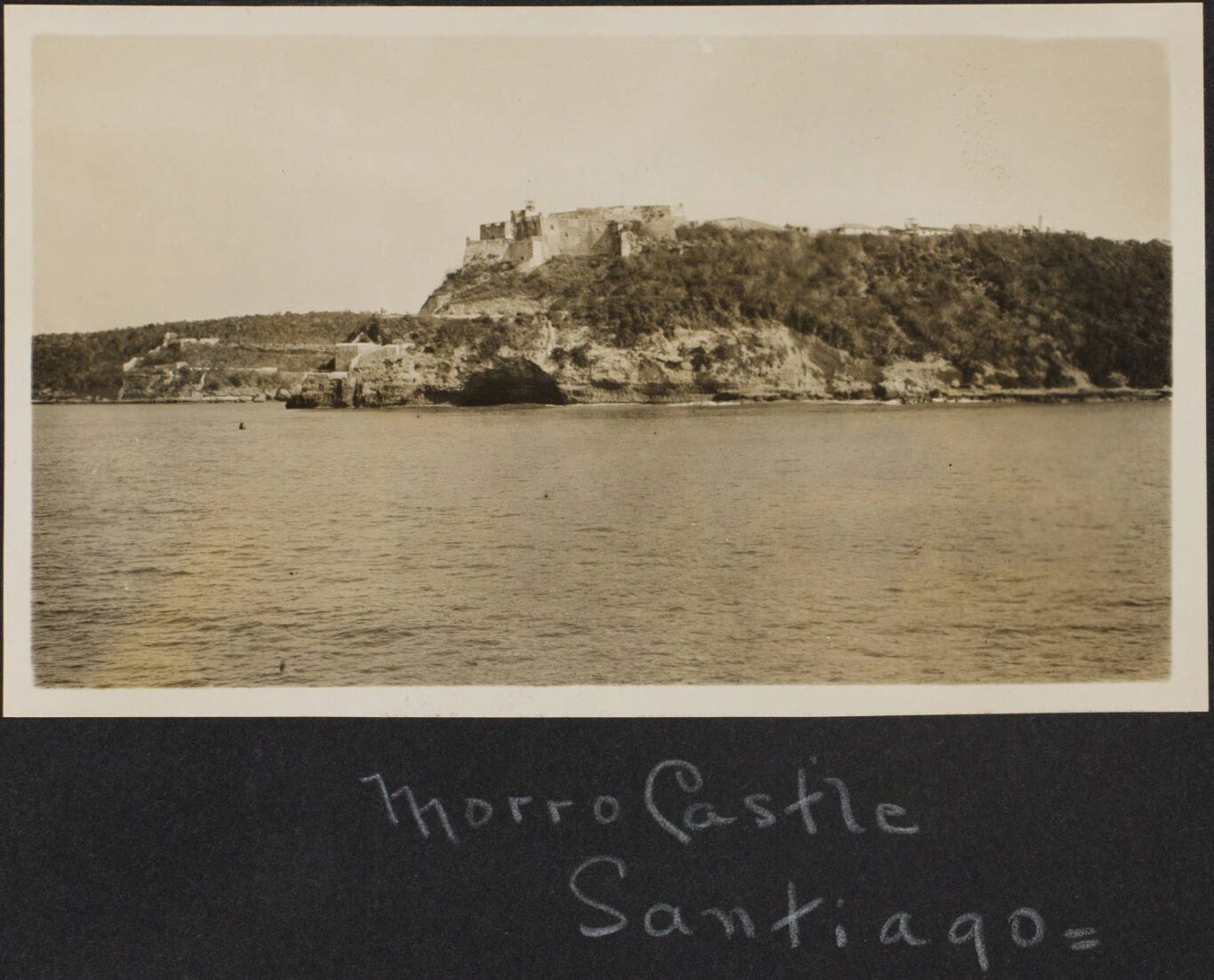
Early on January 6, 1906, they sailed through the narrow channel that opens the maritime gateway to Santiago. The entrance to the bay is a sight to behold, with the imposing Morro and La Estrella on one side, and on the other, La Socapa with its historic cannons and Cayo Smith, dotted with colorful chalets rising from the sea. London couldn’t resist using his camera, and by capturing this coastal landscape, he created his first postcards of Cuba.
***
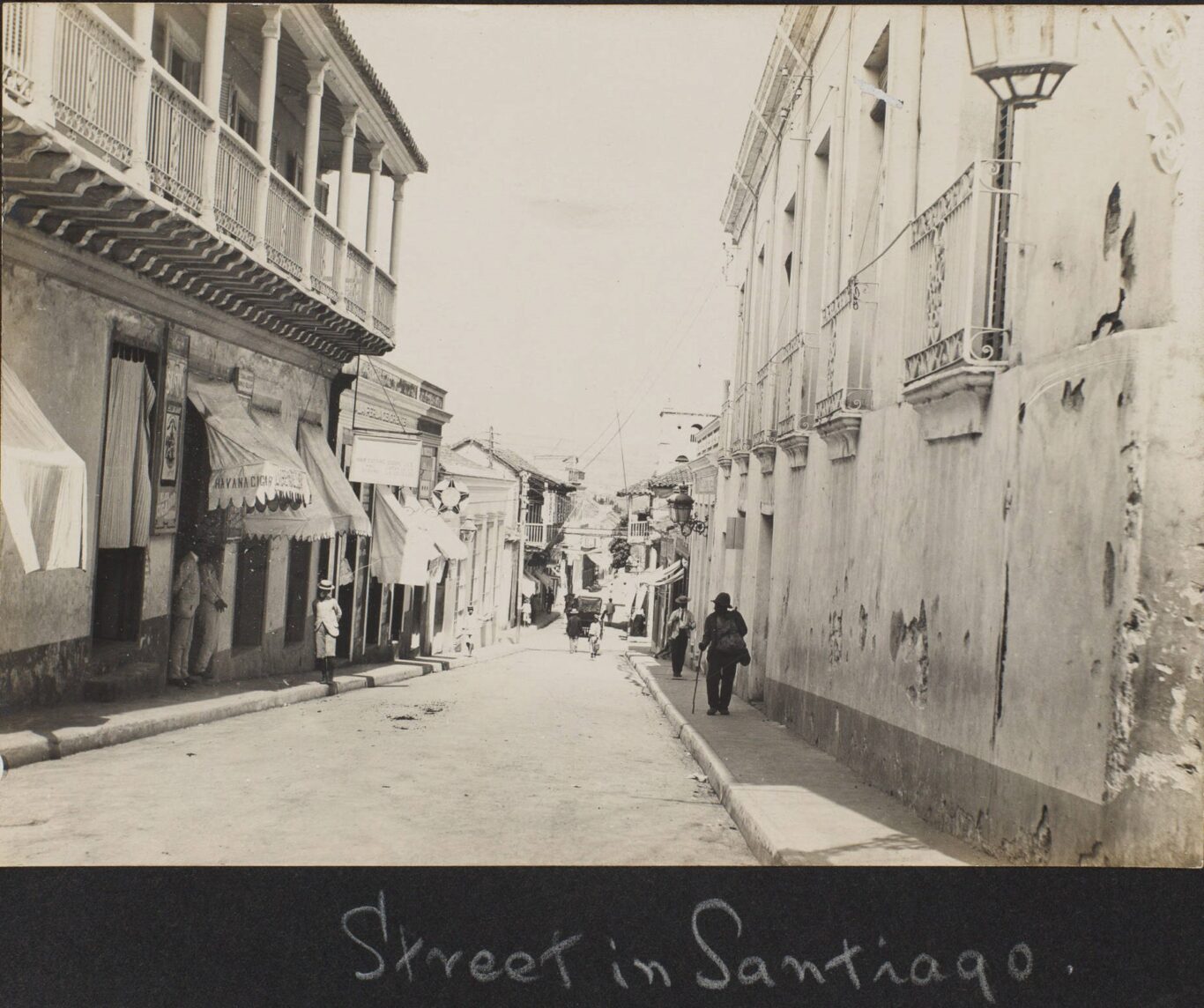
In Santiago, the couple stays at a place Charmian calls the Hotel del Alba, which she describes as having a “vaulted room with a balcony with gilded iron railings.” They rest there for an hour. Without wasting any more time, they take a carriage to explore the city. They find Santiago a unique city, with its pleasant climate, lively people, incredibly steep streets and a hanging market. Jack sees much more than he can photograph. They browse some shops looking for lace clothing, and he buys a showy fan to give his beloved a “slight Spanish touch,” according to local custom.
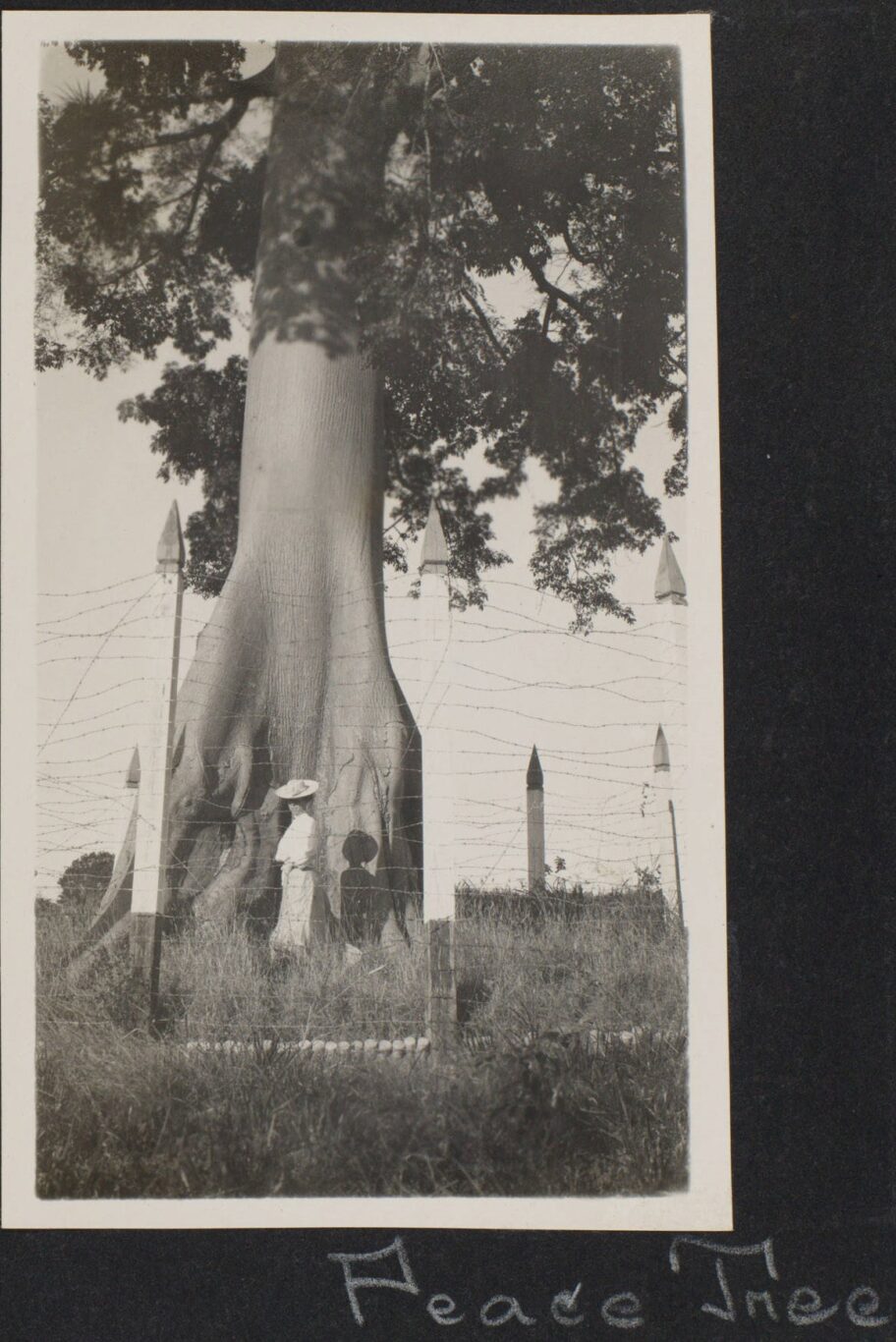
The excursion ends at Loma de San Juan, the site of a bloody battle in July 1898, during the Spanish-Cuban-American War. Navigating the overgrown grass that hides a cemetery of forgotten names and dilapidated gun carriages, Jack photographs Charmian posing next to the trunk of the Tree of Peace, a sturdy ceiba tree that serves as a monument. Like them, many American tourists made pilgrimages to Santiago during the republican years simply to experience the pride and pain of history, in that setting where hundreds of their compatriots fell.
That night, the Londons go to dinner at the Venus café as “guests of a charming gentleman who was enjoying what little life he had left with only one lung. This was always a vivid memory for Jack, who incorporated it somewhere in his fiction.” Such brief details are not enough to identify that hospitable man from Santiago who was clearly one of the few who interacted with or knew of the presence of the famous writer and his wife.
Nevertheless, she more carefully recounts her fleeting sensations of the Santiago evening: “I was wearing a soft pink dress. Lazily fanning myself with my sequined fan with a mother-of-pearl handle to the sound of a band playing in the square, in the warm, languid air beneath the palm trees, I wondered if anything in our future travels could compare to the romance that floated in the air.”
Then they attend a theater performance. After the last act, they return to their hotel room and spend some time “shamelessly gazing at the luxurious Spanish interiors and balconies across the narrow street, where ladies and young women entertained themselves in their courtly ways. I’m sure Jack delighted in that that night; but I’m even more certain that seven-eighths of his satisfaction was centered on his fiancée, for whom every moment was like a precious pearl and as such endures,” Charmian emphasizes.
***
The next day they begin their train journey to Havana. Incidentally, the widow recounts the anecdote of a distressing incident that almost ruined Jack’s vacation. Upon arriving at the train station, one of Jack’s “self-proclaimed annoyances” occurs when he becomes dissatisfied with the fare demanded by the driver. London suspects that the driver is trying to cheat him and they engage in a verbal dispute that almost escalates into a fistfight.
“Jack,” she testifies, “outraged by the blatant dishonesty of the taxi driver who dropped us off at the station, became the center of a gesticulating and clearly not harmless mob. As departure time approached, he shouted at me to board the train. Only the fact that Jack had tickets and money in his possession prevented him from going to jail at the last minute, rather than humbling his Anglo-Saxon pride before the insolent mestizos.” Here she reveals her racist side.
According to Charmian’s version, the driver — whom she calls “completely crazy” — in the hackneyed ploy of taking advantage of the naive and gullible tourist, tried to charge him an “extra fare,” not imagining that this customer had Buck’s keen instincts. Even so, it’s worth noting that these untamed men don’t tolerate anyone singing louder in their own backyard, and so they pounced on the American with their unmistakable swagger.
Distracted by the argument, Jack almost missed the train and had to catch a moving ladder to board. Fortunately for the Londons, they managed to depart for Havana on time, with no further conflict than the memory of the incident. Of that journey, which took them a day, there are no references in the book to intermediate stops or any details other than a hyperbolic description of the “rich country we sped through that golden day, and an Egyptian sunset between small hills that looked like pyramids, where one’s gaze searched among the pink, yellow and lilac for a sphinx. All of this forged by Jack’s creative faculties. At intervals, he would withdraw into himself to take notes for a novel that I now realize he never wrote: The Flight of the Duchess.”
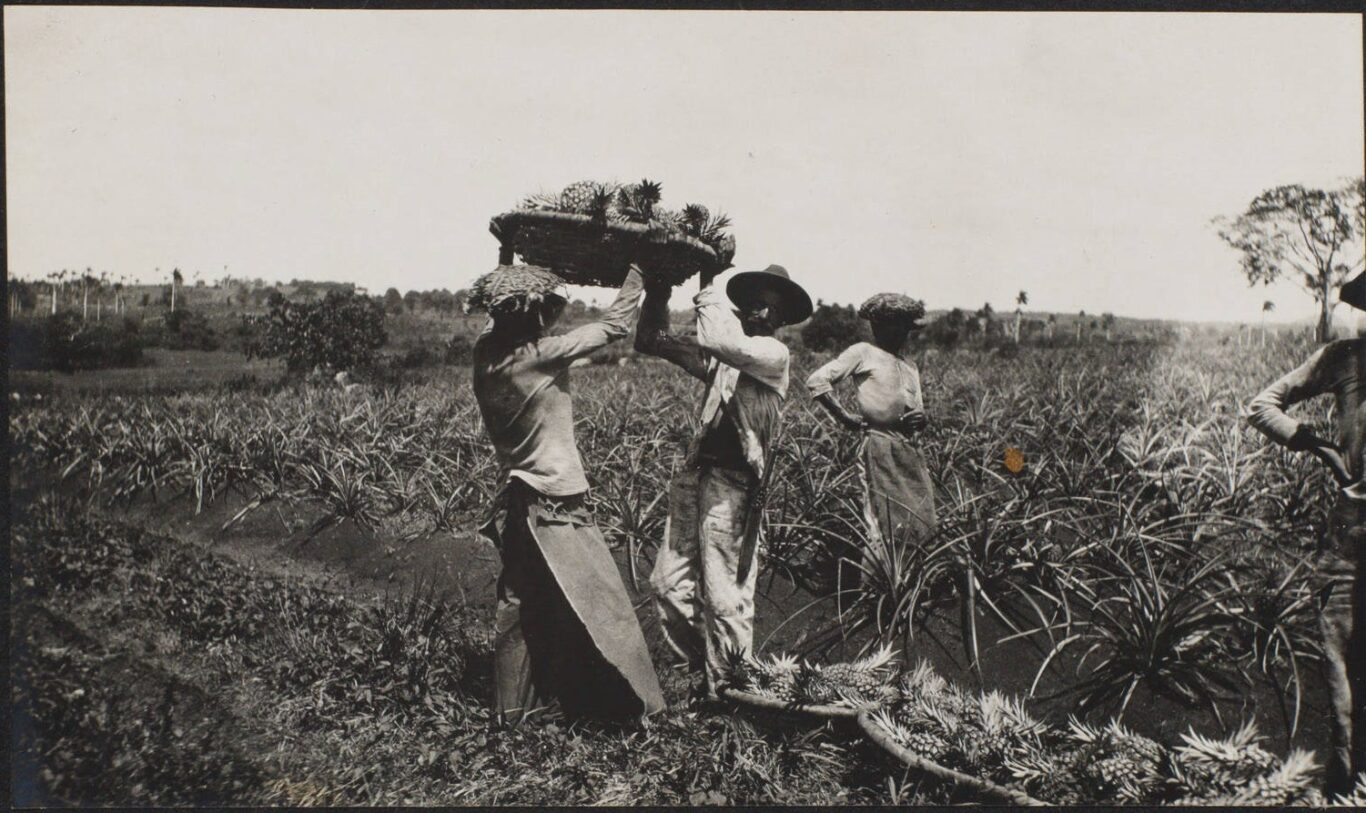
Although the collection of images shows country men in the midst of different agricultural areas, busy plowing with a team of oxen or carrying baskets of produce, which suggests that they were taken during the journey. In any case, one senses that they enjoyed it to the fullest.
***
In the capital, curiously, they did not stay in a hotel but in a boardinghouse, located at Consulado and Neptuno streets, which they liked for its cool rooms and patio full of flowers. As in Santiago, they strolled as much as they could through the capital, which had “dreamlike hues,” in Charmian’s words. “Of course, we saw everything there was to do and see in such a short stay.”
In the bay, they boarded a guadaño (small boat) to circumnavigate the twisted skeleton of the Maine, visited the La Cabaña Fortress and Morro Castle, took a swim in the sea and later entertained themselves watching a pelota game at the popular Jai-Alai. After the sporting recreation, they attended a splendid banquet at the Miramar Hotel, at Prado and Malecón.
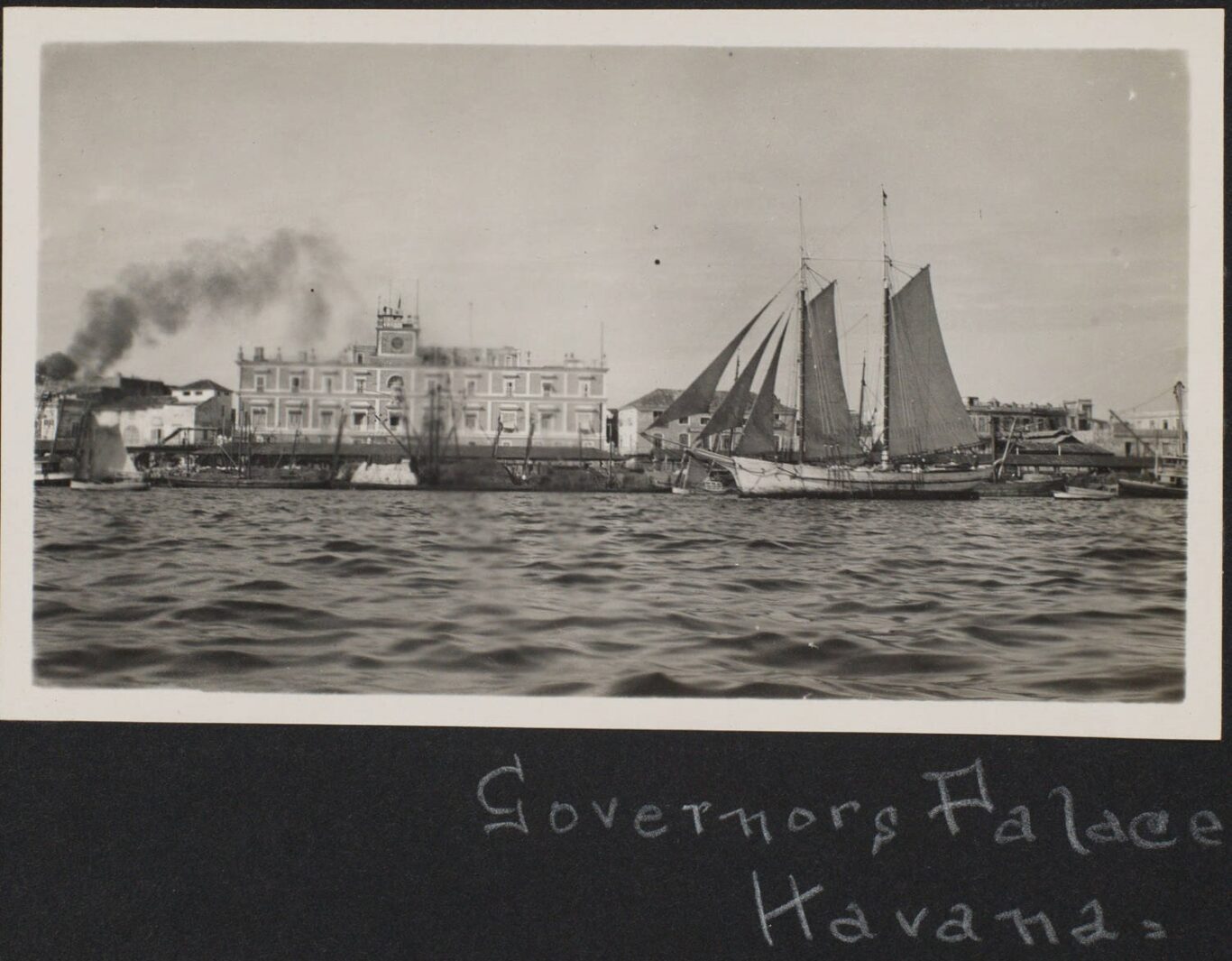
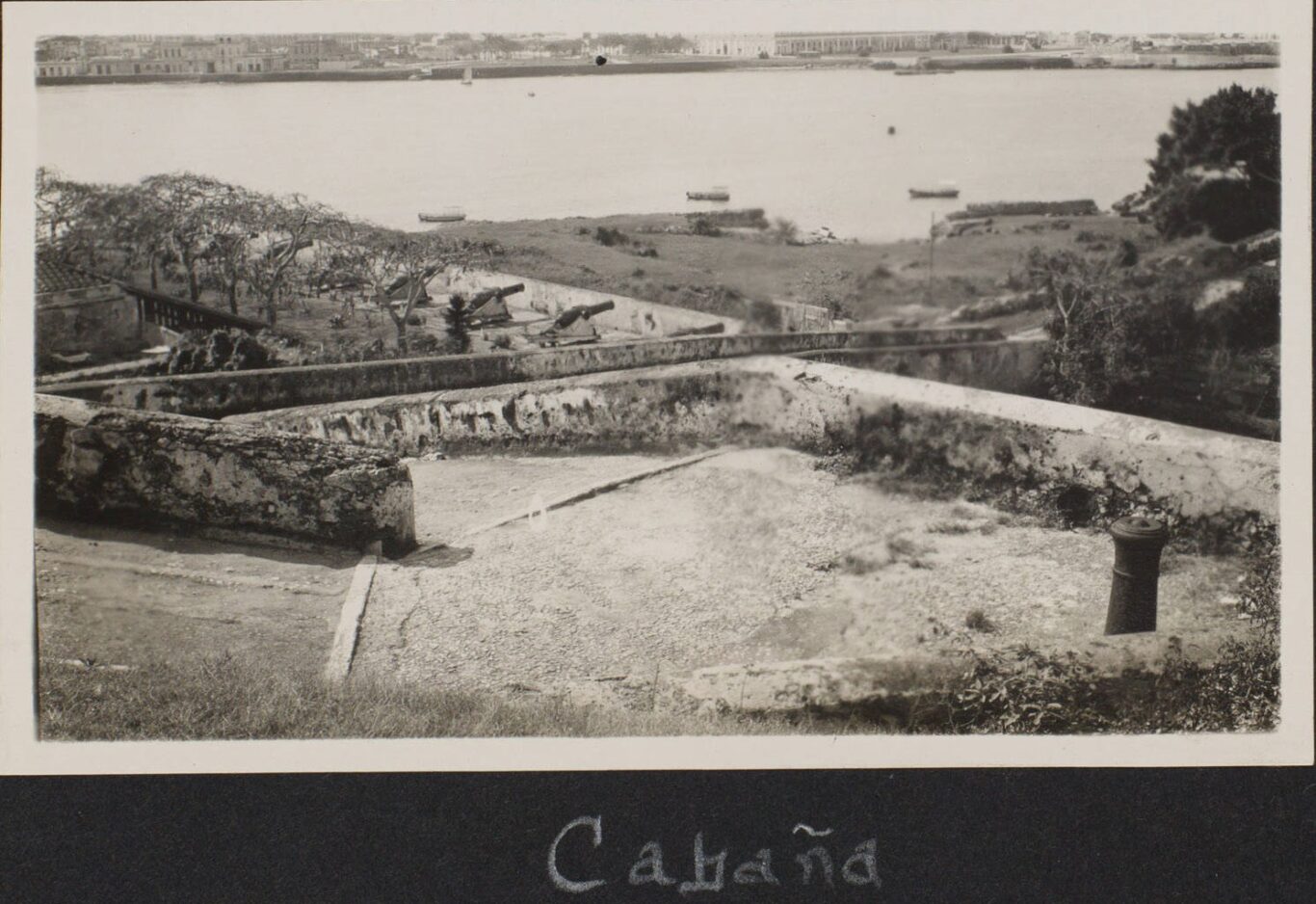
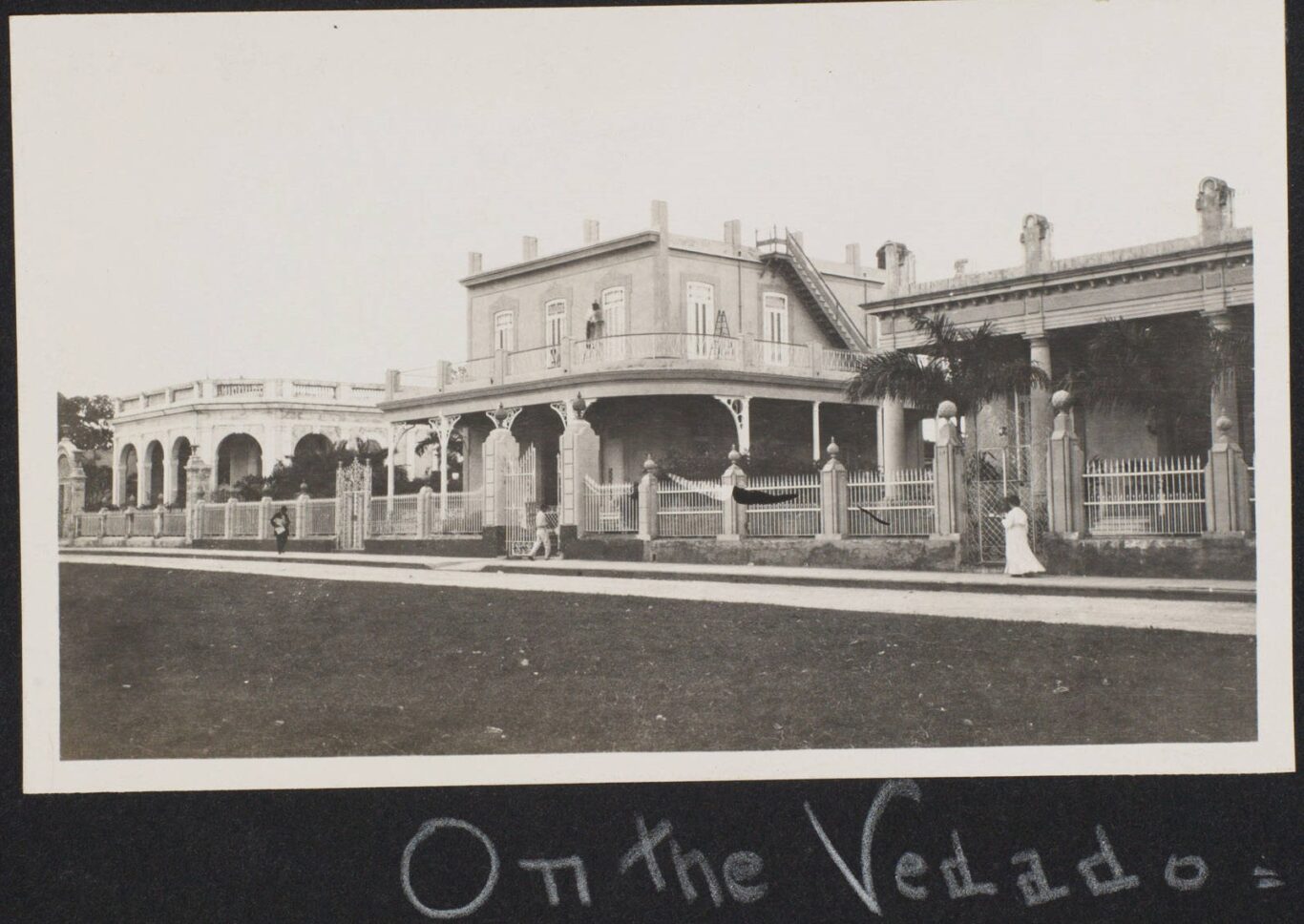
The photographic material confirms that they also strolled through El Vedado, visited Colón Cemetery and even went to the town of Santiago de las Vegas. At the El Rincón sanatorium, they interacted with some of the patients. “It would take an entire book to recount the afternoon we spent at the leper colony,” Charmian claims, adding that from that experience they would begin to take an interest in “the tragedy of lepers.”
Finally, on January 11, 1906, they departed on the steamship Halifax via Key West. Back home, Jack London resumed his lecture tour, delivering “The Coming Crisis” at the Grand Central Palace in New York, and began building the Snark, his two-masted sailboat in which they would travel around the world for seven years.
***
Jack London established a profound sense of connection with the places he visited and often incorporated those influences into his literary work. Therefore, it is not unreasonable to assume that this, his most romantic journey, was an unforgettable moment in his short life and a turning point in his career.
Given his socialist leanings, in Cuba he experienced the atmosphere of the streets, observed the disparity between rich and poor, the living conditions of many people and the political, social and even ideological conflicts that marked that period of national debate about true independence.
But, above all, in the company of his wife, he was fascinated by daily life on the island, the friendliness of the people and the vibrant atmosphere of the cities. He enjoyed the traditional music and the rich cultural identity; he was impressed by the beauty of Cuba’s natural landscapes, its beaches, architecture and heritage sites. “We hated to leave Havana,” Charmian confesses in her memoir…“but the world is ahead of us.”