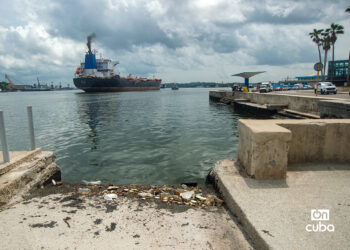
At 9:40 p.m. on February 15, 1898, two consecutive explosions shook the USS Maine, a second-class battleship adrift in Havana Bay. In a matter of seconds, a symbol of U.S. power was blown to bits, causing a shower of debris, more than 260 crew members charred to death, and a fireball on the water. Broken in two by the blast, the 6,700-ton ship, with its armored turrets and pristine white hull, plunged into a mudflat.
Sabotage or accident? The controversy surrounding the Maine since that fateful day has not diminished, and the remnants of its explosion continue to reach us today on the underwater currents of time. The United States government sought to determine the cause of the tragedy and four days later the U.S. Navy convened the Court of Inquiry, a board headed by Captain William T. Sampson, to investigate the incident.
However, rushed through, the investigation remained superficial. Focusing on a plate in the bow found warped like a metallic tongue inward, the experts concluded that the ship had been struck by an external force. The Hearst and Pulitzer newspapers did the rest. Consumed by anger, the United States vowed revenge, and with the jingoistic cry of “To hell with Spain…. Remember the Maine,” it launched a war that made it an empire and reshaped global geopolitics.
The short story of the Maine, from its arrival in Cuba to its tragic disappearance three weeks later, is quite well known. Little could be added about its circumstances and consequences. However, less is said about how it was raised from Havana harbor and sunk again at sea with full military honors. This was the incredible engineering feat that brought the disaster to light and captured the world’s attention.
Operation refloat
Twelve years after that dramatic and incendiary night in 1898 that led to the Spanish-American War, the Maine remained visible adrift in Havana Bay, like a beggar’s skeleton.
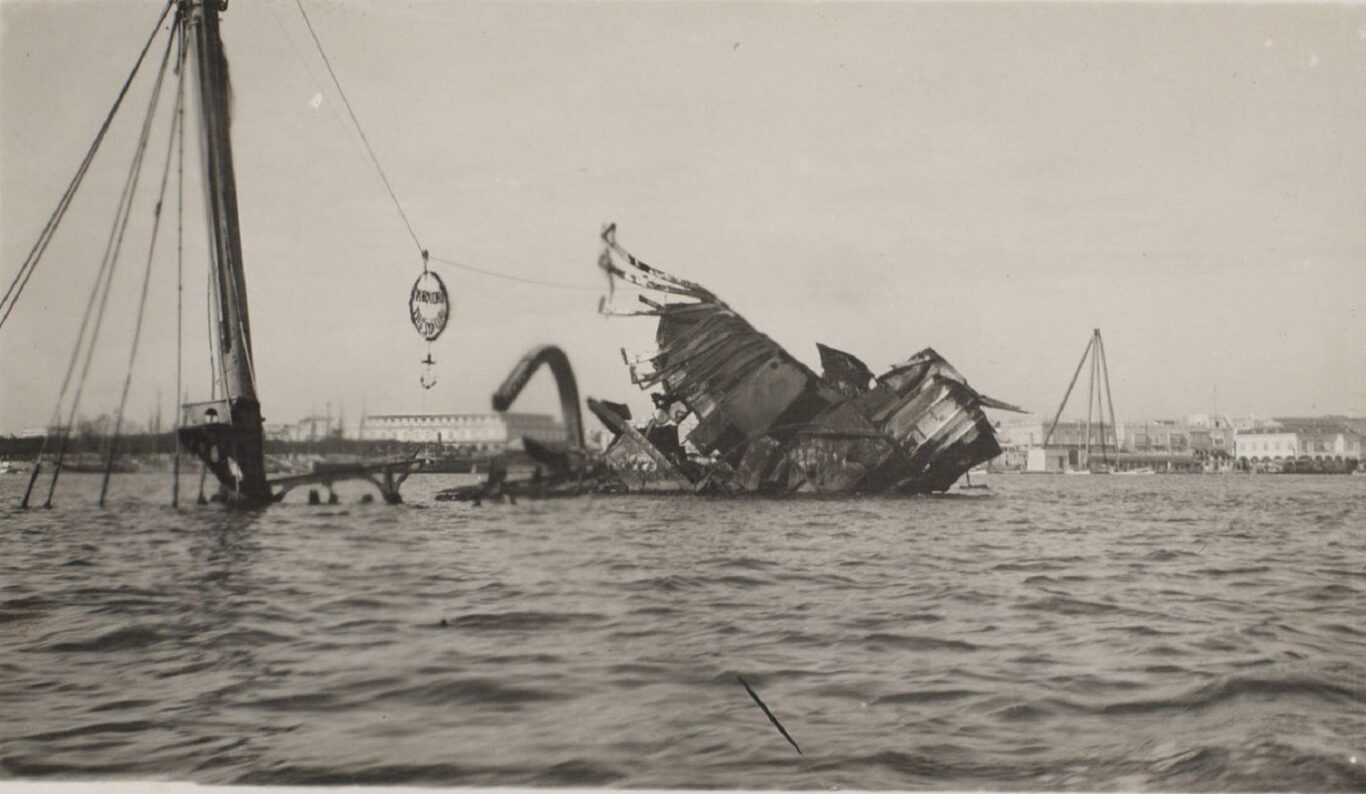
While it was profitable for the boatmen who rowed tourists there, it had the drawback of obstructing navigation for larger vessels, which is why Cuban authorities insisted on its removal. Meanwhile, Spain still awaited the truth about what had happened, seeking to clear its name. The contentious headlines of 1898 were replaced in the U.S. press by calls to refloat the ship, as the public wished to recover the remains of the seventy sailors trapped inside and demanded a second exploration to unravel the mystery of the explosion that had changed the course of history.
Related Posts


Under these pressures, around May 1910, the U.S. Capitol in Washington authorized funding for the removal of the Maine, and the work was entrusted to the naval engineering corps. They quickly packed their bags for the Cuban capital and, by early December, cranes from the Lackawanna Steel Company were already making their first excavations on site. The Cuban dredger Cayo Buba joined the effort, extracting an anchor in March and, much later, the bow. In addition, 275 workers were hired, a number that soon proved insufficient due to the amount of “dirty work” to be done.
The mast that had graced postcards of the nautical landscape was the first relic of the Maine sent to the United States. Planted as a symbol in the famous Arlington Cemetery, it now pays tribute to those who died in the explosion. The memorial was only part of the plan.
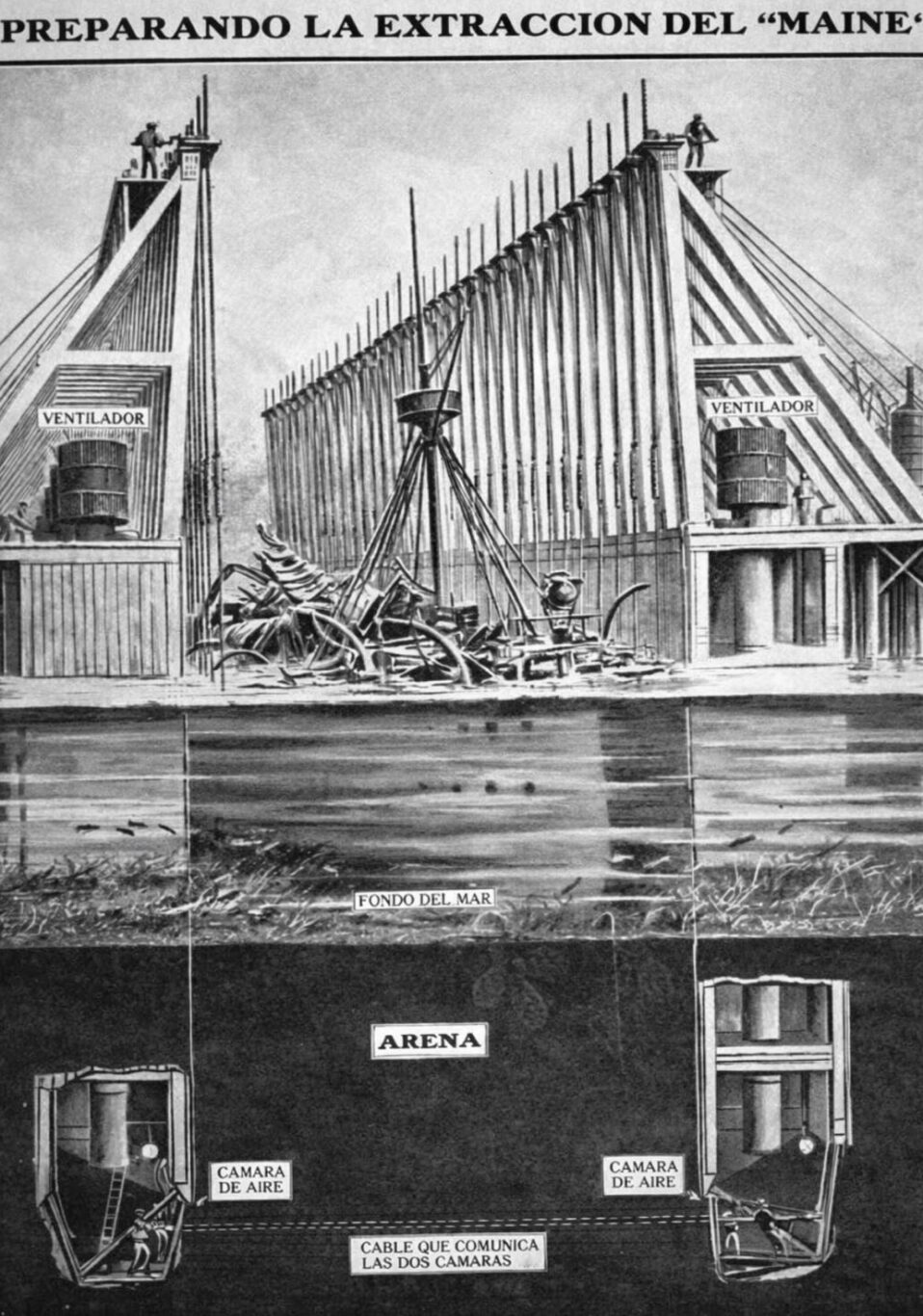
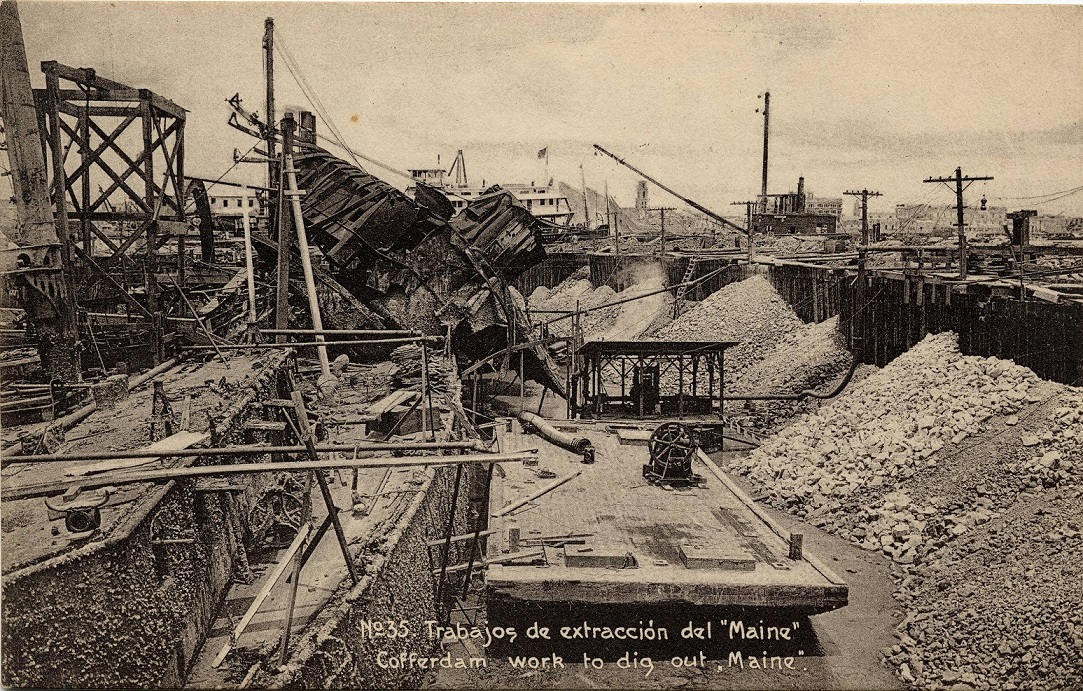
The idea was to expose the Maine. Hoping to achieve this, they would construct a cofferdam, a temporary structure or enclosure to contain the wreck. Then they would pump the water out and free the hull. The area also had to be cleared of rigging, machinery, armament, equipment and other debris that, scattered by the currents, already created a hazardous seabed. However, raising a hundred-meter-long battleship “on dry land” after a decade submerged represented a colossal challenge. No project of such magnitude appeared in the annals of engineering.
It was the event of the year. Not a week went by without the Diario de la Marina, El Fígaro or La Discusión chronicling the ups and downs of the salvage operation. Even a theater company adapted the story for the stage. From January 1911, the Molino Rojo theater presented the entertaining zarzuela “La extracción del Maine” (The Extraction of the Maine), whose performances ran for more than six months and, according to the Diario de la Marina, “it grows more popular every day.”
A corpse in the tub.
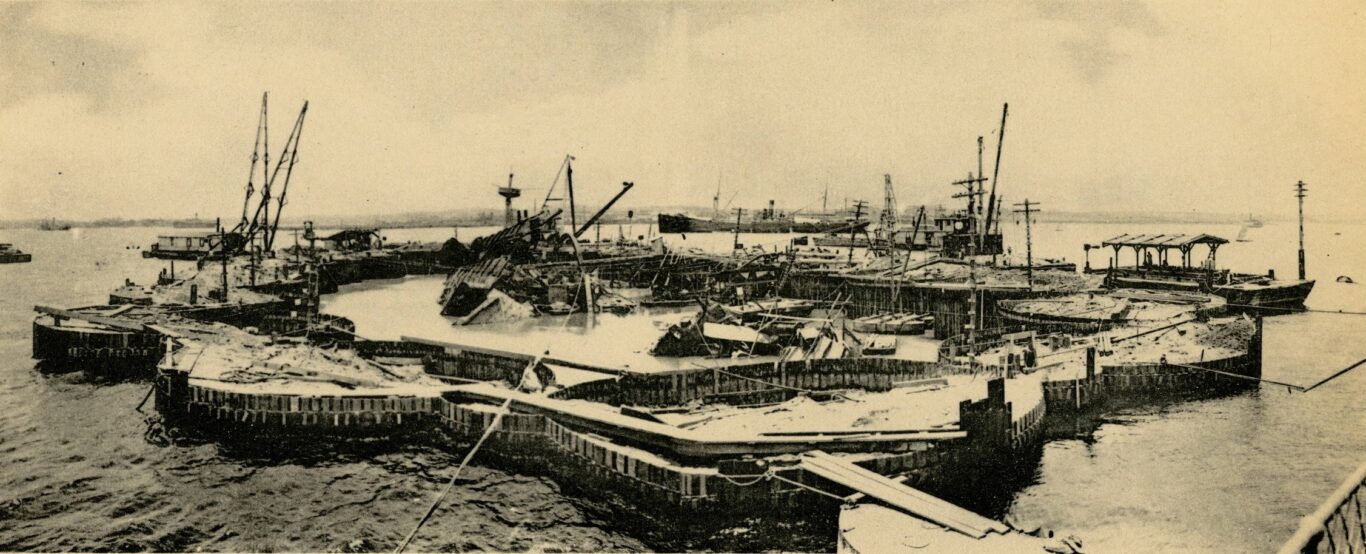
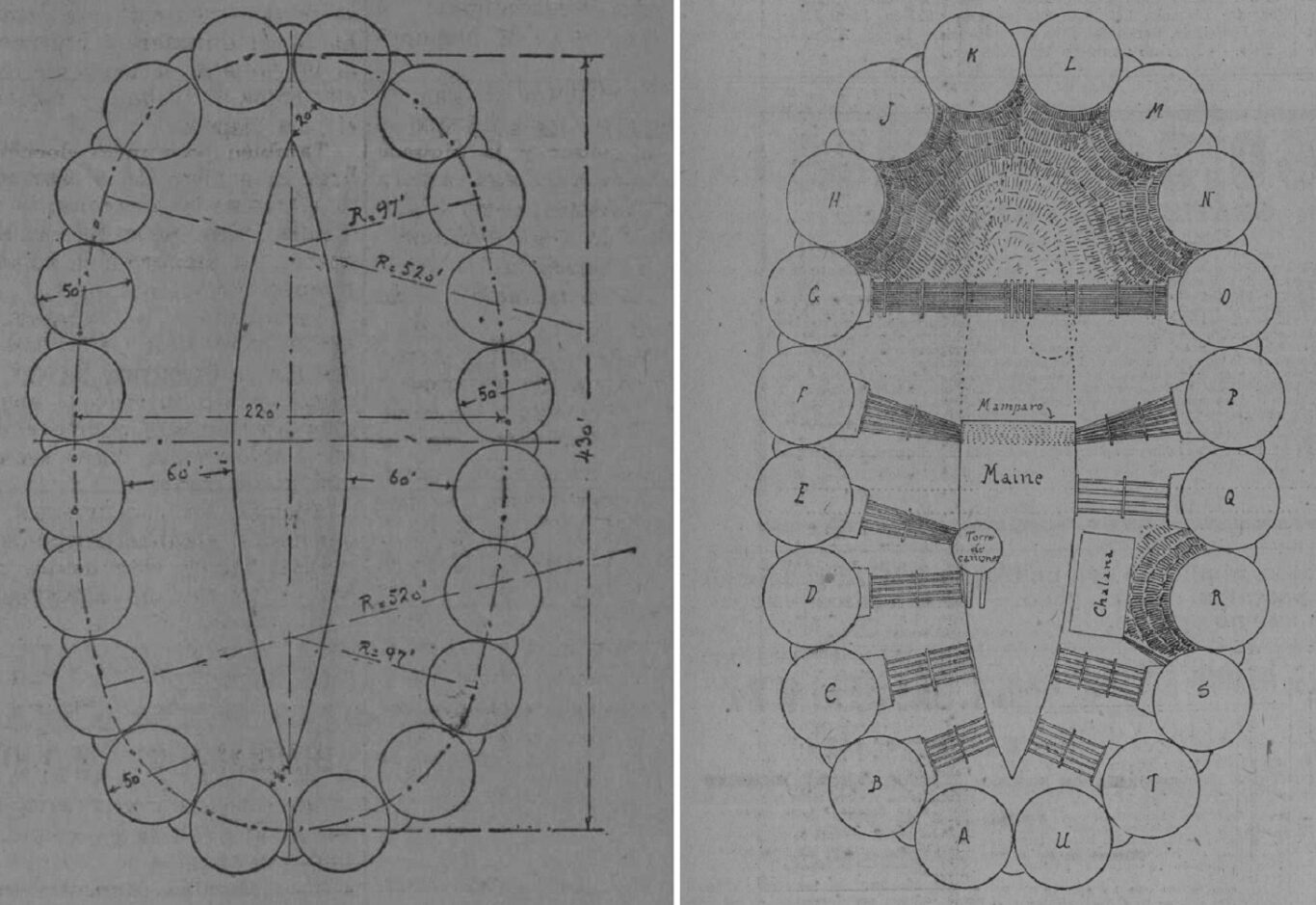
From the outset, the local press revealed the complexity of the maneuvers in the bay. First, they had to drive 3,190 rolled steel stakes 23 meters into the seabed using mechanical pile drivers. These bars — with tongue-and-groove Boardman joints — would serve as the base for assembling twenty cylindrical caissons — 25 meters high and 15 meters in diameter — which, like adjacent piles, defined the elliptical encasing around the Maine.
The focus of attention was on the joints between the tangentially placed cylinders, given concerns that the external pressure of the water and mud would eventually cause the walls of the enormous barrier to collapse. Anticipating this risk, the specialists reinforced the connection points with wooden stakes protected by a small, arched riprap. Both the cylinders — hollow in the center — and the closures between them were filled with compacted gravel and clay. This would provide greater strength and watertightness.
The construction of the cofferdam seemed to proceed at a leisurely pace, and months passed before the first jet of water was released. Several problems arose: the framework was not sufficiently watertight according to the calculations, it suffered tropical downpours, and at times the work was suspended when the allocated funds ran out. Even so, with surprising tenacity and efficiency, the commission of military engineers Black, Patrick and Ferguson, under the supervision of Brigadier Bixby, gradually overcame problems until they achieved absolute confidence.
From a technical standpoint, the cofferdam represented such a resounding success for the Americans that the Chicago Inter-Ocean called for it to be filled in to create a small island, where a monument to the rescue of the Maine could be erected. Conversely, the Diario de la Marina of August 4th quipped: “It is truly the height of safety. Even the smelly mud is being called upon for help. So the success of the cofferdam project with cylindrical formwork could not have been more brilliant. But the fact is that, despite the complete safety they proclaim daily, the project managers remain extremely wary.”
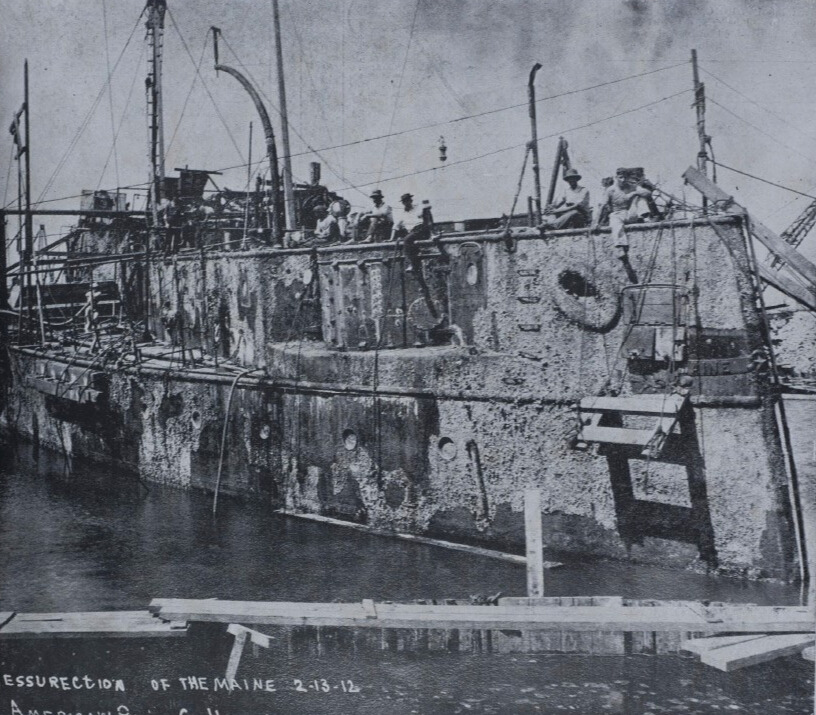
An inspection gave the green light to the oval enclosure to begin draining the contained water, which was done under extreme surveillance and with powerful pumps. As the water level decreased, the Maine revealed its immense chaos. It resembled a corpse lying on its side in a giant tub.
The Maine exposed
By mid-June 1911, the aft bridge with its mud-filled passageways, the officers’ quarters and the turret with its heavy-caliber cannons were visible. Over the course of weeks, the shattered keel emerged and it was confirmed that the entire bow was lost from frame 41 onward. Fifty-eight missing crew members, personal belongings, and other evidence also emerged.
But with the receding water level, the dreaded flexions in the wall began to appear. Would it hold? The question was on everyone’s lips. Like many buildings in “modern” Old Havana, the cofferdam ended up with pine shoring from end to end and thickened with mounds of earth.
The Diario de la Marina of August 10th reported on the ordeal: “The cylinders forming the cofferdam continue to tilt more and more due to the strong external pressure, but according to the engineer in charge of the works, there is no fear that any will burst and cause a catastrophe. However, as a preventive measure, the indicators placed on each of the twenty caissons are checked every half hour. To date, some 20,000 tons of stone have been thrown into the cofferdam, and another inner wall is being built to prevent mud from continuing to stick to the hull.”
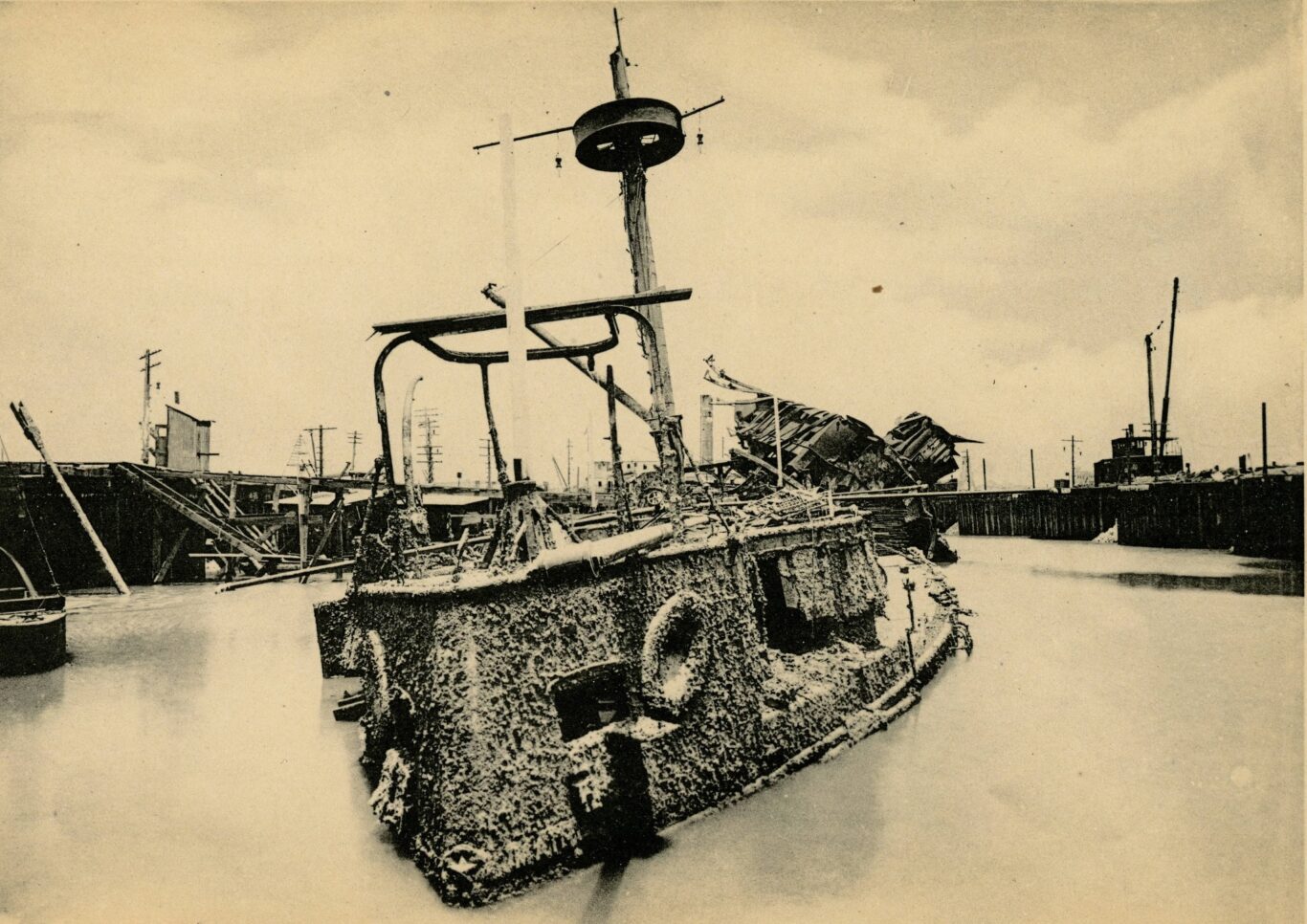
With the sea wall completely removed, the once magnificent ship was revealed as a jumble of rusted iron and frayed pieces, a prehistoric beast with a rosehip rind. The workers — what a long and arduous task they had — cleaned the hull and the mud-filled compartments with pressurized water, recovered the last human remains and cut away the most damaged parts with acetylene torches. Finally, they sealed the cracks, designed a valve system and attached — halfway between the bow and stern — a wood and cement bulkhead to facilitate refloating the ship.
This feat of science and human ingenuity allowed them to keep the Maine in a sort of open pit for six months, enough time to draw diagrams from various perspectives and capture detailed images of the wreck’s actual condition. Bixby himself told the Diario de la Marina that they had taken four thousand photographs (and four thousand glasses of whiskey). This meticulous documentation would be an invaluable resource for future researchers. On January 26, 1912, the salvage operation was completed. It had cost almost a million dollars.
Despite having the Maine exposed — unlike the first commission — and examining other evidence more thoroughly, the 1911 investigating team simply repeated the theory of its 1898 counterpart: the aforementioned mine. It wasn’t until 1975 that Admiral Hyman G. Rickover — considered the father of the U.S. nuclear submarine — provided new arguments. Resuming the case, Rickover and his team of experts refuted the conclusions of both reports, which had been developed under pressure, pointing to a fire in a coal bunker adjacent to the reserve ammunition depot as the most likely cause of the detonation. In other words, he attributed it to an accidental spark, not a premeditated attack.
Two days before the fourteenth anniversary of the disaster, the floodgate was opened to allow the water to slowly return to its domain. Shaking off its deep slumber, the mutilated colossus began to rise heavily. The warship no longer displayed the martial bearing of the war ship that, on January 25, 1898, moored to buoy number 4 in Havana harbor to safeguard the interests of its citizens during tense times. Now it resembled a barge, a floating coffin. All that remained was to tow it to its final destination.
Amidst foam and flowers
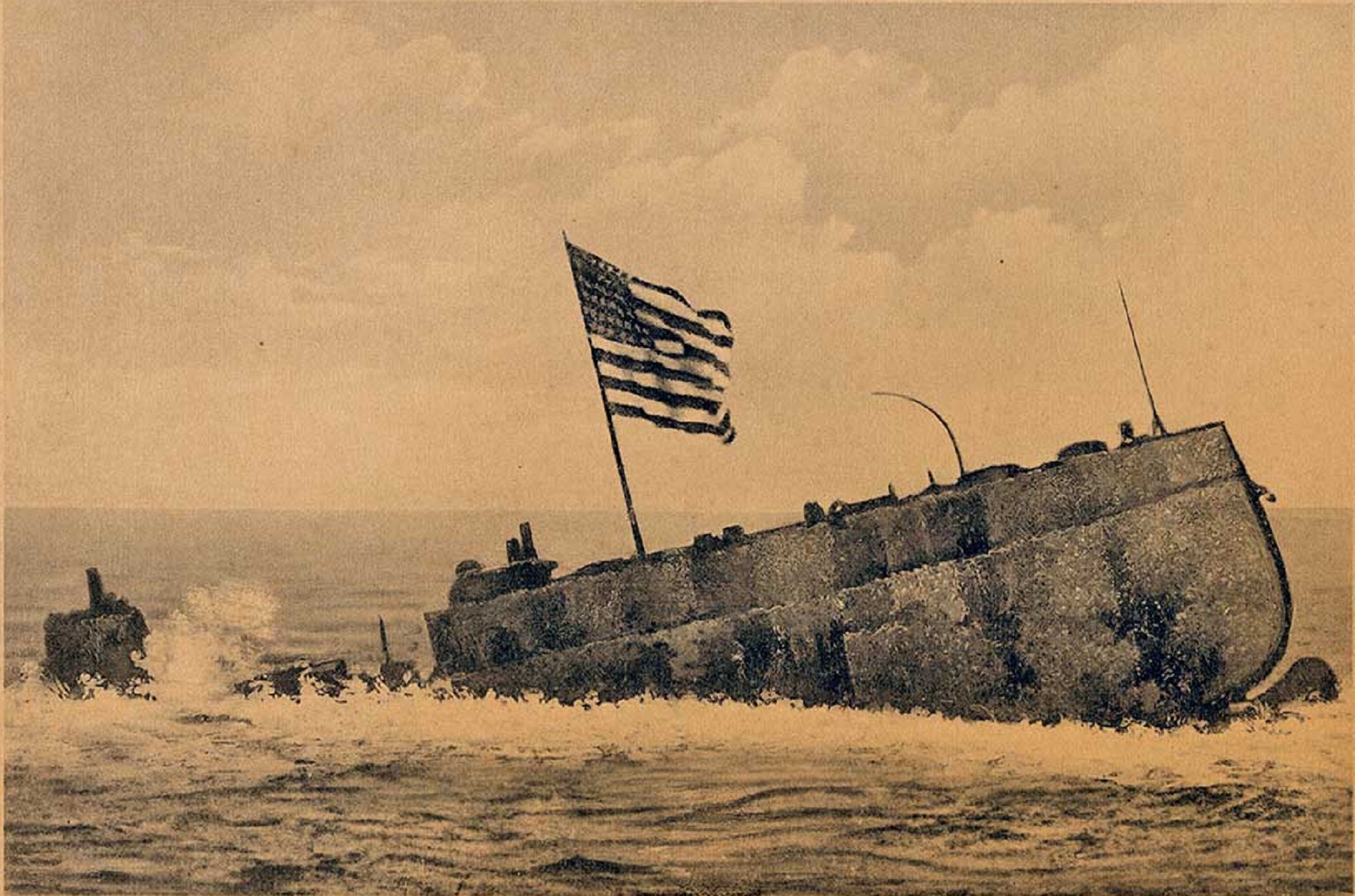
On March 16, 1912, the Maine was towed to its irreversible sinking. The day before, already free of the cofferdam, it was visited by many and prepared for its final voyage. It was adorned with flowers and a flag. Around two in the afternoon, it glided with the slowness of a funeral toward the harbor entrance. From El Morro, a military band played a farewell march as it passed, while the La Cabaña battery fired a ceremonial salute.
The sea was quite rough. The Maine heeled to port and starboard, like a dying soldier nodding his head off to his grave. The hull was taking on water, so they positioned a bilge pump. Offering an honor guard was a procession of vessels led by the battleship North Caroline, the cruiser Birmingham, and the Cuban coast guard ships Hatuey, Yara, Enrique Villuendas and 10 de Octubre; followed by dozens of tugboats, steamers like the Saratoga and the Olivette, yachts, and launches. A band aboard the North Caroline played the romance from Tosca, “E lucevan le stelle” (Farewell to Life).
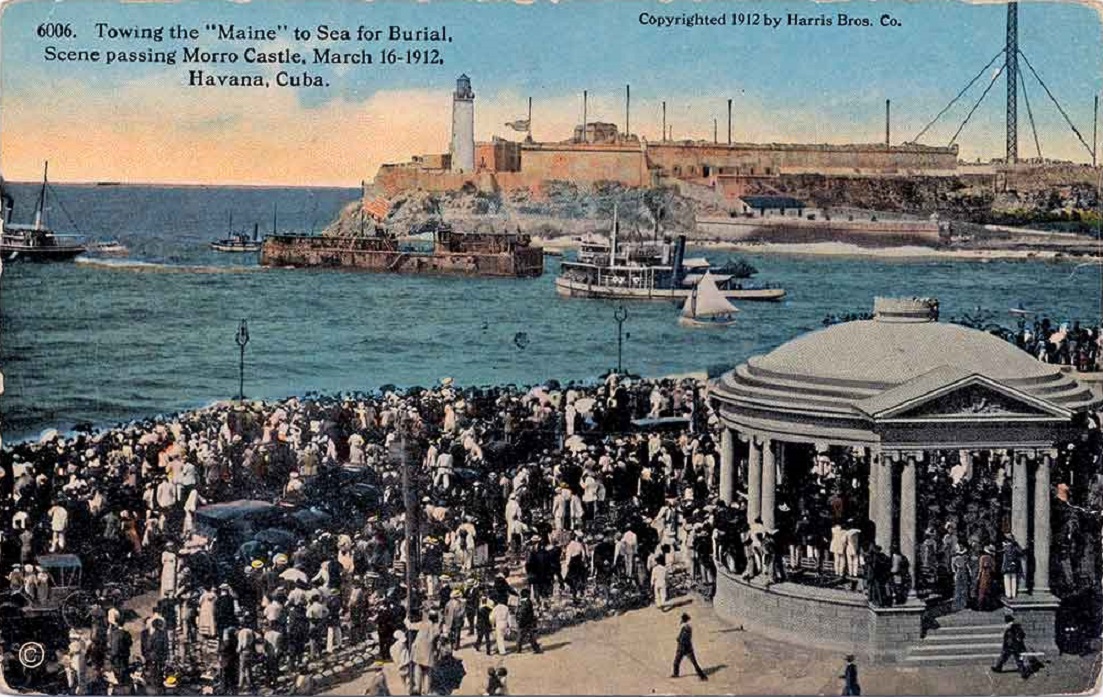
The sky, which had shone blue hours before, gradually darkened during the solemn ceremony. Nearly five miles from Havana, the North Caroline sounded three blasts to signal the halt of its engines. The escort ships formed a semicircle, sounded their sirens and some fired cannons in fervent homage; meanwhile, the mechanics uncovered the prepared hatches and proceeded to dynamite the venerated vessel. Instantly, water rushed into its bowels, expelling the compressed air in torrents.
At approximately 5:20 in the afternoon, before a hundred thousand pious eyes that stretched from the shore to that horizon of death, a leaden ocean swallowed the unfortunate ship that had fought against the waves like a mythological monster refusing to succumb to drowning. It sank with its propellers showing — a whimsical parallel to the iconic farewell of the Titanic — and plunged diagonally into a 1,150-meter abyss. A swirl of foam and flowers left its mark on the sea. But a ghost never truly dies or disappears. In the subtle cycles of history, the Maine seems to resurface, its drastic influence like a Trojan Horse in the Caribbean.