

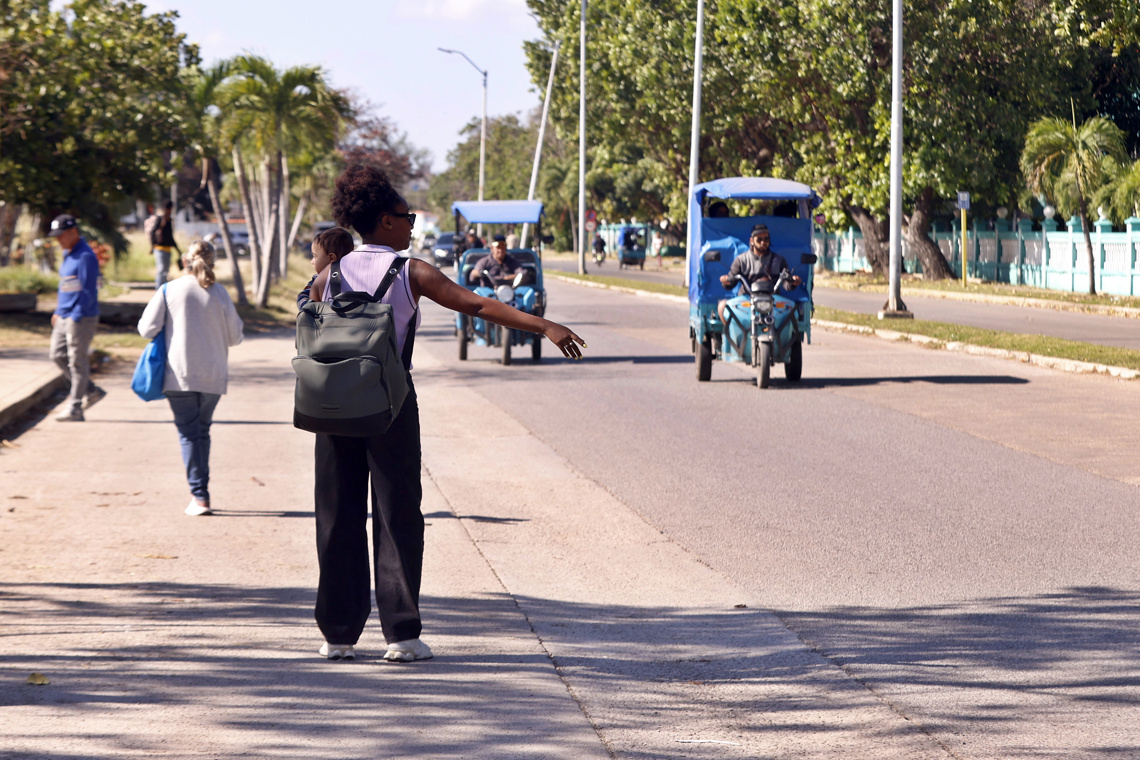
In Cuba, the shortage of fuel is no longer merely an economic problem; it has become a harrowing, everyday reality that has seeped into nearly every pore of family survival. It shows itself in the trips that are never made, in the products that never arrive. It is a lack that conditions every detail of daily life, far beyond hours-long blackouts, and stretches across the entire country, from the countryside to the cities.
Its impact is seen in the farmer—the small or medium-sized producer, the cooperative member, or the hired agricultural worker—who rises before dawn to tend fields of rice, plantains, or beans. People who have spent their lives working the land, patiently caring for each harvest. Many now have their production ready, yet no way to get it to market, especially to Havana. The truck is parked.
The agricultural market, or the street vendor selling in national currency, waits—but the goods do not arrive. Months of effort remain stranded in the countryside, and with them the income that families depend on to get by.
The same is happening in the cities. Private food shops cannot restock. Parcel delivery companies and online sales platforms cannot complete routes or make deliveries. Private transport operators are immobilized. Containers full of food sit stored in ports—protein at risk of spoiling. Everything is halted, everything on pause, dependent on something as basic as an engine being able to start.
This paralysis is neither new nor unexpected. For years, Cuba’s private sector has repeatedly asked the authorities for permission to import fuel through its own means—not to speculate or hoard, but to operate, plan, and sustain activities that are now essential to the country’s daily life.
In recent years, the State has been unable to guarantee a stable supply and, when fuel has been available, it has prioritized its own enterprises. The private sector has been left behind, even as its weight in the real economy has continued to grow.




Today, Cuba’s private sector is neither secondary nor complementary. In many respects, it is the main pillar of everyday supply. The private sector imported $2.2 billion in 2025, and Cuban authorities expect that figure could reach $2.6 billion this year. Economists estimate that between 60% and 70% of those amounts correspond to food.
Private food imports have grown to match—and in several categories surpass—those of the state. It is small and medium-sized private enterprises (mipymes) that now bring in much of the protein, grains, oils, and other basic goods that are then stored, distributed, and delivered to neighborhood shops across the country.
This system is not theoretical. It has scale and urgency. Right now, some mipymes have hundreds of containers stuck at the Port of Havana, loaded with food destined directly for public consumption. They are not there because of a lack of buyers or external obstacles, but because there is no fuel to move them inland. Each passing day, the impact is not only financial—it is human. It is food that does not reach tables.
The same is true for mipymes dedicated to public transportation. Private vehicles that for years eased urban and interprovincial mobility are no longer carrying passengers—not because demand has disappeared, but because fuel has.
Each suspended route has immediate consequences: mothers unable to take their children to the doctor; older adults who cannot reach hospitals or appointments; families stranded in provinces, unable to travel for work or to reunite.
That is why allowing the private sector to import fuel is a practical, urgent, and deeply human decision. Granting energy autonomy to this sector means restoring movement to the country’s private economy. It means farmers can sell their produce; transport operators can circulate again; neighborhood shops can stock goods; food can arrive.
The benefit is not for an abstract entrepreneur. The primary beneficiary is the Cuban people. It also benefits a mother, a sister, or a child whose family lives abroad. We all benefit from the effort and risk assumed by the owners of thousands of mipymes that sustain supply chains on which our families depend, inside and outside the island.
Here, a legitimate question arises: if the United States administration has repeatedly expressed its support for economic opening in Cuba, is this not precisely one of its clearest expressions? Is allowing the private sector to import fuel not a real, concrete, and measurable economic opening that recognizes the weight, role, and responsibility this sector already holds in the country’s current economy?
For that reason, this measure should be welcomed—not attacked or restricted, as some local actors propose, many of whom no longer maintain direct family ties to the island.
Any attempt to block or limit private fuel imports would be profoundly counterproductive. It would strike the private sector, yes—but above all it would strike the Cuban people, who increasingly depend on these networks for food and transportation. And, paradoxically, it would end up benefiting a State that today lacks the capacity to provide fuel in a stable way.
Fuel that arrives through private channels, from wherever it may come, should not be read as a political gesture or a “trick” by the Cuban State. It is, in reality, an opening—an unprecedented, concrete opportunity. A practical response to an urgency that weighs on millions of Cubans and demands immediate solutions, not automatic suspicion.
Because in Cuba, when fuel runs out, it is not only engines that stop. The movement of daily life dims: the table is left incomplete, the road closes, care arrives late. And when that happens, the cost is not political or economic; it is human, intimate, and it touches us all.






