There are topics that do not allow for simplification, and this is one of them. When speaking about racism affecting Afro-descendant Cubans, it must be done with memory, honesty, and an understanding of long-term processes.
I start from something that is clear to me: before 1959, there was indeed racism in Cuba. There were very concrete social, economic, and cultural barriers. Black and mixed-race Cubans were, in general terms, at the lowest level of the social scale, with less access to certain spaces, fewer opportunities for upward mobility, and a heavier burden of discrimination. There are many examples. Even the figure of Fulgencio Batista carried this racial issue at different moments within Cuban politics. To deny that would be to falsify history.
With the triumph of the Revolution, Fidel Castro promised social and racial equality. An important part of that promise was fulfilled. The Revolution dismantled legal barriers, expanded access to education, healthcare, sports, and culture, and allowed many Black Cubans to become professionals, doctors, scientists, teachers, military officers, artists, athletes, and state officials. I do not believe it is right to erase that for the sake of political convenience.
There was a period in which Afro-descendants in Cuba were able to advance significantly, driven by the changes brought about by the revolutionary project.
But acknowledging that progress is one thing, and pretending that history can be frozen as if the issue had been permanently resolved is another. On the contrary, decades later, and especially from the 1980s onward, it became evident that social changes did not fully eliminate disadvantages, vulnerabilities, or discrimination against Black and mixed-race individuals.
History continued moving. Migration had much to do with what came next. The first major wave leaving Cuba after the Revolution was not just any wave. It was largely composed of the upper class, wealthy, powerful individuals with property, connections, capital, and the immediate ability to leave. It also included people linked to the Batista political apparatus and sectors that understood early on that the country that was emerging would not be theirs.



When I think about that exodus, I am reminded of the image immortalized in the second part of The Godfather (Coppola, 1990): New Year’s Eve night, the elite dressed in tuxedos, power, celebration, and suddenly the news that Batista is gone, everything is collapsing, and they must run to the airport, the port, anywhere, because the world they knew had ended. Of course, the film is a representation, but it captures very well the imagery of that flight of privileged Cuba when power slipped from their hands.
Then came the second wave, and I do not want to oversimplify this because it is essential: Boca de Camarioca, 1965, a boatlift in which thousands of Cubans departed from that port town for Florida. This was, largely, the departure of the Cuban middle class, professionals, skilled workers, families beginning to see that the country being built did not align with their expectations. And in both waves, there is something that cannot be ignored: migration was proportionally more white than Black.
Why do I say that Black Cubans did not migrate proportionally like white Cubans in those early stages? Because, in my view, there was a combination of powerful historical reasons. First, within Cuba there was a process opening real opportunities for social mobility that had not existed before. Second, across the Florida Straits, the United States was experiencing one of the most racially tense periods in its modern history: Martin Luther King Jr., Malcolm X, Angela Davis, civil rights struggles, open confrontation. The Cuban Revolution used that contrast as propaganda, but the contrast existed. It was real.
In that context, it is not difficult to understand why Black and mixed-race Cubans had additional reasons not to migrate in the same proportion as whites during those decades, not because they did not want to leave, but because there were opportunities on the island and real racial uncertainty outside.
And here I arrive at the core point. Decades later, when Cuba enters a partial economic opening, when small and medium private enterprises emerge, when remittances become the backbone of thousands of households, when online purchases from abroad and family financing of private businesses become common, inequality reappears with a different face. The legal barriers of the pre-1959 era are gone. Now the barrier is access to capital. And capital in today’s Cuba largely comes from the diaspora.
According to official Cuban census data, Afro-descendant Cubans, including Black and mixed-race populations, constitute a large segment of the country, and likely a much greater share than reflected in official figures.
If the first major migration waves were disproportionately white, and if from those waves come many of the family networks that today send remittances, finance imports, support entrepreneurship, and sustain businesses, then the result, although not explicitly designed that way, has a clear impact on the lack of opportunities for Afro-descendant Cubans.
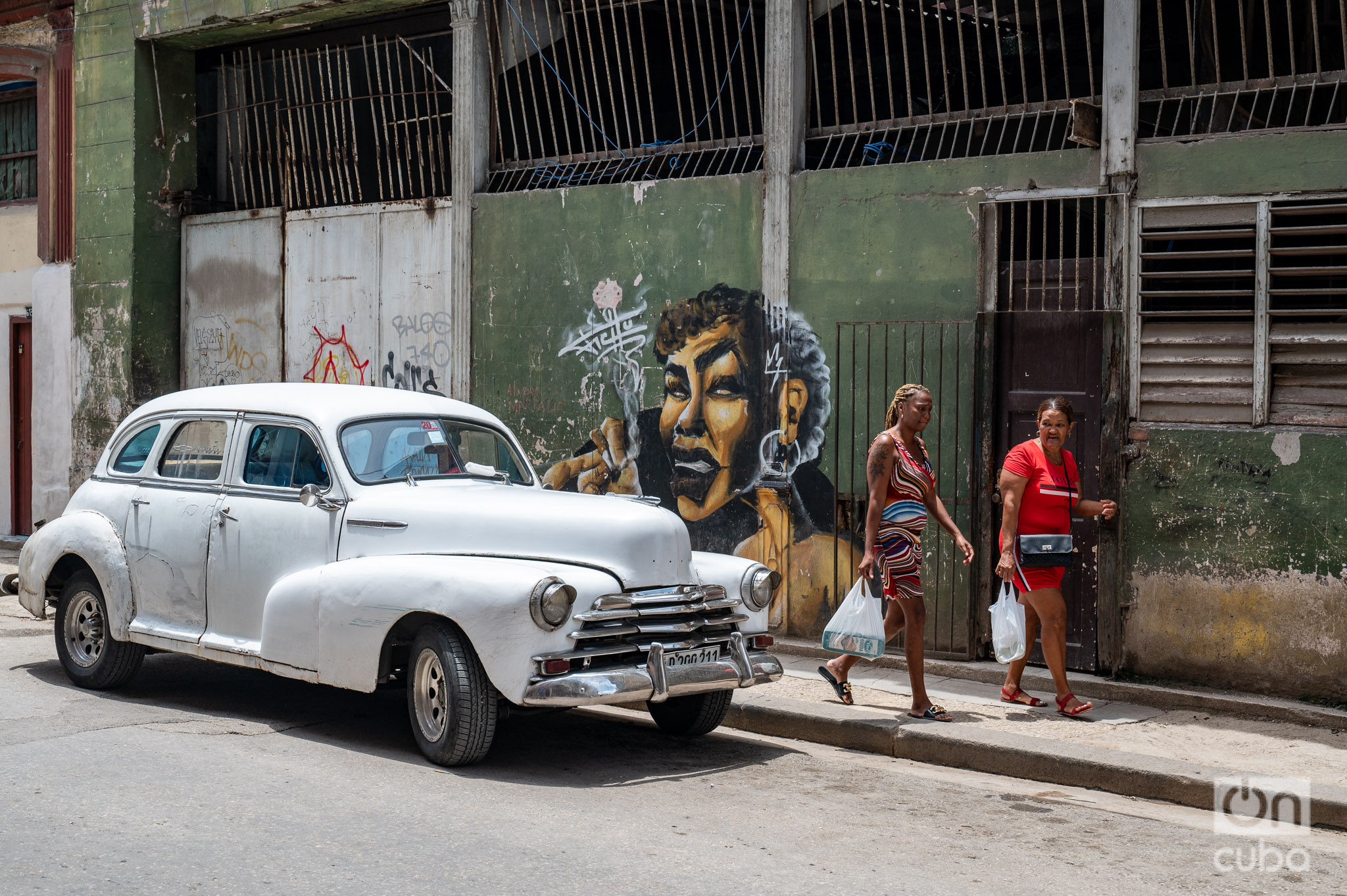
That is why, when one walks through Havana or any province, one sees something painful. One sees who tends to be the owner and who tends to be the employee. One sees who imports and who carries, who sits at the table and who stands at the door. One sees luxury restaurants, private businesses, dollarized circuits, and does not see proportional representation of Black and mixed-race individuals in ownership, investment, or wealth accumulation. On the contrary, they are overrepresented as guards, doormen, lower-level workers. There are exceptions, of course. But anyone who denies the trend is choosing not to look.
And for me, that is a silent tragedy: Black Cubans, who once felt the nation was finally opening space for them, have once again been left behind in an emerging Cuba driven by external money, remittances, and unequal entrepreneurship. I do not say this to blame any one actor. I say it because this is a community that needs to be seen, understood, and addressed. One only needs to walk through neighborhoods to see it, without statistics.
The rights and opportunities of this segment of the Cuban population, where vulnerabilities were concentrated then and are again today, must be addressed specifically, without encouraging any form of segregation.
History does not repeat itself exactly, but it rhymes
Cuba achieved, for a time, something that seemed impossible: reducing a racial inequality that had persisted for generations. But today, without being explicitly intended, that inequality is returning under a different logic, more silent, harder to identify, but just as real.
It does not come from a law or a speech. It comes from unequal starting conditions. Among Afro-descendants there is accumulated poverty, marginalization, less access to professional education, lower qualifications, lower wages, worse working conditions, poorer access to housing, among many other hardships. Unequal access to capital, lack of diaspora connections, and reduced access to remittances clearly determine who can invest in a business and who cannot.
Much of this reality stems from the country’s migratory history and its consequences. And as long as it is not spoken about, not confronted, avoided out of discomfort or convenience, that gap will continue to grow.
Because equality is not a permanent achievement. It is a fragile balance. And today, in Cuba, that balance is breaking once again.
In the midst of the very delicate political climate Cuba is experiencing today, where there is already talk of regime change, outside of Cuba, particularly in the United States, where many of these political and economic interest groups are concentrated and organized, especially within our own community, there is a question that cannot be left out: what will happen to the Afro-descendant population if that change comes? Who will ensure they are not once again left at the end of the line? Because today this community already starts from a disadvantaged position, with less access to capital, fewer support networks, and less presence in the spaces where wealth is being built. If this is not addressed now, the risk that they will once again bear the heaviest burden of the transition is very real.
It is not enough to recognize inequality. We must build the instruments to correct it. That means creating mechanisms for access to capital, from microcredit to direct investment, supported by professional structures that allow historically disadvantaged sectors to participate as owners in the country’s emerging economy.
What does that mean in practice? It means creating a structured national and diaspora-backed fund specifically designed to expand access to capital for historically disadvantaged sectors, particularly Afro-descendant Cubans. This fund could operate through a combination of private investment, diaspora contributions, and international partnerships, with transparent criteria and professional management.
It would provide microcredit, low-interest loans, seed capital, and growth financing, as well as instruments such as credit guarantees, matching funds, and equity participation, not only to support small businesses, but to ensure meaningful ownership and participation in larger, higher-value sectors of the economy.
Alongside this, training, financial literacy, and technical support must be integrated to ensure sustainability and scale, so that access to capital translates into long-term wealth creation and not just short-term survival. Without mechanisms like this, the market will continue to reproduce the same inequalities, concentrating ownership, opportunity, and economic power in the hands of those who already start ahead, even without intending to.
*A shorter version of this text was also published in the Miami Herald.