Cuban political debate lacks sufficient formal venues for expression; instead, it winds its way through channels that are sometimes highly convoluted and tainted — such as social media or pamphlets of one political stripe or another. Moreover, it tends to be a high-risk sport for those who dare to voice uncomfortable ideas in public (regardless of their political leaning).
This month, OnCuba marks its 14th anniversary. Since its inception, one of its core objectives has been precisely this: to provide information and — drawing upon the diverse perspectives of our columnists and journalists — to attempt to influence the trajectory of a process of economic and political reforms that has appeared irrevocable since 2007.
It was in that year that Raúl Castro delivered a speech in Camagüey, in which he made it clear that “to have more, we must start by producing more and doing so with a sense of rationality and efficiency,” and that “to achieve this objective, we will have to introduce whatever structural and conceptual changes prove necessary.” This is the famous “glass of milk” speech — a passage which, incidentally, was excised from the transcripts published subsequently. Months later, he also acknowledged the “excess of prohibitions” existing in Cuba.
That process — initiated around that time — reached its culmination in 2011 with the Guidelines for Economic and Social Policy. This was followed by the Conceptualization of the Economic and Social Model and, more recently, the National Development Plan through 2030.
In September 2010, journalist Jeffrey Goldberg recounted that when Fidel Castro was asked about Cuba’s role as an “exporter of revolutions,” he replied: “The model doesn’t even work for us anymore.”
Ten years earlier — on May 1st, speaking from the Plaza while still fully exercising the duties of his office — he had planted this enduring phrase: “Revolution is a sense of the historical moment; it is changing everything that must be changed.” A kind of mantra that is invoked and betrayed with equal frequency.
A friend reminded me a few days ago of a speech given by Miguel Díaz-Canel in July 2020 upon the approval of yet another plan — one of so many: the “Socio-Economic Strategy to Boost the Economy and Confront the Global Crisis Caused by COVID-19.” In it, he stated: “The worst risk [of implementation] would lie in failing to change, in failing to transform and in losing the trust and support of the people.”
For twenty years, we have been hearing talk of change from the corridors of power in Cuba. Yet, a growing segment — perhaps already a majority — of Cubans, both on and off the island, attribute the current crisis to the government’s “inertia,” having allowed years to pass without adopting decisions that were recommended and agreed upon across multiple sectors — and not just in the economy.
Squandering time, the people’s will to endure and opportunities for regeneration — in a lethal combination with the escalating U.S. sanctions against the island — has brought us to this precipice.
In this context — while people’s lives deteriorate to critical levels, and the country’s capacity to sustain its sovereignty simultaneously wanes — those who claim to support that very power periodically take up arms to attack those who propose or demand — depending on the tone — changes to the island’s economic and political model.
The “super-revolutionaries”
I identify them as a sort of “super-revolutionaries” — those who are more extreme in their views — though it must be acknowledged that they have lost much of their visibility and impact in today’s society, after having inflicted so much damage through baseless accusations and the quasi-police dossiers to which they had access. Life is gradually putting them in their place.
Today, more clearly than ever, they embody the sectarianism that was traditional and largely extinct in other times. And, just as back then, it is reasonable to assume that they are not lone wolves howling in the dead of night, but rather voices emerging from within the sectors of palatial power. With all that this entails.
If a call for a change in the model or “reforms” (a word that has been anathematized) is put forward by a group alternative or critical to the government, it is instantly labeled as liberal propaganda, as the promotion of capitalism — specifically “disaster capitalism” or the “shock doctrine,” annexationism, among other such nasty comments.
Yet, at the same time, it is difficult to find within their statements concrete proposals for “changing what needs to be changed.” That is why I have often asked myself: What, exactly, do those who oppose reforms in Cuba actually want?
The blockade, yes
Let us take their premises seriously, for some are true and deserve to be clearly articulated.
The blockade is not merely a contextual detail to be mentioned for the sake of appearing rigorous, only to be subsequently dismissed with a “but.” It has been a dominant structural variable in the Cuban economy for over six decades — though its most severe impact was unleashed in the 1990s, when Cuba found itself without allies and with an economy utterly dependent on Soviet oil. Once again oil.
Any analysis that relegates the blockade to mere background while elevating the “government’s erratic policies” to the status of primary cause is engaging in a political maneuver, not an analytical one. Acknowledging the reality of the blockade only when it serves one’s purpose is not rigor; it is rhetoric.
That said, let us note that every plan and strategy devised from the beginning of Raúl Castro’s presidency to the present day was conceived with the blockade in mind — and, indeed, while explicitly denouncing it. In every instance, the focus remained fixed on a horizon of possible transformation, despite the blockade; one might even argue that thanks to it, insofar as it incentivized solutions that in a different context might never have been contemplated.
In this sense, constantly falling back on the argument that the U.S. blockade is the primary cause of the current crisis — that it has stymied economic takeoff, particularly in the wake of the pandemic — conveniently overlooks the fact that the objective was supposed to be, precisely, to overcome the crisis by rendering the blockade as irrelevant as possible to Cuban economic and social life.
This objective has gone largely unfulfilled and this line of reasoning has been consistently obscured. As I wrote on one occasion ten years ago: “The blockade is a unilateral policy, the solution to which is bilateral.”
It is also true that Cuba has already demonstrated its capacity to survive without massive external support — at least for a time. The hardest years of the Special Period were devastating, yet the country managed to overcome them through reforms such as the decriminalization of the dollar and the consequent establishment of a foreign exchange market, the development of tourism, the granting of land in usufruct, the implementation of agricultural markets with free price formation and the promotion of foreign investment, among others. All of this occurred before Venezuelan oil entered the equation, and amidst an active blockade and heightened threats. (The Helms-Burton Act was signed in 1996.)


Following a precipitous drop of over 30% in GDP between 1990 and 1993, the Cuban economy grew by 0.6% in 1994 and continued to expand in subsequent years: 2.5% in 1995 and 7.8% in 1996. To attempt to erase this chapter of history in order to construct a narrative of perpetual structural dependency is, effectively, to intentionally amputate one’s memory. However, it must also be stated that we are no longer in the 1990s, and it is impossible to simply superimpose one era onto the other.
The market, too
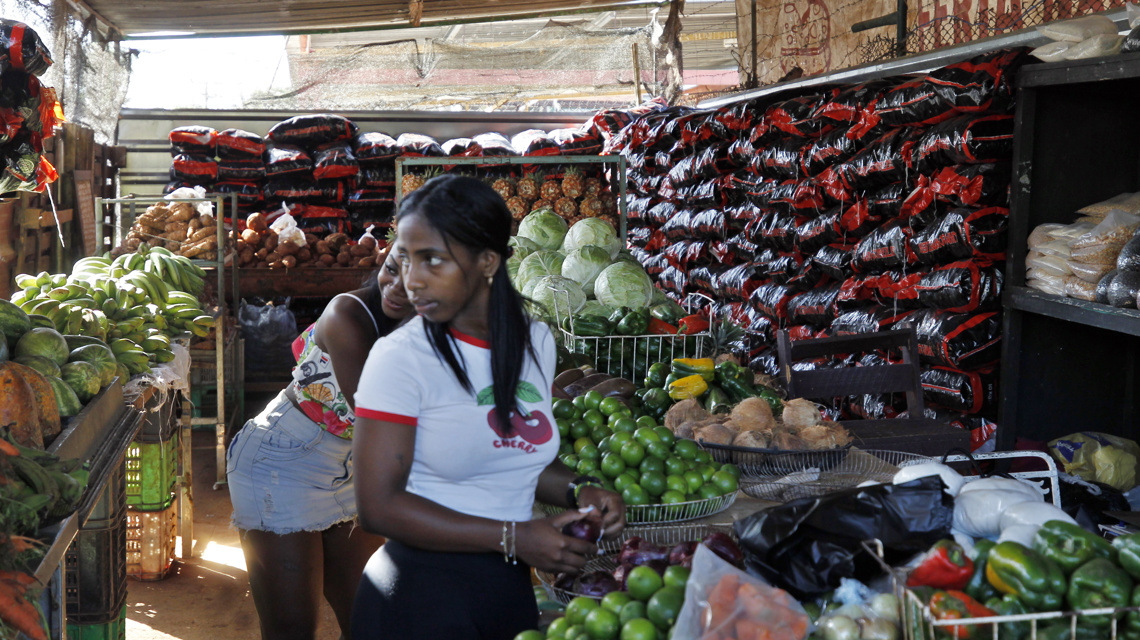
No one doubts that market-oriented reforms — such as those promoted by the 2011 Guidelines themselves — are not ideologically neutral. Nor are they, per se, a source of equality, unless they are regulated by a State that actively exercises its redistributive functions.
Opening up to the market generally benefits those who start from a privileged position — whether due to access to capital, foreign currency, commercial networks, insider information or know-how. Or those who possess all of these advantages.
Cuba’s most dynamic private sector today is not a dispersed, entrepreneurial middle class with a naïf style. Although I lack precise data, I venture to assert that it is a relatively concentrated group characterized by high barriers to entry. This fact must be acknowledged.
Opposition to the market constitutes one more alternative of positioning strategy among many others. And it is healthy for the country to have intellectuals and politicians, artists and influential figures dedicated to anticipating and highlighting trends that exclude the majority from benefiting or that compromise the nation’s security, integrity and sovereignty, for instance through a hypothetical mass privatization of assets.
The reality, however, is that in Cuba, some of these “super-revolutionaries” systematically choose to exonerate the “leaders” and target only those who hold no decision-making responsibilities, thereby allowing themselves to merely skim the surface of purely ideological challenge.
Sometimes these skirmishes amount to sheer vulgarity in Facebook posts, employing strings of adjectives, accusations, one-sided narratives, conjectures and sophisms of every stripe. At other times, they come wrapped in analytical language, complete with erudite references and bibliographies.
The question remains: What do they want?
Pointing out that “disaster capitalism” operates by exploiting crises does not answer the question of what Cuba is doing while the crisis unfolds.
Demonstrating that the emerging private sector has its own distinct interests does not resolve the structural energy crisis, nor does it erase the fact that power outages were already unbearable for both the population and the economy long before January 3rd.
Recalling the “Special Period” of the 1990s as proof of Cuban resilience is both fair and necessary; however, that period also came at the cost of mass emigration, a decade of severe impoverishment and transformations that the Cuban government itself was compelled to implement — reforms that, at the time, were similarly criticized as “concessions to capitalism.”
The stance that asserts, “not like this, not for them, not under these conditions,” may be absolutely accurate in its diagnosis and at the same time absolutely insufficient as a response. What, then, are the options?
Waiting for a shift in the geopolitical context. This is the most passive of all approaches: waiting for the U.S. administration to change — or at least to be weakened following the midterm elections in November — or waiting for Venezuela to stabilize and resume its shipments, or for some other external ally to step in and assume the role of fuel supplier. It is not a far-fetched gamble, yet it either ignores or dismisses the time factor.
While waiting for a favorable geopolitical chessboard to take shape — a scenario entirely beyond anyone’s control — the fabric of Cuban society continues to fray. Emigration, which has become a veritable drain, shows no signs of abating and the population’s material conditions continue to deteriorate in ways that may prove exceedingly difficult to reverse. Cuba cannot simply freeze reality while it waits for the world to shift in its favor. That is not going to happen.
Resistance as a value in itself. They seek to uphold the model, come what may, because any concession to the market is the first step toward socialist dissolution — as the Soviet experience supposedly demonstrated. Confusing form with substance prevents one from distinguishing between reforms that preserve the public and those that destroy it.
Incidentally, many of those forms of public management supposedly characteristic of socialism have already been dismantled, often without any public debate or collective decision-making. On the other hand, there is the massive problem of demanding resistance from those at the bottom while accumulating privileges from the top. As I have stated on other occasions — and continue to maintain — the only offer extended to the Cuban people cannot be the example of Numantia.
A third position — were they to acknowledge it honestly — would actually be plausible: it would entail admitting that they simply cannot find a structured alternative. However, this would require open and honest dissent from the continuity-driven, static policies currently maintained by the government. It would also require placing on the table genuine doubts regarding which direction the compass should point, given that the proposed solutions are often perceived as being worse than the very problems they purport to solve. This could be occurring.
The problem is that saying “no to this” without adding “yes to that” does not constitute a political program; it is merely a stance. And in a crisis of this magnitude — such as the one Cuba is currently experiencing, where everything is at stake — mere stances neither feed nor heal anyone, nor do they deliver electricity to industries and homes. What is needed is action and taking risks.
Binarism
There is an accusation that this trend levels against those who propose reforms: they claim that others engage in binary thinking — that they reduce the entire debate to a choice between “change or perish,” or “reforms or bombs.” This accusation may be valid in many instances, but does not apply in every case. Some texts do indeed construct this dichotomy deliberately as a mechanism for political pressure. Others, however, do not. What an honest analyst requires is to trace the train of thought of an author or a publication, rather than fantasizing over select phrases taken out of context. That is the bare minimum expected of them.
It is worth asking whether binarism manifests itself on only one side. Because the response “capitalist reform or the integrity of the revolutionary project” is also binary. It carries the additional problem that the second term — the integrity of the project — describes something that Cuba has spent decades building, losing and rebuilding in ways that are not always publicly acknowledged. Let’s be honest: how much of the socialist remains in Cuban socialism? Furthermore, how much sovereignty do we have left?
Cuba’s economy today is not a classical socialist economy, but rather a fragmented one — featuring a degraded state sector; an informal market that has long set real prices unchecked within an inflationary environment; and a private sector that is already established, already concentrates power and already makes decisions that impact society as a whole. And how! Just ask in any neighborhood where people buy their daily food.
At the risk of making mistakes
What, then, do those who oppose reforms in Cuba actually want? Behind this lack of proposals may lie a fear that what is to come will be worse than what exists. The memory of transitions that ended in disaster lends credence to this fear; as does a deep mistrust of those who turn the crisis into a business opportunity. Such fear is understandable, yet it is insufficient to evade the responsibility of offering a project. Behind this absence, one typically finds — above all — political opportunism and intellectual rigidity.
Cuba cannot afford the luxury of a debate in which participants know precisely what they reject — and reject intransigently — and remain unsure of what they ought to propose. Especially when such negation emanates from sectors that continue to enjoy spaces of privilege, whether symbolic or material.
One cannot build a country upon negation. What is needed are solutions, political creativity, the courage to call problems by their proper names and to act, even if it entails the risk of making mistakes. A risk which, for Cuba today, is hardly the greatest one of all.