By Claudia Duperión (EFE)
Among the many cafes in Havana, one unique spot is beginning to turn heads. The novelty: it employs a dozen individuals with Down’s syndrome and those on the autism spectrum, offering them a space for social and economic integration right in the midst of Cuba’s ongoing crisis.
Liva is the name of this small establishment, which stands out thanks to the vibrant yellow of its façade, located at the intersection of Mazón and Neptuno — a central corner in Havana. The cafe is named in honor of Liván Valle, one of its hosts and the son of Mariolis Escobar, the director of the inclusive project Cielos Abiertos, from which this initiative emerged.
“Just like us, our children have dreams: they want a profession and fair pay for their work; they want to feel empowered. And I believe Liva contributes to making that happen,” Escobar told EFE.
The idea, which officially launched on March 21, took shape in February. At that time, following a U.S. oil embargo against the island, the Cuban government implemented an emergency plan that entailed restructuring working conditions within the state sector in an effort to save fuel.
Although the prevailing economic climate hardly inspired optimism, Escobar decided that this very moment was the right time to launch a venture — together with her family and with the assistance of other parents — in order to create a new opportunity for their children, who had been staying at home without work.
The cafe’s staff also includes a special education specialist and a psychologist. Escobar emphasizes that she “likes to surround herself with people who are sensitive to the community and possess some knowledge regarding individuals with intellectual disabilities.”
“They are the souls of the Liva project,” adds Valle excitedly, referring to his colleagues.
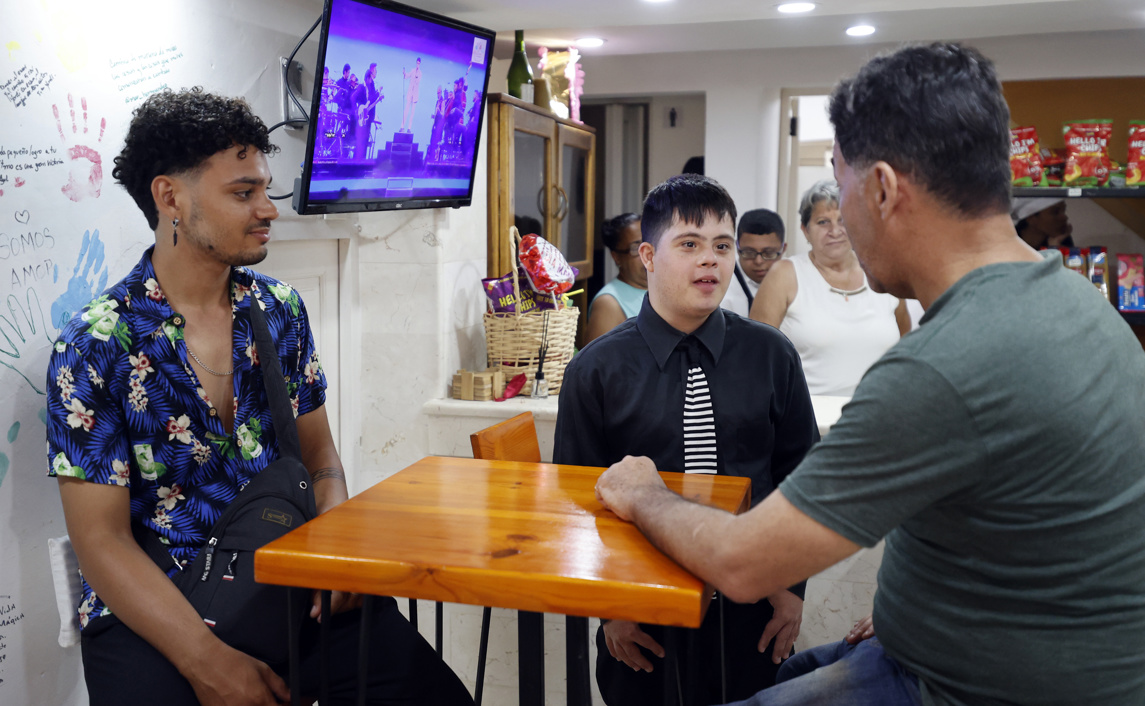
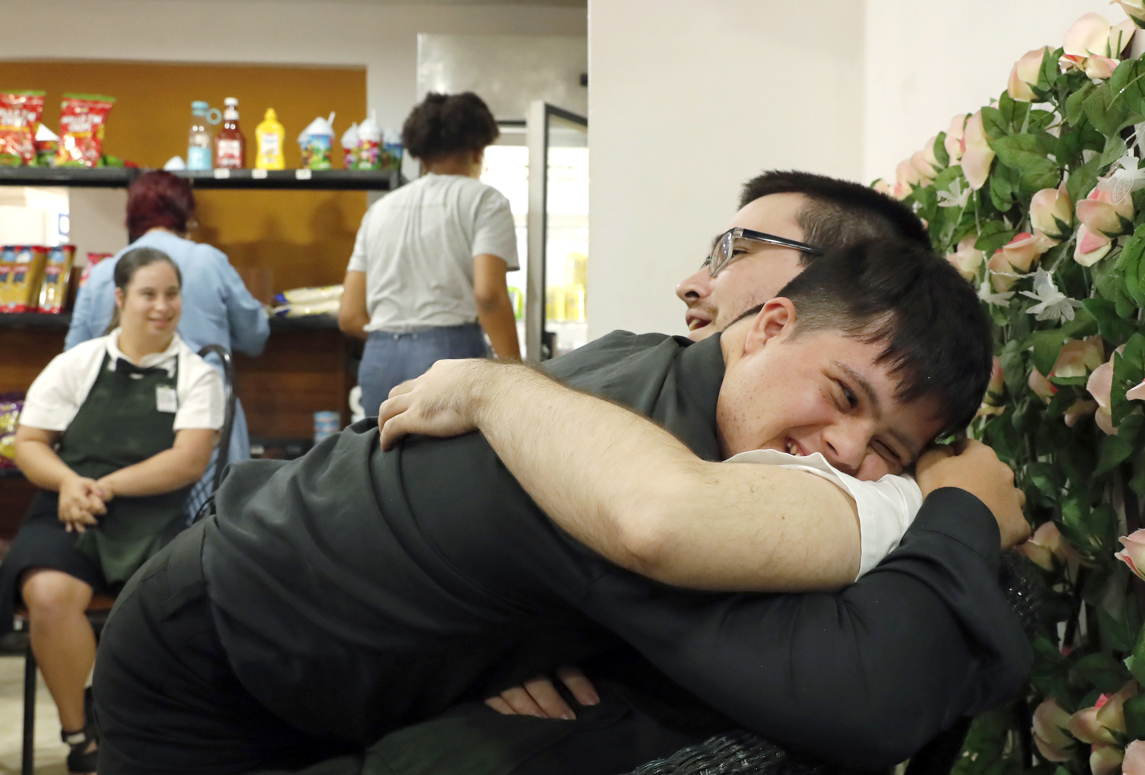
During EFE’s visit, Liván was sharing his duties as a waiter with three colleagues with Down’s syndrome and one with autism: Martha Fernández, 27; Claudia Sosa, 33; Richard Pérez, 24; and Andy Muñoz, 22, respectively.
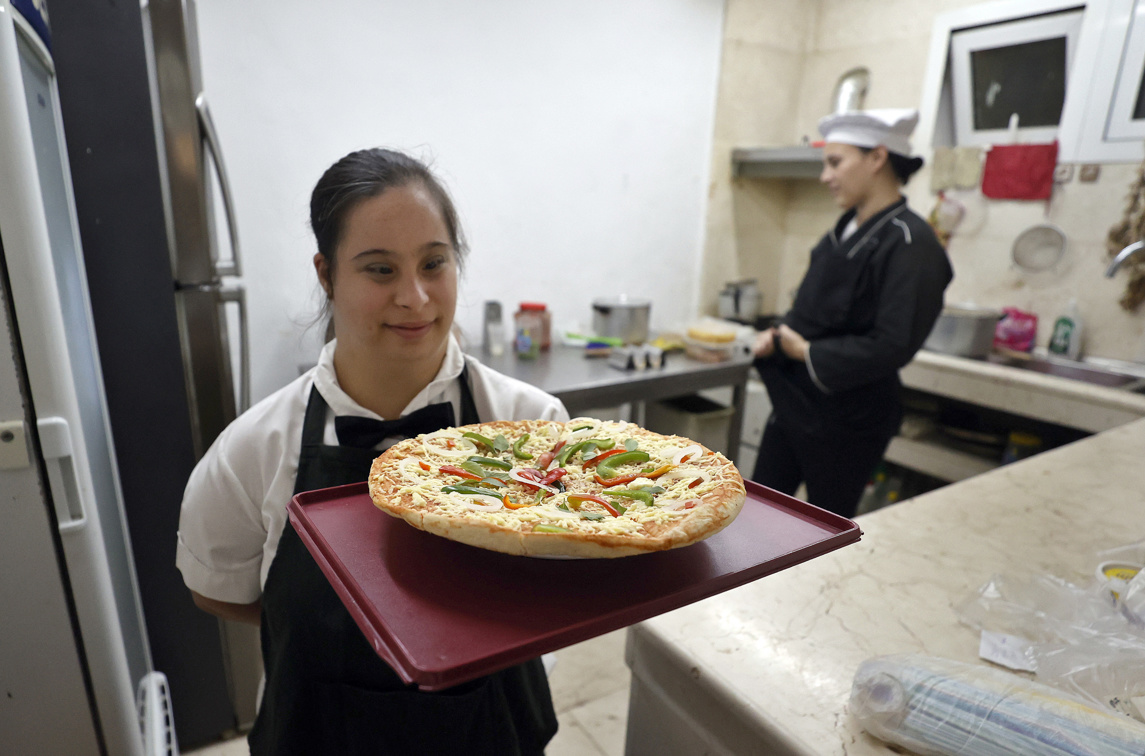
The young people — ranging in age from 20 to 35 — work as waiters or kitchen assistants, for which they receive approximately 1,000 pesos per day (slightly less than two dollars at the informal exchange rate).
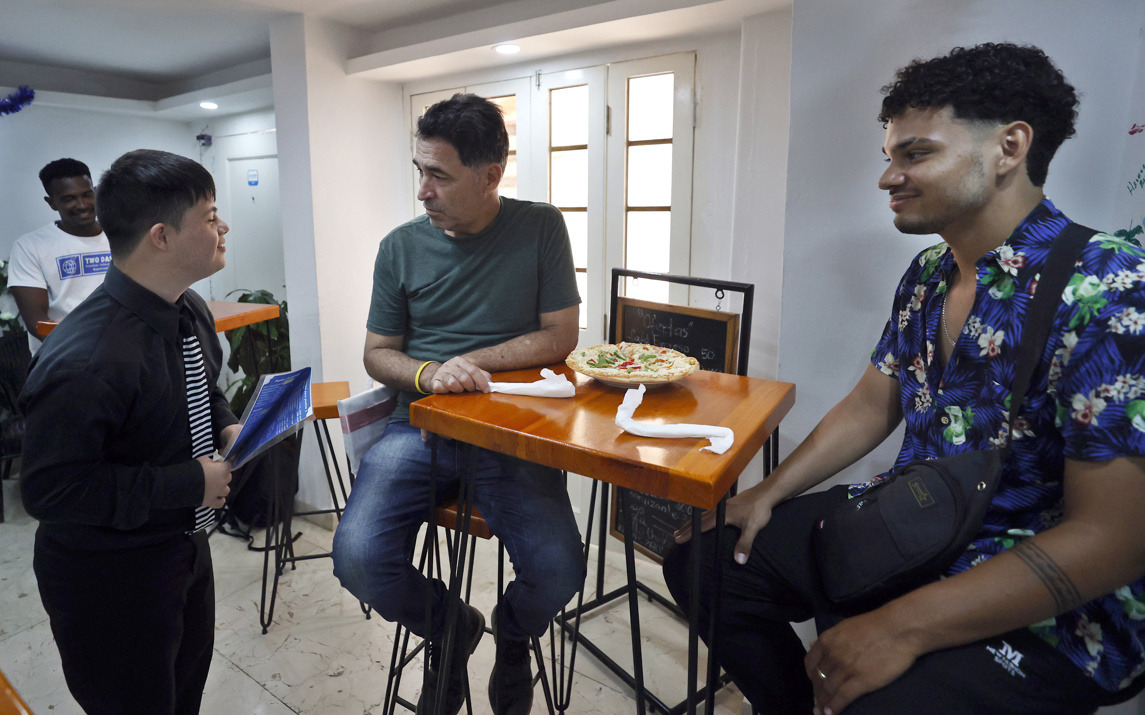
The cafe specializes primarily in selling tacos, pizzas, pasta dishes, sweets and fresh-squeezed juices. It features about six tables, and the chairs have ribbons of different colors tied to their backrests.
In this way, Escobar explains, “when the young people take an order, they locate the table by its color, rather than by number, so they know exactly which customer to serve.”
However, Escobar regrets that the space remains quite small, making it difficult for all the young people to be present at the same time. That’s why “we established a rotating schedule so that each one works at least twice a week.”



“I am capable”
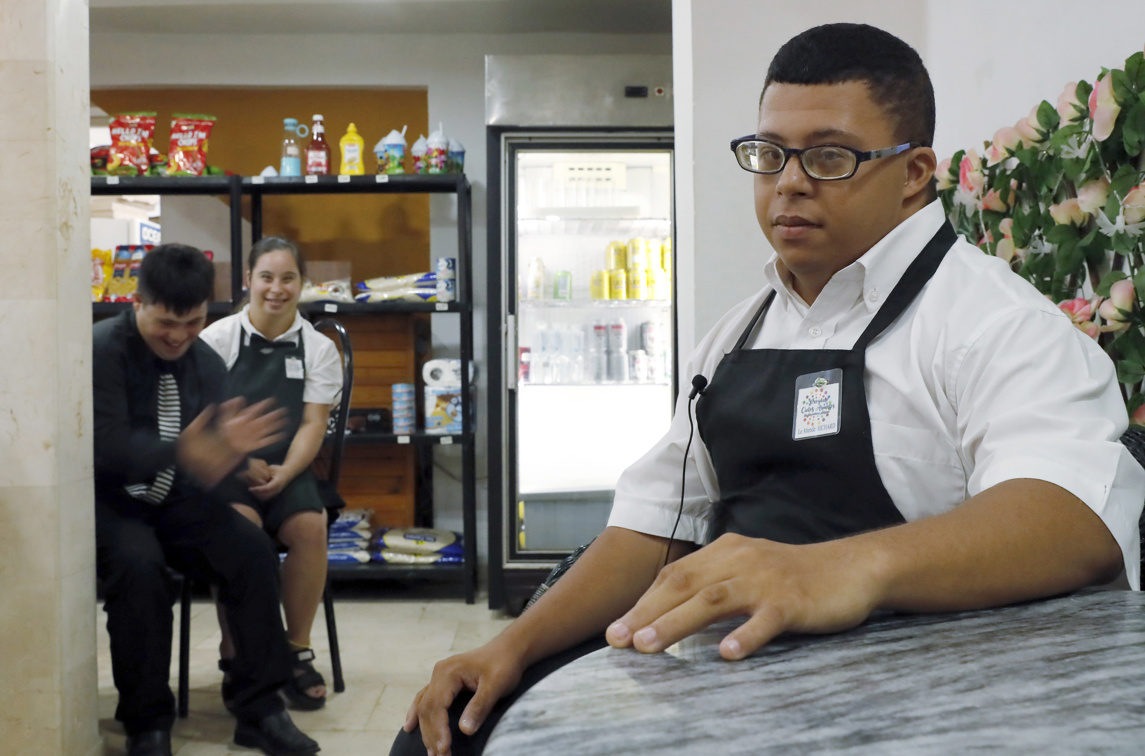
As customers began to arrive at Liva, Richard Pérez told EFE that while he currently serves the diners, he aspires to become a cook in the future. “I am capable,” he asserts.
Liva has made “our children feel useful, fulfilled and committed to a specific task,” says Yamilé García — Martha Fernández’s mother — for her part.
Down’s syndrome is a genetic disorder that alters physical and cognitive development and results in varying degrees of intellectual disability. According to various studies, many of them have the potential to work; however, their actual integration into the labor market is often difficult.
According to official data, the prevalence of Down’s syndrome in Cuba is approximately nine children per 10,000 live births; and as of 2025, approximately 3,500 individuals on the autism spectrum had been registered.