ES / EN
- May 5, 2026 -
No Result
View All Result
OnCubaNews
  • World
  • Cuba
  • Cuba-USA
  • Opinion
    • Columns
    • Infographic
  • Culture
    • Billboard
  • Sports
  • Styles / Trends
  • Media
  • Special
  • Cuban Flavors
  • World
  • Cuba
  • Cuba-USA
  • Opinion
    • Columns
    • Infographic
  • Culture
    • Billboard
  • Sports
  • Styles / Trends
  • Media
  • Special
  • Cuban Flavors
OnCubaNews
ES / EN
Home Cuba

U.S. oil siege of Cuba weighs down private sector Washington seeks to aid

Pressure from the United States, combined with the structural crisis the country was already enduring, is creating an environment for private Cuban entrepreneurs that is as adverse as it is uncertain.

by
  • OnCuba Staff
    OnCuba Staff
May 5, 2026
in Cuba, Entrepreneurship in Cuba
0
Cuban entrepreneurship

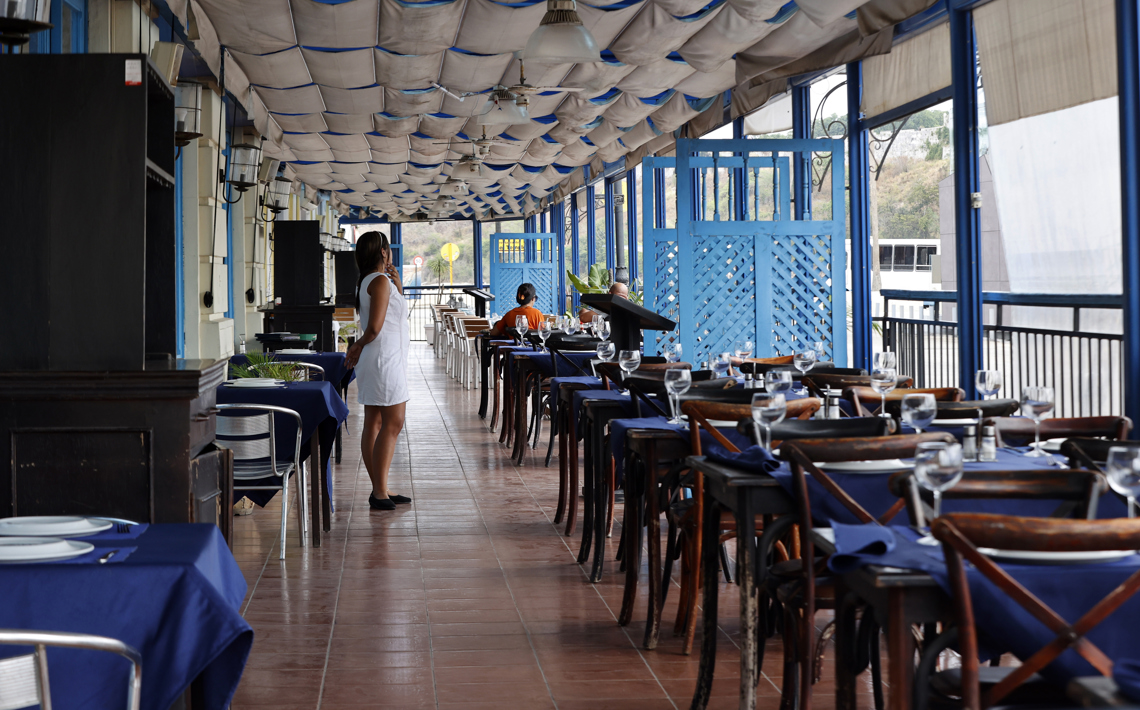
A restaurant in Havana. Photo: Ernesto Mastrascusa/EFE.

The U.S. oil blockade against Cuba is heavily burdening the island’s nascent private sector, where hundreds of small businesses have closed or suspended operations, while others are reinventing themselves and fighting to survive. 

U.S. pressure, combined with the structural crisis the country was already enduring, is creating an environment for private Cuban entrepreneurs that is as adverse as it is uncertain. This is particularly challenging for a group Washington has stated on more than one occasion that it intends to support, as the lack of fuel strikes them on multiple fronts. 

Without fuel, neither workers, suppliers nor customers can count on reliable transportation; this disrupts supply chains and internal labor organization, while also dampening consumer demand. Furthermore, power outages are becoming prolonged since a portion of the national power generation relies on diesel and fuel oil, thereby undermining economic activity. 

Lacking fuel, private businesses (estimated at around 10,000 across the island) are also unable to ensure a steady power supply using their own backup generators, vital for establishments such as bakeries or shops selling refrigerated goods. 

Laura Salazar, manager of the private complex Loft Bahía, speaking in an interview with EFE. Photo: Ernesto Mastrascusa/EFE
Laura Salazar, manager of the private complex Loft Bahía, speaking in an interview with EFE. Photo: Ernesto Mastrascusa/EFE

Moreover, during power outages, mobile and wired connectivity frequently fail, thereby eliminating the possibility of remote work and extinguishing any glimmer of a digital economy. 

“It has affected us deeply. After all, we are a logistics and delivery company,” Cuban entrepreneur Marta Deus acknowledged to EFE. She heads the popular platform Mandao — the island’s equivalent of food delivery apps such as Glovo, Rappi, or Uber Eats.  

Related Posts

House in Havana. Reforms in Cuba

What those who don’t want “reforms” in Cuba actually want

April 1, 2026
Uranga Collections project in Old Havana

Uranga Collections: a home for Cuban collectors

March 26, 2026
Havana Malecón. Cuba

Flash: Havana that doesn’t go completely dark

March 17, 2026
Cardiovascular medical procedure in Cuba.

More than 96,000 patients await surgery amid U.S. oil embargo, warns health minister

March 14, 2026

With a staff of 50 employees, orders have dropped by 50% since the oil blockade began, settling at an average of 120 per day. The core staff remains intact, although adjustments have been made regarding external services. 

She recounts that restaurants have closed or scaled back their operations; that they have had to purchase an electric vehicle to transport their workers to the central office and back home; and that they acquired electric bicycles and scooters for deliveries. 

Deus explains that the adaptation process has been “very complicated,” but that they have leveraged the experience they had been accumulating in the provinces, where long power outages and fuel shortages had already been the norm for some time. 

Furthermore, this entrepreneur asserts that, so far, she has been unable to import fuel, despite the measures announced by the U.S. to facilitate shipments to the island’s private sector. “Regarding fuel, we are at zero. Personally, we haven’t managed to secure any yet. It’s not a simple matter. We are in the process,” she notes. 

In Havana — home to nearly half of the micro, small and medium-sized enterprises (MSMEs) that have emerged in Cuba since they were once again permitted in 2021, following a ban of nearly six decades — many restaurants, cafes and retail establishments have closed their doors in recent months. 

Many others, ranging from service enterprises to small guest houses, are  weighing every option on the table in the face of the serious difficulties they currently confront, as well as the absolute uncertainty with which they face the future — a future in which anything seems possible, even a U.S. military intervention. 

Reinventing themselves 

Others have decided to remain open. Laura Salazar, the manager of Loft Bahía — a hotel, restaurant and café complex in Old Havana — told EFE that she is committed to innovating during this crisis, just as the business has done in the face of every previous challenge it has encountered. 

“Since opening, Loft Bahía has had to contend with a great many limitations. We opened in the wake of the pandemic; it has been a period in which we have almost constantly been facing a bit of a downhill battle,” she explains.  

She describes how they have chosen to seek out new “market segments” in the face of declining tourism, secure transportation for employees, reorganize staff shifts and arrange new activities to attract different audiences. “We’ve had to reinvent ourselves,” she summarizes. 

She views the crisis with optimism: there’s simply no other choice, she believes. “It’s part of what we’ve experienced ever since we opened. Right now, the issue is oil, but in previous months and years, there was always some other challenge, and we’ve continued to reinvent ourselves despite it,” she notes. 

“As circumstances beyond our control improve, so will we. Our outlook is optimistic,” this entrepreneur concludes. 

  • OnCuba Staff
    OnCuba Staff
Tags: Cuban Economycuban environmentfeatured
Previous Post

The Equality That Was Achieved… and the Inequality That Returned

OnCuba Staff

OnCuba Staff

Leave a Reply Cancel reply

The conversation here is moderated according to OnCuba News discussion guidelines. Please read the Comment Policy before joining the discussion.

Your email address will not be published. Required fields are marked *

Most Read

  • The Enchanted Shrimp of the Cuban Dance

    6227 shares
    Share 2491 Tweet 1557
  • U.S. actress Susan Sarandon praises Cuban vaccines and calls for end of embargo against the island

    210 shares
    Share 84 Tweet 53
  • Vatican foreign minister arrives in Havana to meet with Díaz-Canel

    41 shares
    Share 16 Tweet 10
  • The story behind the “sister flags” of Cuba and Puerto Rico

    114 shares
    Share 46 Tweet 29
  • Amelia Earhart: a promise of the sky in Havana

    23 shares
    Share 9 Tweet 6

Most Commented

    • About us
    • Work with OnCuba
    • Terms of use
    • Privacy Policy
    • Moderation policy for comments
    • Contact us
    • Advertisement offers

    OnCuba and the OnCuba logo are registered® trademarks of Fuego Enterprises, Inc., its subsidiaries or divisions.
    OnCuba © by Fuego Enterprises, Inc. All Rights Reserved.

    No Result
    View All Result
    • World
    • Cuba
    • Cuba-USA
    • Opinion
      • Columns
      • Infographic
    • Culture
      • Billboard
    • Sports
    • Styles / Trends
    • Media
    • Special
    • Cuban Flavors

    OnCuba and the OnCuba logo are registered® trademarks of Fuego Enterprises, Inc., its subsidiaries or divisions.
    OnCuba © by Fuego Enterprises, Inc. All Rights Reserved.

    Manage Consent
    To provide the best experiences, we use technologies like cookies to store and/or access device information. Consenting to these technologies will allow us to process data such as browsing behavior or unique IDs on this site. Not consenting or withdrawing consent, may adversely affect certain features and functions.
    Functional Always active
    The technical storage or access is strictly necessary for the legitimate purpose of enabling the use of a specific service explicitly requested by the subscriber or user, or for the sole purpose of carrying out the transmission of a communication over an electronic communications network.
    Preferences
    The technical storage or access is necessary for the legitimate purpose of storing preferences that are not requested by the subscriber or user.
    Statistics
    The technical storage or access that is used exclusively for statistical purposes. The technical storage or access that is used exclusively for anonymous statistical purposes. Without a subpoena, voluntary compliance on the part of your Internet Service Provider, or additional records from a third party, information stored or retrieved for this purpose alone cannot usually be used to identify you.
    Marketing
    The technical storage or access is required to create user profiles to send advertising, or to track the user on a website or across several websites for similar marketing purposes.
    • Manage options
    • Manage services
    • Manage {vendor_count} vendors
    • Read more about these purposes
    View preferences
    • {title}
    • {title}
    • {title}