What will happen on Tuesday, November 3, 2026? Will the Democrats win both chambers of Congress, or just the House, or neither—leaving the Republicans to retain absolute control for the epiphany of a convicted felon? How would Washington’s policy toward Cuba be affected, regardless of who wins?
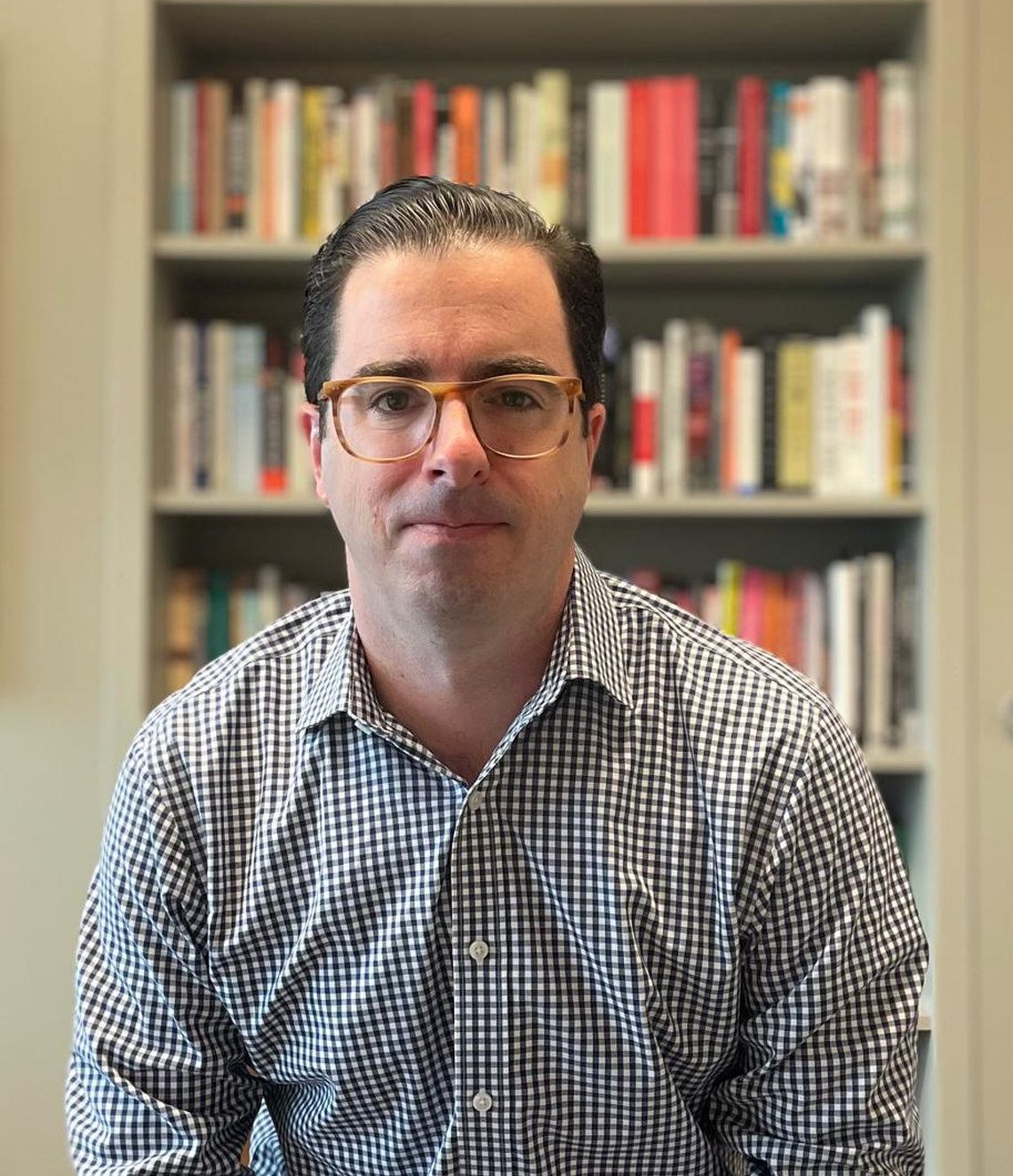
Michael Bustamante (New Jersey, 1984)—an “Orwellian year,” a literary detail he notes pointedly—does not engage in cliodynamics. Nor does a crystal ball appear in his inventory of possessions. He leaves mathematical predictive modeling to the speculators, yet his experience as a historian and his academic standing are far from negligible in this exercise of gauging a reality that is so changing and surly to easy categorization.
His book jackets identify him as the author of Cuban Memory Wars: Retrospective Politics in Revolution and Exile (2021) and co-editor, with Jennifer Lambe, of The Revolution from Within: Cuba, 1959-1980 (2019); he holds a Ph.D., M.A., and M.Phil. in Latin American and Caribbean History from Yale University. He also holds a B.A. in History and International Studies—awarded summa cum laude—from that same institution.
Bustamante’s writings have appeared in the Journal of American Ethnic History, Latino Studies, Cuban Studies, the Journal of Latin American Cultural Studies, Anthurium: A Caribbean Studies Journal, and the Oxford Encyclopedia of American History.
Currently, Bustamante is an associate professor of History at the University of Miami and holds the Emilio Bacardí Moreau Chair in Cuban and Cuban-American Studies. He also directs the Cuban Studies program and the academic programs of the Cuban Heritage Collection.
Contacted via WhatsApp, Dr. Bustamante graciously agreed to answer a series of questions ranging from the midterm elections to White House policy toward the island and its historical reverberations within the context of a revived Monroe Doctrine. Dubbed “Donroe”—a play on the name of its sponsor, Donald Trump—Washington’s ambition aims to oust competitors from a post-colonial hemisphere (with the exceptions of Puerto Rico and the Falklands) that is politically mixed and bifocal, where some look toward Washington while casting a sidelong glance at Beijing, and vice versa.
The midterm elections—a mechanism for redistributing legislative and political power in the United States—are just thirty days away. Engaging in a bit of speculation: in a catastrophic scenario what might lead to these elections being postponed or suspended?
I don’t think a formal suspension of the elections is the most plausible scenario. I mean, the president lacks the unilateral authority to cancel federal legislative elections, and—at least for now—there are significant constitutional and institutional limits that remain in effect, right?
I am more concerned about a different kind of scenario, and I don’t think I’m the only one who feels this way. I am concerned about elections taking place amidst an extraordinary subsequent dispute over who was able to vote, which votes are valid, and how the results are certified—much like what we saw with the 2020 presidential election.
This is where, for instance, the White House’s recent effort comes into play: using federal databases to cross-reference state voter rolls and identifying potential cases of non-citizenship. The aim is partly to challenge the legitimacy of state-level elections—since elections are controlled by the states of the Union—and potentially to file lawsuits and complicate the legal landscape in that regard.



The problem with that technique is that an administrative discrepancy regarding who is a citizen and who isn’t does not necessarily amount to proof of the matter. At the federal level, there is a database of all citizens and residents in the country maintained by the Social Security Administration; however, when an immigrant naturalizes as a U.S. citizen, that database must be updated, and the process is not automatic. Consequently, discrepancies can arise between state-level and federal-level citizenship records. Apparently, the White House intends to leverage these discrepancies—perhaps as a way to challenge the legitimacy of state-level elections.
Thus, the most serious risk I see is not necessarily that someone might shut down the election process, but rather that confidence in its legitimacy could be eroded through erroneous exclusions or disputes—once again—over vote counting and certification.
Trump, the cheater
Do you think that, at this stage, Trump’s ploys to undermine his opponents’ ability to mobilize support—ranging from gerrymandering and pressuring against mail-in voting to promising direct financial incentives to voters (the famous $5,000)—have failed, leaving the president with no choice but to either upend the entire system or accept the risks and costs of a midterm election defeat?
Regarding Trump’s tactics, I wouldn’t say all his maneuvers have failed, but neither has the White House managed to impose the rules of the game it wanted. I think the overall result is quite mixed.
We have seen various attempts to alter election procedures blocked by the courts, while others—such as certain redistricting efforts or the expanded use of federal databases to verify citizenship, as I mentioned earlier—remain in effect or are at least still being litigated. That is why I don’t believe we are yet facing a choice between upending the system and resigning ourselves to defeat. Rather, we are witnessing an ongoing institutional dispute regarding the conditions under which elections are held.
And that obviously matters because, even without canceling an election, attempts can be made to influence who votes, the rules involved, and the level of legal uncertainty. For instance, there may be attempts to intimidate certain voters by deploying ICE agents in immigrant neighborhoods. The Department of Justice has hired over 1,000 new election observers—supposedly to ensure compliance with federal election law, though they could also become a source of baseless litigation later on.
At the same time, it is important to emphasize that checks and balances are still working. Judges, state legislatures, and voters themselves have blocked various White House initiatives; the result, for now, is not a complete takeover of the electoral process, but rather a landscape that is far more contentious than usual.
Can the numbers be misleading? A protest vote
National polls consistently show Democrats holding a clear lead in the midterm elections: 53% of registered voters say they would support a Democratic candidate, compared to 41% who would opt for a Republican. Furthermore, 45% state that their vote will be primarily a protest against Trump. How reliable are these polls and their predictive power? Should we expect surprises—perhaps akin to gas prices topping $5 a gallon?
As for the polls, I would take them seriously, but not literally. In other words, a national lead of this magnitude across many polls indicates a political climate that is clearly unfavorable to the president’s party—as is typical during midterms—and reflects a significant protest-vote component against Trump.
It is a significant signal, but it does not mean we can automatically translate that national margin into a specific number of seats. One must also approach polls with a degree of doubt and caution, as in recent years we have seen the polling industry encounter significant shortcomings when calculating or attempting to predict the final results of many electoral contests.
Midterm elections consist of hundreds of distinct contests. There are different maps, different candidates, and turnout levels that remain highly uncertain—though high participation is expected among Democratic Party supporters. However, there are still several weeks left during which events could occur that might alter voting behavior.
That is why I believe polls are quite useful for gauging the direction of the political climate, yet they are insufficient to predict exactly how seats in the House of Representatives and the Senate will ultimately be distributed.
The day after
You have spoken of a game of “chicken” between Washington and Havana to see which side might blink first as a collision looms. Viewed like a traffic light, would the midterms signal a brief pause in decision-making regarding the island?
In fact, I believe the midterms are already part of the calculus for policy toward Cuba, alongside the situation with Iran and, above all, domestic economic concerns.
In recent months—and particularly in recent weeks—it seems to me that the White House’s outlook regarding Cuba has shifted in terms of timing. Marco Rubio no longer speaks as if fundamental change is necessarily imminent; he acknowledges that it would be a long process. For now, the emphasis—both his and that of the policy itself—seems to be on maintaining a strategy of attrition and pressure rather than triggering immediate escalation. And there is an obvious political logic to this, isn’t there?
An escalation prior to the election that sparks a major crisis in Cuba—or incurred economic costs for the United States related to reconstruction and the like—could become yet another problem for Republican election campaigns.
So, for me, the most interesting question arises the day after the election. I believe a Democratic victory—of whatever magnitude—could impose new political costs on any subsequent escalation, primarily through investigations, hearings, and heightened scrutiny of foreign policy and the budgets supporting it.
However, there is also the possibility of the opposite effect. That is, between the November elections and the new Congress taking office on January 3, there is a period when the administration already knows the election results but is still dealing with the outgoing Congress. If it concludes that its room for maneuver will shrink dramatically after January, that interval—late in 2026—could become particularly significant and volatile.
There are other variables at play as well, both personal and institutional.
As we know, Marco Rubio has been a central figure in shaping U.S. policy toward Cuba over the past two years. If he were to leave the State Department at some point to pursue his own political ambitions—specifically, a run for the presidency—one would have to ask to what extent the Cuba policy depends on him personally, and to what extent it has already become, shall we say, institutionalized within the White House.
In that sense, I view the midterms not so much as a traffic light switching from red to green, but rather as a turning point that can alter the incentives, timelines, and risk thresholds for all the actors involved.
A Democratic victory and the Cuba issue
What would a Democratic victory in both chambers—or a partial victory in the House—mean for Cuba, given that Marco Rubio has vowed to maintain pressure until the very last day of the Republican administration? “The reality of their situation is that things aren’t going to get better in Cuba without very substantial changes,” Rubio stated recently—a stance the Cuban leadership views as a violation of its “red lines.”
I don’t believe that a Democratic victory in one or both chambers automatically implies a shift in Cuba policy.
In the first place, this is because a significant portion of current strategies—such as sanctions, pressure on third countries, and so on—rely on the Executive’s broad discretionary powers and could continue even with a hostile Congress.
What would change, however, is the political environment. For instance, a Democratic-controlled House of Representatives could subject Cuba policy to much more aggressive control. It could hold hearings, demand documents, investigate the policy’s humanitarian or migration-related consequences, and use the appropriations process to attempt to impose limits.
If the Democrats were to also control the Senate, their ability to influence appointments, legislation, and budget priorities would be greater; however, we would not necessarily see an immediate reversal of the pressure strategy. Obviously, a new Congress—even under Democratic control—would arrive with a multitude of priorities, and I don’t believe Cuba would rank among the top ones.
The recent remark by Rubio that you cite strikes me as significant because his rhetoric has shifted from expecting rapid change to the idea that Cuba must substantially alter its behavior—a process that could well extend through the remainder of Trump’s term.
The question, I believe, following the midterms, is how much political space the White House will retain to continue ratcheting up pressure, and whether doing so will come at any domestic cost.
Is Havana buying time while Washington sells it?
Let’s discuss the time factor. In an article you published in The New York Times, you argued that, given the severity of the crisis, Cuba has run out of strategic time to manage the negotiation timeline—a period during which it must simultaneously steer its economic model full-speed toward the market while handling the political dissent and social unrest spawned by the system’s own bankruptcy. Yet, the Cuban leadership—despite acknowledging the humanitarian gravity and the resulting repressed explosive potential of such a scenario—has continued to bank on an elastic timeframe in its dealings with Washington, an approach likely to reach its limit with the midterms. In fact, this tactic of resistance has forced the chief architect of the Cuban transition, Marco Rubio, to stretch his punitive imagination in search of further sanctions and to rethink the timeline for capitalist-style changes on the island—aiming for the end of the administration’s term in 2028, achieved step-by-step without resorting to military action. For Havana, how viable—and successful—is playing against Washington’s clock? Who is controlling the timing of this back-and-forth?
I think Havana may believe that time is on its side, in a way, and I’m not sure they are entirely wrong. For decades, the Cuban state has demonstrated an enormous capacity to absorb crises, manage shortages, and wait for international or bilateral circumstances with Washington to shift.
If their calculation is to survive until—let’s say—U.S. pressure eases, or until they find a way to simply keep existing as they are, without a major disaster or large-scale political instability, then this strategy could still work, right? My question is: at what cost—especially for ordinary Cubans?
I believe that every month passing under current conditions means further infrastructure deterioration—despite efforts like installing solar farms, which are helping to address some of the electrical grid’s problems but do not, at this stage, represent a complete solution.
With each passing month, there is a greater loss of human capital due to emigration. I was struck by the official figure showing that—despite the U.S. border being effectively closed—more than 200,000 Cubans left the country last year. That is a significant number.
Each passing month brings more impoverishment, greater institutional erosion, and an economy that is harder to rebuild. There is a recent article by U.S. analyst Will Freeman on the Foreign Affairs magazine’s website in which he raises a point that is, in a sense, very obvious.
The issue is not simply whether the government can survive, but what kind of country will remain to be rebuilt when circumstances eventually change. And the longer this situation drags on, the more enormous that task will be.
Obviously—and I want to emphasize this—the same question must be asked of Washington.
The United States may also think that time is on its side, that its leverage is growing, and that economic decline will eventually force Havana to accept changes it currently rejects; But if the strategy consists of waiting for Cuba to be sufficiently weakened to negotiate or yield to U.S. demands, there is a danger that by the time that moment arrives, the country will be far less capable of sustaining any economic—or even political—transition.
This is no small risk for a White House that has shown no inclination toward projects involving what it—somewhat disparagingly—calls “nation-building.” In other words, we are not talking about a White House likely to mobilize vast U.S. funds to support Cuba’s economic reconstruction.
To put it another way—and this was essentially the thesis of my New York Times article—I believe the Cuban state and the U.S. government may think they have more time than we realize, but Cuba as a country perhaps does not; that is my fundamental concern.
The Cuban vote. Is María Elvira a dissident?
You live in the capital of the Cuban exile community and have witnessed the ideological shift since 2017—taking that year as a peak moment of anti-embargo sentiment and the present as the expression of a majority demanding a hard line against the island—can you venture a guess as to how the community will behave in these midterms? And, if I may offer a provocative thought: is María Elvira Salazar actually a dissident who favors the Democrats in Florida?
There are real tensions within the Cuban-American electorate today that were not present two years ago—or at least not with the same intensity.
The cost of living and inflation are weighing heavily. Miami has become one of the most expensive cities in the United States relative to average income.
This White House’s immigration policy has directly affected numerous families in the city and, more broadly, in Miami-Dade County. And regarding the issue of Cuba, there is a certain sense of fatigue, isn’t there? This follows months of maximum pressure on the island without the major change some expected actually taking place. And they expected it partly because the president himself constantly reinforced that idea with repeated comments suggesting Cuba was on the verge of collapse.
When Marco Rubio recently lowered expectations for an immediate change and spoke of the need for strategic patience and a longer process, frustration was palpable in certain sectors of the community that had come to expect much more forceful—even military—action.
However, it is not entirely clear to what extent all these issues will actually drive a protest vote.
Take the immigration issue and the people directly affected by it—such as those involved in the well-known I-220 cases—as an example. By definition, these matters primarily affect the families of relatively recent immigrants. Within those family networks, there is likely a higher concentration of permanent residents and others who do not yet hold U.S. citizenship and, consequently, cannot vote.
That does not mean the issue lacks electoral consequences; families and communities do convey these concerns to those who are eligible to vote. Yet, I believe we must be cautious before assuming a direct link between dissatisfaction with immigration policy and behavior at the polls.
And even if that dissatisfaction does reach the voters, a second question remains for me: who is in a position to capitalize on it politically?
It is one thing for the president’s former supporters to simply stay home. And, of course, the battle over turnout—or the lack thereof among certain voters—could give the Democrats a head start.
But it is quite another for local Democrats to successfully mobilize the vote—not merely against the president and his party, but, ideally, in favor of a set of concrete proposals. What I observe in their campaigns is a greater emphasis on mobilizing anti-Trump frustration than on articulating an agenda of their own.
In other words, despite that very real discontent, Republicans could retain a significant advantage due to party identification, distrust of the Democrats, or simply the lack of an opposition platform that generates enthusiasm.
Of the three congressional seats representing Miami, María Elvira Salazar’s appears to be clearly the most competitive. Salazar has probably been the local Republican figure who has most tried to maintain a degree of independence from the White House regarding immigration policy.
She even went so far as to promote her own version—a rather harsh one, I’d say—of a comprehensive immigration reform, something the White House didn’t like. Yet it’s paradoxical, because that very stance has left her vulnerable on both sides.
In other words, her recent criticisms of Trump’s immigration policy have been viewed by many as belated or politically motivated—especially after she had remained silent regarding the White House’s actions on previous occasions, or had voted for budget bills like the “Big Beautiful Bill,” which facilitated the staggering expansion of ICE (Immigration and Customs Enforcement).
But I have to admit, I still have doubts about the Democrats’ ability to turn that discontent into voter turnout.
I live in the heart of María Elvira’s district. Polls show her rival, Elliot Rodríguez, is very competitive, yet we are weeks away from the election and I still don’t sense any particularly intense grassroots mobilization from either side. No one has come to my door to ask for my vote, which has surprised me.
As for the Cuba issue, I generally think it will take a back seat to the economy and immigration in this election. But it is interesting: in another Miami district, the Democratic candidate running for Republican Carlos Giménez’s seat—an American named Phil Ehr—has accused Giménez of not being tough enough on Havana and has proposed his own military action plan, which shows just how unique the political debate in Miami is.
For all these reasons, I would be very cautious about interpreting any current discontent as an automatic return of Cuban-Americans—or at least a portion of them—to the Democratic Party.
The contradictions exist; they are clear. The big question remains whether the Democrats have the organization, the message, and the credibility to turn that into votes—especially in a context where the national party is investing almost nothing in local campaigns in Florida, because it does not view the state as competitive.
And remember:
The final results of all those races do not depend solely on Cuban voting patterns. I know we Cubans and Cuban-Americans like to think we’re the center of the universe, but that potential behavior cannot be analyzed in isolation.
The mirror, the collective imaginaries, the uncertainty…
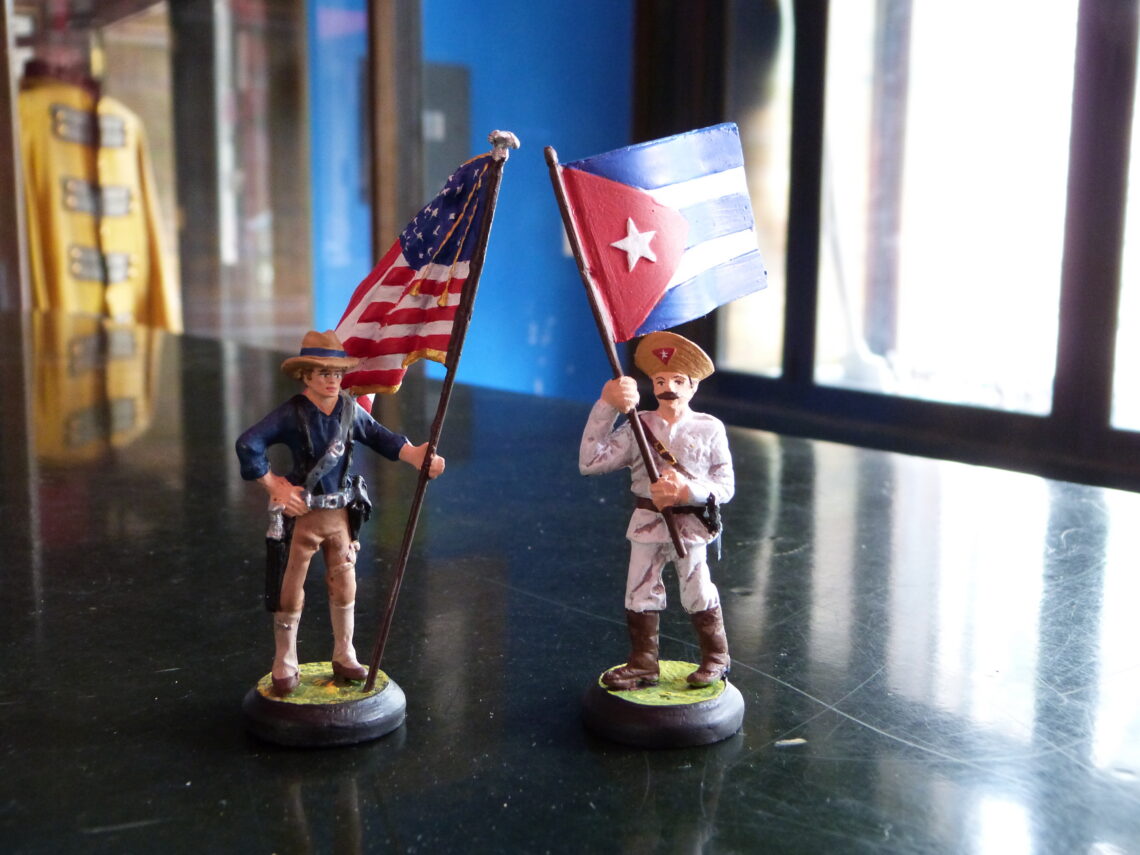
Let’s wrap up. Western media outlets have reported on the initial moves by major U.S. companies—some directly embedded in the “Trump galaxy”—to take control of assets previously held by European, Canadian, and other investors (in sectors like hospitality, mining, and finance) who were forced to abandon their interests on the island due to Rubio’s efforts. As a historian, what parallels do you see with the scenario of the 1890s, when the island—still a Spanish colonial possession—was being overtaken by U.S. capital and exports that were spreading like mushrooms throughout its domestic market? Do you think we Cubans are looking into the transitional mirror of 1898 for a second time—both instances playing out as tragedy rather than farce—thereby refuting old Marx’s famous line from The Eighteenth Brumaire of Louis Bonaparte?
Yes, I think the echoes of the 1890s—and 1898 in particular—seem quite clear to me. Not because we are repeating the exact same story—since no historical moment repeats itself in that way—but because a recognizable combination is re-emerging: a Cuba in deep crisis, a vast power asymmetry vis-à-vis the United States, and a growing capacity—or at least a growing confidence on Washington’s part—to shape not only the political outcome but also the economic structure that might emerge in the wake of the “change.”
It is interesting. By the late 19th century, Cuba was already deeply integrated—in certain respects—into the U.S. economic orbit, even prior to the military intervention of 1898. Today, I believe we are witnessing something different, obviously, yet comparable in certain ways. In other words, U.S. sanctions over the last few months—particularly since May—are severely hampering Cuba’s relations with suppliers and investors from third countries while simultaneously increasing the importance of the exceptions that allow for trade with the United States under embargo laws.
In recent months, the flow of U.S. food, fuel, and other products to the island has grown significantly, precisely as other sources of supply have tightened.
That is to say, a policy designed to increase pressure on Cuba is also creating a kind of new economic dependency on the United States, and this has somewhat paved the way for even greater Washington involvement in a “post-transition” scenario. In that regard, I also see certain parallels with the situation in the 1890s.
On the other hand, secondary sanctions are diminishing the value—or increasing the risk—associated with certain Cuban assets. They are driving foreign companies to exit, while at the same time, we are seeing U.S. investors—despite existing restrictions and sanctions—showing interest in filling some of those voids.
If one credits a recent report in the Miami Herald, the United States even proposed an agreement to begin supplying oil to Cuba in exchange for the privatization of Cupet and its transfer to U.S. capital.
That is why I believe the U.S. economic interest seems clear, and it certainly brings to mind the precedent of the 1890s.
In short, U.S. economic power does not merely emerge after a political change; rather, it is helping to shape—perhaps in advance—the conditions under which that change will occur. And that, too, recalls the historical precedent from over a century ago.
Obviously, the echoes are not merely economic. In a text I published a couple of months ago, I analyzed AI-generated images that were circulating widely on social media.
There are images circulating—created by Cubans—that envision the island’s future through the lens of U.S. symbols: figures like Trump or Rubio cast as liberators, or U.S. companies dominating the Cuban commercial landscape.
Many of these visual representations bear a striking resemblance to the visual culture of the U.S. press around 1898, when Cuba was depicted as a woman in need of rescue, a child requiring guardianship, or a territory whose modernization could only be achieved by the United States.
The most interesting difference today is that while such images were once produced in the United States for a U.S. audience, they are now being created by Cubans themselves. They are participating in the construction of mental images that closely mirror the U.S. perspective from over a century ago.
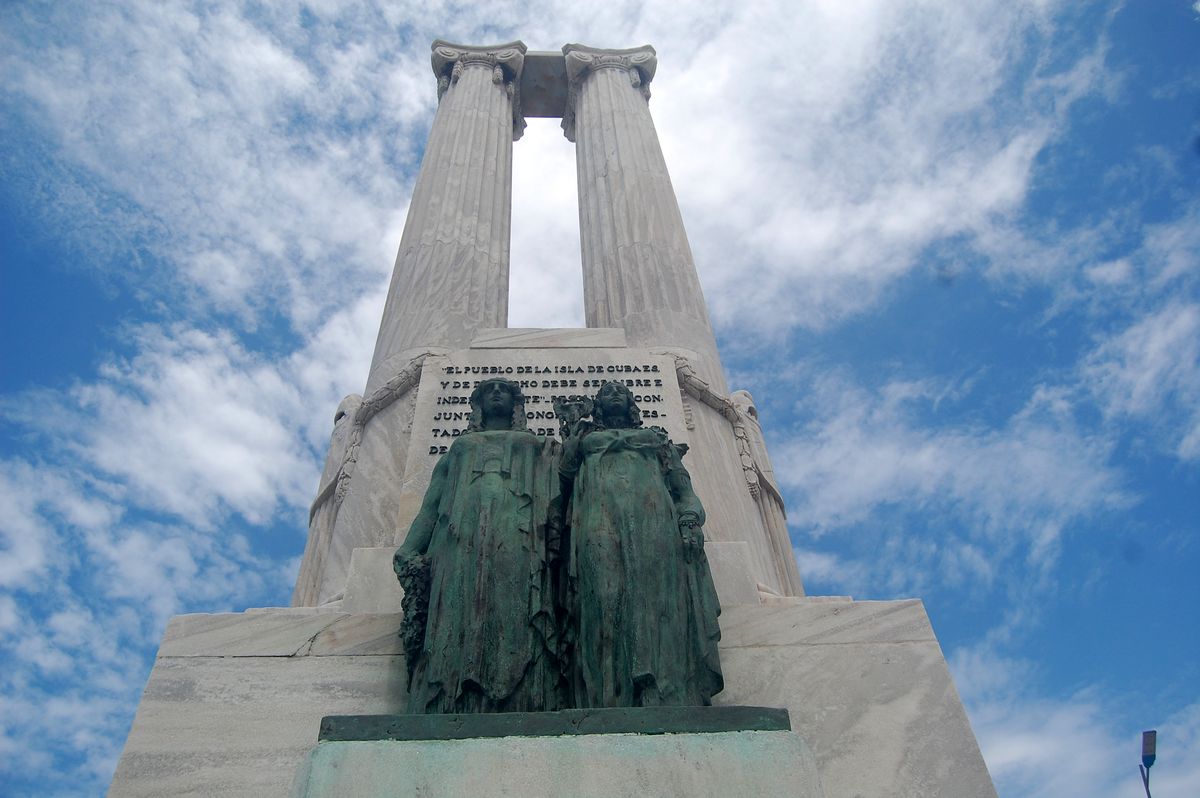
This raises a very interesting question: to what extent are certain ideas about Cuba’s future once again becoming trapped between two very narrow options—the continuation of the current system as it stands, or a transformation conceived primarily in Washington?
However, there is a relevant difference compared to the 1890s. Despite the very real risks posed by the United States, Cubans at that time possessed a powerful independence movement capable of inspiring, mobilizing, and offering a vision for the future.
Today, I believe it is much harder to identify a political project on the horizon with that same power to rally people. And perhaps that partly explains why some Cubans, at least, are drawing inspiration from these AI-generated fantasies—which so strongly evoke the visual culture of U.S. imperialism in the late 19th century.
In short, the mirror of 1898 proves useful not because we know the outcome in advance, but because it compels us to revisit questions that never fully disappeared from the Cuban debate.
In other words, who defines the terms of change in Cuba? Who will own the country’s assets after a crisis? What relationship will exist between political sovereignty, economic independence, and democracy? And how much of Cuba’s future will ultimately be decided outside of Cuba?
Postscript
This interview began with questions from the interviewer and ended with questions from the interviewee—questions for which the reader must seek answers. Thus, there is no final page, let alone a full stop. Everything remains in suspense, in a state of uncertainty, like a roll of the dice briefly caught in the air.