ES / EN
Dr.C Juan Triana Cordoví

Dr.C Juan Triana Cordoví

The situation and development in Cuba

Having a development plan that runs until 2030 does not mean that in 2030 Cuba will be a developed country. Now that the archipelago has begun to discuss the documents from the Seventh Party Congress, where the development model that we want to achieve is set out. In order for it to be prosperous; I think that the topic of the moment, or that of time management, is decisive. Advancing along the path of development with a plan (I would have preferred to call it a program) means that we work together in a coordinated and determined way looking for that plan. It also means that this plan will have to undergo constant updates throughout the years, right up until 2030. The first step with then be to agree about what development we want and what is the standing of the development that we can aspire towards, being, as we are, a poor country, still subject to an embargo, whose population is ostensibly decreasing and aging. We cannot take a great leap forwards in development because we have many accumulated deficits. In essential areas (like that of computerisation) we are advancing at a speed which is slower than the rest...
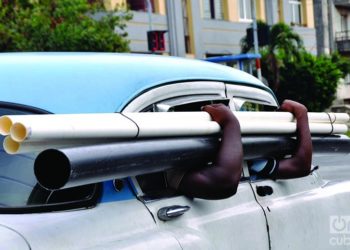

Photo by Yander Zamora

The urgency of infrastructure for development in Cuba

If we could calculate how much, in terms of lost revenue, services no longer lent, and interrupted labour, we would have in our hands a very illustrative resource to help understand just how important it is to rely on a good, modern, and efficient ‘infrastructure’. In the documents approved in the 7th Congress of the Cuban Communist Party, and whose discussion, who for all those who want to participate in life in the island, it has already begun: a group of ‘strategic areas’ with which to reach development, are described . What is infrastructure, economically speaking? It is a group of sectors and activities, that provide services or guarantee access to services that facilitate people’s daily life. As much in their productive tasks as when they are quietly watching TV. A simple example of sectors of infrastructure are those of energy, transport, communications, water and sanitation. Obviously if we want to productively transform the country and insert ourselves, with real profits, into the global economy, infrastructure is decisive.  But infrastructure is also essential if we want to achieve a sustainable development, if we really want to be prosperous, if we aspire to greater equality. Including, if Cuba wants to be...

Photo: Claudio Pelaez Sordo

Now that Obama has returned to the U.S.

Cuba did not arrive at Obama’s presidential visit with its head bowed and hands supplicating. It arrived, that’s correct, with clothes stained with the vicissitudes of 56 years of self-abandonment and of resisting the jostling of a neighbour… a neighbour that became an enemy because of the decisions of many former president elects before Obama came. It seems that this neighbour understood that force and anger only generates more force and anger. The visit and its results have generated all kinds of impressions and positions. Back in his country many have criticised the American leader for daring to take this step. From this side of the Florida Straits some are more focused on highlighting the threats than the opportunities arising from this visit. It would seem that the critics here and there would prefer another 56 years of embargo instead of trying the path to normalisation. These are the paradoxes of a reality that seems to change more quickly than some of its protagonists. From my perspective the outcome of this visit for Cuba is very positive. Augustín Lage has listed the outcomes and I agree wholeheartedly. The President of the United States did not come here to demand submission,...

Photo: Ramón Espinosa / AP

The economic impact of changes in U.S.-Cuba relations

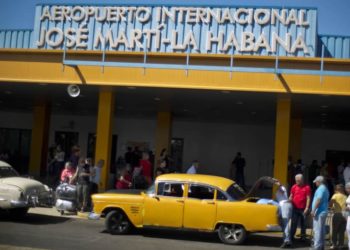
Today I’d like to do one of those ‘close your eyes and imagine’ exercises. I’d like to think of some of the consequences and the challenges that the bilateral changes between the United States and Cuba mean.  I’m going to start with one that is nearly a done deal: the establishment of regular flights. What does at least 10 daily flights landing at Havana Airport mean? First of all it will mean more income from ground operations and for landing permission, it will also impact revenue from airport taxes. Without a doubt our taxi drivers will earn more. The increase in American visitors will cause a rise in the demand for rooms in hotels, hostels, and private rental houses, and a greater demand on services of all types, particularly restaurants and car rentals… And, as in essence tourism is first and foremost and adventure, even the everyday “boteros” will benefit from the tourists. How much will this mean in terms of revenue? No idea, but it’s not an insignificant amount. The other side of the airport coin is the challenge it presents from an operational point of view. Those who travel often know how far the Cuban terminals are from...

Photo: Roberto Ruiz

2016 will be a tense year for the Cuban economy

After growing 4{bb302c39ef77509544c7d3ea992cb94710211e0fa5985a4a3940706d9b0380de} in 2015, after 1{bb302c39ef77509544c7d3ea992cb94710211e0fa5985a4a3940706d9b0380de} in 2014, the Cuban economy is projected to grow 2{bb302c39ef77509544c7d3ea992cb94710211e0fa5985a4a3940706d9b0380de} in 2016. Reverting to a rate of growth lower than 3{bb302c39ef77509544c7d3ea992cb94710211e0fa5985a4a3940706d9b0380de} is not the best news, even when this growth is after the best rate of growth that the national economy has reached in the last six years. It’s also logical to think that this growth of 2{bb302c39ef77509544c7d3ea992cb94710211e0fa5985a4a3940706d9b0380de} will influence the improvement plans for the country, by reducing the total product available in 2016, as much for consumption as for investment. This rate of growth will be achieved in a complex environment with a mixed meaning for the national economy. On one hand the International Monetary Fund anticipates that the global economy will shrink. In our region, the countries that have led the growth for years find themselves stagnating. For Cuba, the political events in Venezuela, Brazil, Argentina and the weak economic performance of the first two aforementioned countries have become the biggest threats in the short and medium term given their sizeable presence in the Cuban foreign market. In the case of Venezuela, its role in asset trading, fundamentally in oil supply (approximately 100,000 barrels a day) and its significant role in...

Page 7 of 7 1 6 7