

The 2026 Super Bowl halftime show will be etched in the memory of Latin Americans for a long time. For 13 unforgettable minutes, Benito Antonio Martínez Ocasio — Bad Bunny — gave us goosebumps with a performance permeated from beginning to end with symbols of our Latino culture: the child asleep on the chairs during the party, the wedding, the sugarcane field, the shaved ice, the blackouts, the diverse and irreverent Latino bodies taking over the party in someone else’s home.
All of this in a context where hiding that Latino culture has become, for many, a way to survive, to avoid deportations, family separations and persecution in a country where almost half of the migrants come from Latin America and the Caribbean.
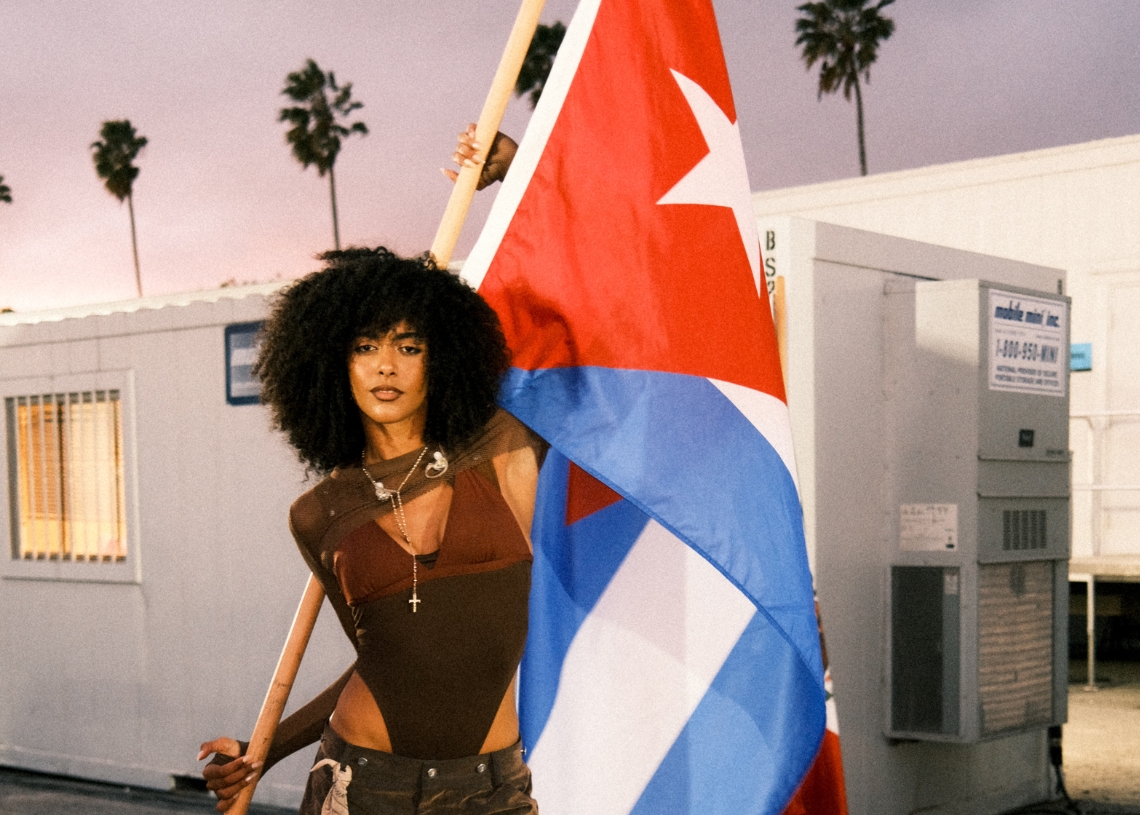
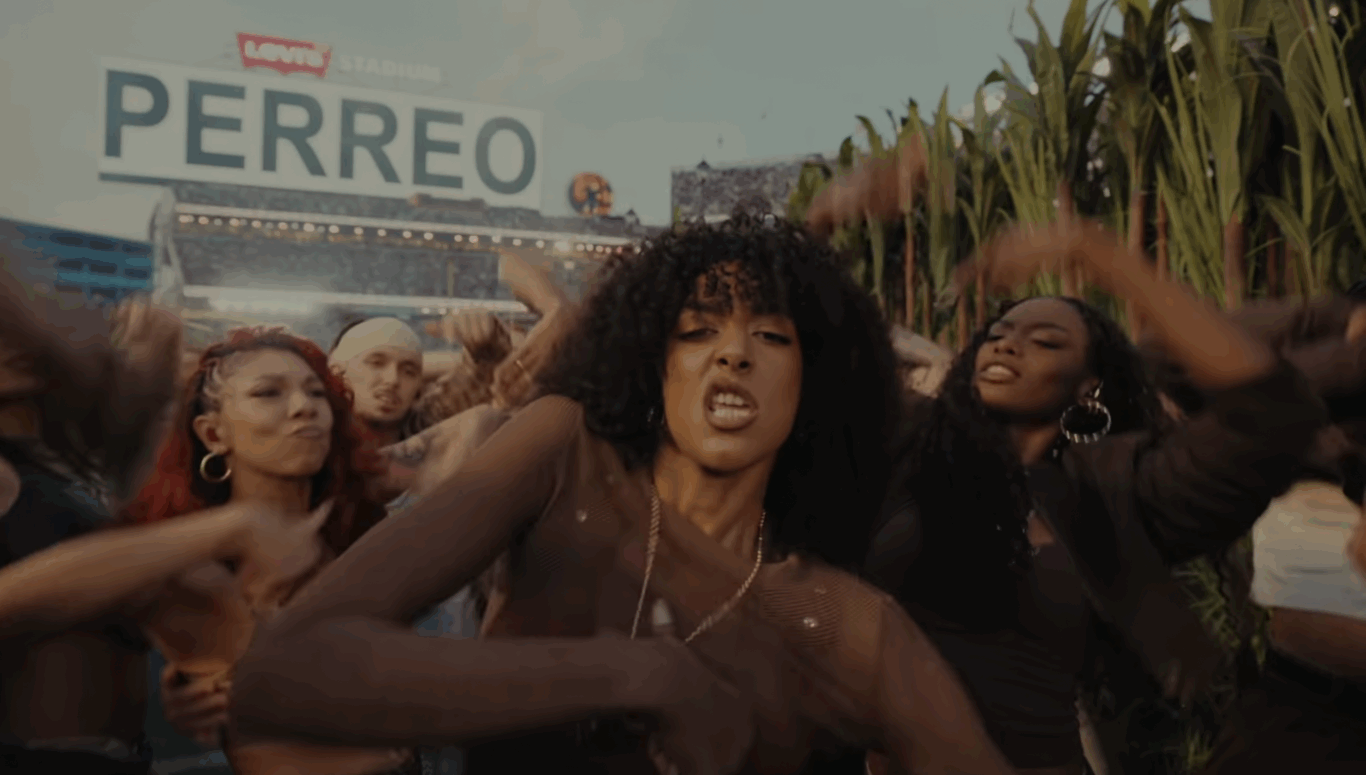
When the door of “La Casita” opens and Benito walks part of the path that leads to the truck where he will perform “EoO” (Debí tirar más fotos, 2025), the camera makes its way to Bersil Iglesias (Havana, September 15, 1999). Benito is close, but it is the Cuban woman who commands the frame with just a few seconds of dancing while “Gasolina,” the reggaeton anthem of the 2000s, plays in the background — a song she herself danced to countless times when she still lived in Cuba.
“That song means so much to the Latino community. I’ve danced and sung it at the top of my lungs since I was a child. To know that at that moment I represented all the Latino women who ‘want more gasoline’…I still can’t believe it,” Bersil told OnCuba, her voice filled with emotion, in a WhatsApp conversation.
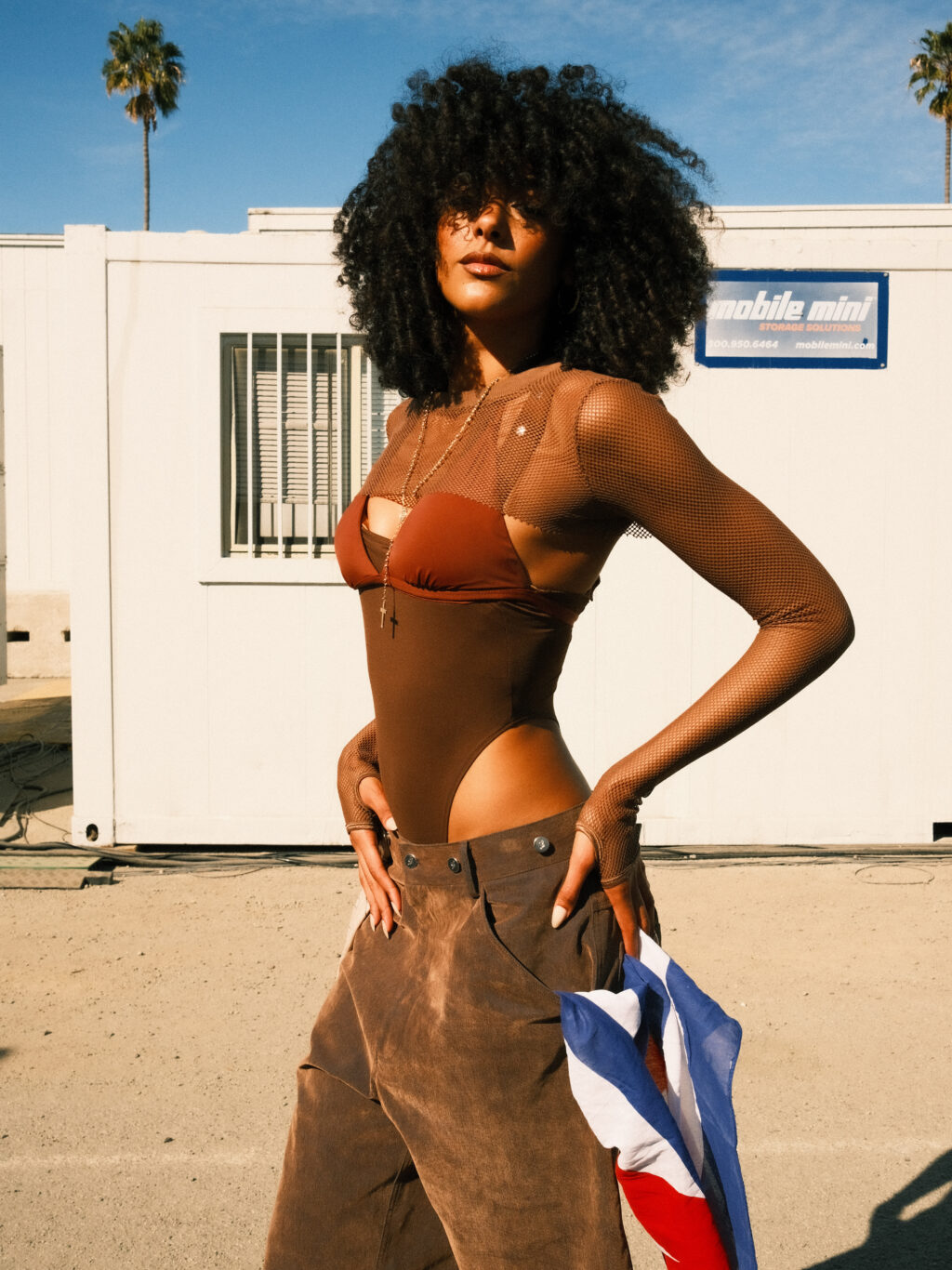
Bersil’s face is now etched in our memories. We Cubans, who took pride in watching her dance and bring all her flair to the camera in those brief moments, know her name and where to find her on social media. But before meeting Benito at the Super Bowl, Bersil had already spent years building her career in the world of dance and entertainment. Her appearance during the halftime show of one of the world’s most famous sporting events could mark a turning point between her previous trajectory and a new chapter to come.
She arrived in the United States in 2004 and almost gave up dancing, driven more by her parents’ desire than her own — that she finish her studies in Criminology.




Her family’s story shares both hardships and triumphs with that of many other Cuban families who emigrated to the land of promised dreams, and that’s something Bersil hasn’t forgotten.
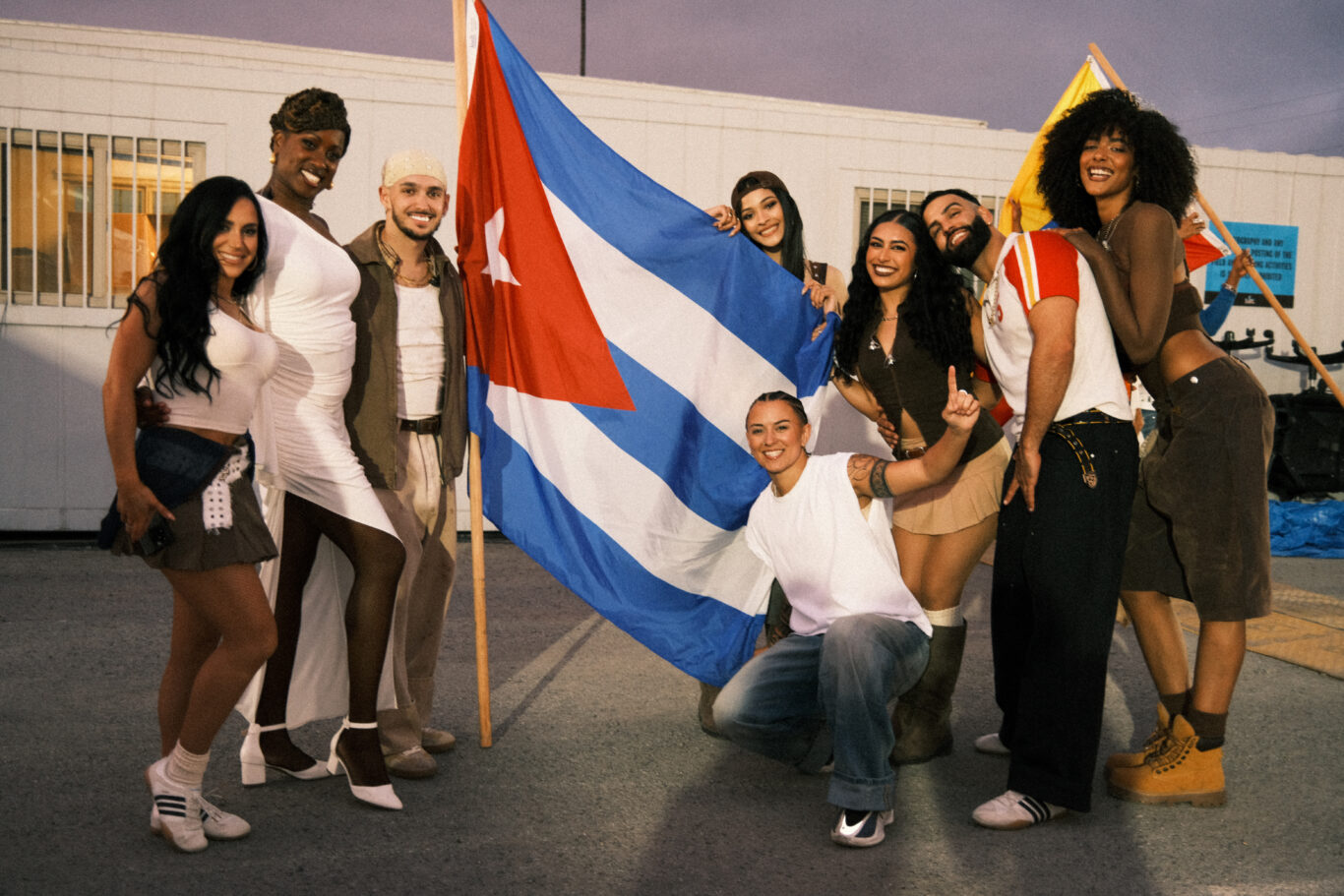
“As an immigrant and the daughter of immigrants, I don’t take any opportunity that comes my way lightly, much less this one. That night I wasn’t alone on that stage: those who came before me, those who are here today and those who will join me on this journey were with me. It was an honor to represent what I struggled to see on the big stages during my childhood. I hope that all Afro-Latino girls around the world can see themselves reflected in this and know that there is a place for them too. May they fully occupy it,” she wrote on her Instagram profile alongside a picture of herself holding her flag, the Cuban flag.
How and when did you discover that dance was your calling?
It’s hard to say exactly how and when. Since I was a child in Cuba, my house was always filled with all kinds of music, and my father was the life of every family party: he would get all my aunts dancing, from salsa to Boney M hits.
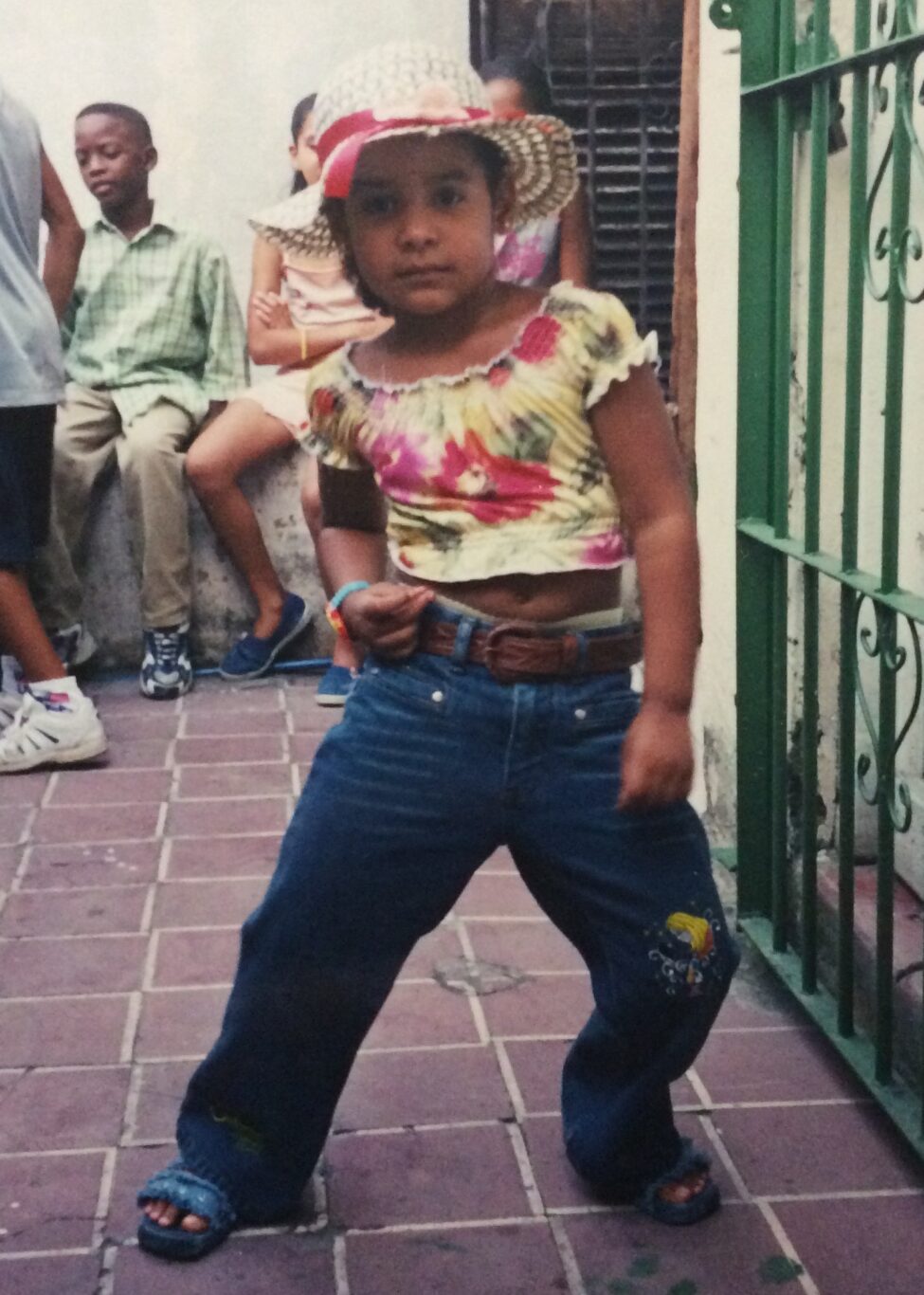
My first classes were in Cuban folklore at age three, and I started dancing flamenco in Miami at eleven. Although I discovered years later that dance is not only my passion but my purpose, I’ve always had rumba in my veins and a love of art in my heart for as long as I can remember.
Where and how did your training begin?
Unfortunately, I can’t say that my artistic training took place in Cuba. And I say unfortunately because I know that my island is incredibly talented; so much so that, even with the difficulties, Cuban art continues to reach the rest of the world after all these years. Although I couldn’t train there, my first dance teacher was Idmaray Breuil, principal dancer with the Lizt Alfonso Ballet for several years. Much of her methodology was inspired by how the famous Cuban ballet company trained.
What dance styles have you trained throughout your career?
Actually, there’s little I haven’t trained, even if only once. I feel that the best thing we can do as movement artists is to become cultured and versatile in the language of dance. Throughout my career, I’ve trained in hip-hop, house, dancehall, jazz, contemporary, flamenco, Afro styles, Latino styles…and the list keeps growing.
When did you emigrate to the United States? What was that process like on a personal and professional level?
I emigrated to the United States at the age of four with my parents and grandmother. My family was already looking to leave the island due to political interference in my mother’s career; she was a pharmacist at the time. Then my father won the visa lottery — which in Cuba we called the “Bombo” — that granted legal visas to the United States. They both took advantage of that opportunity, and we started from scratch in Miami in 2004. I will always be grateful for all the sacrifices my parents made; without them, none of this would have been possible.
Once you arrived, what were the main challenges in entering the world of dance and entertainment?
I feel that my biggest challenge — and at the same time, my greatest strength — has always been my physical appearance. I’m 6 feet tall, have curly Afro hair and am a Black woman. I very rarely saw girls or women who looked like me in the dance world. I’ve had to work hard on my mental state during times when I’ve felt isolated or rejected by an industry that, even today, remains attached to traditional ideals in a modern world.
Was there ever a moment when you thought about quitting or changing course? What made you hold on during the most difficult times?
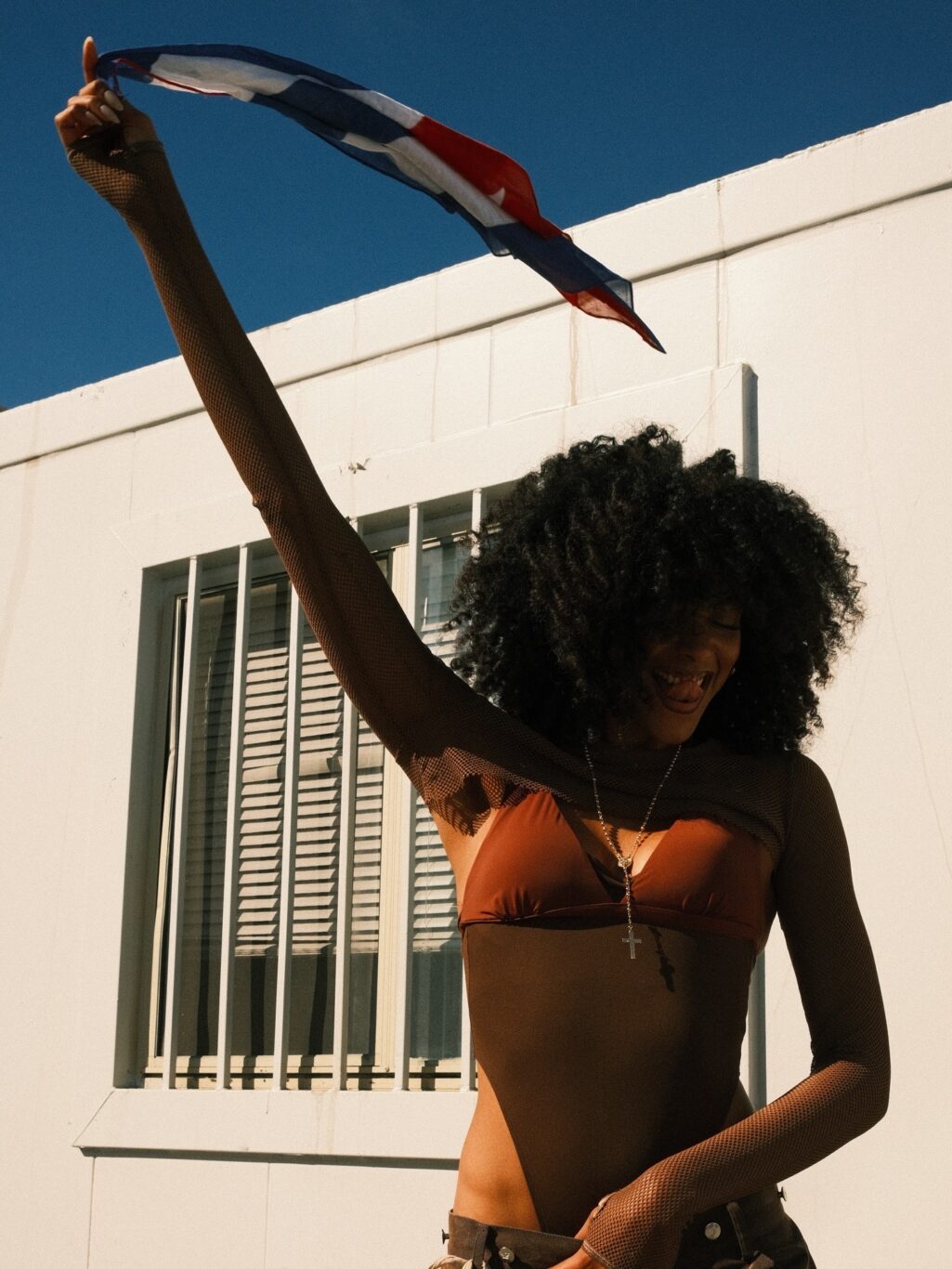
Yes. When I started university, I stopped dancing to focus on my studies in Criminology and Education. Many children of immigrants are taught that education always comes first. Although I had my family’s support with dance, I didn’t see how I could turn it into a real profession. I became very depressed during that first year of university and, before starting my second year, I decided that art and dance were the only things I couldn’t leave behind. Today, in addition to my professional career in the business world, I have a degree in dance.
How has your experience as an immigrant influenced your artistic identity and the way you present yourself on stage today?
My experience as an immigrant and the Cuban culture I carry within me are present in everything I do artistically and in how I present myself on stage. I’m not afraid to intertwine what I learn today with what has been with me since I was born in Havana: from how I dress in rehearsals, to the hip movements I add to the choreography or feeling that all of Cuba is with me every time I step onto a stage.
Before the Super Bowl, what do you consider to be the most important moments or projects of your professional career?
Before the Super Bowl, one of my favorite projects was the campaign I filmed with Agent Provocateur in 2022. It filled me with pride that Cuban beauty was highlighted globally. I also fondly remember shoots and videos that allowed me to further explore acting, such as “XQ te pones así” by Feid with Yandel, and “Hands on me” by Jason Derulo with Meghan Trainor.
Throughout your career, you’ve also worked with major Latino artists, like Jennifer Lopez. What have those collaborations meant to you, and what did you learn from them?
Working with Latino artists always feels different because it becomes personal. They remind me of when I was a little girl dreaming from my living room every time I saw them on TV. I’d look at my mom with wide eyes and tell her that one day I was going to do that too. I never knew how, but I knew it would happen. Working with them is a feeling that’s hard to explain: they remind me that anything is possible.
How did you receive the news that you would be participating in the Super Bowl halftime show with Bad Bunny?
The news came to me unexpectedly. When I joined the dance troupe, along with five other Latino dancers from Miami, they had already been rehearsing for weeks with more than 140 dancers. They called us because they were developing camera moments and wanted performers who could authentically represent Latino culture. That’s how the “Gasolina” moment was born. Everything happened so fast and we had to learn the entire show in just a few days, but we pulled it off. My heartfelt thanks to the choreography team — Charm La’Donna, Karina Ortiz, Jovanni Soto and Melany Mercedes — for creating a unique and authentic Super Bowl with such a beautiful message.
Tell us about preparing for such a demanding performance.
There were many days of rehearsals in both Los Angeles and Santa Clara, California. The physical demands increased as the show progressed, and each day I danced more choreography. The long nights and the physical strain were especially noticeable in Santa Clara, when the hundreds of people who were part of the Super Bowl joined us. For me, it was crucial to stay focused and take care of my warm-up and rest to arrive at the performance with the same energy I had when I started rehearsals.
Your most visible moment was when Daddy Yankee’s “Gasolina” played. What do you remember about that moment?
From the moment I knew I would be the girl in front of the camera when “Gasolina” played, I felt like my heart was going to burst. That moment when Benito opened the door to “La Casita” was very meaningful. It’s important to remember where reggaeton comes from: before it was global music, it was the expression of a community that was discriminated against and marginalized in the Caribbean and Latin America for many years. It fills my heart that so many people connected with that tribute.
When the camera focused on you in close-up, what did you want the world to see about Cuba and about yourself?
That’s a difficult question to answer, because I would have wanted them to see everything. Beyond who I am as a dancer, I wanted them to see who I am as a person and the beautiful island I carry with me wherever I go. I wanted them to see not only what we have already contributed to art and music, but also everything we still have to contribute. I also want them to understand that the current state of Cuba cannot sustain the great light that its people carry within, and that we need help. But we are still here, proudly Cuban.
At what point did you become aware that your dance represented a collective history: that of Afro-Latino and migrant women?
Since childhood, I have felt that my connection to dance goes beyond myself. I had the opportunity to study the history of African, Afro-Caribbean and Indigenous dances, and for me, it is essential to know the culture before the steps. I am here thanks to my ancestors, those who survived colonialism and preserved their roots. It has not been an easy struggle for Afro-Latino and migrant women, and I carry that history with me. I hope that when they see me, they see themselves and know that if I am there, they can be there too.
What would you have liked to see when you were a child, and what responsibility do you feel today as a role model?
As a child, I had many insecurities about my identity. I grew up in a time when inclusivity wasn’t as common as it is today. I would have liked to see more brown skin, curly hair, diverse nationalities and different body types. I’m happy to know that’s changing. The greatest responsibility I feel today is to continue being authentically myself: to be the woman I always wanted to see as a child.
What does it mean to you to represent Cuba on an international stage like this?
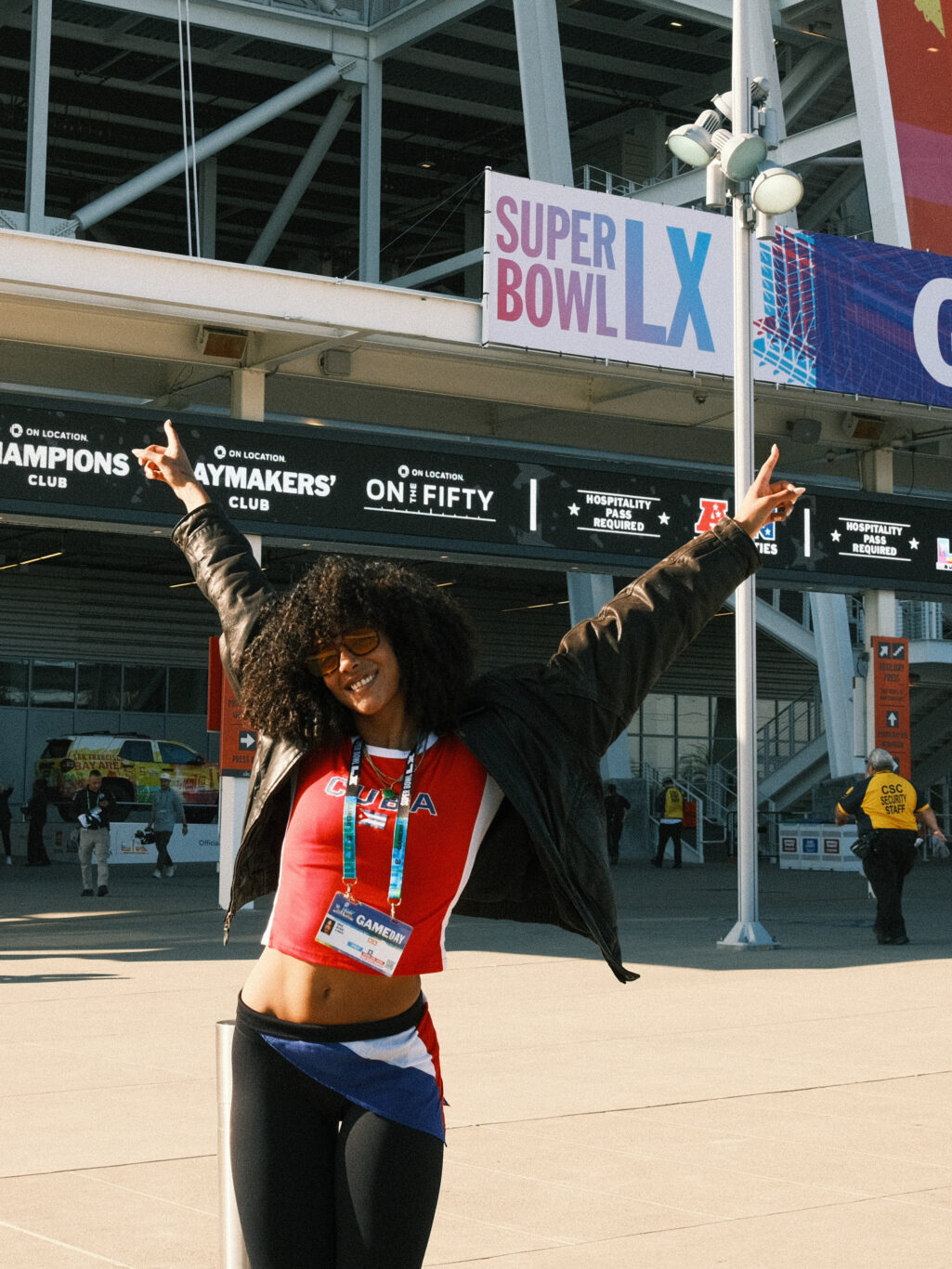
Representing Cuba at the Super Bowl with Benito is a dream come true. Being able to proudly raise my flag at such a culturally and politically significant moment is something I will never forget.
What message would you send to other Cuban artists who dream of making it outside the island?
Never try to fit in. Let’s remember that we are people of music, dance and art. If you manage to leave the island, do everything you can to fulfill your dreams, not only for yourself, but for those who are still dreaming in Cuba.
Do you think experiences like this can open more doors for Latino talent?
Yes. I hope this show has demonstrated that Latino talent fully deserves its place on the global stage.
Would you like to explore other areas of entertainment?
I’m definitely interested in artistic and creative direction. I would like to work on the choreographic side or in artistic development at some point in my career.
Are there any collaborations that you are particularly excited about?
Ever since I was a little girl, I’ve dreamed of working with Beyoncé and Rihanna. I identify with both of them since discovering their music, and I’ve always wanted to contribute to their artistic visions. I also hope to expand my career into acting. We’ll see what comes next.






