At the recent first session of the National Assembly of People’s Power, one of the relevant issues was related to the “activity of science, technology and innovation.” This was so given Cuba’s characteristics, its relatively little amount of natural resources – even when the few we have are not well used -, having a highly qualified workforce and because the tendencies of our demographic evolution fully show that our population is aging. Because of all those reasons, the role of science, technology and innovation is decisive.
Moved by this topic, I am listing some proposals to use more efficiently the human resources in favor of Cuba’s development.
Without good schools and good professors at all levels, we won’t be able to have a good science or good technology or be good at innovation. Schooling is basic, from elementary education – and especially in those three first grades – up to the universities. That is the first thing we have to recover. If today we still have a good scientific plant it is because thanks to the educational policy of the Cuban Revolution we had good schools and very good teachers.
By guaranteeing this first step, then it obviously it is in keeping to give more resources to the activity of science, technology and innovation. The data doesn’t allow us to lie. The amount of resources that Cuba allocates today to that activity (as a GDP percent) is much less than a few years ago, and much less than what the State dedicates to maintaining an absolutely inefficient and even less strategic sector as the “so-called” state-run commerce and gastronomy (in CUP as well as in CUC). A part of those resources could be used in science, technology and innovation.
This situation of allocating few resources to science and technology is, to a certain extent, incongruent with what the international tendencies reveal, since for a greater qualification of the workforce greater resources are required in I + D + i. It is true that there are restrictions, but there is also an issue of allocation or inefficient allocation of the resources. I again use the example of the moneys dedicated to that sector of commerce and gastronomy, which could have a better destination. In this case it is a problem of bad allocation. That is to say, resources generated by the people are allocated to sustain low productivity activities and with a scare impact on innovation as well as in the future development of Cuba. If to this we add that generally the management of those incorrectly allocated resources is to a great extent inefficient, then we have the worst of all the possible combinations.
Let’s take a look at exports. Neither is our structure of export of goods in keeping with the qualification of our workforce and the amount of scientists per inhabitants there is in Cuba. The majority of our goods exports is concentrated in goods of low and medium technological complexity, like sugar, cigars, rum, nickel sinter, white oil derivatives. With the exception of the oil derivatives, the rest have been products we have exported during the last 200 years and in the case of nickel since the 1940s. The new products with a significant weight in exports are only those of the companies of the biotechnological hub. This situation changes if we incorporate the services, in this case for the contribution of medical services, but we still haven’t achieved that that export generate sufficient links for the rest of the national economy.
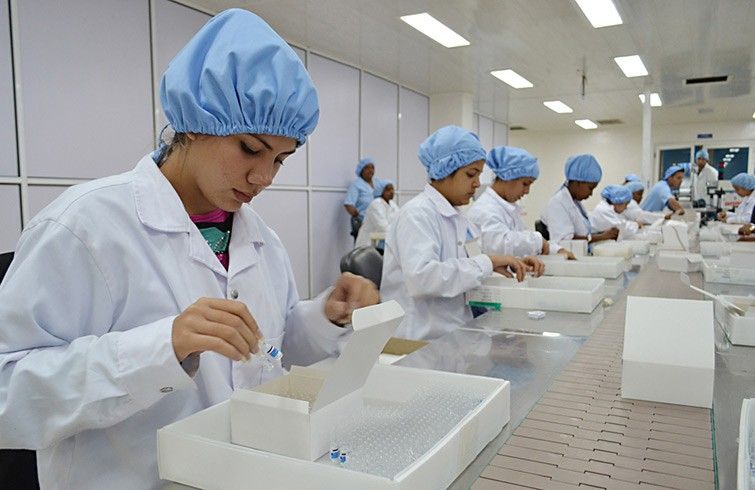
Biotechnology would be the exception in this case. It receives highly qualified human resources and generates products with a high added value. But in other sectors like industry and agriculture there is no comparison. It is probable that Cuba has more agricultural and livestock engineers and scientists per hectare of land being produce than any other country in Latin America, but our yields and production levels, except for the rare exception (potatoes), are far from those countries’ yields.
There is also a problem of efficient assignment of qualified workforce. Researches carried out in the Faulty of Economy of the University of Havana show that the assignment of university professionals to certain sectors is not in keeping with their export potentials. That is to say, sectors with export potentials receive less highly qualified persons than others that barely export. It is necessary to rectify this and assign qualified labor resources to the sectors and enterprises that most contribute to exports.
The sugar cane industry can be another example. Today we have production and yield levels from the early 20th century, but we have a human capital as few countries in the world have despite the drain that occurred starting 2004.
The third is an industrial policy that promotes the production of new products and adequately rewards innovation and qualification, and I add, an inclusive industrial policy, which doesn’t marginalize because of forms of ownership. The Cuban industrial policy must be thought out and think of Cuba and its economy as a whole. The best example I have today at hand is in the software engineers and the designers, but there are many more. Even in the field of the renewable energies there are persons interested in developing cooperative projects and their proposals are still sitting around waiting to be looked at.
The fourth is achieving that all the provinces generate and promote initiatives on a local level to better use the existing qualified workforce. I believe territorial policies that complement the national policies should exist.
This is an issue that has diverse expressions and specific solutions also on the level of each locality. Having a mining engineer in a province with mining wealth, who exercises as a Marxism professor is a medical school doesn’t seem the optimum solution. I repeat that I don’t know of territorial strategies to achieve a more effective use of that workforce they have today. Perhaps they do exist, but I have no knowledge of them. We spend hours debating the issue of the services, or of the bread or the potatoes, it’s understandable, they are daily affairs that affect the people, it is the immediate. But I don’t frequently read in the national press about debates in the provinces about the efficient use of the qualified workforce they have.
But to achieve those policies the local governments must have greater possibilities of carrying out and putting into practice their own initiatives.
Obviously all of this goes through an adequate wage policy, which rewards qualification and above all the results associated to qualification, and in that case there is still much to be done. But it can’t be that the engineers who produce goods of first generation technology and generate more than 100,000 in exports, earn between 10 and 20 times less than their peers in countries with GDP levels similar to those of Cuba, or much less than a private taxi driver.
This wage policy in force, which still hasn’t been able to be changed, is contrary to the vision of country which has been assumed, but I warn that achieving radical changes in it can produce very strong fiscal tensions due to the money exchange distortion. In any case, what is worse is to continue delaying the solutions and to make them depend on a productivity growth that can continue taking a considerable time.
I also believe that the conception of planning of the workforce must be radically modified. How it is done depends on another moment of the economic reality of our country, surpassed years ago. In fact, I think that one of the tasks of the present that should not be delayed much is to make an in-depth review of the mechanisms involving the planning and assignment of recent graduates, as well as the seats in university careers.




In an economy subjected so much to short-term changes in such a dynamic world submerged in a fourth technological revolution, it is very difficult to think that the mechanisms that are currently used to plan the formation of qualified workforce can be really effective. I am not proposing to stop making a strategic exercise in relation to each year, on the contrary, the problem is that the one we make today apparently is not the one that is needed.
It occurs in the education sector, where we also have many professors in bureaucratic posts, as officials, specialists in human resources, etc. However, professors are needed in almost all the educational levels.