ES / EN
- March 31, 2026 -
No Result
View All Result
OnCubaNews
  • World
  • Cuba
  • Cuba-USA
  • Opinion
    • Columns
    • Infographic
  • Culture
    • Billboard
  • Sports
  • Styles / Trends
  • Media
  • Special
  • Cuban Flavors
  • World
  • Cuba
  • Cuba-USA
  • Opinion
    • Columns
    • Infographic
  • Culture
    • Billboard
  • Sports
  • Styles / Trends
  • Media
  • Special
  • Cuban Flavors
OnCubaNews
ES / EN
Home Cuba

Four thousand lithographic stones: the discovery of a treasure in Havana

It was the photographer and researcher Julio Larramendi who noticed the narrow opening in the wall that gave way to the treasure.

by
  • Rafael Acosta de Arriba
    Rafael Acosta de Arriba
April 22, 2023
in Cuba
0
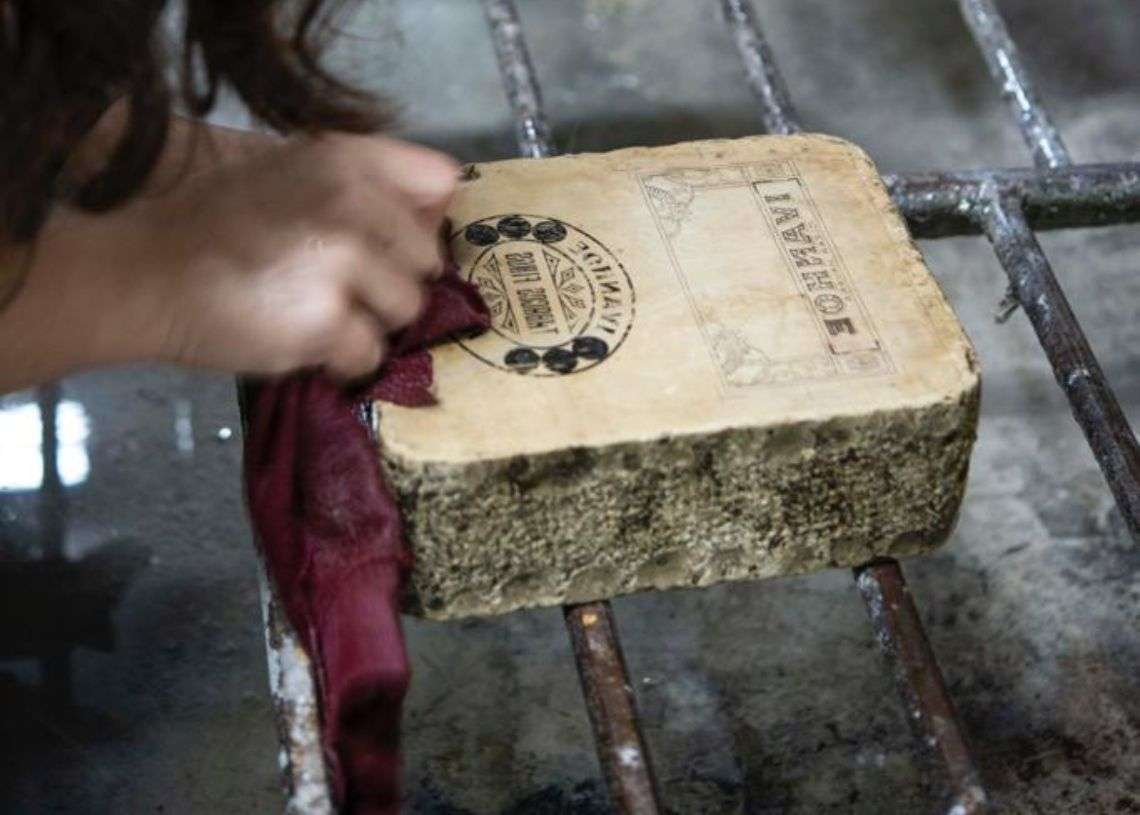
The stones that required a more intense wash were those that at the time were protected with an adhered paper. Photo: courtesy of Julio Larramendi.

The stones that required a more intense wash were those that at the time were protected with an adhered paper. Photo: courtesy of Julio Larramendi.

A surprising find occurred recently at the Engraving Experimental Workshop of Havana (TEGH): a batch of 4,000 lithographic stones stacked in a dark and narrow space in a corner of the workshop.

The stones, with their stamped inscriptions and images, had been there for decades. It was the photographer and researcher Julio Larramendi who, looking for a specific stone to illustrate one of his books, noticed the narrow opening in the wall that led to the treasure.
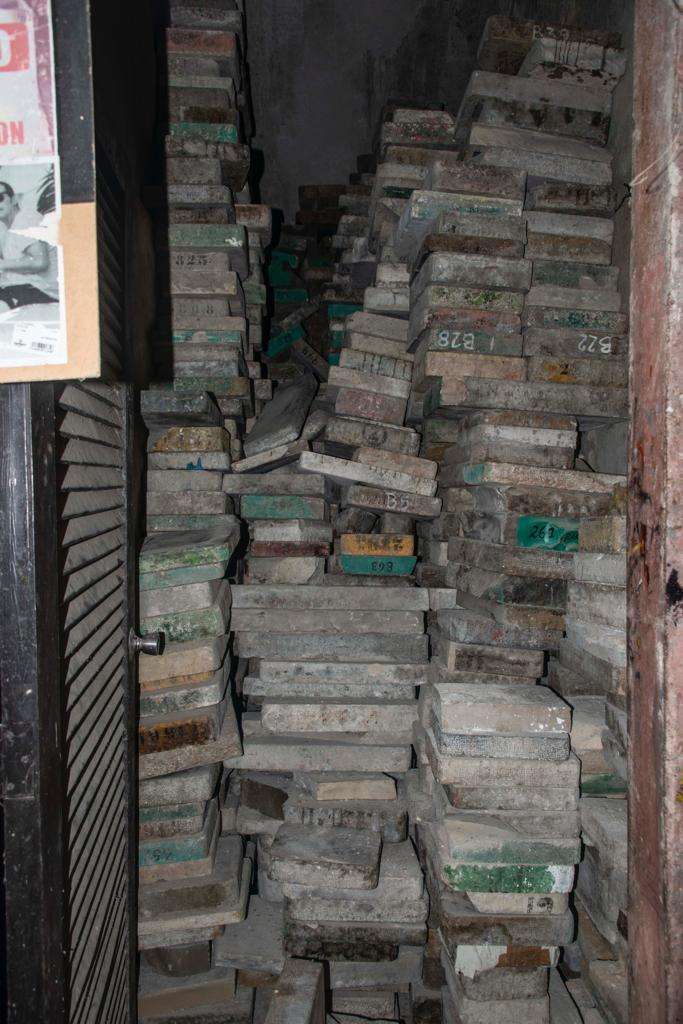
Original state of the deposit of the lithographic stones in the Engraving Experimental Workshop. Some 4,000 units were found. Photo: courtesy of Julio Larramendi.

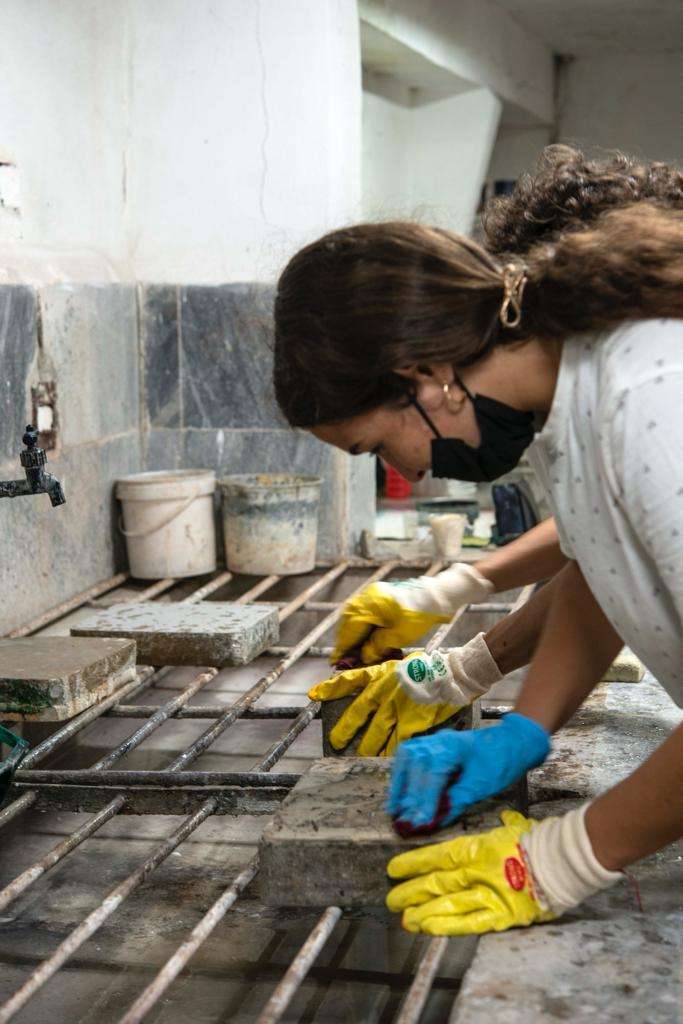
After this, a process of cleaning and identification of the images engraved on their surfaces, as well as their possible authors, began. The prints were studied and classified. Some sixty students from the Information Sciences course at the University of Havana and the same number from the Workshop School of the Office of the City Historian carry out these tasks.

Duly protected and under the supervision of experts, these young people have extracted the stones one by one to move them to a nearby gallery, always inside the Workshop, an institution that has preserved this heritage for all these years.

The students of the Faculty of Communication begin the extraction and transfer of the stones.
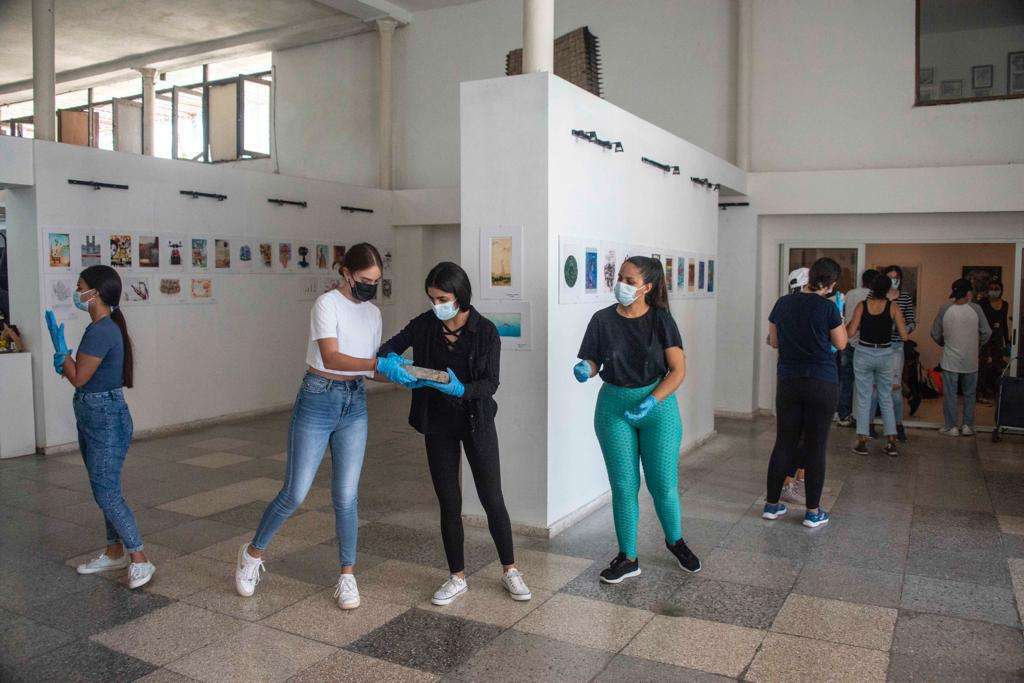
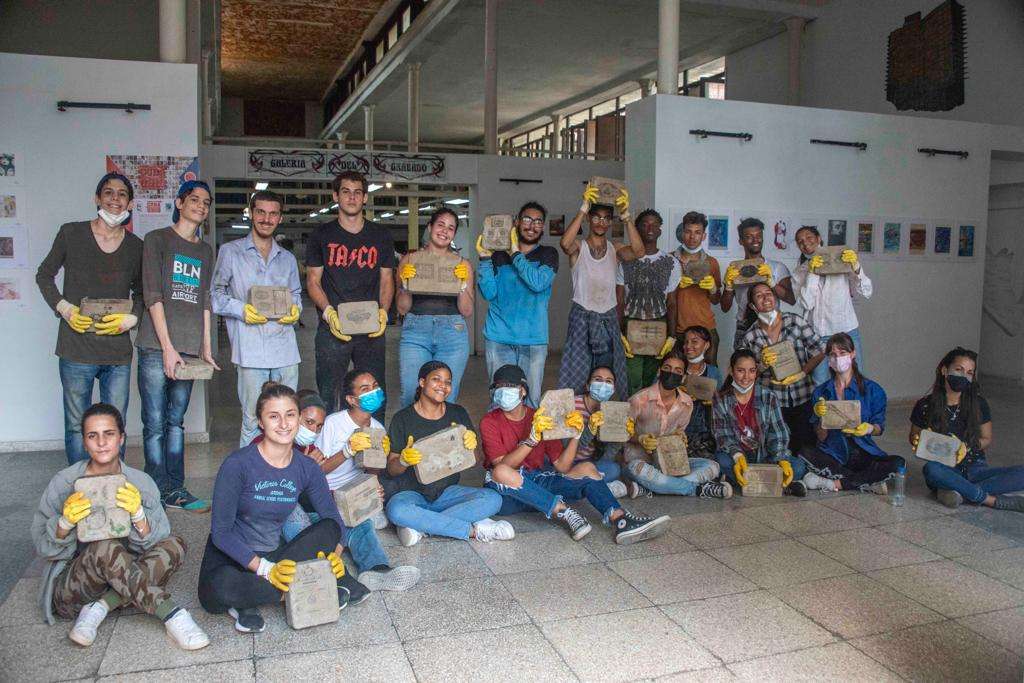
A total of 62 first-year students participated in the first phase of the project. Photo: courtesy of Julio Larramendi.

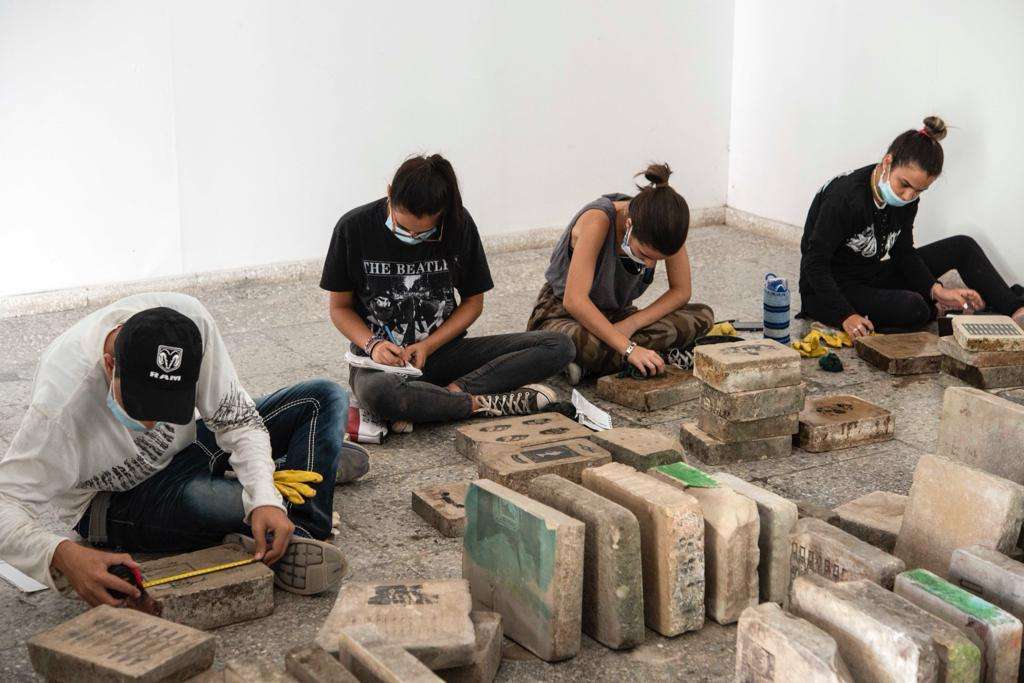
This singular team has processed two thousand pieces. Each one has gone through three phases: definition of the state of conservation of the stone and its inscription; washing and scanning of the stone and the stamp drawn on it; and, finally, classification (for example, those that are considered artistic drawings are immediately delivered to the TEGH).
Related Posts

Uranga Collections project in Old Havana

Uranga Collections: a home for Cuban collectors

March 26, 2026
Havana Malecón. Cuba

Flash: Havana that doesn’t go completely dark

March 17, 2026
Cardiovascular medical procedure in Cuba.

More than 96,000 patients await surgery amid U.S. oil embargo, warns health minister

March 14, 2026
Holy Greek Orthodox Cathedral Church of St. Nicholas of Myra. Havana

St. Nicholas of Myra: a Greek Orthodox church in the heart of Old Havana

March 11, 2026
Some pieces required a previous washing. It was done very carefully so as not to affect the drawing. Photo: courtesy of Julio Larramendi.

Once this process is finished, the stones are returned to a provisional space within the Workshop until it is decided what to do with them. In a month or so, the work should be completed.

This process was supported by software developed at the Faculty of Information Sciences that allows saving the data obtained and identifies the student who did the work. Subsequently, research can be carried out on the topics represented in the stones.


Once clean, the stones are measured, classified by drawing quality, identified by themes, scanned with phones, and photographed. Photo: courtesy of Julio Larramendi.
At the end of one of the cleaning and cataloging sessions, each student in this brigade chose the stone of their choice. Photo: courtesy of Julio Larramendi.

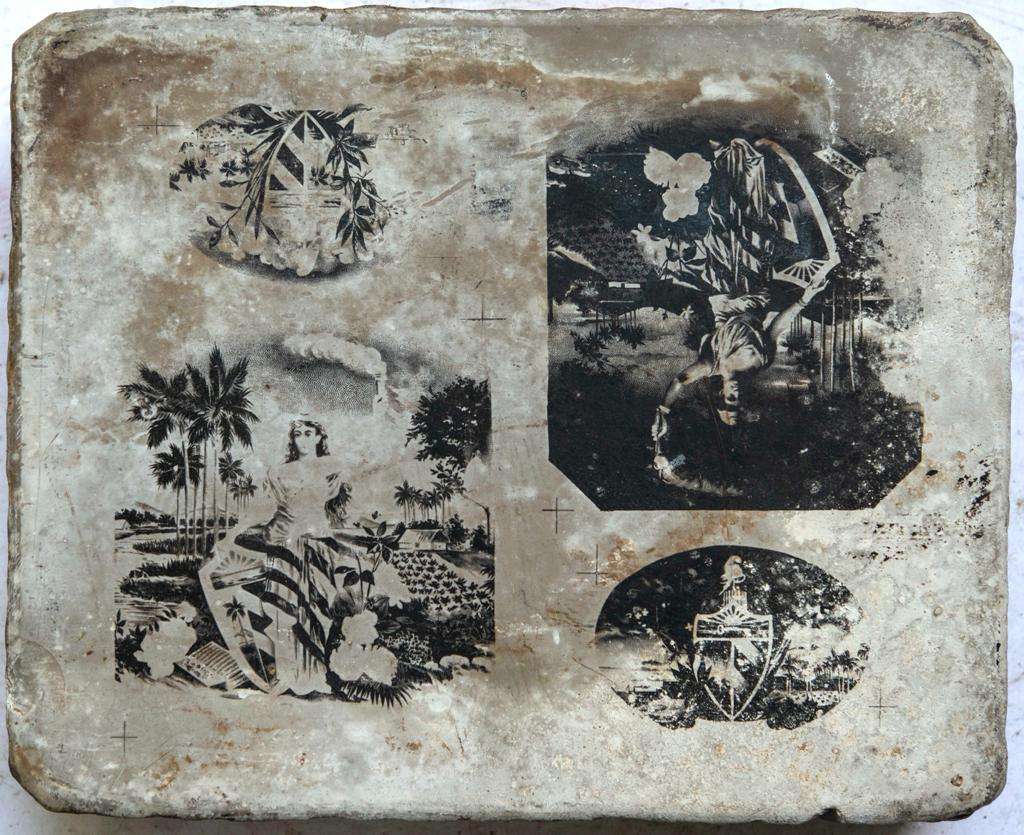
The pieces have enormous heritage value. Among them stand out stones with the signature of Roberto Matta, Antonia Eiriz, Víctor Manuel, Manuel Mendive and Antonio Canet, among other recognized artists.
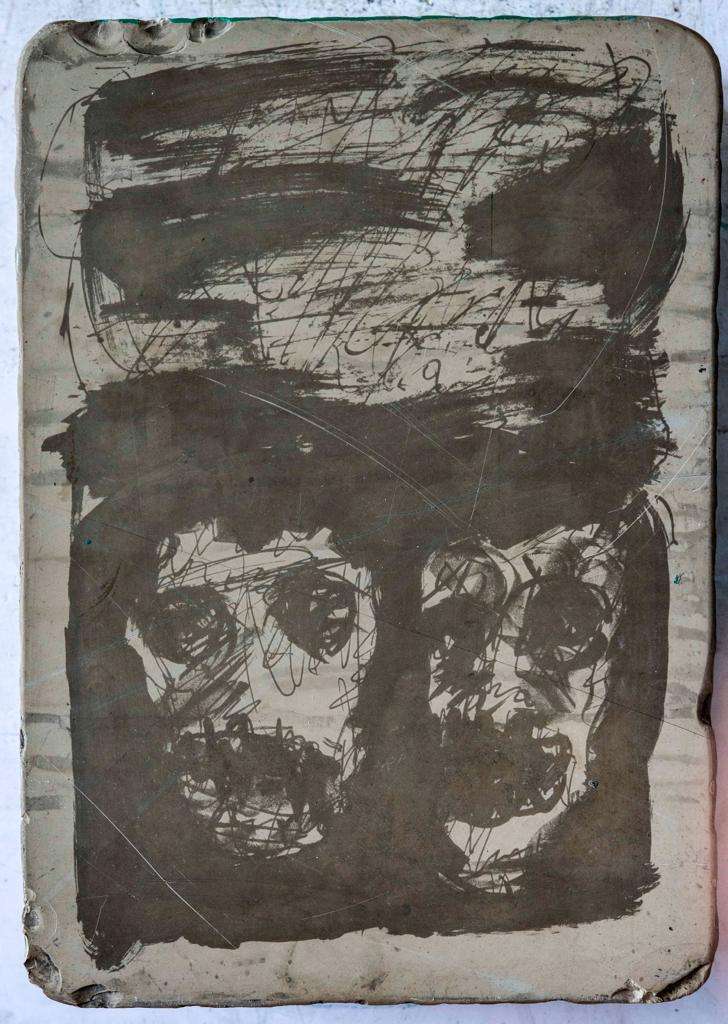
Stone worked by Antonia Eiriz. Photo: courtesy of Julio Larramendi.

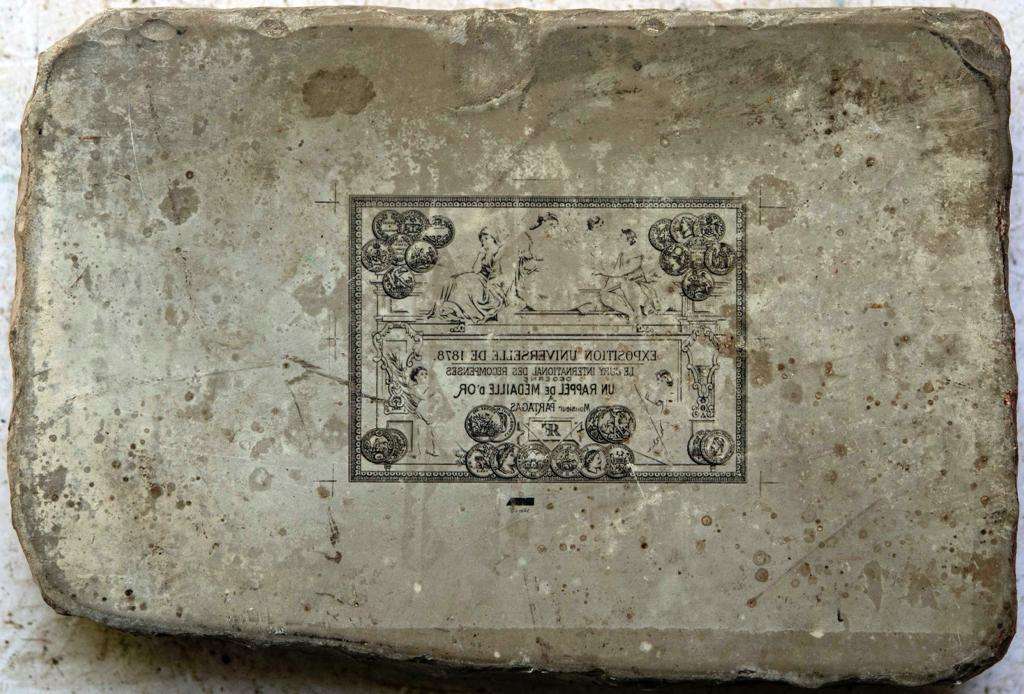
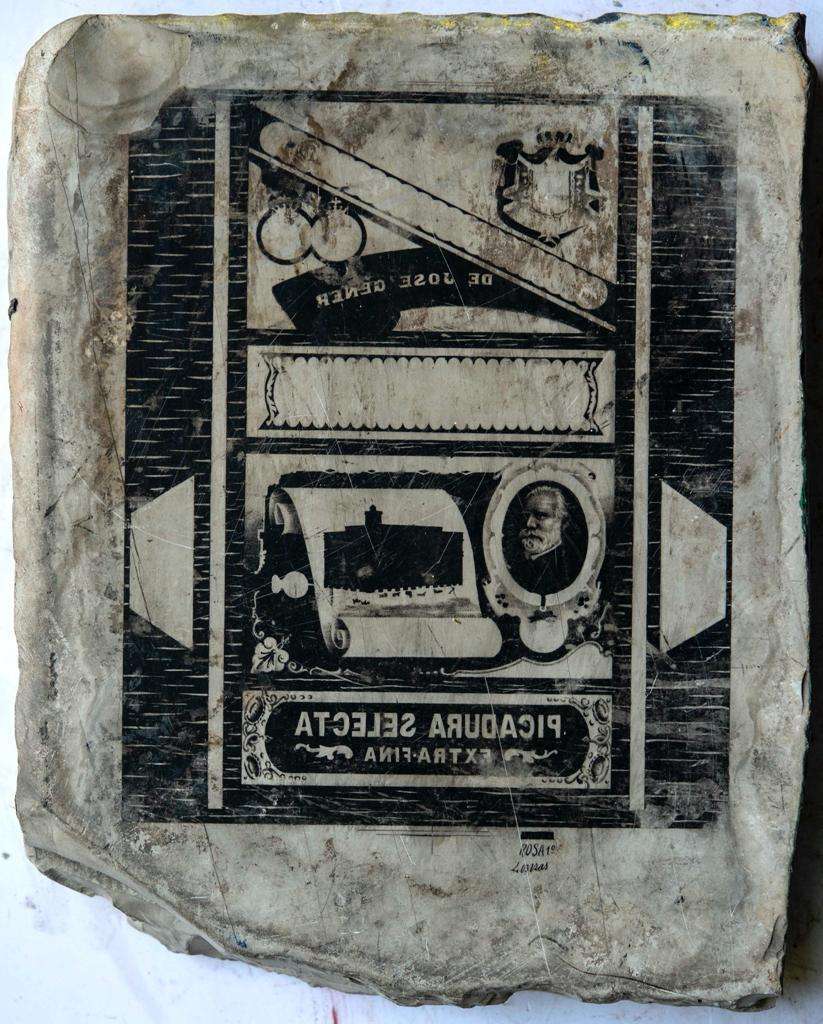
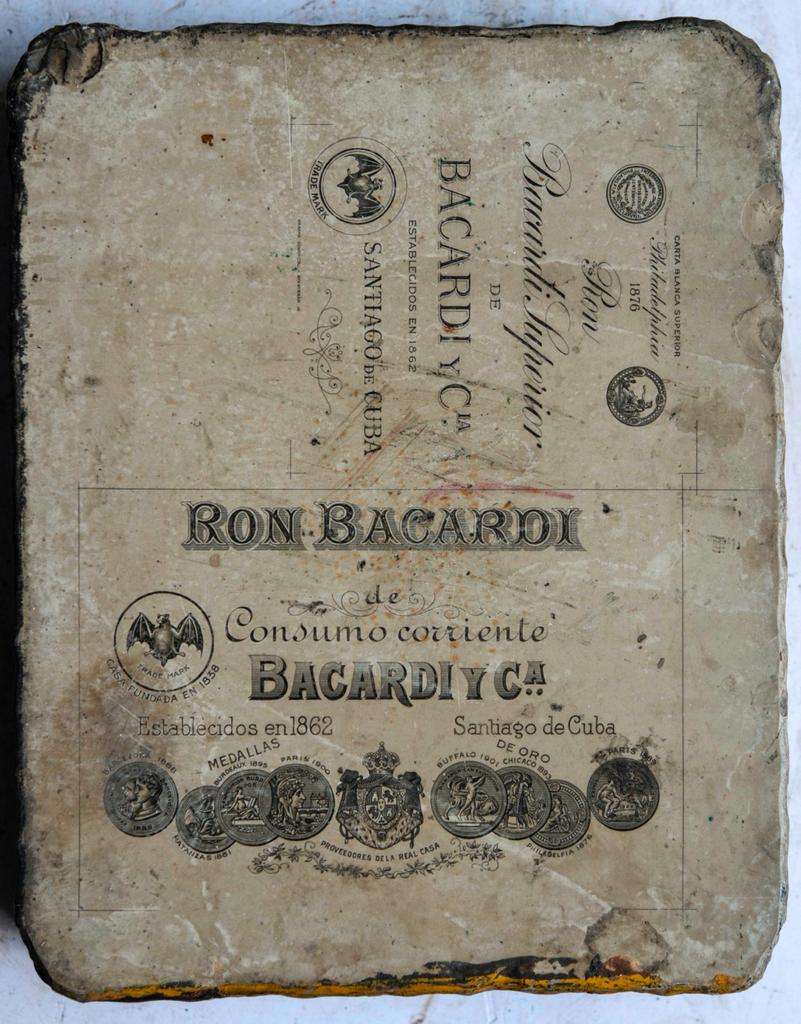
In addition, others no less valuable pieces reveal their use for commercial purposes associated with the tobacco industry, first of all, and with beverages and liquors, fruits, perfumery, pharmacy, and chocolates.

This could be the prelude and foundation for various exhibitions, books and other actions of artistic and cultural value. It could even revive an old dream: the creation of a museum of Cuban engraving.
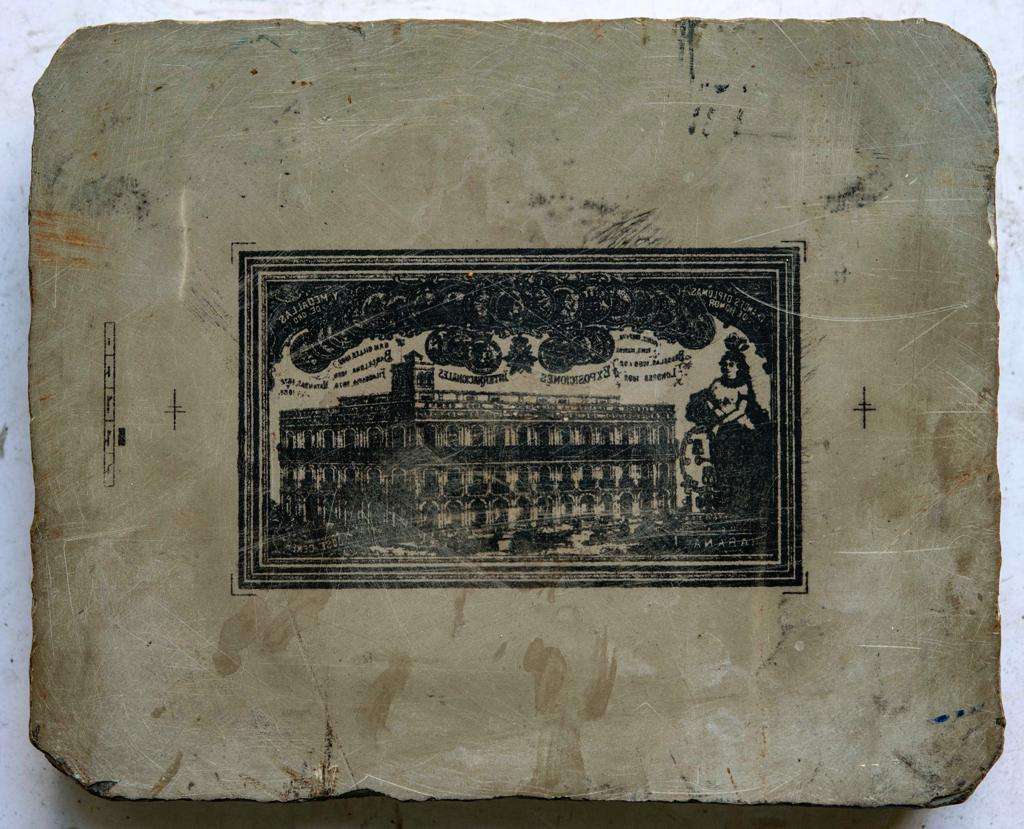
Based on the drawings it has been possible to date the lot between the end of the 19th century and the middle of the 20th. Photo: courtesy of Julio Larramendi.

Stone stamping in Cuba had as antecedents the engraving on wood and metal in the 18th century. Then the lithographic technique arrived from Europe, associated at first with the musical development of the colony. Sheet music and other musical prints were the first use for these prints. Then came the rural and city landscapes, the portraits of colonial personalities and the scenes of types and customs of insular society. Lithographic art has left us excellent books, today classic pieces of our literature and visuality.

According to various studies, a French miniaturist painter who had lived on the island for years, Santiago Lessier Durand, established the first workshop in Havana in 1822. From then on, a solid lithographic tradition began to develop.

This is confirmed, in her book La memoria en las piedras (Ediciones Boloña, 2001), by the renowned researcher Zoila Lapique Becali, Honorary Member of the Academy of History of Cuba and an authority on the subject.

Subsequently, the lithographic activity was modernized and industrialized in order to produce the largest number of copies of the prints for commercial purposes.
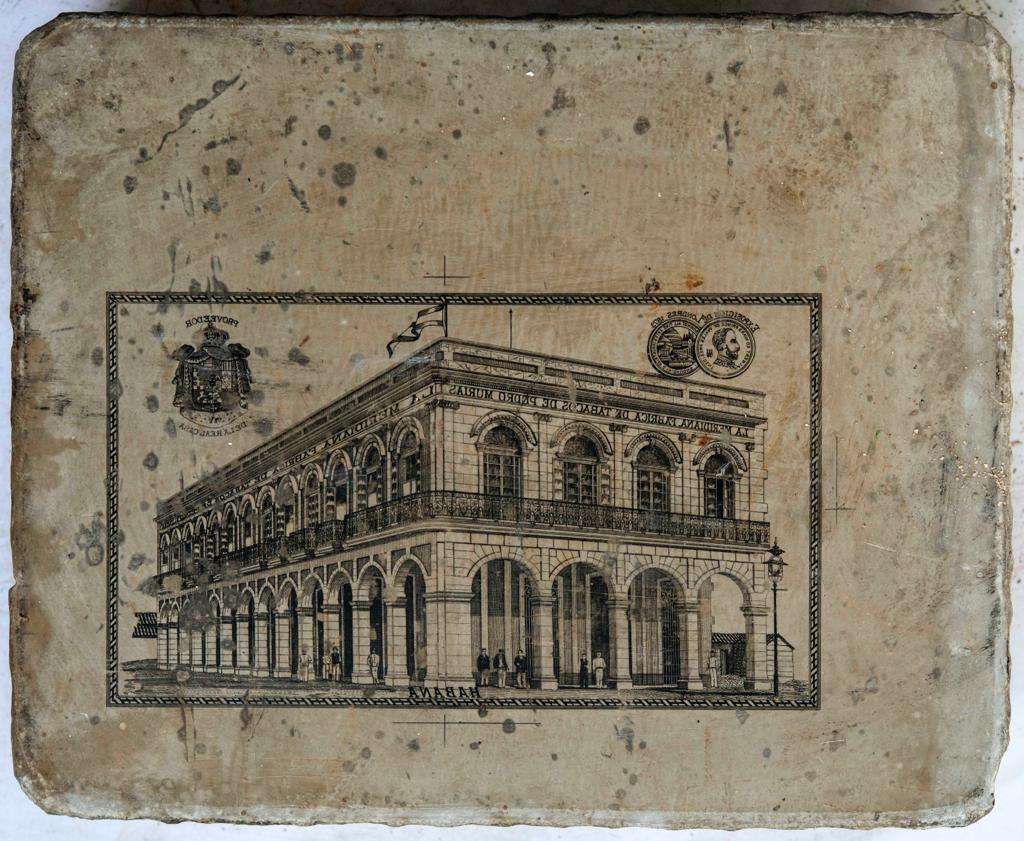
 

1 of 6
- +
ADVERTISEMENT

1. Lithographic stone of the Tobacco Factory.

2. Numerous beverages, from Cuban rums to Spanish wines, used labels printed by the Havana Lithographic Company. Photo: courtesy of Julio Larramendi.

3. Stone for the impression of factory authorization.

4. Stone for printing cigarette packs.

5. Lithographic stone for the wrapping of pipe tobacco.

6. The national symbols begin to appear on tobacco permits at the dawn of the 20th century. Photo: courtesy of Julio Larramendi.


This is how the first half of the 20th century went. With the political and cultural dynamics that began with the triumph of the Cuban Revolution, it was a matter of time before a Workshop for artistic engraving was created.

In July 1962, the TEGH was founded, located today at the end of the Callejón del Chorro in the Plaza de la Catedral, Old Havana. This emblematic institution began to work with disposable equipment from the former Havana Lithographic Company. During its existence, it has gone through several stages in terms of development, but it has always been the epicenter of the creative work and exhibition of engravers in any of the techniques. Before settling in its final location, the Workshop was in other buildings, including the Palace of the Marquis of Arco.

There is a version of its history that speaks of the fact that its presses, plates and stones were in serious danger due to the defensive fever that prevailed in the first revolutionary years. Lithographic stones were used at this time to create parapets and barricades. The machines would be melted down for the same military purpose, in the face of continuous aggression and threats from the United States.

It is also said, in this version, that Che Guevara and the poet Pablo Neruda — the latter visiting Cuba and attentive to the claims of the local engraver José Venturelli, a worker at the Workshop — intervened jointly in favor of the Workshop not becoming extinct.

In the institution’s six-decade history, the best Cuban engravers and many artists of other nationalities have passed through its machines and produced splendid pieces of art, while exhibitions and events have been held that have exalted the tradition of engraving on the island.

  • Rafael Acosta de Arriba
    Rafael Acosta de Arriba
Tags: Cuban culture
Previous Post

Three ferocious tigers devour the Big Apple

Next Post

Mireya Luis’ great jump

Rafael Acosta de Arriba

Rafael Acosta de Arriba

Next Post
Mireya Luis at her home in Havana, January 2020. Photo: Jorge Luis Coll Untoria.

Mireya Luis’ great jump

Long lines to buy fuel in Havana. Photo: Otmaro Rodriguez.

Fuel crisis in Cuba: the long wait

Fentanyl is a synthetic opioid 50 times stronger than heroin and 100 times stronger than morphine. Photo: Aristegui Noticias.

Fentanyl, another U.S. war

Leave a Reply Cancel reply

The conversation here is moderated according to OnCuba News discussion guidelines. Please read the Comment Policy before joining the discussion.

Your email address will not be published. Required fields are marked *

Most Read

  • The Enchanted Shrimp of the Cuban Dance

    5986 shares
    Share 2394 Tweet 1497
  • U.S. actress Susan Sarandon praises Cuban vaccines and calls for end of embargo against the island

    181 shares
    Share 72 Tweet 45
  • Flash: Havana that doesn’t go completely dark

    13 shares
    Share 5 Tweet 3
  • Uranga Collections: a home for Cuban collectors

    4 shares
    Share 2 Tweet 1
  • Who are Cuba’s main economic partners?

    84 shares
    Share 34 Tweet 21

Most Commented

    • About us
    • Work with OnCuba
    • Terms of use
    • Privacy Policy
    • Moderation policy for comments
    • Contact us
    • Advertisement offers

    OnCuba and the OnCuba logo are registered® trademarks of Fuego Enterprises, Inc., its subsidiaries or divisions.
    OnCuba © by Fuego Enterprises, Inc. All Rights Reserved.

    No Result
    View All Result
    • World
    • Cuba
    • Cuba-USA
    • Opinion
      • Columns
      • Infographic
    • Culture
      • Billboard
    • Sports
    • Styles / Trends
    • Media
    • Special
    • Cuban Flavors

    OnCuba and the OnCuba logo are registered® trademarks of Fuego Enterprises, Inc., its subsidiaries or divisions.
    OnCuba © by Fuego Enterprises, Inc. All Rights Reserved.

    Manage Consent
    To provide the best experiences, we use technologies like cookies to store and/or access device information. Consenting to these technologies will allow us to process data such as browsing behavior or unique IDs on this site. Not consenting or withdrawing consent, may adversely affect certain features and functions.
    Functional Always active
    The technical storage or access is strictly necessary for the legitimate purpose of enabling the use of a specific service explicitly requested by the subscriber or user, or for the sole purpose of carrying out the transmission of a communication over an electronic communications network.
    Preferences
    The technical storage or access is necessary for the legitimate purpose of storing preferences that are not requested by the subscriber or user.
    Statistics
    The technical storage or access that is used exclusively for statistical purposes. The technical storage or access that is used exclusively for anonymous statistical purposes. Without a subpoena, voluntary compliance on the part of your Internet Service Provider, or additional records from a third party, information stored or retrieved for this purpose alone cannot usually be used to identify you.
    Marketing
    The technical storage or access is required to create user profiles to send advertising, or to track the user on a website or across several websites for similar marketing purposes.
    • Manage options
    • Manage services
    • Manage {vendor_count} vendors
    • Read more about these purposes
    View preferences
    • {title}
    • {title}
    • {title}