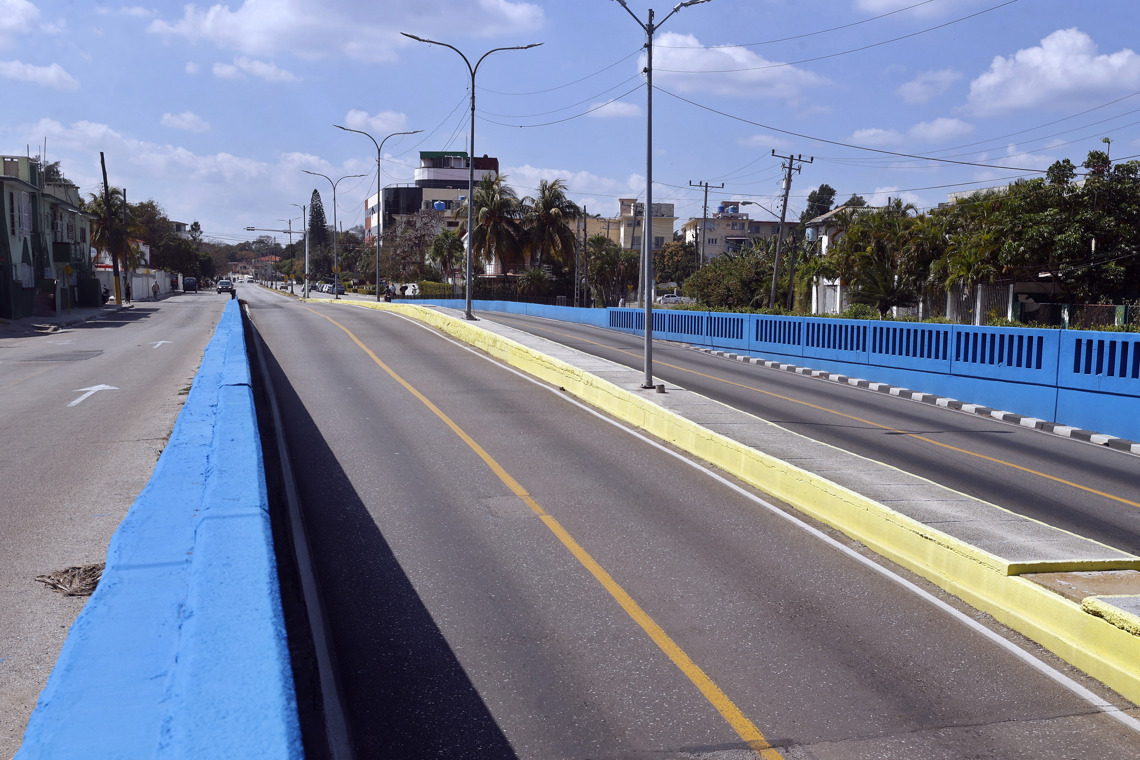
On February 20, US President Donald Trump signed an executive order entitled “Ending Certain Tariff Actions” that puts an end to additional tariffs imposed under the International Emergency Economic Powers Act (IEEPA) on a long list of countries, including the tariff threat against oil suppliers to Cuba. The order, which is global in scope, reverses measures that affected Mexico, Canada, China, Brazil, Russia, Iran, and Cuba, among others.
The immediate question arising in Havana is straightforward: does this mean the end of the oil embargo that Washington has imposed on the island since late January? The answer, with some nuances, is no.
What the February 20 order says—and does not say
The White House text is precise in what it eliminates and careful in what it preserves. The order explicitly repeals the additional ad valorem tariffs imposed under IEEPA, including those contained in Executive Order 14380 of January 29, 2026, which threatened to tax imports from countries that supplied oil, directly or indirectly, to Cuba.
However, the document is unequivocal on two key points. First, the national emergency declared on Cuba remains intact: “National emergencies declared or described (…) remain in effect and will not be affected by this order.” Second, any other action taken in response to those emergencies—that does not involve the imposition of tariffs under IEEPA—is also unaffected.
In other words, tariffs as a specific tool disappear; the legal architecture and other pressure measures do not.
The national emergency over Cuba is not new but dates back to 1996. It was originally declared by Bill Clinton on March 1, 1996, following the shooting down of two planes belonging to the organization “Brothers to the Rescue.” Since then, every president (Clinton, Bush, Obama, Biden, and Trump) has renewed it every year without interruption.
A month of oil blockade with real consequences
Trump escalated the situation by declaring on January 29, 2026, that Cuba represents an “unusual and extraordinary threat” to U.S. national security and foreign policy.
The measure established a system of secondary tariffs to punish any nation that maintained oil trade with the island. The declaration came at a time of extreme energy vulnerability for Cuba: weeks earlier, on January 3, a U.S. military operation in Caracas culminated in the capture of then-Venezuelan President Nicolás Maduro, which led to the sudden suspension of Venezuelan oil flows to the island.
The threat of tariffs served as an immediate deterrent. According to an exhaustive analysis published by The New York Times on February 20 and reproduced by multiple media outlets, oil tanker traffic to Cuba has practically stopped.
Mexico, which in 2025 had supplied 44% of Cuba’s imported oil, officially suspended its deliveries on January 27, pressured by negotiations on the United States-Mexico-Canada Agreement (USMCA) and dependence on the US market.
President Claudia Sheinbaum has attempted to walk a fine line by sending humanitarian aid.
On February 9, the U.S. Coast Guard intercepted the tanker Ocean Mariner, which was carrying more than 84,000 barrels of Colombian fuel oil bound for Havana, in a sign that the oil blockade has not been merely rhetorical. The pressure extends to shipping companies, insurers, financial intermediaries, and ports.
The humanitarian impact: hospitals, MSMEs, and 20-hour blackouts
The consequences for the Cuban population have been immediate and well documented. On February 23, Minister of Public Health José Ángel Portal Miranda warned that the energy deficit is already affecting ambulance services, causing blackouts in hospitals, and forcing the suspension of flights carrying medical supplies. “It is not rhetoric to say that this situation can put lives at risk,” the minister stressed.
The impact on the private sector is no less significant. A study by the private consulting firm Auge, published on February 21, revealed that 96% of Cuban micro, small, and medium-sized enterprises are on the verge of collapse. With blackouts lasting up to 20 hours a day and black market fuel prices exceeding $6 per liter—more than 3,000 or 4,000 pesos—the private business sector is facing its biggest crisis since the opening of 2010.
On February 13, three UN experts and rapporteurs condemned the threat of tariffs, calling it a unilateral act that violates the principles of sovereign equality and free trade, and warned that the blockade measures “may end up constituting collective punishment of civilians.” The rapporteurs also noted that the January 29 executive order lacks the authorization of the UN Security Council.
What tools does Trump have left to prevent the oil tanker from reaching Cuba?
The removal of tariffs under IEEPA does not mean that Washington has no alternative instruments to pursue this policy, and recent history suggests that it is willing to use them.
Naval surveillance. The US Coast Guard and Navy maintain a significant military presence in the Caribbean, the largest in decades, according to the Times. The interception of the Ocean Mariner demonstrated that the capacity for physical blockade exists and is exercised independently of tariffs. Bloomberg reported on February 20 that a tanker carrying Russian fuel—the Sea Horse, with about 200,000 barrels of diesel—was heading for Havana, testing precisely that naval blockade.
Financial sanctions and the Helms-Burton Act. The embargo/trade blockade against Cuba, codified since 1996 in the Helms-Burton Act, remains intact. This law allows for the sanctioning of companies and individuals who “traffic” in confiscated property in Cuba and has extraterritorial reach. Shipping companies, insurers, and banks that facilitate oil shipments remain subject to sanctions by the Treasury Department (OFAC) regardless of tariffs.
Sections 232 and 301 of the Trade Act. The Trump administration could apply tariffs under sections 232 (national security) or 301 (unfair trade practices) of the US Trade Act, legal bases that have been historically validated by the courts.
Bilateral diplomatic pressure. Washington has proven effective in convincing trading partners—Mexico being the clearest example—that the cost of supplying oil to Cuba outweighs the benefit. That pressure does not depend on any specific tariff instrument: it is pure geopolitics, and the new executive order does not eliminate it.



The broader strategy
Behind the oil blockade lies a more ambitious strategy that combines energy suffocation, international financial pressure, and discreet contacts with sectors of the Cuban system and opposition, with the aim of promoting the fall of the government and a transition.
On Monday, the Cuban government reaffirmed its decision to resist US pressure but declared itself open to “respectful” dialogue. Foreign Minister Bruno Rodríguez Parrilla denounced the “collective punishment” of the energy blockade before the UN Human Rights Council. Trump, for his part, has stated on several occasions that negotiations are underway with the island’s authorities; Havana describes them as mere “technical exchanges on specific matters.”
The suspension of tariffs is not the end of the energy blockade on Cuba. Rather, it represents a tactical reconfiguration—derived from the Supreme Court’s decision on tariffs—that leaves the pillars of the blockade intact: naval presence, the historic embargo, financial sanctions, and diplomatic pressure.
For Cuba, relief seems unlikely. The island needs around 100,000 barrels per day of crude oil and derivatives, and its domestic production covers only 40% with sulfur-laden oil that is used primarily for electricity generation in the island’s deteriorated thermoelectric plants.
The energy “zero hour” that several analysts project for the first weeks of March has not receded with the signing on February 20.