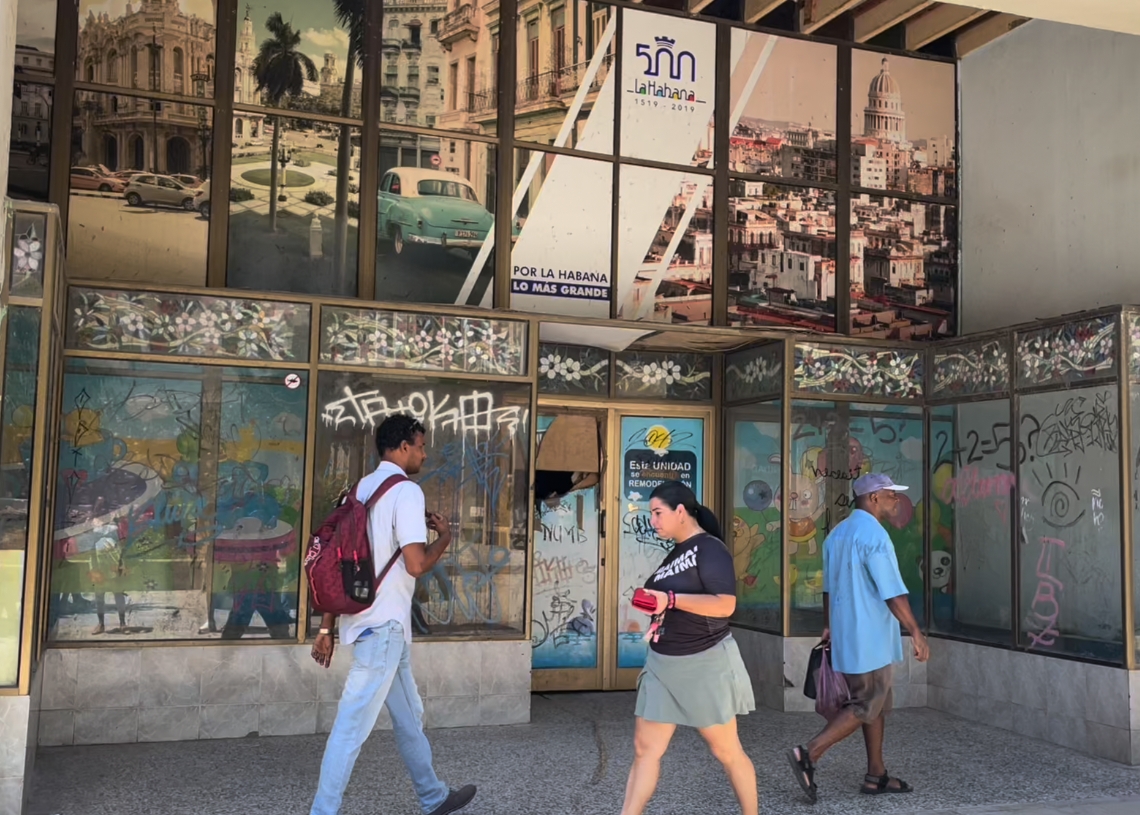
The Historic Center of Old Havana used to be one of the city’s busiest areas. The district offered a wealth of cultural, culinary, and commercial options, all set against the backdrop of the history embedded in the walls of the Cuban capital’s oldest quarter. The current crisis and the slump in tourism have drastically altered that reality.
Places that once teemed with crowds now stand in chilling solitude, proof that tourism, a cornerstone of the Cuban economy, never managed to recover from the crisis triggered by the COVID-19 pandemic. That situation has now become extreme due to the sanctions the United States has imposed on the island since the beginning of the year.
Between January and May, tourism in Cuba dropped by 58 % compared to the previous year. The impact is visible not only in the empty streets and venues but also in the lives of the thousands of people in Old Havana who depended on tourism for their livelihood.
Adelaida Borges is the fortune teller of Havana Cathedral. “I’ve been working here for 37 years — reading cards, offering hope and strength. I’m 84 years old now, which means I’ve seen many stages of my beloved Cuba, and I’ll die a Cuban because I’m not going anywhere else,” says the woman known as Señora Habana (Lady Havana).
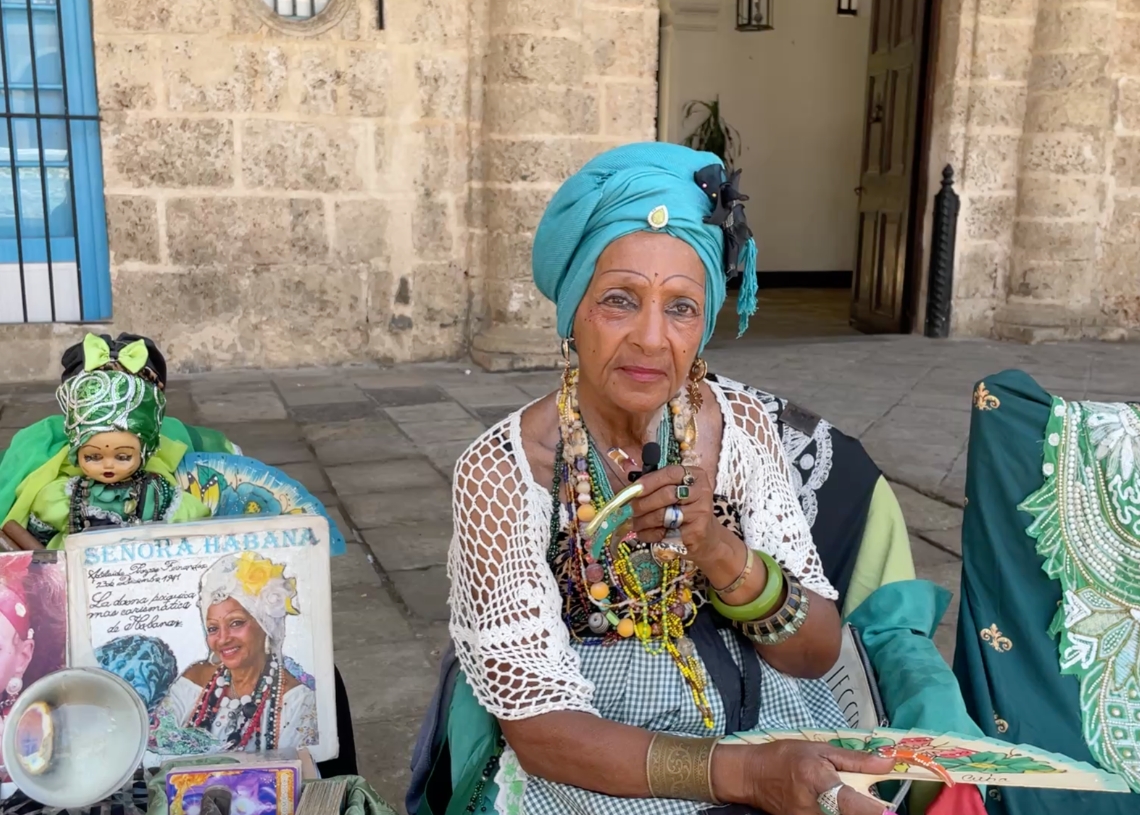
Reflecting on her more than three decades of work in the old city, she states, “This is the lowest point of all; we’ve hit rock bottom.” The fortune-teller believes that “we cannot compare other times with this one because they have nothing in common” and that “as you go along, you realize that a city that used to be so packed with tourists lacks that now — and that is what many of us live off.”
The absence of foreign visitors has left everyone on tenterhooks — from independent workers to those in the state sector and private investors who have put money into the area.
The real problem lies with the families behind these workers; today, they face the harsh Cuban reality, compounded by a radical shift in their purchasing power.
Lissete Pérez — a well-known Old Havana street vendor whose distinctive calls have been featured in documentaries and even a Los Van Van music video alongside Juan Formell — describes the situation as going “from bad to worse.”
“We can’t even say we have a tourism industry. This year, we practically haven’t seen a peak season at all. The high season usually starts in October, dips in December, picks up again in January, and runs through May; but nothing has come in here — we’re hitting rock bottom,” says the street performer and peanut vendor, who has been walking these streets and calling out her wares since 2011.
Others have known nothing in life but scraping by on these streets. Such is the case for José Orlando García, a street musician who has been singing and playing guitar for tourists since he was nine years old; he is now 69.



When asked how he views the situation, he is unequivocal: “Like nothing I’ve ever seen in my life — not even when I was a child.” Yet, it is clear he has no intention of giving up on the thing that has given his life meaning and sustenance. “This is the hand we’ve been dealt; you have to fight the battle at any distance — short, medium, or long,” he says, before treating us to a song.
No sales
Local handicrafts are among the most sought-after products in tourist areas worldwide. A sector that not only provides employment but is also crucial for the survival and evolution of artisanal techniques — practices that are part of the nation’s cultural identity and have been passed down from generation to generation.
They are part of the country’s cultural identity, yet their primary customers are often foreign visitors looking for a unique memento to take home from the places they visit.
The fair run by the Cuban Association of Artisan Artists (ACAA), located on Obispo Street, used to be one of the busiest spots in the area. Today, it is usually empty.
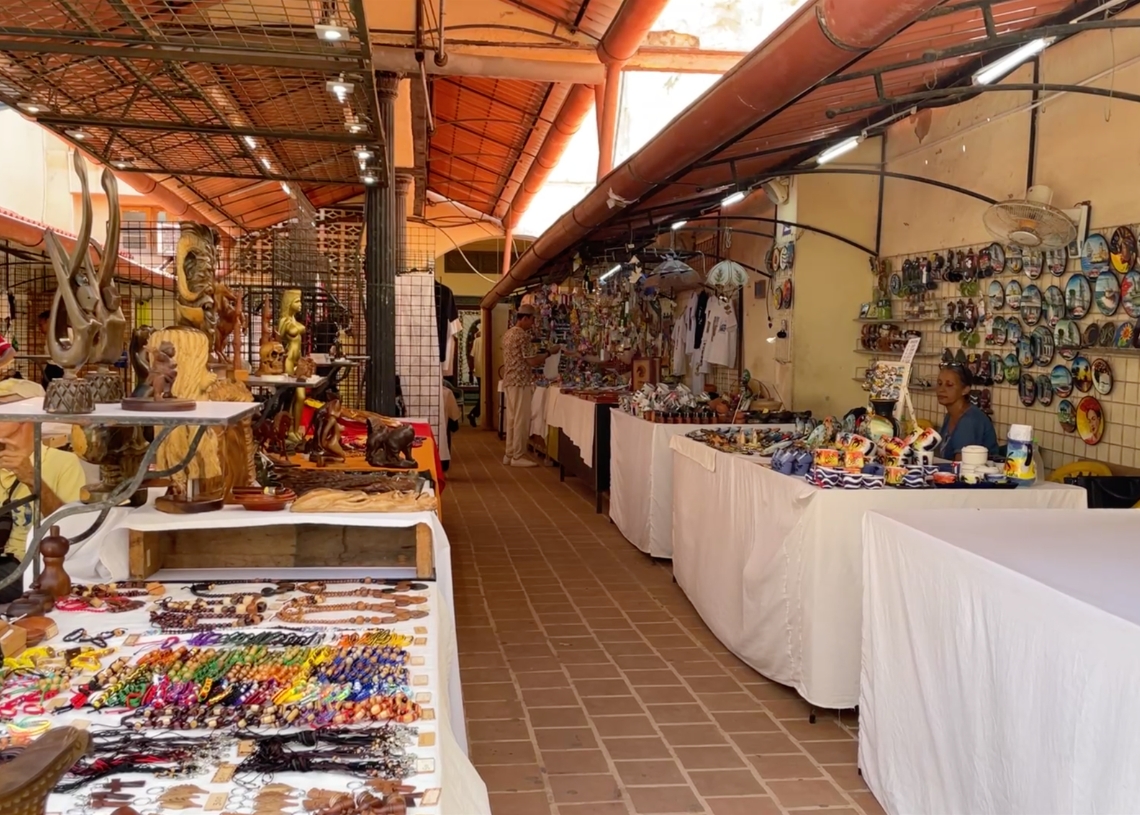
A wide variety of handmade goods are sold there. Wood carvings, ceramics, textiles, papier-mâché, costume jewelry, and leatherwork are among the range of artisanal products — classic souvenirs — on offer.
“We often come more out of principle and a commitment to professionalism, to stand by our work, but actually making a sale is very difficult. I’ve been a member of the ACAA since 1995; it takes a lot of experience to make a sale while maintaining the value of your work — finding a price that is fair to you while ensuring the customer is happy — but customers are exactly what’s in short supply,” says Manuel Alejandro Fauro Abreu, a wood artisan.
Fauro explains that “sales often happen with locals, embassy staff, or the occasional airline worker.” In his view, were it not for these occasional buyers, the fair “would be on the verge of shutting down.”
“Customer traffic at the fair is very low — especially for us, the papier-mâché artists. Our work is bought by tourists, not Cubans, and there is a severe lack of tourism. We might make one sale a day — two at most — if God wills it, but often there are no sales at all,” says Ivette Cortina, an artisan who has been selling her creations here for 18 years.
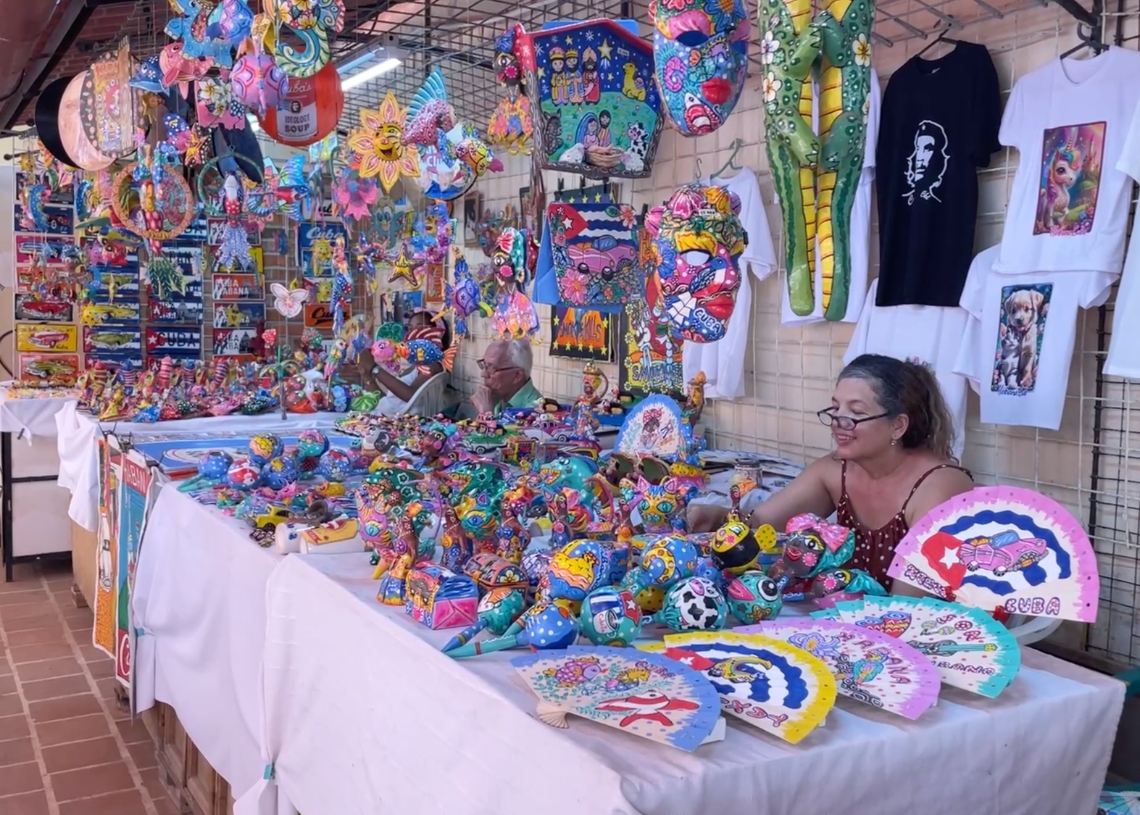
Other vendors, such as Mario Mesa Rodríguez, have been selling at this location for a shorter period. He has been selling his small wood carvings at this establishment for three years.
“Look how empty it is; that affects us artisans. You’ll see the table stocked; we keep working, hoping the current situation in Cuba improves. Better times will come; things have to get better,” he tells us.
Just as the vendors at the Obispo fair suffer the consequences of the lack of tourists, so do those selling their products at the San José Warehouses — located on Avenida del Puerto, much further away from foot traffic, and the many small businesses scattered throughout Old Havana.
Neither outsiders nor locals
Beyond the drop in international tourism, Old Havana used to be a favorite leisure spot for Cuban families — especially during the summer — and the absence of that crowd is also noticeable.
Closed venues and services unavailable due to shortages of supplies or electricity leave the area much worse off; only a few businesses — almost always run by the private sector — are full. For many, the current appeal of Old Havana boils down to walking around and admiring the beauty its heritage buildings still retain.
We came across a group of teenage girls on Oficios Street taking photos and videos for their social media. For them, the area remains an attraction.
“It’s great; we take lots of photos in beautiful places you can go into and see,” Jade tells us.
Estefany, however, while enjoying the outing with her friends, admits: “It’s still very beautiful, in a way, but the streets aren’t the same as when we were kids — Obispo isn’t the same anymore — but you still have a good time.”
Some mothers still try their luck bringing their little ones along, but they, too, are struck by the overwhelming transformation of the space. Mairelis went out with her children and friends and states that what she found has “absolutely nothing” to do with what it used to be.
“Right now, I’m here with the kids I brought for an outing in Old Havana, and I have no idea where to take them, because most things are sold in foreign currency or are very expensive, and Cuban families simply can’t afford them,” she tells us, as the group of children accompanying her runs about on Madera Street.
For Wendy, the outing with her little girl was completely cut short. “We were just at the Aquarium, but because the power went out, the whole trip was ruined. We were going to go into another museum, but the same thing happened. It’s a shame,” she says as we approach her; she is standing right in the street, adjusting her daughter’s sun hat and clearly unsure of what to do next.
The decline of Old Havana as a vital hub of the city’s cultural and tourist life — for foreigners and Cubans alike — is a tangible sign of the structural crisis affecting every aspect of life in the country. It threatens the loss of areas and sectors that were once our primary attractions for the world.