


What happens if you search the Internet news about GM foods? I can tell you will find the most diverse headlines: “GM foods: genocide of our time”, “Is it the solution to world hunger or a profitable risk?”, “Transgenic Food vs. Organic Food “,”GM cultivation in the world is highly increasing.”
This plurality of approaches reveals the importance of one of the most debated issues of scientific-technological world. The causes of many views vary from country to country. However, some other issues do are common in almost everyone: the media silence, the lack of a debate on the social level and the existence of opposing positions within the scientific community, governments or multinational companies.
But what are GM foods? What are their impacts on human health? What ethical dilemmas are generated by this technology? Why might be important to know about this particular issue?
Understanding the process
GM foods are organisms which genetic information has been modified in laboratories to give them specific characteristics. In the case of plants, for example, it seeks to increase resistance to pests and diseases.
 “Genetically modified plants are more likely to be resistant to drought, salinity and are more efficient in water use,” explains Dr. Merardo Pujol, from the Center for Genetic Engineering and Biotechnology (CIGB by its Spanish acronym), one of the most prestigious Cuban institutions devoted to the study of plant and animal transgenesis.
How is obtained a transgenic in practice? Although the answer could be very “technical”, the process requires combining the skills in the laboratory, with the effort and dedication of scientists who are passionate about their work.
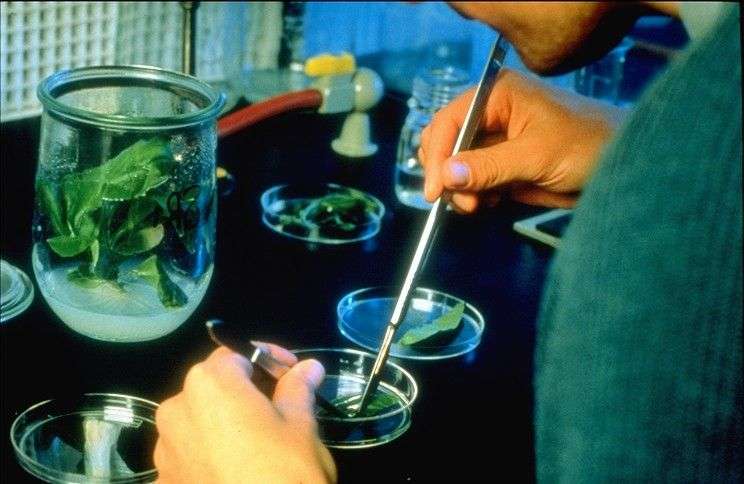
Kenya Tiel, CIGB young researcher, told us the details of the process: “First, the gene of interest is isolated, which gives resistance to herbicides, viruses, bacteria or fungi. Then it is introduced into the plant tissue, either directly or by using a bacterium. An entire plant is formed with that tissue containing the resistance gene. Once on ground, these plants are analyzed to confirm the presence of the gene of interest and also confirm the presence of the characteristics of the plant that originated them. ”
GMOs are considered “new organisms” that coexist with other living beings. Their appearance has generated ethical concerns about interactions with the environment.
So says Dr. Fernando Funes-Monzote, prominent Cuban agro-ecologist: “In regard to the design and management of sustainable agricultural systems from an agro-ecological perspective there are concerns about the displacement of peasants from their lands, environmental imbalances and health problems in humans arising from the introduction of a technology such as transgenesis “.
Under the slogan of eradicating hunger, several seed companies were proposed to control the food chain including Monsanto, Dupont and Syngenta. Despite this reality, these foods are sometimes presented as the solution of global hunger.




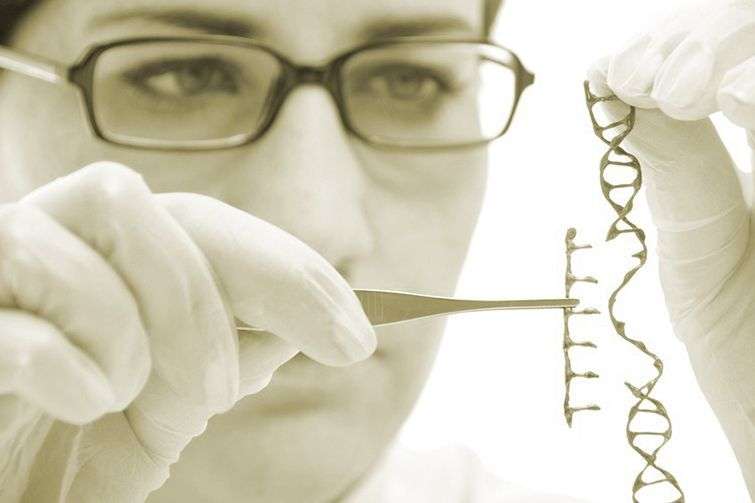
This diagram shows the process of obtaining transgenic plants / Photo: ScienceDaily
Controversy in Cuba
A recent study by the Cuban researcher Manuel Álvarez Gil reveals that 73{bb302c39ef77509544c7d3ea992cb94710211e0fa5985a4a3940706d9b0380de} of people in Cuba do not know about genetically modified food, partly because it is a matter of relative novelty.
In the early 1980s, scientists from the Caribbean nation began to explore the technology of genetically modified foods. A decade ago they worked on finding direct solutions for agriculture.
“Now we experiment with two plant species: soybeans and corn. At this time, we are planting a few thousand hectares. We have already begun to produce transgenic herbicide resistant soybeans seeds, “said Dr. Pujol.
The potential impacts on health excel among the main concerns about the introduction of GM foods.
” There are both studies showing adverse effects and others deny them. There would still be a lot of research and these are investigations to be carried out after different generations and cumulative effect. ”
In contrast, Dr. Pujol explains that “there has been no important or categorical conclusion saying that transgenic provokes health problem on plants and animals”.
Given this variety of criteria, various Cuban regulatory agencies closely follow the path of transgenic in order to analyze their safety for the environment, agriculture and as food. Among them: the National Biosafety Centre, the Institute of Nutrition and Food Hygiene and the Institute of Hygiene, Epidemiology and Microbiology.
Dr. Delgado says in the Cuban context “there is seriousness in scientific research, academic quality in the process, reliance on the participation of a group of institutions. These are advantages because the technology is at the service of society, not as in other societies where economic and social conflicts occur associated with the use of this technology. ”
However, as it happens worldwide, controversy about GMOs is a reality in the Caribbean nation.
“In 2008, the cultivation of transgenic corn began in Cuba, prompting a debate in the scientific community about the ethical, economic and biological aspects,” recalls Dr. Funes.
“We must take into account risks to the biosphere, the unpredictability of some phenomena, heterogeneity of Cuban society. What is the social reception we have of a technology in various strata of society? These are all factors that should be taken into consideration for use of knowledge provided by this technology under social control, “warns Dr. Delgado.
From CIGB the bet is by combining different technologies in agriculture. On this position, Dr. Pujol explains that “there are crops with transgenic solution, and some not. To the problem of weeds, for example, transgenic provide important solutions, not the only solution, nor I think that the existence of transgenic involves replacing other types of agriculture. ”
In Cuba, as in many countries, it is almost impossible to know when foods are genetically modified or not.
In this debate, agro-ecological perspective suggests that the emphasis should be mainly on optimizing the production process. According to Dr. Funes, organic farming in the Cuban context can guarantee safe food for all. Therefore, this expert believes the problem is “not so much on food production in general, but in their marketing, storage, in the long chain between seed to consumer.”
The controversy over GM foods reflects the importance of access to information in order to promote the participation of citizens in decision-making on the use of technology and conscious consumption of genetically modified foods.
“The issue here would not be wonder whether this is a technology that should be prohibited or permitted, but wonder as Cuban society how can we be better informed and collectively work to enable this knowledge,” concludes Dr. Delgado.
The various views on GM foods, both in the Cuban context and internationally, show that it is still a reality in construction. The opening of spaces for socially responsible dialogue will help us understanding how this technology is needed – or not – to boost the country’s development.








Thank you for this article; especially significant after my recent trip there through Global Exchange and ICAP.
I hope the Cuban organic agricultural certification process can be strong enough to keep GMO’s out; and that the astounding success of Cuban organic agriculture can be broadcast and supported. There is NO “peaceful coexistance” between Organic and GMO’s. GMO crops are created to insure their company profits; not to solve hunger. As relations open between Cuba and US, I hope Cuba recognizes, supports, & strengthens it’s visionary accomplishments in Organic Agriculture. Sincerely, Suzanne Ferroggiaro, Grass Valley, California, USA
No need for GMOs… Nature has done things perfectly.. crop rotation is the key. Ever wondered why the whole world rejects GMOs??? Except from USA and Canada of course… why should Cuba open their doors to contamination & disease of soil and their own people? Noway….
All scientific advances can be used for good or ill, and we can take it for granted that private corporations do what they do in order to make a profit, and not out of some fuzzy feel-good committment to ‘ending world hunger’.
But, to quote the Wikipedia article on GMOs: “There is a general scientific agreement that food from genetically modified crops is not inherently riskier to human health than conventional food. No reports of ill effects have been proven in the human population from ingesting GM food.” (Full article here: https://en.wikipedia.org/wiki/Genetically_modified_organism, and another, focussing on the issue of GMO safety, here: https://en.wikipedia.org/wiki/Genetically_modified_food_controversies).
In fact, the study of genetics is going to be the foundation of a massive advance of the human species in this century, and it will involve extensive ‘interference’ with what ‘Nature’ — i.e. blind evolution — has ‘given’ us, which has included devastating hurricanes, famines, plagues, and cancer. The effects of all of which we have reduced, and will reduce further, through cold hard science.
One of the American influences that I hope Cuba does NOT import is hippy-dippy fuzz-brained thinking about this subject.