Around these days, U.S. cancer patients who wish to be treated in Cuba are facing a great dilemma: complying with their country’s laws or trying to prolong their life.
The new regulations of the Trump administration in relation to travel to the island, in place since November 2017, are now an obstacle for a growing number of patients who were considering getting the Cuban vaccines or had already started to do so.
A recent report by Public Radio International (PRI) reproduced by USA Today, affirms that many Americans in this situation were “silently” traveling to Cuba on their own by using the people-to-people category established by President Obama.
However, elimination by the Trump government of the individual trips in this category is closing this option for the patients and forces them to visit the island in organized groups or in other individual variants with greater supervision, like the category of “support for the Cuban people.”
This U.S. media said that since the travelers in this category are demanded to follow a complete calendar of activities, it is probable that it is not a good option for cancer patients.
According to PRI, the question with which many patients are wrestling is how to enter and leave the United States without being discovered due to the probability of a greater scrutiny.
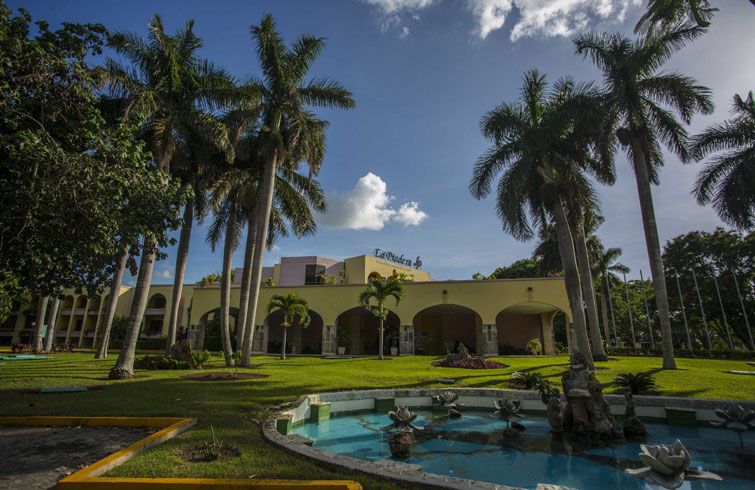
Nancy Kelly, a 71-year-old patient from California who traveled to Cuba last spring to be treated in La Pradera International Health Center in Havana, where most of the U.S. cancer patients traveling to the island are treated, said that what Trump did is absolutely scandalous, making it much more difficult to go to Cuba.
Despite the restrictions, Americans like George Keays have no doubt about their priorities.
Keays, a 65-year-old real estate agent from Colorado with stage 4 lung cancer who was already treated in La Pradera and aims to return to Cuba this year, said he isn’t seeking to violate the law but neither is he seeking to die.
He commented that people like him should be allowed to try what they want to stay alive, no matter what the officials believe, and that the last thing they need is for the government to strangle them because of an archaic regulation that simply says that they have to take what is available there and die.
Cimavax, Vaxira
Like George Keays and Nancy Kelly, many Americans travel to Cuba to be treated with medicaments created by the island’s biotechnological industry, especially with the therapeutic vaccines Cimavax and Vaxira, which are applied in advanced stages of cancer and function by activating the immune system of a patient to combat the disease.
In essays carried out in Cuba, both vaccines have been able to prolong the life for at least some months of those to whom they were applied, especially in lung cancer patients, although it is estimated they could also be effective with other types of cancer.
With several years of trials, Cimavax is available for the Cubans free of charge since 2011 and has been applied to more than 5,000 patients worldwide. Vaxira, meanwhile, is currently undergoing more trials in Argentina and is available in that country and in Cuba.
In 2016 a clinical essay of Cimavax in the Roswell Park Cancer Institute, one of the most important in the United States, was announced as a result of a collaboration agreement with the Havana Molecular Immunology Center. The trial began months later in Buffalo, New York, and is expected it will take at least three years to complete and that up to 90 patients are participating in it.
Dr. Candice S. Johnson, president of the Roswell Park Institute, commented in an interview that this clinical essay could lay the foundations for future cancer investigations and therapies in the United States.
At the time she affirmed that science tells us that this vaccine is unique, that there is nothing like it in any other part of the world and that it has potential to help dozens of thousands or perhaps millions of persons.
According to PRI, the Roswell Park researchers are currently carrying out preclinical studies of Vaxira on animals to determine if afterwards it will be possible to make an essay of the vaccine on humans, a decision that could take at least a year.
Although Cuban scientists are optimistic about their vaccines and are studying how to take them to a new level to increase patients’ survival rate, the U.S. medical community is more cautious about the possible results.
Dr. Robert Doebele, part-time professor of medical oncology in the University of Colorado-Denver and principal editor of the magazine of the American Association for Cancer Research, understands that Cimavax “is very well-known on the Internet and patients are understandably desperate to get to know it.”
“But the fact is we simply still don’t know if it works,” he opined.
However, many American patients who have found out about the Cuban vaccines want to try them, no matter the price.
At La Pradera
Ever since the rapprochement between Cuba and the United States since late 2014, the number of Americans who went to La Pradera International Health Center constantly increased, despite the price for the treatment: around 860 dollars per dose.
According to PRI, the total cost of the trip, which includes airfare, accommodations and the supply of the medicament to take home, can surpass 10,000 dollars. More so if the patient is accompanied by the family.
Nevertheless, 50 Americans were treated in this specialized clinic in 2016 and 46 in the first eight months of 2017, when the number of consultations about the vaccines increased threefold in relation to the previous year.
But with Trump’s measures against Cuba the numbers came to a standstill.
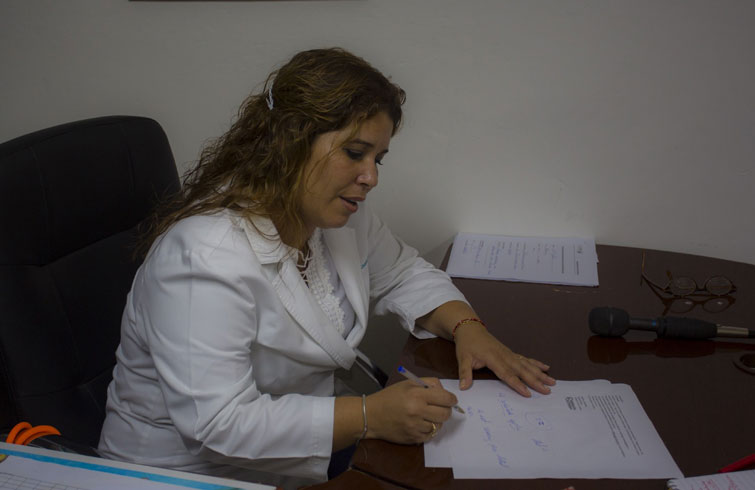
Dr. Anabely Estévez, who treats cancer patients in La Pradera, said to the U.S. media that after the announcement of the travel restrictions they started receiving cancelations.
“There are many patients who are adequate for the treatment but who don’t come for political reasons,” Estévez commented. “As a doctor I feel really bad because I believe that our vaccine is a good treatment that can prolong the life of these persons.”
One of the options that American patients have started managing is traveling to the island through a third country, as they used to do before the reestablishment of relations.
The Ontario P & G Travel Agency, one of those used by Americans to travel to Cuba, says that the numbers go up and down. Ever since Trump’s June announcements, the number of direct reservations from the United States decreased 60 percent. On the other hand, the reservations of Americans who arrive to the island from other countries increased 30 percent, according to Tathiana González, the agency’s specialist in Cuba.
“When you are given a month to live, go. It’s something that’s basic,” said González.
Another aspect is the entry to the United States of the Cuban vaccines by the patients themselves for their treatment. Some patients like 74-year-old Judy Ingels, a stage 4 lung cancer patient, entered their doses in refrigerated bags after a stay in La Pradera.
When Ingels told the agent of the Transport Security Administration in Florida that she was carrying a vaccine, he opened and rummaged in her bag but asked no questions, according to PRI.
But when her supply ran out, and after a reduction of her tumor which she attributes to Cimavax, she wants new doses. That’s why she is considering options like traveling to Cuba through Bahamas or hiring a professional “mule” that flies to the island to receive the vaccine for a rate.
However, for many these cannot be the options and they opine that the Donald Trump government should consider their situation.
George Keays, whose cancer has worsened even after having tried several treatments in the last two years – among them the Vaxira vaccine -, plans to return to Cuba to continue his treatment despite his country’s laws, but he believes that the definitive solution lies in a change in the United States.
Keays is working on a letter to the U.S. Senate Foreign Relations Committee for it to intercede on behalf of patients like him and has motivated other patients to also write.


“I have the intention of doing everything that’s possible to present how these restrictions steal terminal cancer patients’ hope, and possibly, their life, as well as others suffering from diseases that could benefit from Cuba’s advances in medicine,” Keays commented. “Ignorance about this policy is astonishing.”