ES / EN
- March 17, 2026 -
No Result
View All Result
OnCubaNews
  • World
  • Cuba
  • Cuba-USA
  • Opinion
    • Columns
    • Infographic
  • Culture
    • Billboard
  • Sports
  • Styles / Trends
  • Media
  • Special
  • Cuban Flavors
  • World
  • Cuba
  • Cuba-USA
  • Opinion
    • Columns
    • Infographic
  • Culture
    • Billboard
  • Sports
  • Styles / Trends
  • Media
  • Special
  • Cuban Flavors
OnCubaNews
ES / EN
Home Cuba Economy Cuban Economy

Nutritional education in Cuba in full crisis

A Spanish-French entrepreneur defends education for quality food in a Cuba that is fighting against shortages.

by
  • EFE
    EFE
March 12, 2024
in Cuban Economy, Society
1
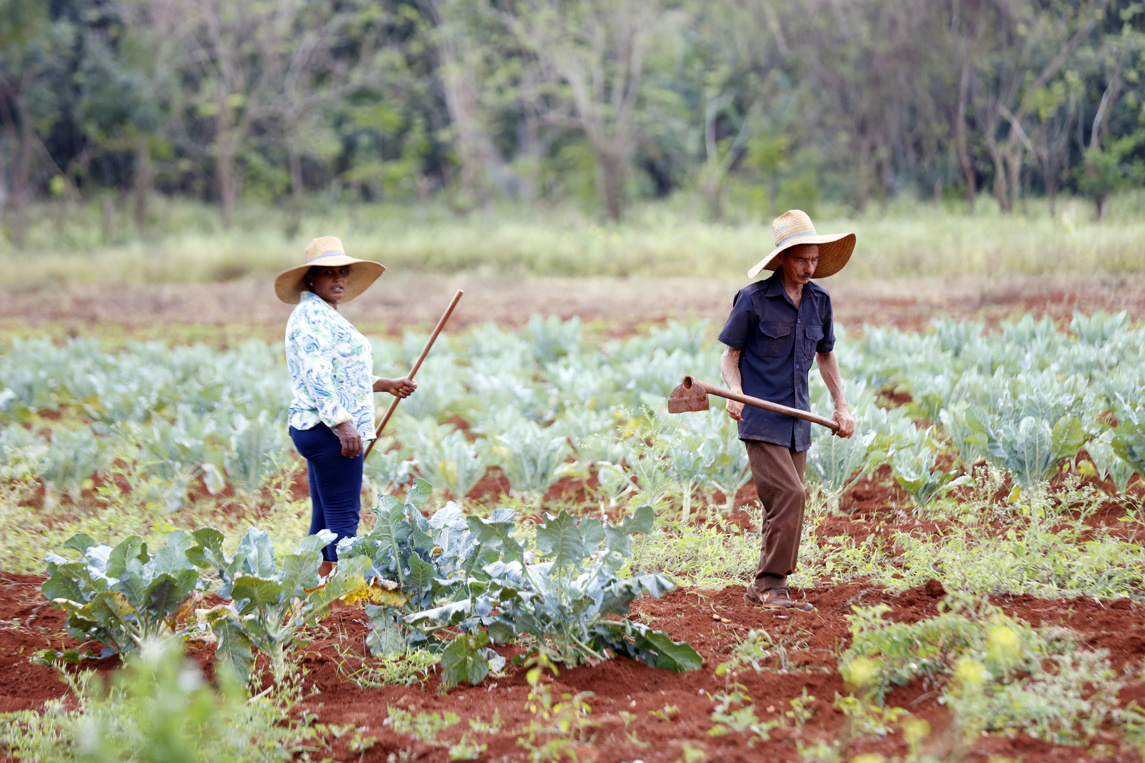
Workers grow cabbages at the Doña María agroecological farm, in Havana. Photo: EFE/Ernesto Mastrascusa.

Workers grow cabbages at the Doña María agroecological farm, in Havana. Photo: EFE/Ernesto Mastrascusa.

By Laura Bécquer

Modifying the eating habits of Cubans amid the current food shortage with criteria of health and local availability is the purpose of the nutritional education project promoted since 2017 by the Spanish-French entrepreneur María Paco in Cuba.

“Many laughed when I presented this project to diversify the Cuban plate and learn to eat healthier: with vegetables, without sugar, and without the ‘main course’ as they call meat here,” she tells EFE from her Doña María agroecological farm, located on the outskirts of Havana.

Paco says that she left her job in France as a fruit seller for an international company and went to Cuba for the first time in 2014. At that time, “she was struck by the lack of knowledge among Cubans about the benefits of nutritional education and more in a country where there is so much scarcity,” she explained.

“My parents and grandparents were farmers, so they instilled in me the idea of taking advantage of everything that comes from the land and not throwing anything away,” says this entrepreneur with Spanish roots.

María Paco, Spanish-French entrepreneur, during the recording of an episode of the series “Cocinar, un juego para todos” (Cooking, a game for everyone). Photo: EFE/Ernesto Mastrascusa.

Her “alternative” menu ranges from an eggplant spread on bread, salads with lentils, cabbage, and chili; vegetarian pizzas with basil, oregano, rosemary, or parsley — without the typical cheese or tomato puree —, to replacing carbonated and chemical soft drinks with fruits like bananas, she explained.

Related Posts

Holy Greek Orthodox Cathedral Church of St. Nicholas of Myra. Havana

St. Nicholas of Myra: a Greek Orthodox church in the heart of Old Havana

March 11, 2026
Transport in Cuba. public transportation in Havana.

The island, the icebergs

February 23, 2026
Cuban flag. Cuban economy

Venezuela today: scenarios and urgent challenges for the Cuban economy

January 22, 2026
Havana Malecón. Cuba

A bit of certainty

January 6, 2026

“I started with the same people who helped me on the farm. At first, they gave me a strange look when, instead of chicken, I offered them yellow rice with only vegetables or gave them a snack with toast, eggplant paste, and tomato juice. They later assimilated the change in their meals and incorporated the same things they harvested here on the farm into the dish,” she said.

Her project has taken a turn in the last three years, when the serious crisis affecting the island has caused a shortage of basic supplies, including milk and flour, mainly due to the lack of foreign currency, in a country that imports 80% of what it consumes.

María Paco, Spanish-French entrepreneur, during the recording of an episode of the series “Cocinar, un juego para todos” (Cooking, a game for everyone). Photo: EFE/Ernesto Mastrascusa.

A school farm

Upon becoming a local development project in 2017, Paco’s initiative signed an agreement with the Juan Tomás Roig primary school — for children between 5 and 11 years old — in the El Cacahual community to talk about “nutritional education.”

“The idea was for the children to come once a month to cook, to learn, to eat vegetables, to learn that they can eat healthier and easier with what they have on hand at home and do without a little junk food,” she commented.

“They value the work of the farmer, they learn to collect their vegetables, prepare them, and then they eat what they themselves make,” she explained.

The experiences of the children participating in María’s project were collected in the audiovisual series: “Cocinar, un juego para todos” (Cooking, a game for everyone), sponsored by the World Food Program (WFP), the United Nations Educational, Scientific and Cultural Organization (UNESCO) and the United Nations International Children’s Emergency Fund (UNICEF).

The series of ten 8-minute programs contains its own recipe with the products grown on the Paco farm, as explained by the French director Dominique Clément during the recording of one of them just a few days ago in Havana.
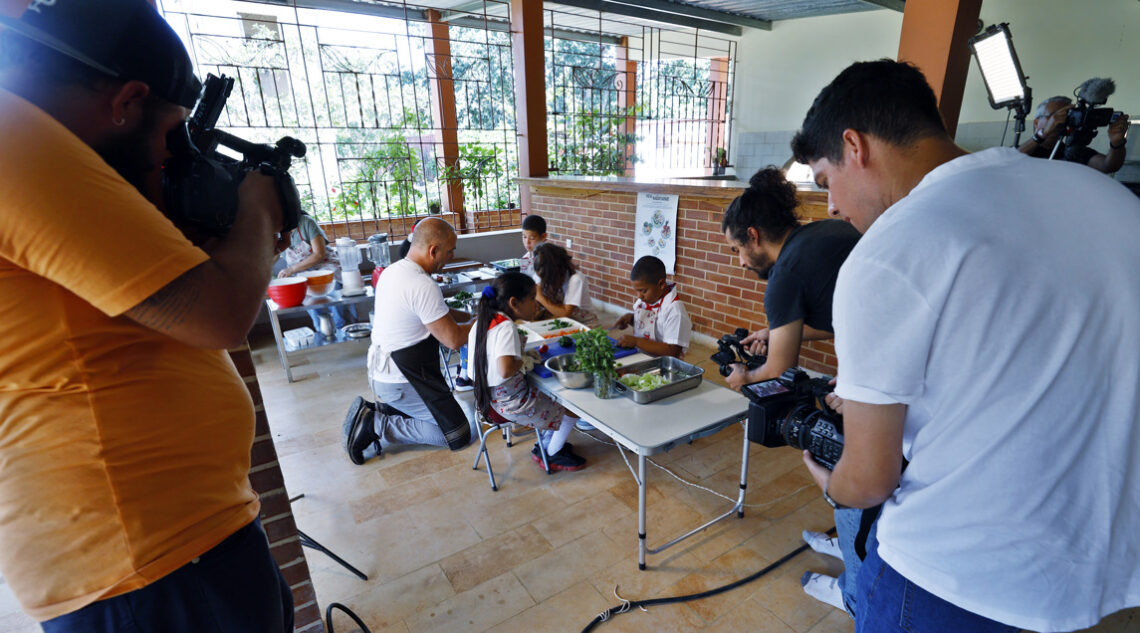
Students participate in a healthy cooking workshop at María Paco’s farm, where an episode of the series “Cocinar, un juego para todos” is also being recorded. Photo: EFE/Ernesto Mastrascusa.

Changing habits

Paco highlights that her project gained more value when the Food Sovereignty Law was approved in 2022 because the law “defends taking advantage of what we can grow from an approach that also respects nature.”

This legislative text proposes the strengthening of municipal autonomy, reducing losses due to food waste and promoting the practice of sustainable agriculture on agroecological bases, among other issues.

Paco herself recognizes that “in Cuba, the food is very good, but sometimes it disappears and becomes a headache for many parents. That’s why I try from my space to instill in them that to eat well, you don’t need chicken, for example.”

However, she admitted that “the most difficult thing has been to change the mentality and habits of Cubans: they still laugh when I tell them that they can eat without ‘main course’.”

  • EFE
    EFE
Tags: food crisis in cubafood production in Cuba
Previous Post

Havana’s grilles

Next Post

MSMEs and state enterprises: a combination to achieve success?

EFE

EFE

Next Post
Store selling in freely convertible currency in Cienfuegos. Photo: Otmaro Rodríguez

MSMEs and state enterprises: a combination to achieve success?

A seller of agricultural products in Havana. Photo: Otmaro Rodríguez.

Cubans spend more than 70% of their income on food, according to official data

Cuban soccer

Cuban soccer: the all-time ideal eleven

Comments 1

  1. Paul Citro says:
    2 years ago

    Here in the US we have the Food Industrial Complex. It places profit above health. We get manufactured nutritionally depleted food in pretty packages. I hope that Cuban Socialism can do better than this.

    Reply

Leave a Reply Cancel reply

The conversation here is moderated according to OnCuba News discussion guidelines. Please read the Comment Policy before joining the discussion.

Your email address will not be published. Required fields are marked *

Most Read

  • The Enchanted Shrimp of the Cuban Dance

    5782 shares
    Share 2313 Tweet 1446
  • The story behind the “sister flags” of Cuba and Puerto Rico

    99 shares
    Share 40 Tweet 25
  • Cuba Facing Its Most Important Economic Decision: Attracting Its Diaspora

    17 shares
    Share 7 Tweet 4
  • U.S. actress Susan Sarandon praises Cuban vaccines and calls for end of embargo against the island

    169 shares
    Share 68 Tweet 42
  • St. Nicholas of Myra: a Greek Orthodox church in the heart of Old Havana

    8 shares
    Share 3 Tweet 2

Most Commented

    • About us
    • Work with OnCuba
    • Terms of use
    • Privacy Policy
    • Moderation policy for comments
    • Contact us
    • Advertisement offers

    OnCuba and the OnCuba logo are registered® trademarks of Fuego Enterprises, Inc., its subsidiaries or divisions.
    OnCuba © by Fuego Enterprises, Inc. All Rights Reserved.

    No Result
    View All Result
    • World
    • Cuba
    • Cuba-USA
    • Opinion
      • Columns
      • Infographic
    • Culture
      • Billboard
    • Sports
    • Styles / Trends
    • Media
    • Special
    • Cuban Flavors

    OnCuba and the OnCuba logo are registered® trademarks of Fuego Enterprises, Inc., its subsidiaries or divisions.
    OnCuba © by Fuego Enterprises, Inc. All Rights Reserved.

    Manage Consent
    To provide the best experiences, we use technologies like cookies to store and/or access device information. Consenting to these technologies will allow us to process data such as browsing behavior or unique IDs on this site. Not consenting or withdrawing consent, may adversely affect certain features and functions.
    Functional Always active
    The technical storage or access is strictly necessary for the legitimate purpose of enabling the use of a specific service explicitly requested by the subscriber or user, or for the sole purpose of carrying out the transmission of a communication over an electronic communications network.
    Preferences
    The technical storage or access is necessary for the legitimate purpose of storing preferences that are not requested by the subscriber or user.
    Statistics
    The technical storage or access that is used exclusively for statistical purposes. The technical storage or access that is used exclusively for anonymous statistical purposes. Without a subpoena, voluntary compliance on the part of your Internet Service Provider, or additional records from a third party, information stored or retrieved for this purpose alone cannot usually be used to identify you.
    Marketing
    The technical storage or access is required to create user profiles to send advertising, or to track the user on a website or across several websites for similar marketing purposes.
    • Manage options
    • Manage services
    • Manage {vendor_count} vendors
    • Read more about these purposes
    View preferences
    • {title}
    • {title}
    • {title}