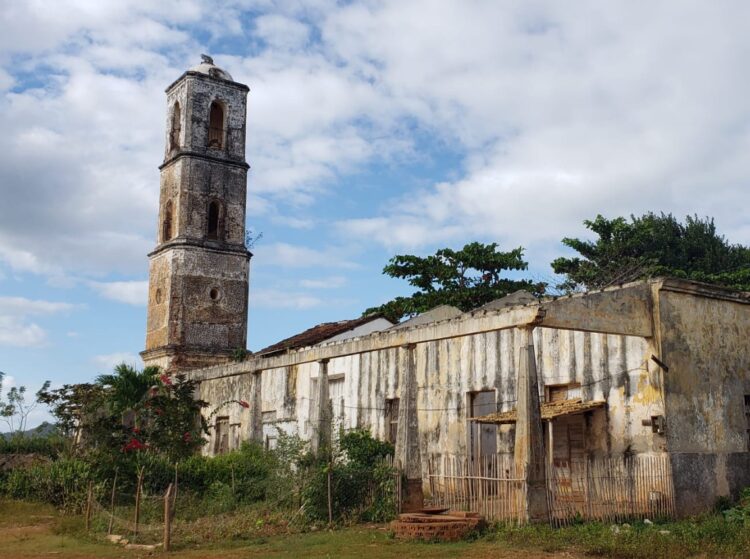
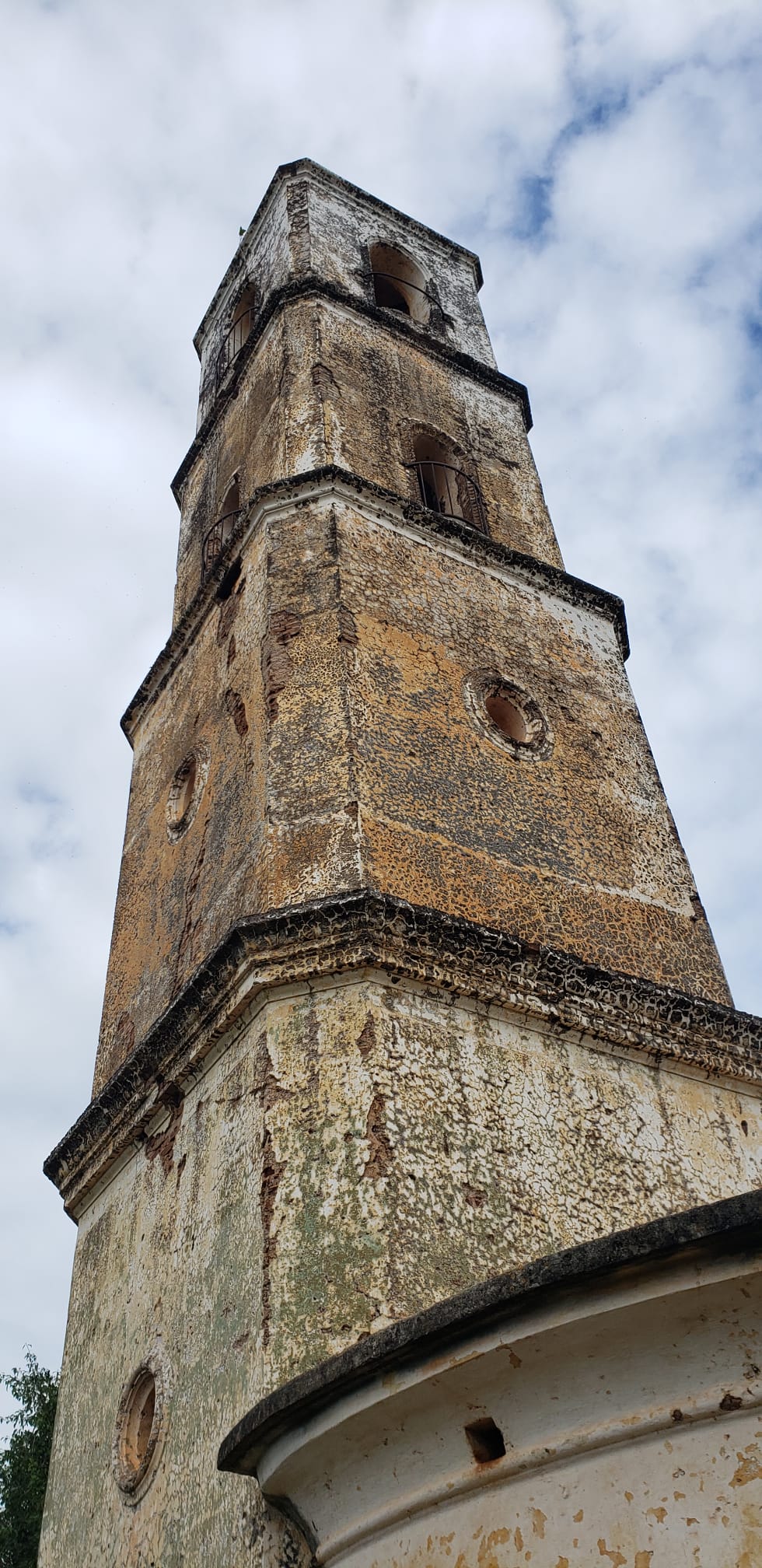
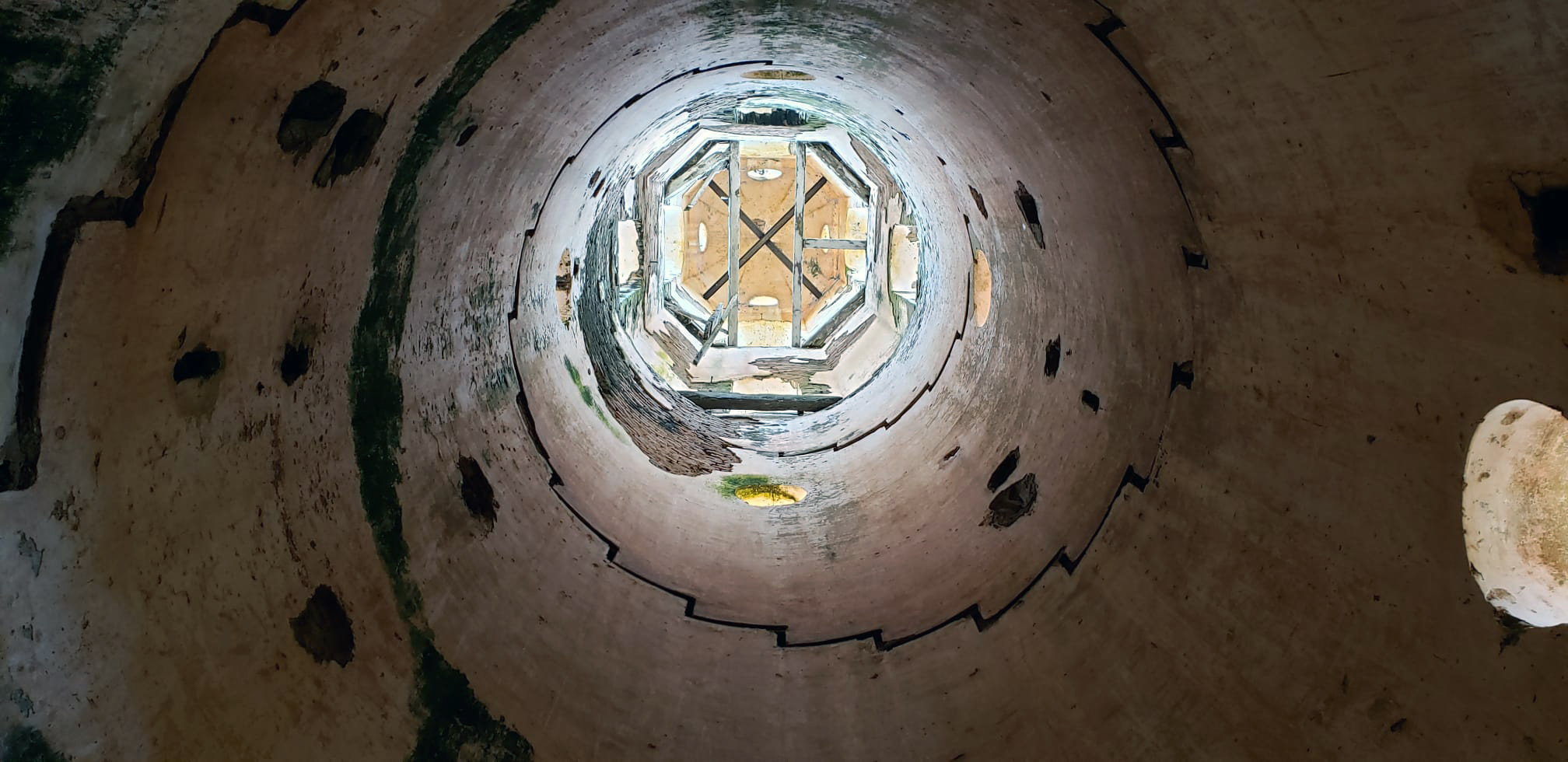
Between a mountain range of royal palms, sugarcane fields and coffee plantations, on flat ground, stands the four-section Tower with a spiral staircase inside to climb to the bell tower in the 19th century.
From there the sleepless sentinel scanned the horizon, ready to call out if a slave was escaping, the proximity of a group of bandits or a troop of the Liberation Army.
Some say that it is the younger sister of the tower of the Manaca-Iznaga sugar mill, the one that still amazes travelers in Trinidad, Sancti Spíritus. That of Caibarién has had less luck in its conservation, it cries out to be restored, because the apathy of men and the relentless passage of time can erase its silhouette forever.
Its history, sometimes legend, endures in the popular imagination. There is talk of noises, of wails, of dragged chains that are heard at night, as if the former slaves, creators of wealth, had resurrected and returned to take revenge for the suffering and torment they experienced at the orders of their masters.
One imagines them crestfallen, sweaty, under the harsh sun, with the guataca and the hoe on exhausting days. Their beginning and end was called by the chime that sounded at the top of the tower. Those were times when some preferred to commit suicide or flee to the mountains to avoid the horrors of submission.
Nearby, in a cave on the Guajabana hill, called Dead Man’s Box by the sailors, the most famous among those who chose the risk of escape was hidden: Esteban Montejo, the runaway slave in the novel testimony written by Miguel Barnet.
The slaves, in addition to working in sugar production, had to perform other tasks that we can infer thanks to the Spanish historian Jacobo de la Pezuela, who in his Diccionario geográfico, estadístico, histórico, de la isla de Cuba wrote about the Caibarién district: “On farms, sugar mills and work sites, rice, beans, bananas, root vegetables, fodder and tobacco are harvested, and a lot of wax and honey are collected.”
To export sugar and molasses, the owner of the Dolores sugar mill used a railway line that reached the port of Caibarién; this town had been founded on October 26, 1832. Teams of oxen pulled the carts along the iron road. From the pier they could also travel by steamboat to Havana, Sagua la Grande, Cárdenas and Nuevitas. Also, since April 14, 1851, there was a railway that connected Caibarién and Remedios.
Early times
The Dolores sugar mill belonged to the Caibarién District, jurisdiction of San Juan de los Remedios, in the 19th century. Today its ruins are in the demarcation of the Caibarién municipality, close to the highway of this city on the way to Yaguajay. The exact date of its foundation is not known. It is only known that the first owner was José M. Vissinay.
The hacienda had more than 200 caballerías of land (more than 77.27 km²). In 1854 a fire affected the industry. Six years later, Juan González Abreu, captain of the Volunteer Corps, who was also Justice of the Peace and Deputy Mayor of Remedios, bought the factory and managed to gradually recover its former splendor. He built a house, described like this by researcher Rita María Argüelles:


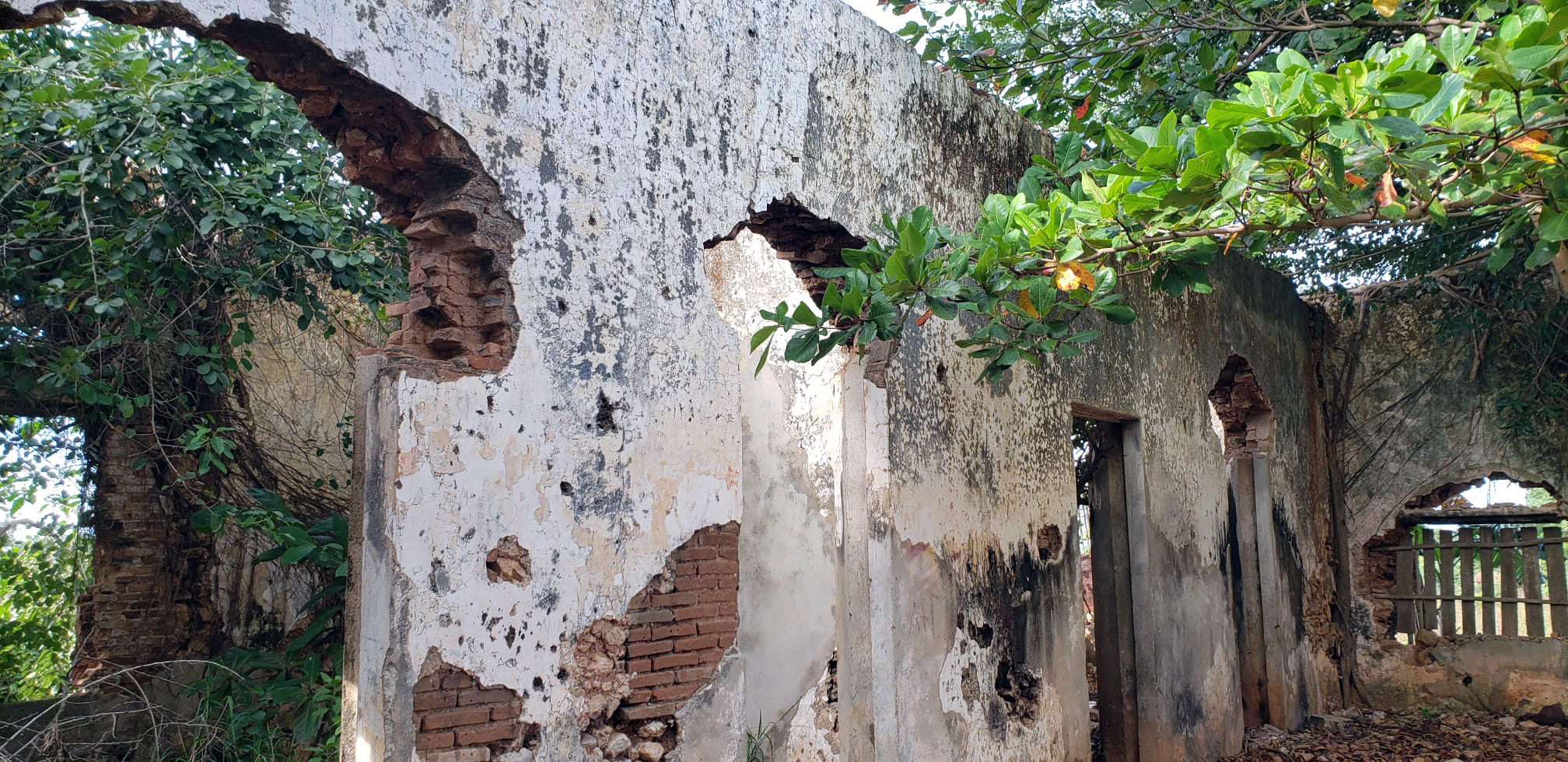
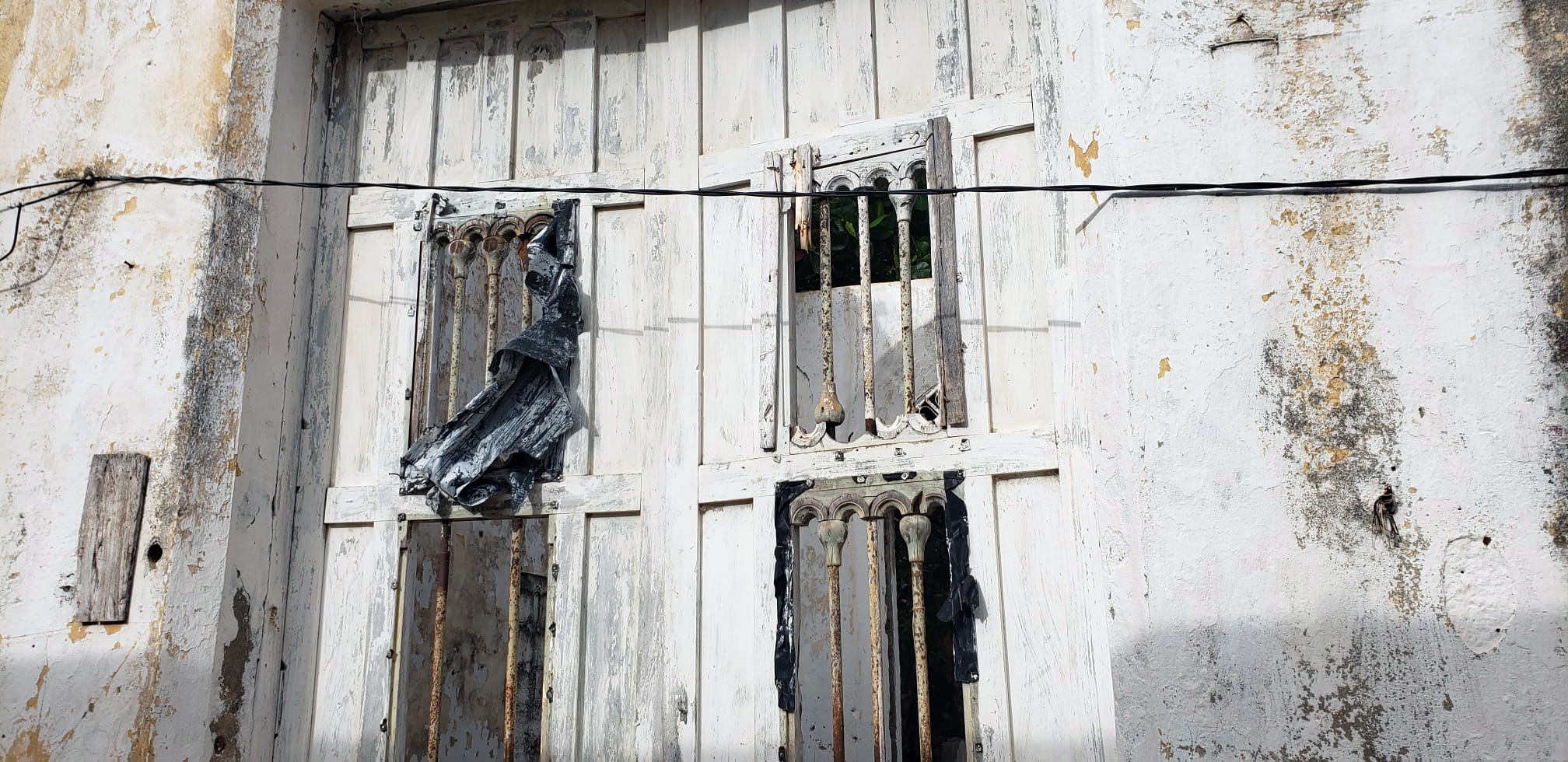
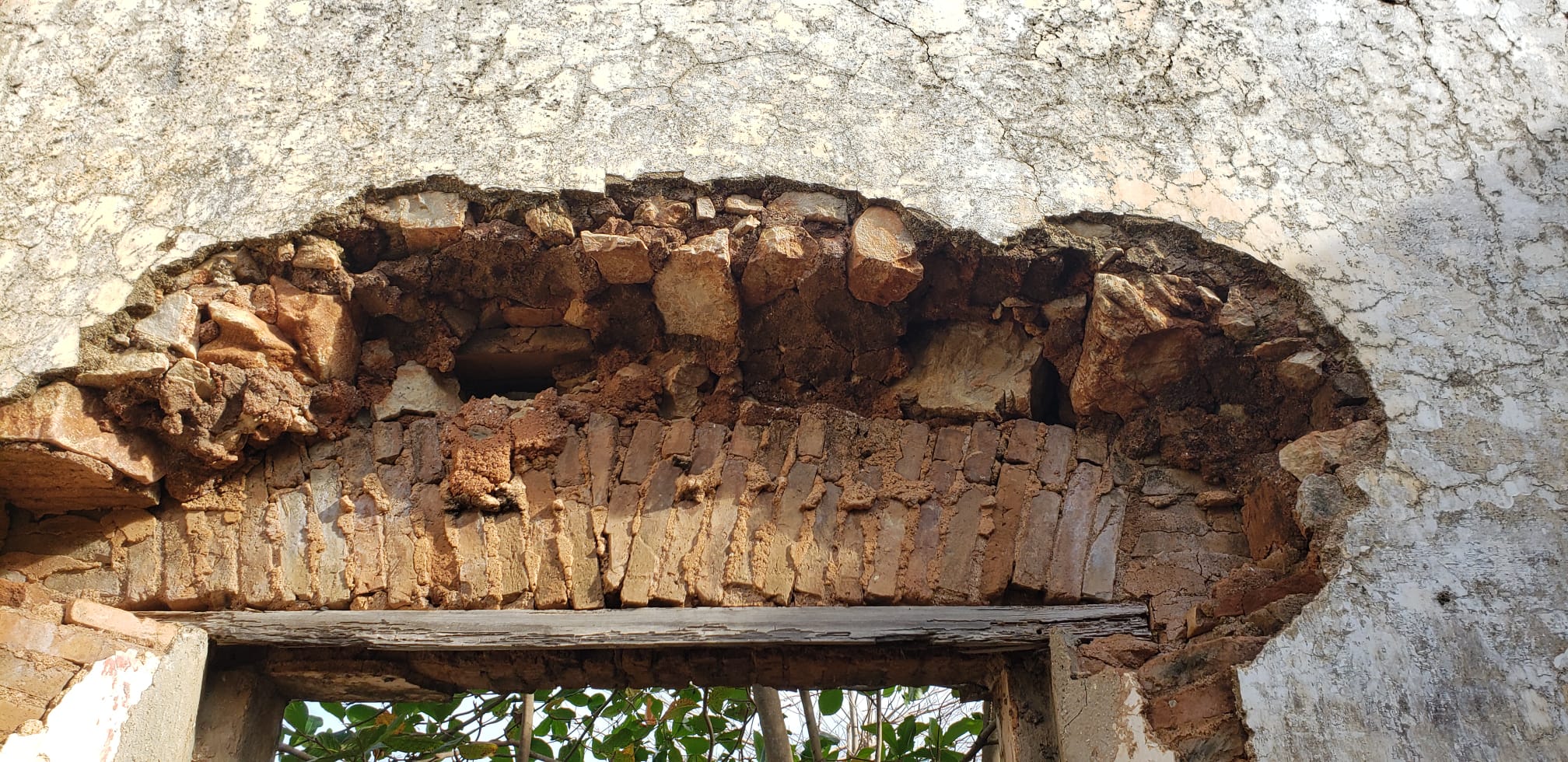
“The mill house built in 1872, with masonry walls and a roof of precious wood and Cuban tiles; almost square floor plan, cloistered patio with shed corridors and octagonal square section columns, masonry parameters, tiled portal that supports pyramidal columns, central doors and several other doors with panels and simple tool making, lintel and semicircular openings, some with embrasures, the second one lacking a cover.”
During the independence wars
To defend himself from attacks by insurgent troops, the owner, very committed to the Spanish authorities, built a fort, with stone walls and a vaulted ceiling. The loopholes were used to shoot from good cover.
His caution was not unfounded since on July 20, 1869 the sugar mill was besieged by combatants from the Liberation Army. Although they could not take the house, defended fiercely by two gentlemen named Palacios and Valdés, aided by soldiers, they did take supplies.
The owner fled in terror towards Remedios. Perhaps he feared being executed, since the Caibarién Volunteer Corps, that year, had treacherously murdered, when he was going to be transferred to Remedios, the patriot Francisco María Jiménez, a doctor well known throughout the region for being a good man.
The factory survived the War of 1868-1878, an almost miraculous event, since the devastating effects of the incendiary torch applied by the insurgents are known. In the 1888-1889 harvest it produced 2,680 bags of sugar and in the following harvest 4,028. The last milling was done in 1894. It is said that it was in a modernization process when the independence protests resumed, on February 24, 1895.
Although it was already inactive, the column led by Brigadier General José González Plana, descendant of African slaves and military leader of the Remedios region, attacked the factory with cannon and infantry fire on January 1, 1897, but did not cause damage to the structure.
It ended in Japan
After the armed conflict ended, the sugar mill had several owners. Major General José Miguel Gómez, during his time as Civil Governor of the province of Las Villas, was interested in buying it, but the price was so high that he gave up his intention.
Disused machinery was rusting. It seemed that the destiny of that metallic mass was to remain a mute witness of a period of economic magnificence. However, a merchant acquired all the iron from the industry and sold it, in 1934, to Japan, a country that was developing its war industry at that time and used it as raw material to manufacture weapons.
The ruins of the sugar mill, located approximately 10 kilometers from Caibarién, due to its cultural values, could continue to contribute to the economy, if a tour were included, after its restoration, in the extra-hotel offers for tourists in the area of the northern group of keys, in the province of Villa Clara. A look at the past and the landscapes, from the century-old tower, would attract travelers, eager for beauty and knowledge.
________________________________________
Sources:
Jacobo de la Pezuela: Diccionario geográfico, estadístico, histórico, de la isla de Cuba, El Siglo, La Habana, 1863.
Rita María Argüelles: “Una mirada al patrimonio industrial de Caibarién,” Revista Arquitectura y Urbanismo, Vol. XXX, Instituto Superior Politécnico José Antonio Echeverría, Havana, 2009.
Manuel Martínez Escobar: Historia de Remedios (Colonización y desenvolviendo de Cuba), Jesús Montero, editor, Havana, 1941.
Ecured.