From a marvelous real Caribbean, described with clever remarks and truthfulness in The Kingdom of this World by great Alejo Carpentier, emanates a fulfilling invisible and intangible spirit that can be sensed.
However, those pages, intense given the richness of its characters, its religiousness and detailed descriptions of incredible places, become a true story in this city with the Fire Festival.
Readers will remain doubtful about the man who performs surgeries with knives, or about the fact that people in Cuba speak other languages in addition to Spanish.
The most skeptical would say “let’s wait and see”. “It takes all sorts to make a world”, would faithfully assure devotees. The truth is that most unusual events can take place in Santiago de Cuba during the Caribbean Festival.
The Workshop on popular religiousness in the Colloquium El Caribe que nos une (The Caribbean that brings us together) offers a specific opportunity to confirm it. There, practitioners and scholars come together and exchange their visions on a phenomenon that is definitely leaving an imprint on their lives.
They agree the Caribbean peoples have an authentic way of believing which is linked to Africa and Europe, but is already genuine, because it nourishes from the popular imaginary.
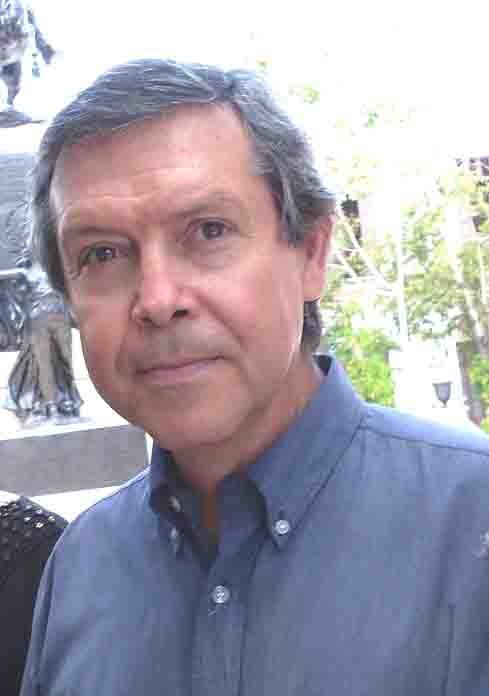
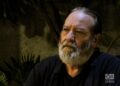
PhD. Jesús Guanche, anthropologist and researcher from the Fernando Ortiz Foundation and coordinator of the project La ruta del esclavo by UNESCO, is of the opinion that this space systematizes knowledge derived from researches with the daily practices of those who preserve religions.
Guanche, in an exclusive interview for OnCuba, explained how to combine the results from those studies in the national context. “The different presentations at these workshops result in new unfulfilled tasks as for instance including among the indicators of the National Population and Housing Census, not only religious diversity but also languages actually coexisting in the island.
“In Cuba, even though most of us speak the Spanish national variant, people also speak other languages such as English, French, Creole and Yiddish –by Jewish practitioners–, among others. Yet, the Census does not comprise that linguistic variety, which is a resource for identifying not only ethnic but cultural diversity as well in the country.
“It is a paradox because, though Cuba is one of the signatories of the 2005 Convention on Cultural Diversity, it is not always consistent with that process.”
Which are the prevailing religions in Cuba?
Based on a survey carried out by Havana’s Psychological and Sociological Research Center, 85{bb302c39ef77509544c7d3ea992cb94710211e0fa5985a4a3940706d9b0380de} of our population practices religious expressions with marked African lineage.
Why? These religions are not at all identical to those practiced in Africa. They have changed in time, space and symbolically. We cannot state these are African, but current Cuban practices that are related to the African religions.
They have Congo or Arara origins, or Yoruba, whose massive entrance to Cuba took place after slave trade was eliminated.
These religions are mixed, not only among them, but also with spiritualism and many symbolic elements from Catholicism. Whether we agree or not, they
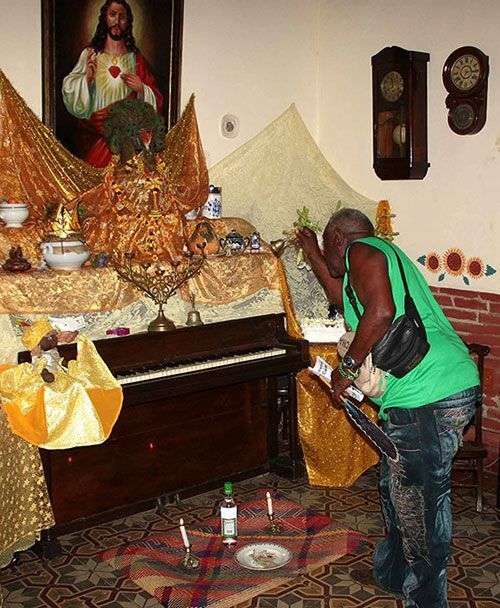
become part, in many regards, of the imaginary and of religious spaces.
More interestingly, these religions are not exclusive. They have the wonderful quality of being mutually included in the imaginary, practices, beliefs and prayers. Even though in theoretically spaces they are together but not mixed, in the people’s mind they are inevitably related as analogies are set and thus the process in enriched.
“In Cuba this element is closely related to national identity, because it can be noticed in the Spanish language with religious words, generally in the most archaic Yoruba variant, that is Oyó, and associated with the practice of la Regla de Ocha and Ifá. It is the same with funk language, in Arara houses.”
Guanche encourages the development of researches for identifying other languages spoken in Cuba, which he deems live languages “with the limitation of their reach and have transcended to the common language.”
He noted there are researchers like Gema Valdes, who study these phenomena in the island and is hopeful that “others will join them with their contributions.”
Where can we read about the studies developed on our African religiousness?


-The Casa del Caribe magazine has worked the moston the issue of the African legacy in the area. You can realize about that immediately by monitoring different magazines.
Are there other spaces for publishing these researches?
-Apart from the Caribbean Festival, in Cuba we have managed to hold a set of events during the whole year for continuing making visible these studies on popular religiousness.
“We opened up in January with an event by the House of Africa, of Havana’s City Historian Office. Then, we have another one in April coordinated by the Fernando Ortiz African Cultural Center, here in Santiago de Cuba. The following month, the Cuban Anthropology Institute develops an event that has been named after his recently deceased director Jesús Lobaina Jaramillo, who was a babalawo. In July, we meet at the Caribbean Festival and in Havana, at the Psychological and Sociological Research Center, an institution with a specific department for the study of popular religiousness.
“The interesting thing about these events is that we have succeeded in systematizing the participation of academicians and practitioners.”
What do these workshops have to offer for popular religiousness?
-They can favor the generation of cultural policies not only restricted to music and dance elements in these religions. These would prevent the Ministries of Culture from having a limited vision as that of the 18th century that only took into account artistic and literary elements, and be able to approach this phenomenon in a comprehensive way from the perspective of the impact this can have on the language, as well as from the plastic manifestations that go along with these phenomena.”
The Cuban academician agrees that one of the institutions that have advanced the most in this regard in our country is the National Council of Cultural Houses, though he states the Cultural Heritage National Council is increasingly getting more involved in this matter.
“Therefore, this Workshop on popular religiousness taking place in Santiago de Cuba can contribute with permanently improving cultural policies. This is the 34th edition of the Festival of the Caribbean, which has gradually expanded in terms of visibility of related studies coming not only from the Caribbean but from other regions of the world”, pointed out Jesus Guanche.