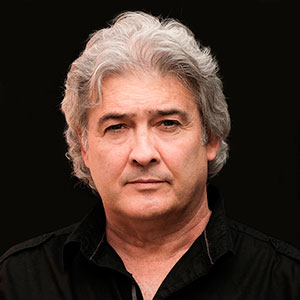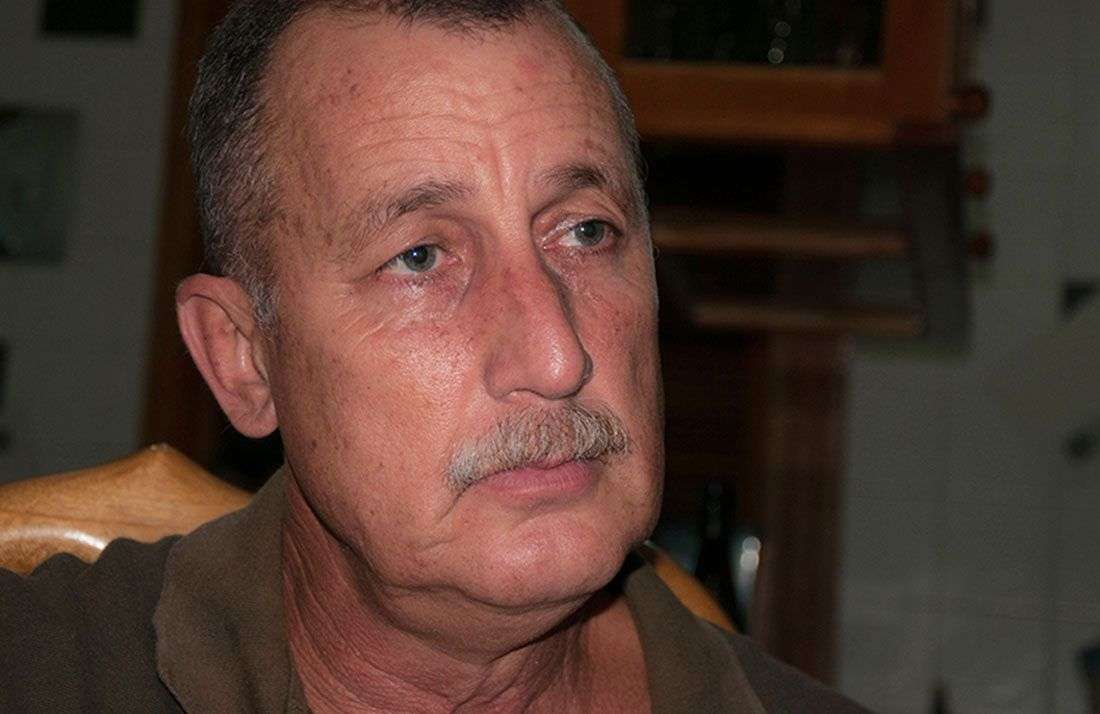
Juan Triana is one of the most famous economists of Cuba; some of his lectures recorded on flash memories are passed from hand to hand among Cubans. Before Raul Castro’s reforms to be initiated, his views and the ones by his colleagues at the Center for the Study of the Cuban Economy aroused much controversy. Today, some of his proposals are being implemented by the government in its plan to “upgrade” the model. Triana explains to us that in this process, “the economists are heard as never before in Cuba.”
Cuba prepares for the International Fair a project portfolio for foreign investment totaling 8000 million dollars…
The organisms have announced more than 240 projects, prepared as business opportunity with a calculation of the investment needed. The 8000 million dollars are much more than the initial figure but of course that digit is to be developed in several years. The important thing is that there is a new portfolio of investments more realistic and adjusted to Cuba today.
Which sectors are going to be prioritized in those investment projects?
Especially in the energy sector that is strategic. In that regard Cuba is a dependent country which needs to change its energy matrix to renewable sources.
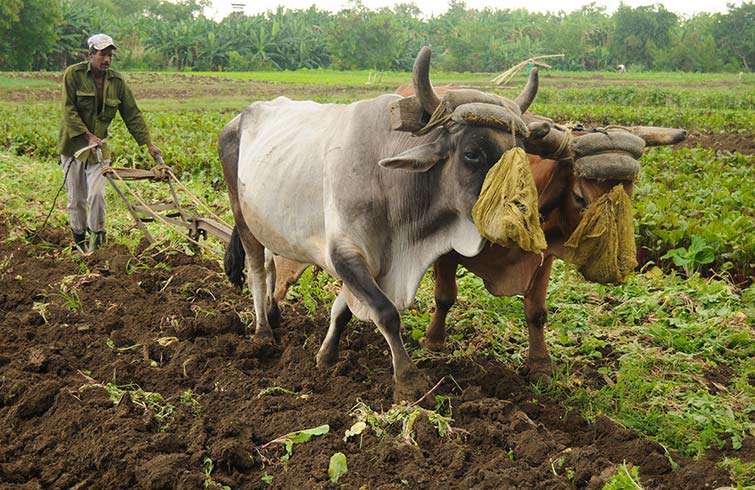
The other strategic sector is food production. We have a large deficit in production, not only because we have to import a lot but because we produce with low yields. Our agriculture is far from its potential of production. We have to make a technological leap in agriculture but it is not easy to find investors willing to risk to the Helms-Burton Act to take them before American courts .
Do you think the reforms have advanced enough to arouse interest among foreign investors?
Cuba has developed a new policy for foreign investment, a new environment has already been created, and it is a change from what Cuba had before.
It should be kept in mind that Cuba is a small market with a low per capita income, so foreign investment should consider exporting and then we enter another matter. To export we must ensure the necessary facilities and that has not been our previous reality.
“Definitely, exporting and importing is a major problem in Cuba today. Firstly, there are mechanisms that are outdated; secondly, because we do not have a proper culture, and third, we have real financial constraints “/ Photo: Raquel Perez.
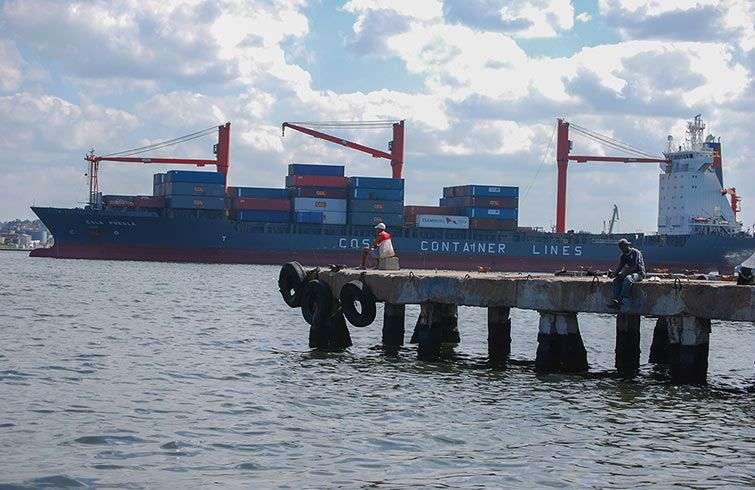
To Export and import in Cuba is a very complicated and very slow process in Cuba, right?
“Definitely, exporting and importing is a major problem in Cuba today. Firstly, there are mechanisms that are outdated; secondly, because we do not have a proper culture, and third, we have real financial constraints. ”
I hope that, pushed by this new investment law, the institutions related to import and export to change, to make them more flexible. We must find indirect regulatory instruments to facilitate the fundamental purposes. Sometimes you do not realize that we have to import to export. Japan was one of the first exporters of steel in the world and has no iron or coal.
By these days some economists are raising criticism against the government, is this new ?
There have always been critical views of what is done, sometimes more and other less publicized; sometimes reported with a good purpose and others with an inappropriate style. I think one of the tasks of the economists is to have a critical view on the management of the government. What happens is that these visions as well as criticism have to be responsible.
I worry about the visions that distort with the purpose of facing the economists against the government. But anyway we should not be afraid, the president Raul (Castro) promotes a culture of dissent and there is nothing containing more discrepancies that the economy.
What happens is that sometimes there is a lot of reactivity to what the foreign media says and it is given a connotation that does not really have. It is part of an old culture in Cuba where many times people just talk for fear on how the press can reflect it. I think it’s a cost that we have to take, we must not renounce to a forum in which to explain our criteria by fear to someone to misunderstand us.
Are the academics really listened to?
The economists are heard as never before in Cuba. This is a very good moment; there is a decision to incorporate economists and academics in the analysis and proposals for solving the problems of the Cuban economy. That is already institutionalized; there is an Advisory Council on Science and Technology that is consistently working to implement the guidelines.
Can you disagree on these spaces?
So far I’ve been always able to give my criteria, even the most divergent ones. In recent years I have not felt the pressure of previous years. One of the great merits of this update process is the creation of spaces for people to give their views.
What is the main challenge the Cuban economy faces?
The biggest challenge is to structure an economic development program. That one includes many other challenges that are not only economical, there are also social, cultural, political and ideological. Some have to do with individuals, families, institutions and businesses.
The development program is difficult and is made from complex positions; we have been blocked by 50 years. This blockade generates limitations of trust and uncertainty among investors who fear US retaliation. It also limits the market access, for example, the 40 percent of the production of rum consumed in the US, We are financially harassed; you saw it with the French bank.
Also we put it difficult and for many years it was difficult to do business in Cuba, you just have to compare what it took to Cuba to approve a business with the reality of other countries. But if Cuba is not developed, we cannot have a socialist society, much less sustainable.
What is the main problem that depends on the Cubans?
The desire to really change. There is a song by Silvio Rodriguez that says “to turn this earth at once.” We not only have to change and modernize institutions, not just change the economy, we must also change people.
We must understand that this is a Latin American and underdeveloped country and the development that we would reach is that of this region. Yet we often stop and look at ourselves through the eyes of Europe and that is a serious mistake. The first thing to do is being sincere with ourselves.
Do you think that the reforms to take to fruition?
I think it is more important to this state to spend on sheets for a hospital than to keep spending in salaries, maintenance and tablecloths of the cafés that now will be converted into cooperatives. The problem is that maintaining these businesses in bankruptcy means that we all pay it because there is a single budget.


The country will have more inequality but it always be on the basis of equity to which the State and the government have not given up. The terrible thing is to try to maintain equality at all costs and end up losing the economic ability to sustain equity, which was what was happening to us.
I would have liked this process of passing the gastronomy sector to the cooperatives to have happened five years ago. I would want that everything related to trade in Cuba, including hard currency stores, to cease to belong to the state and began to be operated by cooperative or mixed sector or with a foreign company that could ensure sufficient inventory. The expense that we have there is money that could be used in other things and we would not stop earning for that.