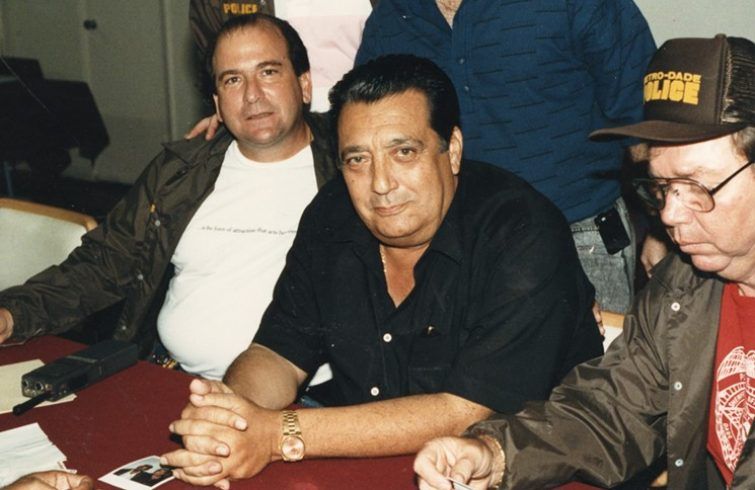
Benicio del Toro and Leonardo DiCaprio will participate in a film about a Cuban-American mafioso capo. Del Toro, as protagonist; DiCaprio as coproducer.
But there’s a twisted and at the same time seducing story behind the cinematographic novelty that has its roots on the island and has joined in that same project filmmakers, retired police officers, a best-seller writer and Hollywood celebrities.
The film will have as its principal character José Miguel Battle, a Batista policeman and member of Brigade 2506 which landed in the Bay of Pigs, who later became a mafioso leader in the United States.
Battle wasn’t just any mafioso capo but rather the head of The Corporation, a group of Cuban-American criminals involved in illegal gambling and the drug trade that moved millions of dollars and left behind a trail of blood and death.
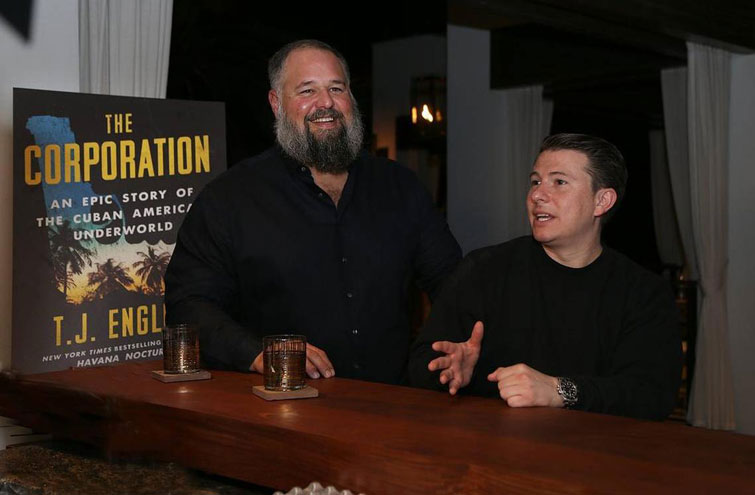
Before getting to cinema, the story of the mafioso was turned into a book. Published last week and written in English by organized crime historian T.J. English, The Corporation has been classified by El Nuevo Herald as an extraordinary chronicle of real adventures in the Cuban-American underworld of the 1960s, 1970s and 1980s.
Its author, who a decade before wrote Havana Nocturne about the U.S. mafia’s dealings in Cuba in the 1950s, considers this book a continuation of his previous successful book.
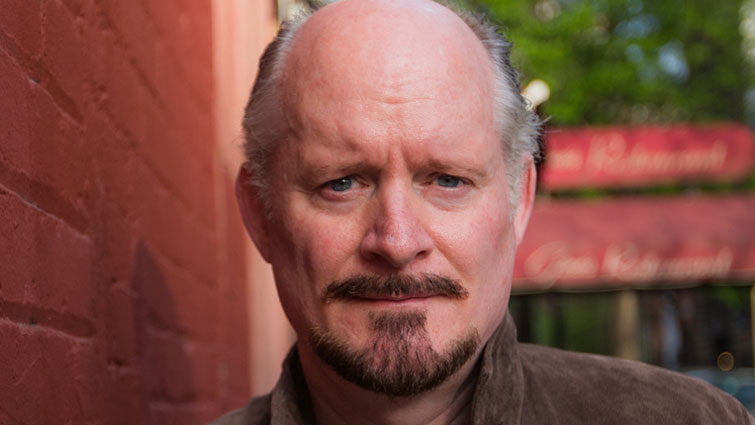
According to what English said to WUSF News, Battle was more than just an observer of the mafia’s actions in Havana. As a policeman he gave money from the casinos to the presidential palace. And he made relations that created the foundations of what he would do in the United States.



The writer assumed his character to have links to the CIA and sees in the humiliation and also imprisonment in Cuba after the Bay of Pigs defeat the key to understand Battle and those who formed The Corporation with him.
He affirms that the psychological need for revenge is at the core of this criminal enterprise.
Discovering Battle
The story of José Miguel Battle and his criminal organization got to T.J. English through José Daniel Freixas.
It was Freixas, a Cuban American graduate from the Film School of the University of Miami, who imagined that the capo’s story would become a book and a movie.
In 2007 he read in The Miami Herald the obituary of Battle, who died as a result of liver failure, and since then he started joining the threads of this story.
He first searched for and convinced David Shanks, a retired Miami police officer who was on the trail of the mafioso for almost 20 years, so that he write a detailed police description mainly based on transcriptions of recordings and testimonies in the courts.
After this he presented this material to English fearing that he would not turn it into a book. But the writer, who had already heard about The Corporation when he was researching organized crime in Cuba, just took two seconds to say yes, according to what he said to the Herald.
Freixas affirmed that English wanted to write a book about that but that he didn’t have the sources.
During his research English interviewed some 40 mafiosos to give a more complete image of Battle and his criminal group, in meetings attended by Shanks, Freixas and the also Cuban-American Tony González, the filmmaker’s partner and as the coproducer of the future movie together with DiCaprio and Jennifer Davisson.
Freixas was even able to gatecrash an exclusive Hollywood party to propose the plot to Benicio del Toro, when he still didn’t have a research or book to show. But his effort paid off.
According to the Hollywood press, cited by the Herald, the offers of the film studios for the story reached more than the million dollars until DiCaprio and Paramount got the contract to make the movie.
The Cuban-American Godfather
Ever since he discovered his obituary, Freixas was captivated by the cinematographic life of the mafioso. “He is the Cuban-American Godfather,” he says.
Battle was truly a surprising character. From corrupt policeman in prerevolutionary Cuba and a veteran of the Bay of Pigs invasion, where, according to El Nuevo Herald, he miraculously saved his life, he went on to be a czar of drug trafficking and of the illegal lottery of Cuban origin known on the island as “la bolita.”
His empire was not limited to Florida. He reached New York with whose mafia he was associated, English affirms.
Moreover, as the author of The Corporation says, he was an example of a mafia boss who got his hands dirty and was involved.
Cruel and ambitious, he could bet up to a million dollars on a cockfight as well as do away with his enemies himself. It is said that he shot the same victim 10 times to be sure that he was dead and he used to sit on his sofa, with a rifle over his thighs, to watch The Godfather movies.
When one of his subordinates, Ernesto Torres, murdered someone who owed money to Battle, the capo got furious not because he had killed the man or because he did it in the middle of the city, but rather because the death of the debtor deprived him of a source of incomes.
Later, he himself gave Torres the coup de grace when the latter got out of control. He personally pursued him to an apartment in Opa-locka, where he killed him with a shot to the forehead.
The police estimate that he had millions in profits, although according to the Herald he finally lost everything in an orgy of avarice and arrogance. He died in a hospital in South Carolina, where he was serving a sentence of 20 years postponed because of his health after he declared himself guilty of organized crime in 2006.
But despite his gruesome story, or precisely because of that, Battle finally became a Hollywood character.
Freixas and González are not afraid that this will sell a stereotyped image of the Cuban Americans.
“One would have to be ignorant, very ignorant, to think that the characters in The Corporation are representatives of the entire Cuban-American community,” González affirms. “We are telling a specific story, and like any other group, there are good people, bad people and others in the middle. This is the story of the bad guys.”