
One question comes to mind every morning when I read the first news of the day about Cuba. It is not who will govern the country, nor what system will prevail. Nor is it who was right over the past sixty-six years.
What concerns me seems far more important. What will happen to Cuba the day after?
For decades, we Cubans have argued about the past. We have argued about the Revolution, about the embargo, about exile, about the political system, about the United States, and about our own mistakes. We have debated so much about what happened yesterday that we have often forgotten to prepare for what might happen tomorrow. And tomorrow is already knocking at the door.
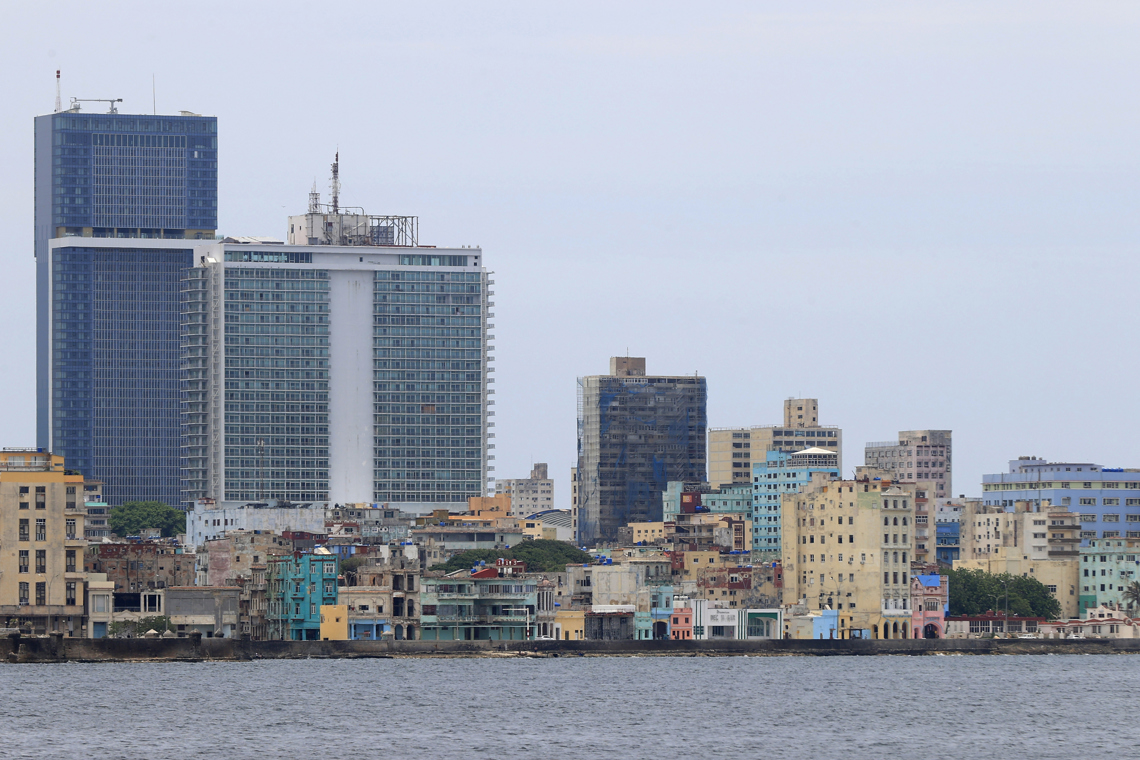
The reality of Cuba is visible to everyone. There is no need to exaggerate it or exploit it politically. It is there.
It is a country with a worn-out infrastructure: an electrical system on the verge of collapse. Hospitals that survive thanks to the extraordinary sacrifice of doctors and nurses. An economy incapable of meeting the most basic needs of the population.
Millions of Cubans live in anticipation of a remittance, a phone recharge, or aid sent from abroad. And there is at least one generation of young people who no longer dream of transforming the country but of leaving it. That is the deepest tragedy.
It’s not that Cubans want to change the government. It’s not that they want to change the system. Rather, many have stopped believing that Cuba can change; that’s why I think more and more about the day after.
Because it will come. I don’t know when, or how, or under what circumstances, but it will come.
And when it comes, the greatest challenge won’t be merely political: about figures or parties or groups. The biggest problem will not be who occupies an office, but who can unite forces to get the country back on its feet and make what already exists today work. There will be those tempted to destroy everything old, but this would be a huge mistake.
Who will ensure that hospitals and schools remain open?
Who will ensure that fuel arrives?
Who will keep the ports and airports operational?
Who will guarantee food distribution?
Who will keep the water distribution systems and other basic services running?
Who will prevent the despair accumulated over decades from turning into confrontation among Cubans?
Observing transition processes in different parts of the world, we learn that countries do not fail when they change, but when they self-destruct while changing. And that is the risk we must avoid.
Some believe that the main challenge of a new era will be economic. Others believe it will be political. I believe that, to a large extent, the challenge will be emotional.
After decades of division, there is a great deal of accumulated pain, wounds, resentments, unresolved issues, and personal stories that deserve to be heard.
But a nation cannot build its future solely on its wounds. Justice and truth will be necessary, as will acknowledging the suffering, but revenge would be a national disaster.
I have said it before and I will repeat it as many times as necessary: Cuba does not need a witch hunt, nor does it need to replace one form of exclusion with another. We do not need to create a new category of defeated citizens.
The vast majority of Cubans are not responsible for the national crisis. The vast majority simply tried to survive.
Teachers.
Doctors.
Engineers.
Government workers.
Military personnel.
Police officers.
Farmers.
Entrepreneurs.
Young people.
Retirees.
Most of them did not design the system; they simply lived within it. And the country’s reconstruction will need everyone: those who left and those who stayed, those who supported and those who criticized. Those who have resources and those who have nothing.
The reconstruction of Cuba will be too vast for a single generation, a single ideology, or a single political group to undertake.
And this is where the diaspora comes into the picture.
I have spoken many times about its importance because the diaspora is not a reality external to Cuba: the diaspora is Cuba. There are millions of Cubans who continue to support their families, help their communities, and keep alive an emotional bond with the land where they were born.
But the diaspora must not return as a conqueror but as a builder. Not to impose, humiliate, or hand out certificates of patriotism. We must return with humility, with generosity, and with a deep understanding that those who remained in Cuba also made enormous sacrifices.
National reconstruction will require investment, knowledge, international experience, and capital, but it will also require respect—a great deal of respect. Because no country can reconcile itself if one part of the nation seeks to impose itself on the other.
That is why I believe Cuba needs to begin discussing a major national stabilization pact right now. A basic agreement among Cubans, a minimum commitment that transcends ideologies. A national understanding to protect peace, guarantee essential services, prevent violence, and create the conditions necessary for the country to rebuild itself.
It would have to be an agreement that recognizes that the nation’s future is more important than our differences; that stability is more important than revenge; that reconciliation is more important than hatred; and that Cuba’s survival is more important than the victory of any political group.
History is bringing us closer to a decisive moment. Perhaps closer than many imagine.
When that moment comes, every Cuban will have to answer a simple question: Do we want to leave our children a nation divided by resentment or a nation united by hope?
My answer is clear. I dream of a Cuba where no one has to leave to prosper, where thinking differently is not a problem, and where the success of one Cuban is celebrated by everyone else.
A Cuba where reconciliation is not a political slogan but a national reality. Because at the end of the road, after all the arguments, after all the ideologies, and after all the wounds, there will be only one truth: there will be no future for Cuba without Cubans—all of them.


And there will be no new Cuba unless we first learn to rebuild ourselves as a nation.
A pact is needed to preserve the nation. And I am not talking about a political pact, nor an agreement between parties. I am not talking about sharing power.
I am talking about a national pact to protect Cuba during the first months of a new era—one that entails a commitment among Cubans to ensure the continuity of essential services, protect the most vulnerable sectors, prevent violence, preserve the functioning of the country’s fundamental institutions, and create the necessary conditions for an accelerated economic recovery.
It would have to be a pact that allows hospitals, schools, water systems, power generation, ports, communications, and food distribution to continue functioning while the country moves toward a new economic and political reality.
A pact so that no one has to renounce their ideas, but where we all accept a shared responsibility: to prevent Cuba from collapsing as it tries to get back on its feet.
Justice must not be confused with revenge, nor reconciliation with forgetting. And firmness cannot turn into hatred.
History shows that peoples prosper only when they are able to build a minimum consensus around higher goals, and that must be our challenge.
It is not a matter of proving who was right or who won. We cannot divide Cuba again into victors and vanquished but rather demonstrate that we Cubans were capable of saving Cuba when it needed us most.
The true success of a new era cannot be measured by the mere change of a government but by the capacity we had, as a people, to preserve our nation.








Congrats Hugo on your very positive
analysis based on the inclusive agenda to win cooperation of the Cuban diaspora in nation building out of current crisis.
I hope Cuban leaders will move to build bridges with Cubans in Spain France and also Miami.
VIVA CUBA ❤️