
Important U.S. companies have signed agreements with the Cuban government. The Internet giant Google, General Electric, Good Year, Caterpillar and the cruise lines Norwegian Cruises, Royal Caribbean and Pearl Seas Cruises are the beneficiary companies.
This possibility of this happening has been circulating off the record for some days, but the death of Fidel Castro prevented the news from having an effect until today.
According to what was announced, Google will expand its presence on the island after more than a year of negotiations. Recently, the company allowed Cuban users the access to the services of the Chrome Web Store and before it had inaugurated a technological center in Havana in the studio of visual artist Alexis Leyva Machado, “Kcho”.
Meanwhile, General Electric reached an agreement related to a hydroelectric plant in the province of Matanzas. This will contribute to the generation of renewable energy, one of the fields prioritized for foreign investment in Cuba. Previously it had signed a memorandum of understanding with the Cuban government in the areas of energy, medical devices and aviation, according to reports by The Wall Street Journal.
Moreover, Norwegian Cruises, Royal Caribbean and Pearl Seas Cruises negotiated the arrival of their cruise ships to Cuban ports. They would be arriving late this year or, in the majority of cases, already in 2017.
The news was especially awaited by Norwegian Cruise Line Holdings, whose president and CEO, Cuban-American Frank del Río, had commented months ago his company’s interest in establishing and gradually expanding its presence in Cuba. It is the first major company of a Cuban-American to be present in Cuba since the thawing that began on 17D and in the context of the economic changes on the island.
“We want to use Havana as much as possible in any incursion made into the extensive Caribbean basin,” he had said then enthusiastically. “We believe that it is a star attraction.”
It seems that the recent visit to the island by Ben Rhodes, adviser to President Barack Obama, served as a final boost to the agreements. Rhodes attended the posthumous homage to Fidel Castro in Havana – although not as an official representative of his government -, after which he met with Cuban officials. None of the parties offered declarations about this meeting.
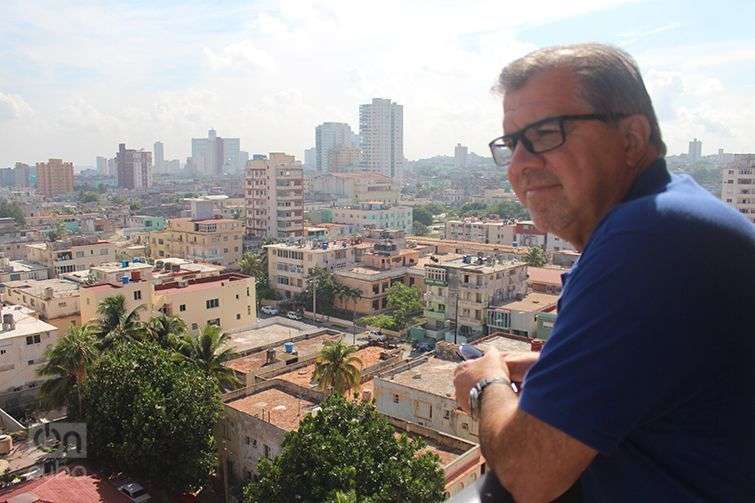
In the opinion of Cuban analyst Carlos Alzugaray, the signing of these agreements “indicated that both governments are moving toward an increasingly greater consolidation of the irreversibility of the agreements reached after December 17, 2014.”



“This is very important,” the expert opined, “given the uncertainty caused by some contradictory statements by President-elect Trump and his principal collaborators about the agreement currently existing between Havana and Washington. The naming of some extreme right-wing hardliners of Cuban origin has also created interpretations about the issue. It is logical, therefore, that relations want to be reinforced and nothing can better meet that goal than strengthening economic ties.”
According to Alzugaray, for the future U.S. government it would not be sensible to return to the scenario prior to 17D. “The principal reasons why Obama changed the Cuba policy,” he affirms, “was its evident failure. Instead of threatening with the reversal of the agreement, the best thing would be to wait for the transition of powers and open a dialogue with Cuba about what they want, as long as it is reasonable. Although they must not forget that it is a two-way street. The Cuban government can insist that with the White House and Congress in the hands of the Republicans it is easier to attain the total lifting of the blockade, which is, of course, what is of most interest, although not the only aspect.”
Meanwhile, economist Juan Triana considers that the effects of the agreements signed now “will depend on two key matters: first, how much a U.S. company can really do in Cuba according to the restrictions imposed by the U.S. regulations, and second, the Cuban regulations on foreign investment and sectorial policies regarding this.”
Triana opines that the biggest impact in the short term will not be economic, but rather “of demonstration and, logically, also political.” For him each agreement with the different companies has its own meaning.
“General Electric is a major company in a sector prioritized by Cuba,” he confirmed. “It is also one of the companies expropriated in 1959 and the latter means a lot, since it can be a timely action that advances a behavior, a sign for other U.S. companies.”
“Google, however, is another matter. An agreement that allows Cubans to have access to all the Google programs and applications is undoubtedly a great step forward. If the agreement goes beyond this and really achieves the possibility of improving Internet access, then, even when it is very difficult to estimate in economic terms, its impact can be significant,” the economist advanced.
“The case of the cruise companies is much clearer,” he finally opines. “It would contribute to increasing the incomes from tourism, although it is going to depend on the size of the cruise ships and the frequency.”
The signing of agreements takes place in the context of the fifth meeting of the Bilateral Commission held today in Havana. The delegations were headed by Josefina Vidal, general director of foreign relations of the Cuban Ministry of Foreign Affairs; while the U.S. delegation by Mari Carmen Aponte, Acting Assistant Secretary of State for Western Hemisphere Affairs, according to a press release by the U.S. Department of State.