Jossette Pellé, Stanislav Verbov, Pilar Fernández and José Amoscótegui were born at different times and in different parts of the world. The first is French, the second Russian, and the other two are Spaniards. They are from different generations; and they could have gone through life without sharing any particularity to bring them together in a sentence.
However, with the years, one aspect has united them: they all have made Cuba their home. Throughout Cuba’s development as a nation, and going back to its colonization by Spain, various waves of immigrants have made new beginnings here.
Their reasons have been diverse, their stays on the island have varied in length, and motives have almost always included financial or romantic matters. Jossette Pellé came to Cuba in the 1960s, soon after the 1959 revolutionary victory, and she never went back.
Her starting point was in Madrid—where she taught French—where she met a young Cuban doctor, an exile from the island’s Fulgencio Batista government, and crossed the Atlantic with him. Together, they arrived at Havana’s Boyeros airport,which was almost deserted at the time, without customs or immigration authorities, but with a welcoming embrace from the rebel forces as the most secure entry permit.
Jossette worked as a nurse assisting her husband in a small rural hospital in eastern Cuba. Later, in Havana, she became a translator for the Radio Habana Cuba, where she remained for more than 40 years. During this time, her four children were born and she lived her life like just another Cuban.
She participated in the different social processes, satisfied with the human warmth and solidarity of the people around her, and even used a food ration book, adapting her diet to French ways whenever possible. She used different survival strategies, such as that of the “botellera,”1 to deal with the ups and downs of transport on the island and to move around the city.
In response to a question about how she would change her life, she admits that she would do it all over again. For Stanislav Verbov—businessman, babalawo, husband of


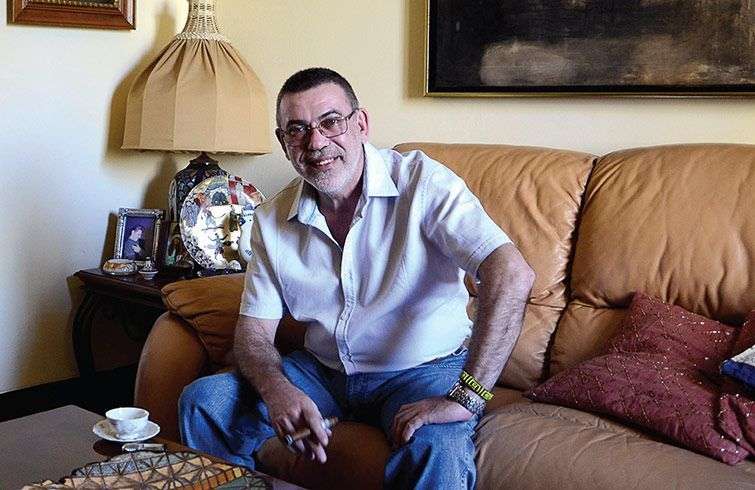
a Cuban woman and father of two Cuban-born girls— having lived in Cuba for 25 years provokes another type of reflection, a more philosophical one if you will, where respect for the social dynamics and culture of the new country should outweigh any differences.
“If you want to make your home and your very being into an impenetrable fortress for culture, and simply try to transfer your customs—Russian idiosyncrasy—to Cuban soil, you’ll never really be able to know the country or have real friends, because you’re limiting yourself and there’s no rapport. I think it’s always good to add and not to subtract, to have two cultures that can enrich you as a human being. That’s always better than entrenching yourself behind your limitations and not knowing anything about the world that surrounds you.
It’s not easy, it requires an effort, just like anything else in life. And to try to understand at an intellectual level what is going on, because every action or reaction should come from understanding. If that component is missing, your path is always going to be erroneous.”
This assimilation process that immigrants must face, no matter what points of contact are established through historic relations between their old and new countries, also involves having the ability to avoid mere folklore-ism and to deal with homesickness. Pilar Fernández, a Spanish businesswoman who has lived here for 17 years, sums it up as follows: “I have sought to really learn about Cuba. If you stay at the surface level, the problem of adaptation comes when you crash into reality; however, when you know the country, when you are perfectly familiar with its laws and customs and you accept them, then it’s not hard for you.
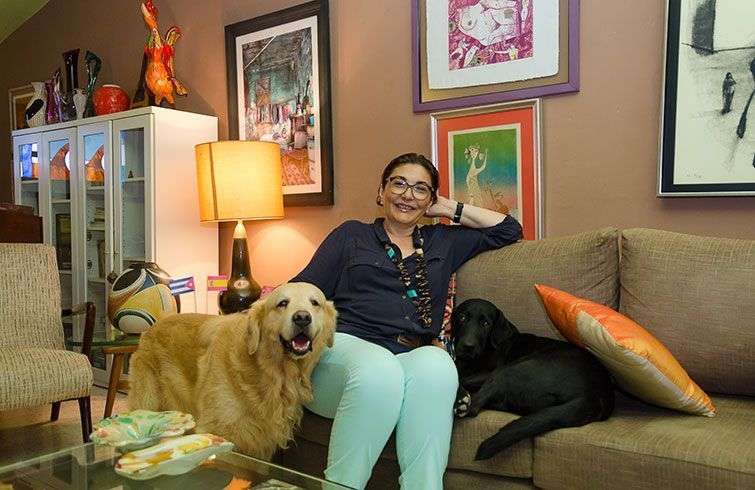
The problem is staying at the surface level and thinking that the country is just about music, rum and mulattas, and that you can do whatever you want, when that’s not the case anywhere in the world.” As a result of this understanding, she has been able to set up her latest projects: first the restaurant Bikos (now closed) and now Casa Pilar, which she plans to open in September. And who knows, maybe by that date she’ll have her mother with her full-time, an unquestionably essential factor for enriching the home that she has established in Cuba.
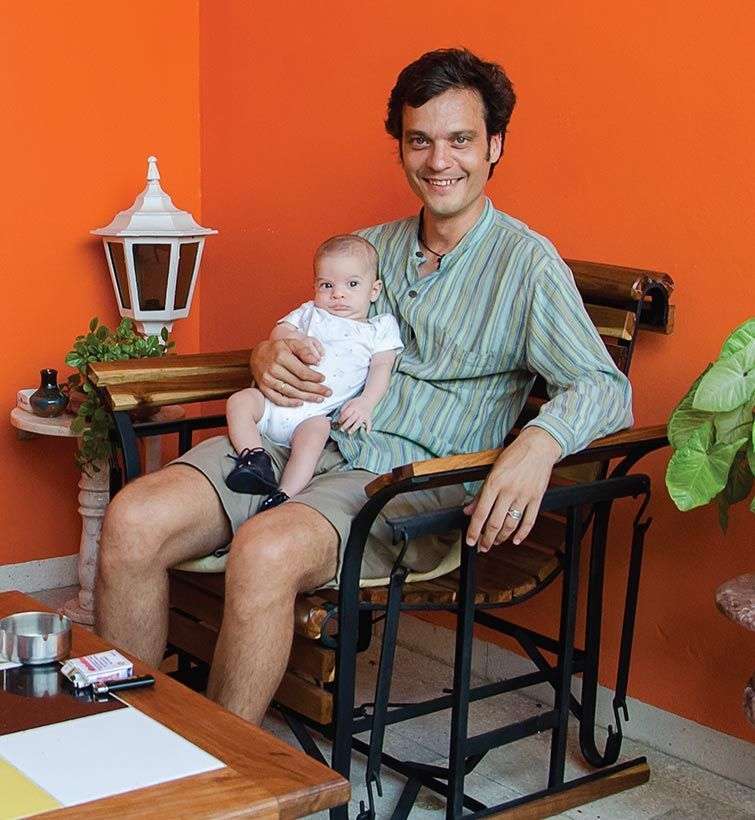
Sometimes, people who decide to settle down in a country other than their place of birth need special safe conduct to be able to integrate into that society. For José Amoscótegui, who has lived in Cuba for two years, that type of incentive has taken two forms: his wife and photography. He came from Seville for her, and through his life experiences, was able to establish relationships with the local people and surroundings.
The course he is taking at Havana’s Escuela de Fotografía Creativa (School of Creative Photography) reveals that “it
works very well; but more than that, I understand it as a social component of my own life, as an encounter between me
and the city, and me and the country. You make the streets your own, and learn little by little where you are. You’re no longer a tourist; you learn how see with other eyes. Some people might need a span of 15 or 20 years to forget that they come from somewhere else, but I feel like this city is my own; Santo Suárez is my neighborhood, and I’m Cuban.”