ES / EN
- September 9, 2026 -
No Result
View All Result
OnCubaNews
  • World
  • Cuba
  • Cuba-USA
  • Opinion
    • Columns
    • Infographic
  • Culture
    • Billboard
  • Sports
  • Styles / Trends
  • Media
  • Special
  • Cuban Flavors
  • World
  • Cuba
  • Cuba-USA
  • Opinion
    • Columns
    • Infographic
  • Culture
    • Billboard
  • Sports
  • Styles / Trends
  • Media
  • Special
  • Cuban Flavors
OnCubaNews
ES / EN
Home Cuba

Cuba to study withdrawing subsidized food to residents abroad

Many of the thousands of Cuban immigrants leave their “ration book” to their relatives or friends on the island, who continue to collect the products for people who are no longer in the country, and consume or sell them to increase their income.

by
  • EFE
    EFE,
  • EFE
    EFE
December 23, 2019
in Cuba
0
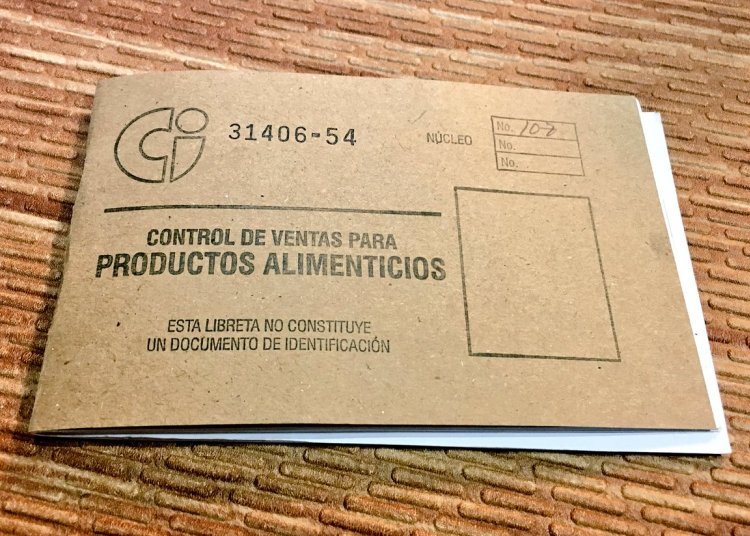
Ration book of Cuba products, known as “ration book.” Photo: @SashaEats / Twitter.

Ration book of Cuba products, known as “ration book.” Photo: @SashaEats / Twitter.

The Cuban government will study the possibility of withdrawing the right to receive the monthly quota of subsidized food of citizens who remain outside the country for long periods, in an effort to save the State expenses.

The Cuban family food basket sells basic products such as rice, oil, bread and eggs at symbolic prices and is distributed through a ration book, an anachronism that has become one of the biggest headaches for the authorities due to its high cost.

This subsidy is still essential for the lower income sectors in Cuba and in the persistent crises of shortages it becomes the only way of having a constant supply of some food products.

Many of the thousands of Cuban immigrants leave their “ration book” to their relatives or friends on the island, who continue to collect the products for people who are no longer in the country, and consume them or sell them to increase their income.

Case by case

The proposal was approved this Friday at the last plenary meeting of the National Assembly, when a deputy from Havana asked that “the possibility that people who leave the country for a long time do not continue to receive the standardized family basic food basket, since it implies large expenses (to the State),” be studied

Minister of Domestic Trade Betsy Díaz responded that they have already assessed similar proposals and agreed that they should issue new regulations that define the minimum term to terminate the “consumer registry,” a list that controls family households and their composition.

Díaz insisted, however, that the procedure must be updated taking into account the reasons for extended stays outside the country.

“There are those who leave on a mission and it is not always for recreational reasons,” she said referring to the professionals that Cuba sends to work in other nations.

Each family receives a “ration book,” where their members and the food they receive are recorded. The head of the household is the one who has so far the power to decide to insert or take out persons in the document.

Related Posts

Agricultural machinery in Cuba. Reforms in Cuba

By Decree and “in Record Time,” Cuba Overhauls Its State-Owned Business Sector

September 3, 2026
Blackout in Old Havana, Cuba

Economic reforms and democratic opening

July 24, 2026
The area’s beauty and preservation have become the only draw for many. Photo: Lied Lorain.

Old Havana: ghost streets, closed venues, nonexistent tourism, and a subdued summer

July 23, 2026
An inclusive cafe in Havana employs young people

An inclusive cafe in Havana employs young people with Down’s syndrome and autism amid Cuba’s crisis

May 21, 2026

This procedure has allowed thousands of Cubans who have immigrated or spend long periods outside the island to continue receiving the subsidy, with the consequent expense for the coffers of the government, which seeks ways to save in the middle of one of the worst crisis in recent decades

La “libreta” ¿50 años más?

Useful anachronism

A symbol of food shortages and economic difficulties in Cuba, the ration book officially came into force in 1962 and in the beginning also included, along with food, toiletries, cigarettes and cigars.

With the economic reforms promoted by former President Raúl Castro to “update the Cuban socialist model,” the ration book “thinned” and today only a small group of products such as beans, sugar, chicken, eggs, rice, oil, salt, pasta and bread can be bought with it, at a total cost that does not reach two dollars per person.

Although the amount of food has also decreased over the years, the family food basket is still a well-received “aid” in a country where the average state salary does not reach 45 dollars.

In 2011, the government proposed its organized elimination and warned that the book favored “both the needy and the non-needy citizen,” while promoting “bartering and resale practices” and “an underground market,” an announcement that worried an important part of the population.

Then it decided that the disappearance of the ration book would be “gradual,” but for the moment it is still being used.

Cuba spends about 2 billion dollars a year to import 80% of the food it consumes.

  • EFE
    EFE,
  • EFE
    EFE
Tags: cuban society
Previous Post

Manuel Marrero appointed Prime Minister of Cuba

Next

Cuba to prioritize exports and increase savings in 2020

EFE

EFE

EFE

EFE

Next
In 2019, the government was forced to take savings measures due to the “temporary” energy crisis because of the diesel deficit. Photo: Claudio Pelaez Sordo.

Cuba to prioritize exports and increase savings in 2020

Photo: Claudio Pelaez Sordo.

ETECSA announces discounts on surfing through Nauta permanent accounts until January 3

Cuban President Miguel Díaz-Canel addressing the National Assembly on Saturday, December 21, 2019. Photo: @PresidenciaCuba / Twitter.

Díaz-Canel in National Assembly: “what’s most pressing is the monetary organization”

Leave a Reply Cancel reply

The conversation here is moderated according to OnCuba News discussion guidelines. Please read the Comment Policy before joining the discussion.

Your email address will not be published. Required fields are marked *

Most Read

  • The Enchanted Shrimp of the Cuban Dance

    7613 shares
    Share 3045 Tweet 1903
  • Experts: Cuban airports ready to restart operations

    255 shares
    Share 236 Tweet 8
  • By Decree and “in Record Time,” Cuba Overhauls Its State-Owned Business Sector

    8 shares
    Share 3 Tweet 2
  • Niurki’s vokingos

    32 shares
    Share 13 Tweet 8
  • A Cuban in the elite world of tennis

    39 shares
    Share 16 Tweet 10

Most Commented

  • Havana's Malecón. Cuba-US relations

    Cuba’s Next Leader Will Not Be Found in Washington

    25 shares
    Share 10 Tweet 6
  • By Decree and “in Record Time,” Cuba Overhauls Its State-Owned Business Sector

    8 shares
    Share 3 Tweet 2
  • The Birth of a Nation: The Remake

    13 shares
    Share 5 Tweet 3
  • Economic reforms and democratic opening

    18 shares
    Share 7 Tweet 5
  • Old Havana: ghost streets, closed venues, nonexistent tourism, and a subdued summer

    15 shares
    Share 6 Tweet 4
  • About us
  • Work with OnCuba
  • Terms of use
  • Privacy Policy
  • Moderation policy for comments
  • Contact us
  • Advertisement offers

OnCuba and the OnCuba logo are registered® trademarks of Fuego Enterprises, Inc., its subsidiaries or divisions.
OnCuba © by Fuego Enterprises, Inc. All Rights Reserved.

No Result
View All Result
  • World
  • Cuba
  • Cuba-USA
  • Opinion
    • Columns
    • Infographic
  • Culture
    • Billboard
  • Sports
  • Styles / Trends
  • Media
  • Special
  • Cuban Flavors

OnCuba and the OnCuba logo are registered® trademarks of Fuego Enterprises, Inc., its subsidiaries or divisions.
OnCuba © by Fuego Enterprises, Inc. All Rights Reserved.

Manage Consent
To provide the best experiences, we use technologies like cookies to store and/or access device information. Consenting to these technologies will allow us to process data such as browsing behavior or unique IDs on this site. Not consenting or withdrawing consent, may adversely affect certain features and functions.
Functional Always active
The technical storage or access is strictly necessary for the legitimate purpose of enabling the use of a specific service explicitly requested by the subscriber or user, or for the sole purpose of carrying out the transmission of a communication over an electronic communications network.
Preferences
The technical storage or access is necessary for the legitimate purpose of storing preferences that are not requested by the subscriber or user.
Statistics
The technical storage or access that is used exclusively for statistical purposes. The technical storage or access that is used exclusively for anonymous statistical purposes. Without a subpoena, voluntary compliance on the part of your Internet Service Provider, or additional records from a third party, information stored or retrieved for this purpose alone cannot usually be used to identify you.
Marketing
The technical storage or access is required to create user profiles to send advertising, or to track the user on a website or across several websites for similar marketing purposes.
  • Manage options
  • Manage services
  • Manage {vendor_count} vendors
  • Read more about these purposes
View preferences
  • {title}
  • {title}
  • {title}
No Result
View All Result
  • World
  • Cuba
  • Cuba-USA
  • Opinion
    • Columns
    • Infographic
  • Culture
    • Billboard
  • Sports
  • Styles / Trends
  • Media
  • Special
  • Cuban Flavors

OnCuba and the OnCuba logo are registered® trademarks of Fuego Enterprises, Inc., its subsidiaries or divisions.
OnCuba © by Fuego Enterprises, Inc. All Rights Reserved.