ES / EN
- August 20, 2026 -
No Result
View All Result
OnCubaNews
  • World
  • Cuba
  • Cuba-USA
  • Opinion
    • Columns
    • Infographic
  • Culture
    • Billboard
  • Sports
  • Styles / Trends
  • Media
  • Special
  • Cuban Flavors
  • World
  • Cuba
  • Cuba-USA
  • Opinion
    • Columns
    • Infographic
  • Culture
    • Billboard
  • Sports
  • Styles / Trends
  • Media
  • Special
  • Cuban Flavors
OnCubaNews
ES / EN
Home Cuba Economy Cuban Economy

Lobster Fishing: A Hard, Lonely Job

by
  • Ronald Suárez Rivas
    Ronald Suárez Rivas,
  • ronald
    ronald
October 13, 2015
in Cuban Economy
2
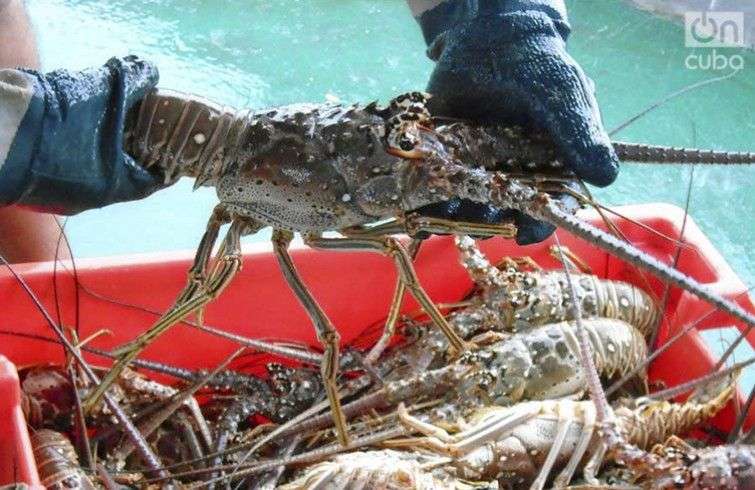
Cuban lobster is one of the most sought-after delicacies in the world.

Cuban lobster is one of the most sought-after delicacies in the world.

Amidst the shallow waters of Cuba’s southern coastline, lobster is just one more dish on the menu of fishing boats. At times the offer of lobster becomes so repetitive that some would rather exchange it for chicken or fish. Too much of one thing becomes tiresome, and this seafood delight is no exception.

Only a few miles away, on dry land, the panorama is very different. Seizures and violations by the country’s authorities form part of a commitment to ensure that every last pound of lobster goes to the tourism sector or is exported, in order to generate revenue for the country’s economy.

But out here, the hundreds of fishermen whose job it is to capture these delicious crustaceans are far removed from this reality.
langosta-11
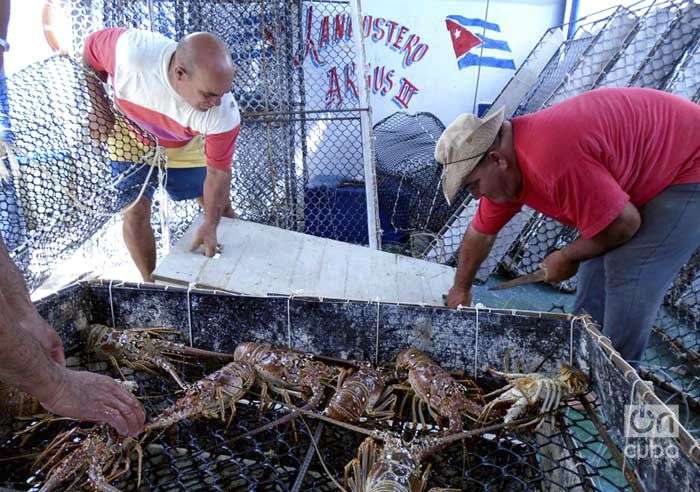
Lobster boats have a type of pool in their hull where the catch is deposited and stored.

Their task is to retrieve lobsters from the seabed and ensure that they arrive to port safe and sound. They explain that rudimentary methods were used in the past but that practices have been modernized over the years.

Rogelio Millar, captain of the Ferro 304, notes that in his grandfather’s time, no one would have imagined that 100 tons of lobster could be caught by a single boat in a year.

At that time, the fishermen used a glass-bottom bucket to locate the lobsters under the water; which they would then dive in and retrieve. In 2014, however, Rogelio and his crew ended the year with a total catch of over 150 tons.
langosta-01
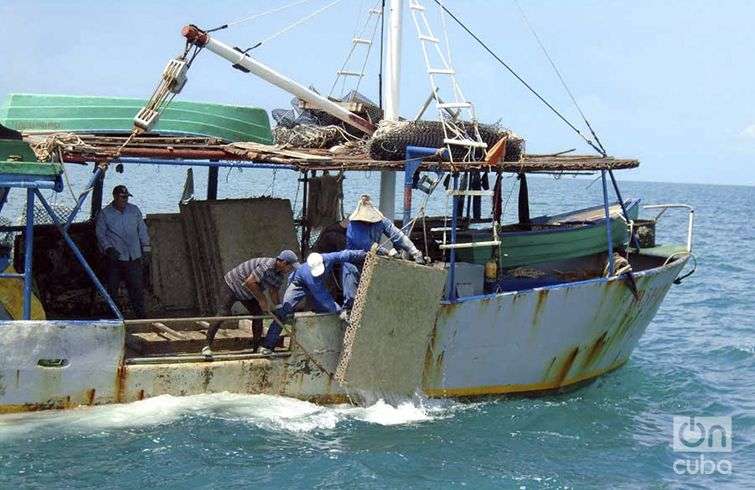
Fishing methods have been modernized to achieve greater productivity.

Such an achievement has been made possible thanks to the introduction of better boats and new technologies, including several different models of cage; in addition to the creation of storage pools, a kind of small aquarium located at the bottom of a platform inside the boat where the catch of the day is deposited; meaning that no time is lost returning to port, and fishing can continue.

Even so, lobster fishing continues to be a hard and lonely job, which sees these men spend the majority of their life at sea. The pay is good, with each crew member able to earn over 6,000 pesos or 1,000 CUC a month; 52 times the average Cuban salary and no one would doubt that it is well earned money.

The fishers often note that it’s their families who really reap the benefits of their work. Nonetheless, life at sea has other rewards: fresh air, beautiful landscape, and limitless lobster…
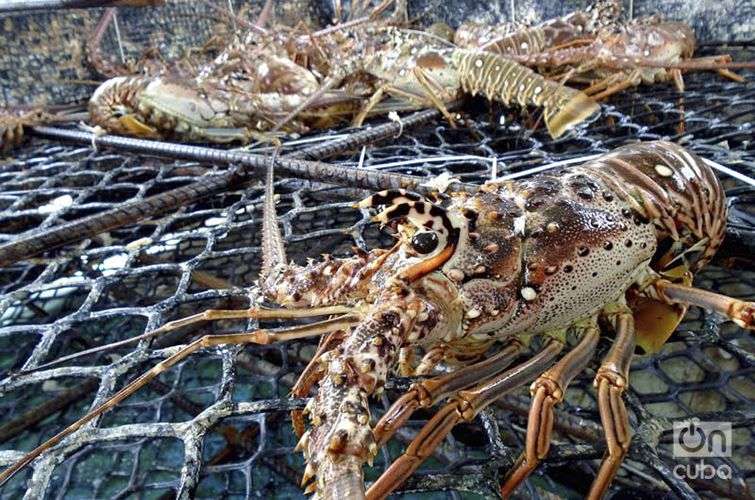
langosta-08
Fishers respect the closed season period (February to June), so as not to interfere with the lobsters reproduction cycle.

For a long time, only storms and perhaps the anguish of having to enter the water during the winter months would affect their routine. Today, however, they also have to deal with poaching, a practice which is fighting to keep its head above water throughout Cuba’s south-western region, precisely the most productive zone in the country.
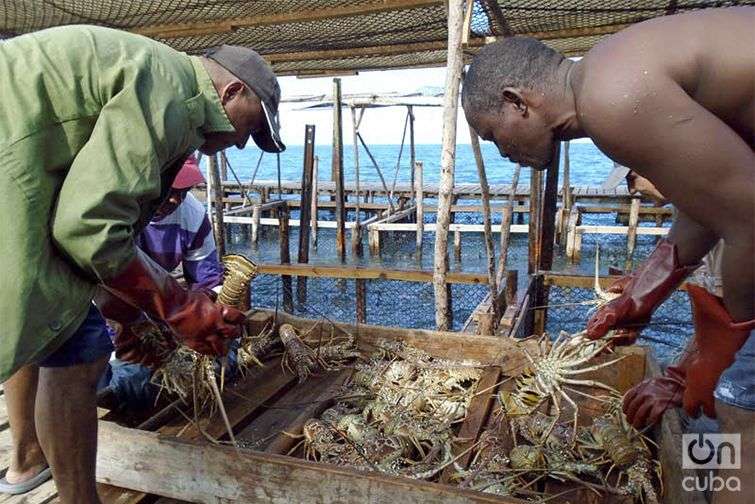
langosta-07
Although working conditions have improved, lobster fishing continues to be a difficult job, which sees fishers send the majority of their lives at sea.

Rolando Muñoz, captain of the Argus II, states that poachers set off from various costal towns such as Dayanigua, Boca de San Diego, Majana, in illegal boats to sack their cages.

Related Posts

Transport in Cuba. public transportation in Havana.

The island, the icebergs

February 23, 2026
Cuban flag. Cuban economy

Venezuela today: scenarios and urgent challenges for the Cuban economy

January 22, 2026
Havana. Foreign investment.

The Cuban diaspora can be a decisive economic factor, and Cuba must pave the way for it.

November 25, 2025
Private property in Cuba

How much can the private sector grow in Cuba?

November 3, 2025

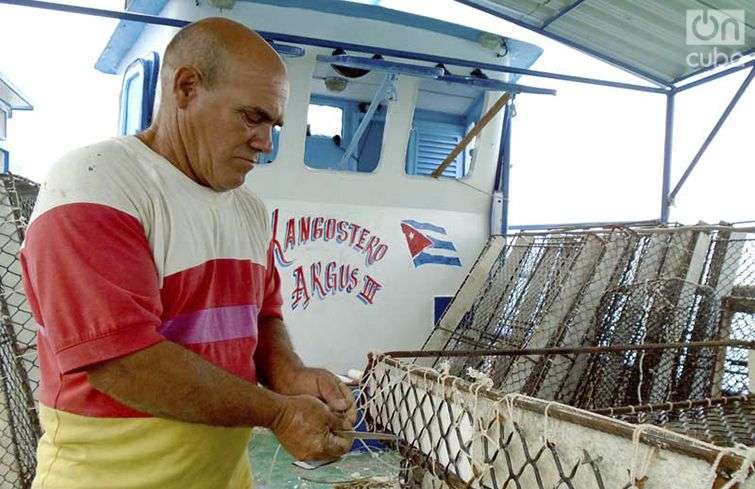
But the problem goes far beyond just stealing lobsters. “In the process of bringing up the ropes and nets, they also destroy our fishing equipment. When this happens, not only do we lose the catch, but we also have to spend days repairing cages.”


langosta-03
Damages to equipment caused by poachers means fishers lose valuable days carrying out repairs.

According to figures from the National Fishing Inspection Office, as a result of actions taken by authorities to contain the situation, both at sea and on land, in 2014, 14 tons of lobster were seized, with a further seven confiscated by August, 2015.

Despite these measures, many fishermen agree that poaching continues to be a problem.
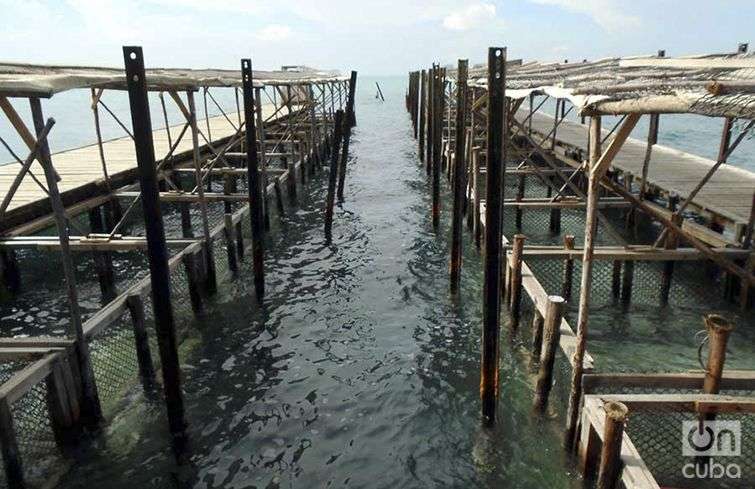
langosta-06
The lobsters are deposited in large tanks in the warehouse from where they transported alive to industry facilities.

Eladio Lazo, head of zone 9 storage center, a man used to listening to the laments of the crewmembers who arrive there daily; states that for better or worse, thefts occur throughout the entire platform.
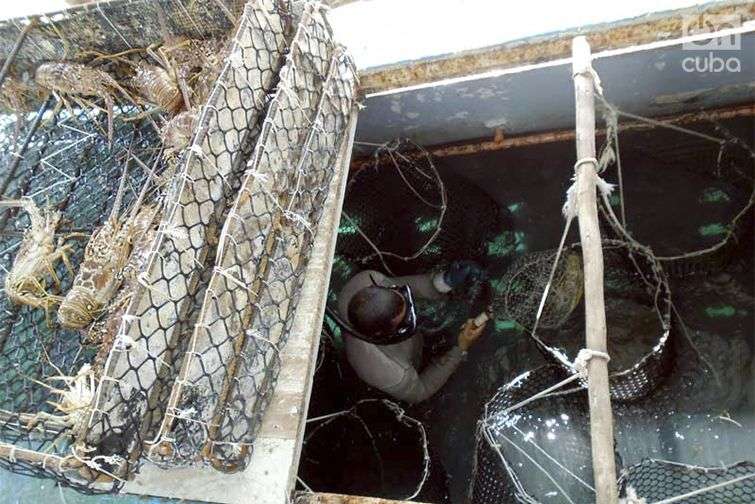
langosta-09
Despite improvements in working conditions, lobster fishing continues to be a tough profession, which sees fishermen spend the majority of their lives at sea.

Poaching, according to Eladio is a complicated issue, with many causes, such as the lack of employment options in many coastal towns and the high price of lobster on the black market.
In addition those who sail these Caribbean waters adhere to a widely held belief that “he sea is home to pirates.”
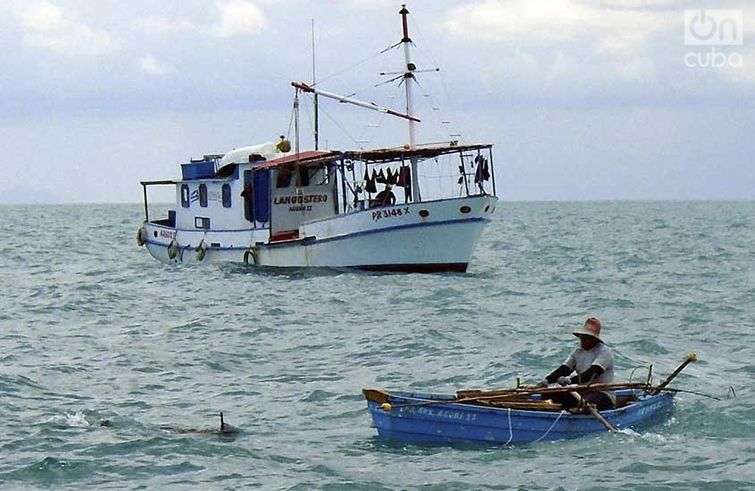

langosta-02
Flatboats and divers – who make up to 300 immersions a day – continue to be vital to lobster fishing.
  • Ronald Suárez Rivas
    Ronald Suárez Rivas,
  • ronald
    ronald
Previous Post

Carlos Gutiérrez: “We can’t let this opportunity go by”

Next Post

King Bar: Where the client is king

Ronald Suárez Rivas

Ronald Suárez Rivas

ronald

ronald

Next Post

King Bar: Where the client is king

Odin Teatret will be one of the foreign troupes performing at the Havana Theater Festival.

What to see at the 16th Havana Theater Festival

Dogs with "identity cards" in Cuba

Comments 2

  1. pepito pingu says:
    11 years ago

    If people in Cuba had a better life style that poaching problem could be severly redused. Ask your Comandantes for solutions other than jailing everybody that opposes the system.

    Reply
  2. Bruno Blanco says:
    11 years ago

    Well, I used to live in a fishing town in the southern coast of Pinar del Río. The fishermen there captured quite a few tons of lobster on a regular basis. True, buying and selling them in the local ‘black market’ was still illegal, but everybody knew who to go to when wanting to buy some “tails.” It was rather easy to get them locally (not in Havana, of course). It sort of makes sense that the authorities choose to make their trade illegal, but I do believe that those who capture them should at least have the right to keep some of them. I know a few fishermen who got ruined by the authorities for getting caught in “illegal practices.” Nobody agreed with how ruthless the authorities were with these fishermen; it was not fair. Again, they should be allowed to keep a share of what they fish – in my opinion at least.

    Reply

Leave a Reply Cancel reply

The conversation here is moderated according to OnCuba News discussion guidelines. Please read the Comment Policy before joining the discussion.

Your email address will not be published. Required fields are marked *

Most Read

  • The Enchanted Shrimp of the Cuban Dance

    7451 shares
    Share 2980 Tweet 1863
  • Is this Javier Sotomayor´s record on the tight rope?

    112 shares
    Share 45 Tweet 28
  • Cuba’s Next Leader Will Not Be Found in Washington

    20 shares
    Share 8 Tweet 5
  • The story behind the “sister flags” of Cuba and Puerto Rico

    157 shares
    Share 63 Tweet 39
  • Camila Bordón: “I still dance with my Cuban rhythm, even though now I sound more like a Colombian”

    23 shares
    Share 9 Tweet 6

Most Commented

  • Havana's Malecón. Cuba-US relations

    Cuba’s Next Leader Will Not Be Found in Washington

    20 shares
    Share 8 Tweet 5
  • The Birth of a Nation: The Remake

    11 shares
    Share 4 Tweet 3
  • Economic reforms and democratic opening

    14 shares
    Share 6 Tweet 4
  • Old Havana: ghost streets, closed venues, nonexistent tourism, and a subdued summer

    10 shares
    Share 4 Tweet 3
  • The Announced Measures and What Is Still Missing

    21 shares
    Share 8 Tweet 5
  • About us
  • Work with OnCuba
  • Terms of use
  • Privacy Policy
  • Moderation policy for comments
  • Contact us
  • Advertisement offers

OnCuba and the OnCuba logo are registered® trademarks of Fuego Enterprises, Inc., its subsidiaries or divisions.
OnCuba © by Fuego Enterprises, Inc. All Rights Reserved.

No Result
View All Result
  • World
  • Cuba
  • Cuba-USA
  • Opinion
    • Columns
    • Infographic
  • Culture
    • Billboard
  • Sports
  • Styles / Trends
  • Media
  • Special
  • Cuban Flavors

OnCuba and the OnCuba logo are registered® trademarks of Fuego Enterprises, Inc., its subsidiaries or divisions.
OnCuba © by Fuego Enterprises, Inc. All Rights Reserved.

Manage Consent
To provide the best experiences, we use technologies like cookies to store and/or access device information. Consenting to these technologies will allow us to process data such as browsing behavior or unique IDs on this site. Not consenting or withdrawing consent, may adversely affect certain features and functions.
Functional Always active
The technical storage or access is strictly necessary for the legitimate purpose of enabling the use of a specific service explicitly requested by the subscriber or user, or for the sole purpose of carrying out the transmission of a communication over an electronic communications network.
Preferences
The technical storage or access is necessary for the legitimate purpose of storing preferences that are not requested by the subscriber or user.
Statistics
The technical storage or access that is used exclusively for statistical purposes. The technical storage or access that is used exclusively for anonymous statistical purposes. Without a subpoena, voluntary compliance on the part of your Internet Service Provider, or additional records from a third party, information stored or retrieved for this purpose alone cannot usually be used to identify you.
Marketing
The technical storage or access is required to create user profiles to send advertising, or to track the user on a website or across several websites for similar marketing purposes.
  • Manage options
  • Manage services
  • Manage {vendor_count} vendors
  • Read more about these purposes
View preferences
  • {title}
  • {title}
  • {title}
No Result
View All Result
  • World
  • Cuba
  • Cuba-USA
  • Opinion
    • Columns
    • Infographic
  • Culture
    • Billboard
  • Sports
  • Styles / Trends
  • Media
  • Special
  • Cuban Flavors

OnCuba and the OnCuba logo are registered® trademarks of Fuego Enterprises, Inc., its subsidiaries or divisions.
OnCuba © by Fuego Enterprises, Inc. All Rights Reserved.