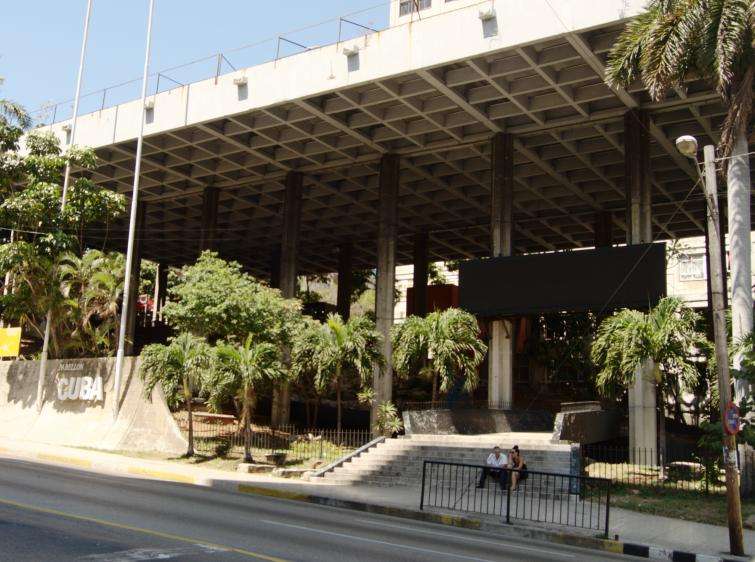
Several Cuban colonial centers have the title of World Heritage Site. With diverse artistic styles, which range from Mudejar, neoclassic to art deco, Cuban architecture becomes a paradigm in many of its constructions, to such an extent that buildings like the Atlantis, the San Carlos de la Cabaña Fortress or the Cuba Pavilion are famous for their beauty or functionality.
But, is there a current Cuban architecture? What tendencies, problems and perspectives characterize it?
The triumph of the Revolution in 1959 marked the start of a period characterized by the neglect of aesthetic budgets, and the non-critical assimilation of the modern Soviet style. That, together with the population’s housing needs, led to practices like the mass construction of impersonal buildings in places far away from the city centers.
With the advent of the Special Period, the shortage of materials marked the almost total absence of new constructions and the neglect of those already in existence. The population found the solutions. Architects Claudia Castillo and Orlando Inclán, both from the Office of the City of Havana Historian, defend the idea that Cuba is a vanguard territory, since, due to its needs, it has been applying for years what today is in fashion: the vintage style, which not only consists in the use of valuable and old objects, but rather that, in architecture, creates disruptions in the adaptation of spaces according to the new demands of daily life.
What is being done in Cuba is the recovery of the space in itself and of its materials. The growth of families has meant in many cases the need to redistribute the space, or expand homes. On the other hand, the new private enterprise possibilities have encouraged turning residences into gyms, restaurants or shops.
Young architect Daniel de la Regata has participated in the projection of several works of that type and says, “The architects who are working now, be it in institutions’ works or outside of them, base ourselves on recovering spaces that were frequently not designed for the function they are going to be given. When the existing materials are recovered, an aesthetic aspect can be given to the place, where the recovery stands out but sensorially it offers something new. Or they can be hidden so that it seems completely new.”
In the world it is very common for the designer’s activity to be associated to contests, which guarantees, in addition to the jury’s opinion, the quality of the ideas that are going to be put into practice. Decades ago that also occurred in Cuba, but at present architecture functions in two fundamental ways: one associated to construction, restoration and project companies; and another that is independent.
In the first, architects are assigned a project that is not always associated to their capacities, and payment depends on the institution’s wage. Daniel de la Regata says that during a working experience in Switzerland he was able to verify that the professionals specialize in a part of the work chain because the company needs to be productive. In Cuba, on the other hand, “at times that is not so important. A project is handed over knowing it has problems because it has to be handed over at a certain period of time.”




When work is independent, the projects find the architects. The professional’s contacts and the renowned reputation he/she has been able to cultivate have an influence on this. The budget comes from the pocket of the owner of the place that will be remodeled or the business that will be set up.
José Enrique Fornés, National Prize for Architecture, warns of a danger in these working conditions. He points out that those who have the most resources to undertake ventures are not necessarily persons that grant the importance that the space’s aesthetic and functional treatment merits. However, De la Regata is of the opinion that this opening enables the project’s failures to have an effect on the client’s pocket, “not on that of the state, nor on that of everyone,” and that is why much better constructions are starting to be carried out. The majority of the clients even pay for the designer to be present throughout the process, since they recognize their need despite this implying an extra cost.
José Enrique Fornés warns of the indispensable need to find an automatic mechanism to improve the population’s taste. Daniel adds that he public must adapt to seeing the architect as the director of the work. “Cubans were used to working directly with the builders, to not pay for a project, because generally they only have the money for what they need without being aware that the architect can save a great deal of money.”
Fornés recalls how his recently deceased friend and colleague Mario Coyula identified among the causes of the bad state of Havana’s buildings the disappearance during the revolutionary process of two very characteristic figures: the owner, who paid for the repair, and the manager, who made sure the regulations were carried out as well as taking care of the installations.
Cuban architecture, according to Daniel de la Regata, has to deal with many bureaucratic obstacles: the activity of the independent project is not allowed, and that makes it difficult to negotiate with the client, since the contractual relation is not legally backed. “Another problem is that generally one works on spaces that are used, and when requesting permission to modify the space for a new business the permit does not exist. There are many legal ways to do it, but they are like patching up, and it becomes difficult to give logical continuity to the project.”
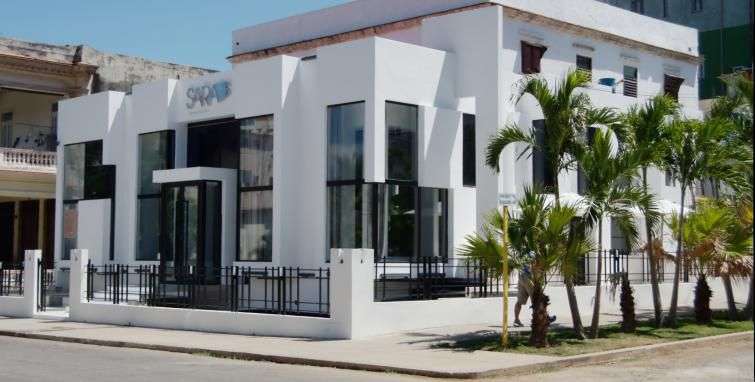
However, there are valuable developments. For Daniel, the Sarao’s Bar, built on 17 and E, in Vedado, is valuable: “What’s interesting is that it is not a modified house, but rather something existed there and it was demolished. From the start that space was conceived for its function.”Meanwhile, civil engineer Karel Pérez identifies among the best recent works the restoration of the Puente de Hierro (Iron Bridge) in Vedado; and the National Sanctuary of San Lázaro, located in the locality of El Rincón, in Santiago de las Vegas, an architectural group of works awarded a prize by the Association of Architecs in 2014 because of the integrity of its studies and interventions.
 To assess the impact, define tendencies and preview how the future of Cuban architecture will be, it would be necessary for discussion groups to function, commissions that not only would measure the final result and its insertion into the community, but also take into account the turbulences of the process.
Up to this point everything indicates that the future of Cuba architecture is already defined by the private enterprises because of the new construction demands they imply, the selectivity of the persons in charge and the flexibility in the process.
In Cuba there are many working and thinking groups about architecture, and they all agree that the future’s premise lies in finding harmonious and sustainable forms of improving the general environs of each one of the spaces. This is so much so that for Fornés the reconstruction work of Mario Coyula’s home is admirable, with no innovations but respecting all the construction regulations of its locality and achieving that the environment has a positive action on those interacting in it.
The Cuban architecture that will come will be one capable of reinventing itself and adapting to the demands of the that has not lost the vocation of being what its name represents: more than construction. environs. And it will also be the one that has not lost the vocation of being what its name represents: more than construction.