ES / EN
- April 28, 2026 -
No Result
View All Result
OnCubaNews
  • World
  • Cuba
  • Cuba-USA
  • Opinion
    • Columns
    • Infographic
  • Culture
    • Billboard
  • Sports
  • Styles / Trends
  • Media
  • Special
  • Cuban Flavors
  • World
  • Cuba
  • Cuba-USA
  • Opinion
    • Columns
    • Infographic
  • Culture
    • Billboard
  • Sports
  • Styles / Trends
  • Media
  • Special
  • Cuban Flavors
OnCubaNews
ES / EN
Home Cuba-USA

Helms-Burton Act, Trump’s nightmare for the Cuban economy

If the lawsuits in U.S. courts multiply, they could generate a complicated spiral of international litigations.

by
  • Atahualpa Amerise / EFE
    Atahualpa Amerise / EFE,
  • atahualpa amerise
    atahualpa amerise
April 29, 2019
in Cuba-USA
0
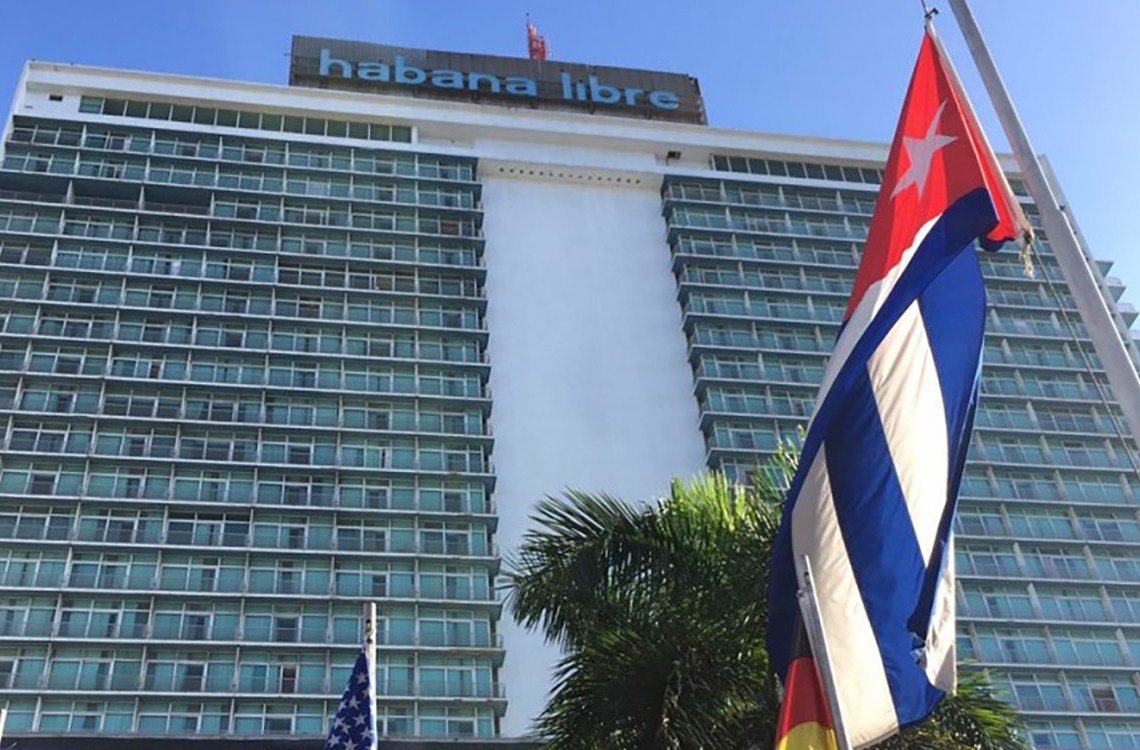
Habana Libre Hotel. Photo: Nicolás Villar / Infobae

Habana Libre Hotel. Photo: Nicolás Villar / Infobae

The U.S. decision to give green light to the lawsuits against multinational companies operating on expropriated land or property in Cuba threatens to discourage foreign investment in the Caribbean country and deal a blow to its increasingly stifled economy.

Starting next Tuesday, May 2, U.S. citizens (a great many of them of Cuban origin) who had their property confiscated in Cuba after the 1959 Revolution may sue in U.S. courts any foreign company that benefits from them, by virtue of Title III of the 1996 Helms-Burton Act.

In an unprecedented move, the Donald Trump administration announced on April 17 the imminent activation of Titles III and IV (the latter prevents entry to the U.S. of the defendants), which remained suspended ever since its promulgation due to the rejection of the European Union and other countries whose companies might be affected.

New restrictions imposed by Trump´s Administration

Spanish firms such as Meliá and Iberostar and other European, Canadian, Japanese, Russian or Chinese companies (usually under a joint venture with Cuban state corporations) operate hotels and other businesses located on properties or land that were nationalized in the first years of Fidel Castro’s government.

If the lawsuits in U.S. courts multiply, they could generate a complicated spiral of international litigations that would harm the defendants, especially if they have some type of assets in the United States.

Related Posts

Ybor City

Vicente Martínez Ibor and the Cubans who built Tampa

April 7, 2026
Cardiovascular medical procedure in Cuba.

More than 96,000 patients await surgery amid U.S. oil embargo, warns health minister

March 14, 2026
The Maine

The Maine: the disaster afloat

March 7, 2026
Jack London and Charmian Kittredge

Jack London’s romantic journey to the Caribbean

March 3, 2026

The EU, which groups most of the threatened companies, warned that it will strike back with “all options within its reach,” in the words of its high representative for Foreign Affairs, Federica Mogherini, and Trade Commissioner Cecilia Malmström, who issued a joint statement following Washington’s announcement.

The Economic War 

Specifically, Brussels promised to resort to its “blockade statute” which prohibits the enforcement of U.S. courts’ sentences related to Title III in European territory and allows the defendants to receive compensation for damages through legal proceedings against their claimants in European courts.

In the specific case of Spain, whose companies dominate a large part of the Cuban hotel market, Minister of Foreign Affairs Josep Borrell alluded to the need for the European Union to again resort to the World Trade Organization (WTO).

In fact, it was a first demand before the WTO presented by the EU in 1996 that forced the U.S., then under Bill Clinton in the White House, to indefinitely suspend the application of Titles III and IV, a measure that was respected by all of Trump’s predecessors.


Regardless of the legal processes to which they will give rise, experts predict that the application of Title III will create a dissuasive effect on potential foreign investors on the island, which needs about two billion dollars per year of foreign direct investment to sustain its economy.

The Cuban government has launched an intense campaign to discredit Trump’s measure and gather support from the international community, which reflects the high level of concern that this threat generates in Havana.

To the previewed deterrent of foreign investments is also added the announcement of two new U.S. sanctions: the more severe restriction of its citizens’ travel to the island and the limitation of family remittances to 1,000 dollars per quarter.

Cuban Foreign Minister Bruno Rodríguez acknowledged that the measures will have “a probable impact on the economy” of the country, although he considered that “they are doomed to failure” and appealed to the traditional resistance of Cubans in the face of continuous adversities.

In any case, this problem arises at a moment when the island’s economy is especially fragile. There is an intermittent shortage of basic foods such as flour, oil or eggs, the debt to foreign suppliers is accumulating and the balance of payments remains negative with no solution in sight.

As if that were not enough, Venezuela, Havana’s main partner and supporter, is experiencing an unprecedented crisis that could jeopardize the subsidized oil shipments that contribute approximately half of the island’s daily energy demand of 130,000 barrels.

  • Atahualpa Amerise / EFE
    Atahualpa Amerise / EFE,
  • atahualpa amerise
    atahualpa amerise
Tags: Cuba-USA RelationsDonald Trump AdministrationHelms-Burton Law
Previous Post

Cuban foreign minister and U.S. congressman discuss bilateral relations

Next Post

Eyes tightly shut

Atahualpa Amerise / EFE

Atahualpa Amerise / EFE

atahualpa amerise

atahualpa amerise

Next Post
Photo: Casa de Gloria / Facebook.

Eyes tightly shut

Viñales Valley, in the Cuban province of Pinar del Río. Photo: Archive.

Forest fire in tourist area of ​​Viñales

Damage caused to the Abel Santamaría International Airport in Santa Clara, in central Cuba, by a severe local storm on April 28, 2019. Photo: @teleyradio / Twitter.

Storms affect Santa Clara and other towns in Cuba

Leave a Reply Cancel reply

The conversation here is moderated according to OnCuba News discussion guidelines. Please read the Comment Policy before joining the discussion.

Your email address will not be published. Required fields are marked *

Most Read

  • The Enchanted Shrimp of the Cuban Dance

    6167 shares
    Share 2467 Tweet 1542
  • U.S. actress Susan Sarandon praises Cuban vaccines and calls for end of embargo against the island

    206 shares
    Share 82 Tweet 52
  • The story behind the “sister flags” of Cuba and Puerto Rico

    112 shares
    Share 45 Tweet 28
  • Who are Cuba’s main economic partners?

    90 shares
    Share 36 Tweet 23
  • Marylin Monroe and Afro-Americans

    701 shares
    Share 280 Tweet 175

Most Commented

    • About us
    • Work with OnCuba
    • Terms of use
    • Privacy Policy
    • Moderation policy for comments
    • Contact us
    • Advertisement offers

    OnCuba and the OnCuba logo are registered® trademarks of Fuego Enterprises, Inc., its subsidiaries or divisions.
    OnCuba © by Fuego Enterprises, Inc. All Rights Reserved.

    No Result
    View All Result
    • World
    • Cuba
    • Cuba-USA
    • Opinion
      • Columns
      • Infographic
    • Culture
      • Billboard
    • Sports
    • Styles / Trends
    • Media
    • Special
    • Cuban Flavors

    OnCuba and the OnCuba logo are registered® trademarks of Fuego Enterprises, Inc., its subsidiaries or divisions.
    OnCuba © by Fuego Enterprises, Inc. All Rights Reserved.

    Manage Consent
    To provide the best experiences, we use technologies like cookies to store and/or access device information. Consenting to these technologies will allow us to process data such as browsing behavior or unique IDs on this site. Not consenting or withdrawing consent, may adversely affect certain features and functions.
    Functional Always active
    The technical storage or access is strictly necessary for the legitimate purpose of enabling the use of a specific service explicitly requested by the subscriber or user, or for the sole purpose of carrying out the transmission of a communication over an electronic communications network.
    Preferences
    The technical storage or access is necessary for the legitimate purpose of storing preferences that are not requested by the subscriber or user.
    Statistics
    The technical storage or access that is used exclusively for statistical purposes. The technical storage or access that is used exclusively for anonymous statistical purposes. Without a subpoena, voluntary compliance on the part of your Internet Service Provider, or additional records from a third party, information stored or retrieved for this purpose alone cannot usually be used to identify you.
    Marketing
    The technical storage or access is required to create user profiles to send advertising, or to track the user on a website or across several websites for similar marketing purposes.
    • Manage options
    • Manage services
    • Manage {vendor_count} vendors
    • Read more about these purposes
    View preferences
    • {title}
    • {title}
    • {title}