ES / EN
- March 18, 2026 -
No Result
View All Result
OnCubaNews
  • World
  • Cuba
  • Cuba-USA
  • Opinion
    • Columns
    • Infographic
  • Culture
    • Billboard
  • Sports
  • Styles / Trends
  • Media
  • Special
  • Cuban Flavors
  • World
  • Cuba
  • Cuba-USA
  • Opinion
    • Columns
    • Infographic
  • Culture
    • Billboard
  • Sports
  • Styles / Trends
  • Media
  • Special
  • Cuban Flavors
OnCubaNews
ES / EN
Home Cuba

Forty years after the “Mariel” exodus

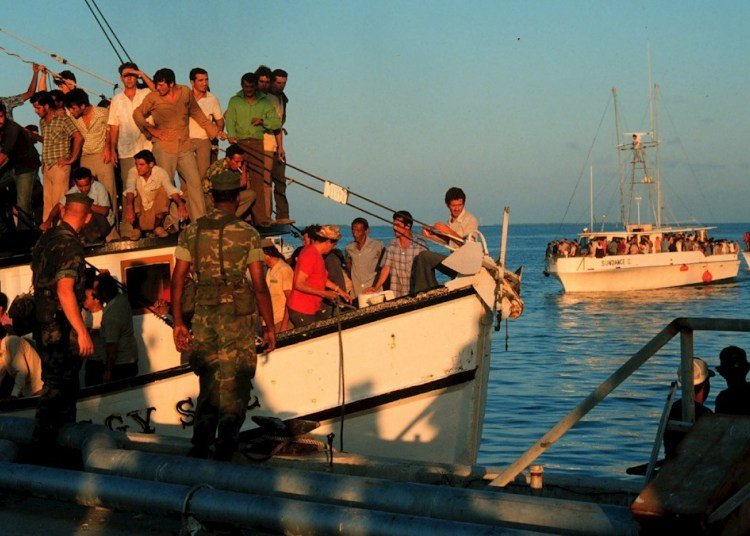
Between April and October 1980, 125,000 Cubans arrived in the United States through Key West on board about 2,000 boats named the “Freedom Flotillas.”

by
  • EFE
    EFE,
  • EFE
    EFE
April 17, 2020
in Cuba
0
Photo: EFE / File.

Photo: EFE / File.

Speaking about “Mariel” in Cuba is now synonymous with a business park to attract foreign investment, but 40 years ago, that area located about 50 kilometers west of Havana was the point of departure of an exodus that went down in history as one of the great migratory crises with the United States.

This episode had begun two weeks earlier, on April 1, 1980, when a group of Cubans using a vehicle forcibly entered the headquarters of the Peruvian Embassy in Havana demanding political asylum.

The Peruvian government granted diplomatic protection to these people and refused to hand them over to the Cuban authorities, who were demanding their arrest for the death of the embassy security guard, a Cuban worker who died amid initial incidents from a gunshot.
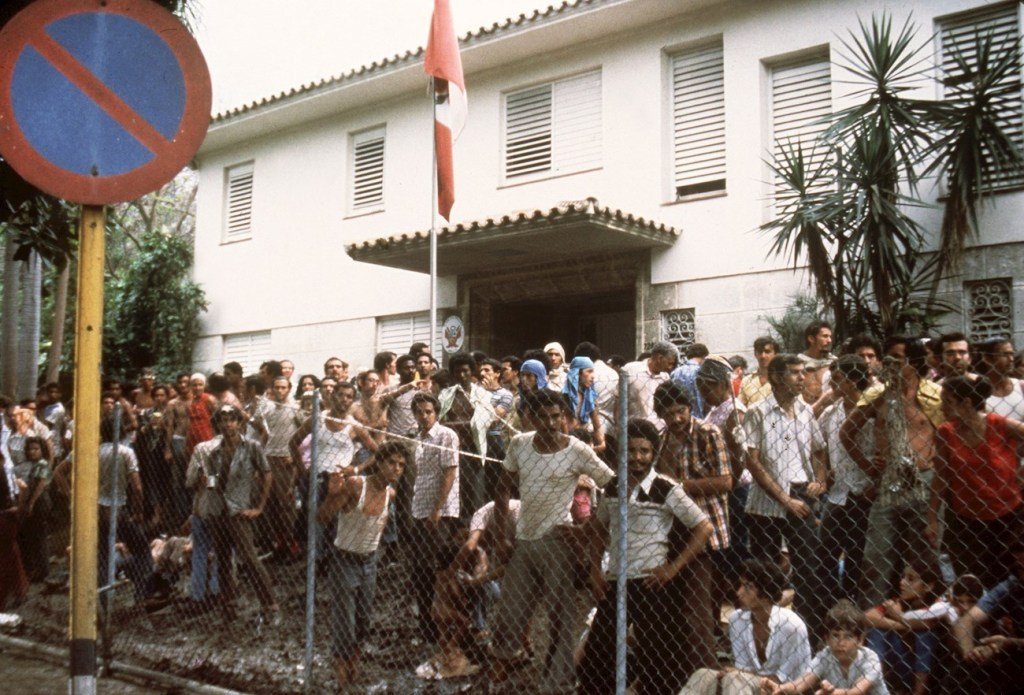
A group of Cubans request political asylum during the occupation of the Peruvian embassy in Havana, Cuba. Photo: EFE/Archive.

Faced with this refusal, the island’s government withdrew protection from the diplomatic representation and, in the face of general perplexity, in the days that followed an avalanche of people arrived, exceeding 10,000. They all wanted to be allowed to leave the country.

Sea bridge

The bilateral crisis with Peru, although it would take years to settle, was the least of the matter: then Cuban President Fidel Castro announced that he would allow those who wanted to leave Cuba to leave through the port of Mariel.

Related Posts

Havana Malecón. Cuba

Flash: Havana that doesn’t go completely dark

March 17, 2026
Cardiovascular medical procedure in Cuba.

More than 96,000 patients await surgery amid U.S. oil embargo, warns health minister

March 14, 2026
Holy Greek Orthodox Cathedral Church of St. Nicholas of Myra. Havana

St. Nicholas of Myra: a Greek Orthodox church in the heart of Old Havana

March 11, 2026
Transport in Cuba. public transportation in Havana.

The island, the icebergs

February 23, 2026

Starting on April 15, dozens of boats from the state of Florida started arriving at Mariel to pick up those who decided to leave, although it was not until the 21st when Granma daily published the official decision to not stop those boats and allow their transit.

Between April and October 1980, a total of 125,000 Cubans arrived in the United States through Key West on board about 2,000 boats named the “Freedom Flotillas.”

Subsequently, Washington accused Castro of having taken advantage of the situation to camouflage among the waves of migrants, criminals taken from jails and the mentally ill until then held in psychiatric hospitals.

Fidel: “We decide”

Regarding that episode, the Cuban president told journalist Ignacio Ramonet in the book Cien horas con Fidel that they knew what was going to happen when they left the Peruvian embassy without protection and that the thousands of people who entered there were “mostly lumpen, eager to travel to the United States and had never been given a visa.”


“We decided and resolved it ourselves…,” he said regarding the decision to authorize the arrival of boats from Florida.

But the end of tolerance to the exits by Mariel seven months later did not mean the closure of this episode.

The issue of the “Marielitos” for years dragged between the two countries in the form of negotiations between the two countries for the deportation to Cuba of more than 2,000 persons classified by the United States as “excludables” to reside in the country.

The tug-of-war seemed to culminate in 1984, when Havana accepted the return of some 2,700 “Marielitos,” but in the end only 201 were deported in five months.

Castro put an end to the negotiations because Radio Martí, considered by the Cuban government to be a subversive media outlet, began broadcasting from Florida to the island.

In 1987, a new agreement was reached to resume deportations after Cubans who arrived during the “Mariel exodus” and were imprisoned for crimes already committed in the United States staged riots in prisons in Georgia and Louisiana.

And the epilogue to this migratory crisis is not in Havana or Miami, but in Lima, which is where in April 1989 the last two Cubans who remained exiled in the Peruvian Embassy finally traveled. They had been there for nine years.

  • EFE
    EFE,
  • EFE
    EFE
Tags: Cuba-USA Relationscuban migrantsMariel
Previous Post

United States offers to allow sending of humanitarian assistance to Cuba due to the coronavirus

Next Post

Four health collaborators in Venezuela tested positive for coronavirus

EFE

EFE

EFE

EFE

Next Post
Photo: Telesur.

Four health collaborators in Venezuela tested positive for coronavirus

The bicycle as a means of transportation in times of coronavirus. Photo: Otmaro Rodríguez

Coronavirus in Cuba: 4 more deceased, 61 new cases of contagion

Photo: Otmaro Rodríguez

Portal Miranda: “We are not going to hesitate to go to a higher stage when the scenario indicates it”

Leave a Reply Cancel reply

The conversation here is moderated according to OnCuba News discussion guidelines. Please read the Comment Policy before joining the discussion.

Your email address will not be published. Required fields are marked *

Most Read

  • The Enchanted Shrimp of the Cuban Dance

    5813 shares
    Share 2325 Tweet 1453
  • The story behind the “sister flags” of Cuba and Puerto Rico

    100 shares
    Share 40 Tweet 25
  • Cuba Facing Its Most Important Economic Decision: Attracting Its Diaspora

    18 shares
    Share 7 Tweet 5
  • U.S. actress Susan Sarandon praises Cuban vaccines and calls for end of embargo against the island

    170 shares
    Share 68 Tweet 43
  • More than 96,000 patients await surgery amid U.S. oil embargo, warns health minister

    7 shares
    Share 3 Tweet 2

Most Commented

    • About us
    • Work with OnCuba
    • Terms of use
    • Privacy Policy
    • Moderation policy for comments
    • Contact us
    • Advertisement offers

    OnCuba and the OnCuba logo are registered® trademarks of Fuego Enterprises, Inc., its subsidiaries or divisions.
    OnCuba © by Fuego Enterprises, Inc. All Rights Reserved.

    No Result
    View All Result
    • World
    • Cuba
    • Cuba-USA
    • Opinion
      • Columns
      • Infographic
    • Culture
      • Billboard
    • Sports
    • Styles / Trends
    • Media
    • Special
    • Cuban Flavors

    OnCuba and the OnCuba logo are registered® trademarks of Fuego Enterprises, Inc., its subsidiaries or divisions.
    OnCuba © by Fuego Enterprises, Inc. All Rights Reserved.

    Manage Consent
    To provide the best experiences, we use technologies like cookies to store and/or access device information. Consenting to these technologies will allow us to process data such as browsing behavior or unique IDs on this site. Not consenting or withdrawing consent, may adversely affect certain features and functions.
    Functional Always active
    The technical storage or access is strictly necessary for the legitimate purpose of enabling the use of a specific service explicitly requested by the subscriber or user, or for the sole purpose of carrying out the transmission of a communication over an electronic communications network.
    Preferences
    The technical storage or access is necessary for the legitimate purpose of storing preferences that are not requested by the subscriber or user.
    Statistics
    The technical storage or access that is used exclusively for statistical purposes. The technical storage or access that is used exclusively for anonymous statistical purposes. Without a subpoena, voluntary compliance on the part of your Internet Service Provider, or additional records from a third party, information stored or retrieved for this purpose alone cannot usually be used to identify you.
    Marketing
    The technical storage or access is required to create user profiles to send advertising, or to track the user on a website or across several websites for similar marketing purposes.
    • Manage options
    • Manage services
    • Manage {vendor_count} vendors
    • Read more about these purposes
    View preferences
    • {title}
    • {title}
    • {title}