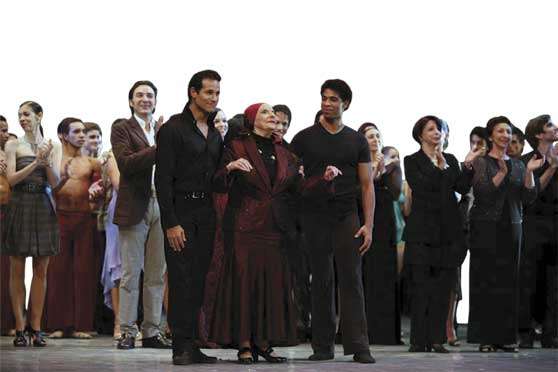
Photos: Archives BNC
More than a century ago, in referring to the historic task that lay ahead for the art of ballet in Cuba, the scholar Don Fernando Ortiz, justly considered as the “third discoverer” of our nation, wisely noted: “It should be an art with Cuban soul, but in its full and glorious national integrity, translated into a language of universal vibration…and we anticipate that it will do so with beautiful flowerings, as long as it does not renounce its deep roots or its rich sap and it is able to air its luxuriant foliage in the highest currents of contemporary culture.”
The beautiful artistic manifestation of ballet, which originated in Renaissance Italy, arrived in Cuba when it was still a Spanish colony, in the late 18th century as the first theaters were built, hosting presentations by major European dance groups. Because of the island´s privileged geographical location and the receptiveness of native-born Cubans, or criollos, to different forms of dance, ballet soon took hold. Celebrities such as Austrian Fanny Elssler came to Cuba, which developed a cultural treasure trove comprising the most eminent choreographers of Ballet d’action and romanticism, many more than any other Latin American country.
When the Cuban Republic was established after an interlude of more than 30 years as a result of the independence struggle, the celebrated Russian ballerina Anna Pavlova brought a rebirth of ballet with the new spirit of classicism and the choreographic revolution led by the genius of Mikhail Fokine. Her visits in 1915, 1917 and 1918 included not only Havana, but also Matanzas, Cienfuegos and Santiago de Cuba. In a special coincidence, in 1931, the year that Pavlova died in The Hague, the first institution devoted to systematic ballet training was born in Cuba: the Sociedad Pro-Arte Musical School of Ballet in Havana. Its most prestigious students were Alicia, Alberto and Fernando Alonso. The three of them, all of whom possessed a true vocation for ballet, had to leave the country to become professionals, but they were always determined to edify the great work of a purely Cuban form of ballet.
On Oct. 28, 1948, the Ballet Alicia Alonso was born, the precursor of today’s Ballet Nacional de Cuba (BNC), with the goal of fulfilling that impelling commitment to history. It was the beginning of a long road plagued by misunderstandings, grievances and aggression in the context of that chaotic period, but the dancers were able to move forward with large doses of sacrifice, artistic quality and patriotism. The valuable outcome of that titanic effort during difficult times included popular productions that were staged throughout the island in theaters, stadiums and public squares; an academy founded to ensure that the talent of young people from very poor backgrounds would not be lost, and the development in that academy of a teaching methodology that would become the foundation of today’s globally acclaimed Cuban school of ballet, along with tours representing Cuban culture in 14 countries in the Americas.
After its reorganization in 1959, the BNC devoted itself to the total achievement of its great historic goal: to make the art of ballet a right of all Cubans. A systematized network of schools throughout the island has made it possible to train several generations of dancers who have won high acclaim, and who are now the mainstays of a world-class company that has taken its ethical and esthetic message to 70 nations on all five continents, creating a vast repertory that spans several hundred works involving the most diverse stylistic tendencies. Consistent efforts for widespread dissemination of this art, consisting of educational shows, lectures and special productions in factories, schools and military units, have initiated and educated Cubans on a mass scale in a liking for the ballet. Special courses and vocational workshops have reinforced a vast popular reserve for that massive growth in love for the ballet, including the participation of children and young people from all different backgrounds in the country. Under the influence of the Ballet Nacional, other groups have emerged, such as the Ballet de Santiago de Cuba and the Centro Pro-Danza, as contributing factors to an artistic achievement that the most prestigious critics have no qualms in describing as “the miracle of Cuban ballet.”




Since 1960, and thanks to support from the State and Alicia Alonso’s gift for creating unity, the Ballet Nacional de Cuba has organized the International Ballet Festival of Havana. This year the 23rd festival will take place from Oct. 28 to Nov. 7 with the general theme of “Tradition and New Paths.” Companies, dancers, critics and observers from more than 20 countries have confirmed their attendance at the event, which will feature a diverse program in venues such as Havana’s Gran Teatro and the Mella, Nacional and Karl Marx theaters in the capital, as well as the Cárdenas theater in the city of Cárdenas, Matanzas province. Many collateral activities will be held, including lectures, film series, photo and visual arts exhibitions, book launchings and the issuing of commemorative postage stamps.
Once again, that cultivated passion, now a tradition, will turn Cuba into the world capital of dance.