
ES / EN
- July 5, 2026 -
No Result
View All Result
OnCubaNews
  • World
  • Cuba
  • Cuba-USA
  • Opinion
    • Columns
    • Infographic
  • Culture
    • Billboard
  • Sports
  • Styles / Trends
  • Media
  • Special
  • Cuban Flavors
  • World
  • Cuba
  • Cuba-USA
  • Opinion
    • Columns
    • Infographic
  • Culture
    • Billboard
  • Sports
  • Styles / Trends
  • Media
  • Special
  • Cuban Flavors
OnCubaNews
ES / EN
Home Cuba Economy Cuban Economy

Díaz-Canel: efforts have been made to present Cuba as a disconnected country

by
  • OnCuba Staff
    OnCuba Staff,
  • OnCuba editorial staff
July 19, 2017
in Cuban Economy
0
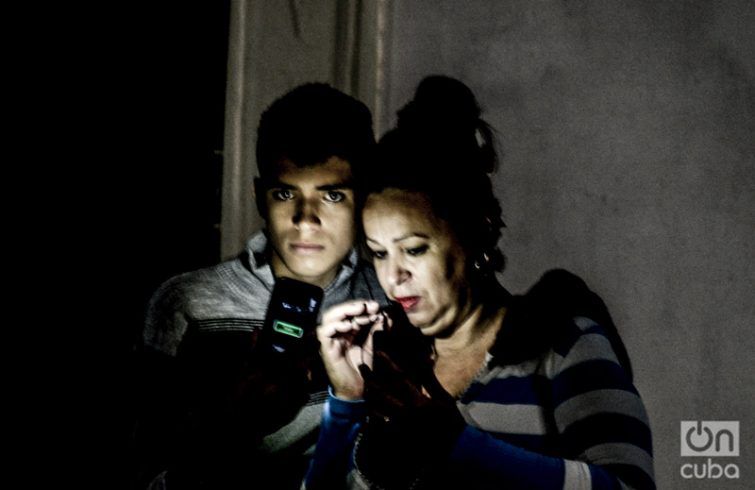
Photo by Kaloian

Photo by Kaloian

Cuban First Vice President Miguel Díaz-Canel said yesterday that the island was the country that most grew in penetrating the social media in 2016, with a 346-percent increase, something that refutes the international “attacks” that affirm that Cuban society is “totally disconnected.”

In the sessions prior to the plenary meeting of the National Assembly of People’s Power (Parliament), Díaz-Canel pointed out that the Internet issue is the reason why “Cuba is most attacked,” one of the countries with the lowest rate of access to the Internet – 33.6 percent -, something which the Cuban government has tried to palliate with initiatives like the opening of 391 public Wi-Fi areas.

“The United States has tried to present Cuba as a disconnected country. There is a constant fierce financial persecution against the technological companies with which we have agreements…to be able to have the infrastructure that we need,” he indicated in one of his speeches broadcast by Cuban Television.

One of the relaxation measures of the U.S. blockade approved after the two countries resumed relations two and a half years ago is that of the new technologies, which has made it possible for some giants of the sector like Google to enter Cuba.

According to the Cuban vice president, those who try to sell the reality of a disconnected Cuba “had to recognize that in 2016 it was the country that has most grown in penetrating the social media, with more than 346 percent.”

Speaking to the Assembly’s commission that analyzes the “the computerization of society,” Díaz-Canel warned that this is a “complex process” that “goes from the economy to ideology.”

Related Posts

Transport in Cuba. public transportation in Havana.

The island, the icebergs

February 23, 2026
Cuban flag. Cuban economy

Venezuela today: scenarios and urgent challenges for the Cuban economy

January 22, 2026
Havana. Foreign investment.

The Cuban diaspora can be a decisive economic factor, and Cuba must pave the way for it.

November 25, 2025
Private property in Cuba

How much can the private sector grow in Cuba?

November 3, 2025

He insisted that “the avalanche of pseudocultural and banal content has to be counteracted,” replacing it with the “contents of the Revolution on the social media.”

Cuba’s computerization policy for the next five years includes actions defined along two lines: the creation of a technological infrastructure and the generation of services, and digital contents.

In this sense, Díaz-Canel supported the creation of platforms for the interaction between the government and citizens, where suggestions and criticisms can be made to achieve the “real democratization in the use of these technologies, contrary to what happens in the major part of the world.”

As first results it was announced that “despite economic limitations,” the band width increased 72 percent in 2016.

As part of the strategy to increase connectivity, ETECSA, the only telecommunications company in the country, began in July 2015 the installation of public Wi-Fi zones that together with the rooms in the company’s offices add up to 1,006 connection spaces in the country, which has 11.1 million inhabitants.

Cuba has already registered four million users with access to the web, of which more than 1.5 million do so through Nauta accounts, which now have been extended to 600 homes after a pilot test last year in Old Havana.

Moreover, today we have more than 630 netsurfing rooms, 370 Wi-Fi sites, in addition to 4.3 million cell phone lines and some four million users have access to the Internet, a million of them through the permanent Nauta accounts,” Minister of Communications Maimir Mesa specified.


Before, only a small group of professionals like physicians and journalists were authorized to have Internet at home.

The principal complaint of the Cubans about access to the web are the high prices to be connected (1.5 dollars per hour in the case of the Wi-Fi areas and netsurfing rooms) compared to the low wages on the island, which stand at an average of 29 dollars a month.

In the case of the “Nauta Hogar” (Home Nauta), packages of 30 hours a month are offered at prices that vary from 15 to 70 CUC (convertible Cuban pesos and equal to the U.S. dollar) for speeds of between 256 kilobytes and 2 megabytes per second.

OnCuba / EFE

  • OnCuba Staff
    OnCuba Staff,
  • OnCuba editorial staff
Previous Post

UN expert concludes visit to Cuba “satisfied”

Next Post

Raúl Castro: autonomous work will not back down or stop

OnCuba Staff

OnCuba Staff

OnCuba Staff

OnCuba Staff

Next Post
Raúl Castro addresses the first regular meeting of the National Assembly of People’s Power. Friday July 14, 2017, Havana. Photo: Marcelino Vázquez / EFE.

Raúl Castro: autonomous work will not back down or stop

Photo: Engage Cuba

Cuban private entrepreneurs present recommendations to Trump

Billboard: House off the window

Leave a Reply Cancel reply

The conversation here is moderated according to OnCuba News discussion guidelines. Please read the Comment Policy before joining the discussion.

Your email address will not be published. Required fields are marked *

Most Read

  • The Enchanted Shrimp of the Cuban Dance

    6799 shares
    Share 2720 Tweet 1700
  • What those who don’t want “reforms” in Cuba actually want

    25 shares
    Share 10 Tweet 6
  • The Announced Measures and What Is Still Missing

    14 shares
    Share 6 Tweet 4
  • The story behind the “sister flags” of Cuba and Puerto Rico

    136 shares
    Share 54 Tweet 34
  • Mireya Luis’ great jump

    144 shares
    Share 58 Tweet 36

Most Commented

    • About us
    • Work with OnCuba
    • Terms of use
    • Privacy Policy
    • Moderation policy for comments
    • Contact us
    • Advertisement offers

    OnCuba and the OnCuba logo are registered® trademarks of Fuego Enterprises, Inc., its subsidiaries or divisions.
    OnCuba © by Fuego Enterprises, Inc. All Rights Reserved.

    No Result
    View All Result
    • World
    • Cuba
    • Cuba-USA
    • Opinion
      • Columns
      • Infographic
    • Culture
      • Billboard
    • Sports
    • Styles / Trends
    • Media
    • Special
    • Cuban Flavors

    OnCuba and the OnCuba logo are registered® trademarks of Fuego Enterprises, Inc., its subsidiaries or divisions.
    OnCuba © by Fuego Enterprises, Inc. All Rights Reserved.

    Manage Consent
    To provide the best experiences, we use technologies like cookies to store and/or access device information. Consenting to these technologies will allow us to process data such as browsing behavior or unique IDs on this site. Not consenting or withdrawing consent, may adversely affect certain features and functions.
    Functional Always active
    The technical storage or access is strictly necessary for the legitimate purpose of enabling the use of a specific service explicitly requested by the subscriber or user, or for the sole purpose of carrying out the transmission of a communication over an electronic communications network.
    Preferences
    The technical storage or access is necessary for the legitimate purpose of storing preferences that are not requested by the subscriber or user.
    Statistics
    The technical storage or access that is used exclusively for statistical purposes. The technical storage or access that is used exclusively for anonymous statistical purposes. Without a subpoena, voluntary compliance on the part of your Internet Service Provider, or additional records from a third party, information stored or retrieved for this purpose alone cannot usually be used to identify you.
    Marketing
    The technical storage or access is required to create user profiles to send advertising, or to track the user on a website or across several websites for similar marketing purposes.
    • Manage options
    • Manage services
    • Manage {vendor_count} vendors
    • Read more about these purposes
    View preferences
    • {title}
    • {title}
    • {title}