ES / EN
Hugo Cancio

Hugo Cancio

Empresario y activista, presidente de Fuego Enterprises, Inc, Fuego Media Group. Fundador y Editor en Jefe OnCuba Magazine y ArtOnCuba

Pepe’s Ashes

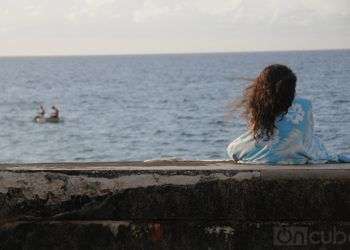
His knees hurt very much; they were like two old rusty hinges. He could hardly see. His tears became condensed and stuck to his pupils, forming a cloud that caused him to only see black and white, sometimes only black. He couldn’t hear much, but he remembered sounds: a dog’s bark, a note from a muffled trumpet, the voice that took away his things, and that cough, that unbearable cough… He talked endlessly. It was his only defense, his ultimate trench. Pepe was 88 years and nine months old. At that age, and even older, some have better vision. But not Pepe. He was tired, disappointed, and his disappointment made his health worse. Less than 24 hours after December 17, 2014, he suffered what would be his last massive heart attack. He was an assiduous survivor of heart attacks and also attacks of rage, all of them or almost all of them caused by Cuba…that’s what Pepe used to say. “Look son, I left Cuba 52 years ago. I never believed in that government. Communism doesn’t work, not in Cuba or on the moon. I was always a humble man from the countryside, hardworking, and I lost everything, they took...

Photo: Roberto Ruiz

A Cuba that I want

A very young Cuban artist approached me recently to say hi, and he used the opportunity to make a comment that surprised and pleased me. Not all young people have succumbed to being seduced by the “privileges” of capitalism; most of them want something different from what exists, either here or there. “I’m very optimistic about everything that’s happening between Cuba and the United States. I travel a lot to Miami and New York, and we do need a store like Walmart or something like that, but not the crazy capitalism that exists there. I’m afraid that Cubans will lose their innocence in that sense, and all of the services for the population, and the social values that we have, especially in education, health and culture,” he told me. Last December, a few hours after President Obama’s speech, top executives of U.S. corporations, investment funds, and law firms began setting into motion something that had been stewing for some time: their Cuba Plan. In a recently-published article, Princeton professor and former secretary of labor Robert Reich said that most U.S. companies do not feel any kind of alliance or commitment to their country or to raising wages for their workforce,...

17D

It was 6:58 a.m. when the phone rang. I was meditating and I jumped. I never put the phone on mute, in case of a family emergency. Startled, I answered without looking at the caller ID. A familiar voice, somewhat nervous and agitated, said to me, “Today is the Day.” Maybe if it had been an announcement, or a reminder that it was a special day—an important meeting, a doctor’s appointment, a trip—I might have had to ask for a few minutes to catch my breath and jog my memory. But I’d been waiting for more than 20 years for that moment, and that voice—that voice was part of the process; that voice and I had traveled too much, talked too much, and worked too hard over the last 12 months for me not to know, at that precise instant, what was happening. “The President is going to speak at noon,” the voice told me, hanging up without giving me time to react. A few minutes later, I began getting alerts on my cell phone: “The Cuban government has freed Alan Gross.” I made a quick call to Washington and it was confirmed for me that the three Cubans who...

Los Van Van / Photo: Rolando Pujol

The Rolling Stones of America

I don’t remember the date very well; it must have been wintertime in the late 1970s or early 80s. We were in high school, dressed in blue, and everybody—except me, because I didn’t know how—was dancing to a big hit by Juan Formell and Los Van Van. I preferred the music that we got from the outside: the Bee Gees, Eagles, Aretha Franklin, Chicago, Marvin Gaye…. I didn’t like Los Van Van, and I would turn up the volume on the radio only to hear their song “Elisa,” a ballad featuring the voice of my Uncle Lázaro Morúa, who sang with them at the time. Actually, I listened to the song mostly because the fact my uncle was singing with Juan Formell and Los Van Van made me popular with other students. Then I emigrated, and I left “Elisa” and Formell with his Van Van, ensconced within the borders of an island that was known not only for inspiring revolutionary movements all over America, but also for its own cultural explosion. One day on an elevator in Philadelphia, an American guy asked me where I was from. “I’m Cuban, from Cuba,” I said. “Cuba! Where is Cuba?” he asked, amazed...

Round trip

I have recently noted an avalanche of young Cubans who have exchanged the island for Miami’s beaches and nightlife. Precisely now that Cuba has begun to take small but sure steps toward an economic opening, which could well provide a bevy of opportunities. This beautiful island, with its security and potential, is what many young people are leaving behind. They prefer Miami. A few days ago, a friend told me, shortly after arriving in Miami, that she never thought she would run into so many university friends here. Another friend, in Havana, commented that she had been left alone, that all her friends now live in Miami. Years back, those who decided to emigrate, condemning themselves to a long, tendentious exile, made the decision based on political and ideological differences with the Cuban government. They left the country in search of freedom… Leaving the country, for many, was equivalent to acquiring a one way ticket, a route which implied losing not only your house and objects of sentimental value, but your friends as well, and even some resigned or domesticated family member. The recognition of the freedom to travel and the right to emigrate, without being booed or thrashed (Mariel),...

Dayri

I got her call an afternoon that was boring but beautiful, one of those days where you don’t expect or need anything, and you’re just feeling good from such spontaneous, simple beauty. Everything seemed perfect with me, on the outside. On the inside, things weren’t so great: the accumulated loneliness of eight long years was wearing my patience thin. I was exhausted from the wait. I was on the verge of giving up, and just then my phone rang. “Good afternoon, Mr. Cancio,” she said. “You don’t know me; I have an order for you.” Actually, she didn’t say it; she whispered it in my ear. She softly murmured her charms. “Hello? Who are you? What do you want? What can I do for you?” I asked somewhat roughly, frustrated by the waiting and the interruption. “This is Dayri.” “Who?” “Dayri,” she repeated, with infinite sweet- ness. I sensed it. Immediately. She was the one I’d been waiting for, I swear to god I knew it. Yes, it was her; my woman, my lady, my life partner, my life, my everything. Unconsciously, with the authority of a goddess, she was trying to give me some kind of a message without imagining...

Investing in Cuba

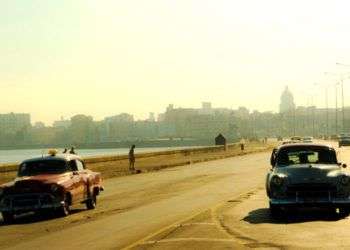
With an import-dependent economy and no major natural resources, and blockaded by the world’s most powerful country, it is easy to understand Cuba’s enormous battle to achieve sustainable economic development. Despite the changes wrought in recent years, the Cuban government continues to seek a driving force for economic growth, and is now advocating for foreign investment. The main incentives promoted by the new Foreign Investment Law are related to tax policies and substantial discounts for those who wish to invest in Cuba. Businesspeople from all over the world are closely watching what is happening in Cuba, and high-level talks have begun, including with governments that previously did not foster economic relations with the island (such as members of the European Community). Nevertheless, U.S. businesspeople cannot invest in Cuba. An absurd law prevents them from doing so…. Cubans resident abroad, wherever they live, also have had the possibility of investing in their country, but the Cuban government has specified that it is interested in multi-million dollar investments, something to which only a small minority has access. Anybody who visits the island and chats with Cubans who live there knows that investments have been made by Cubans who live abroad. The small...

Foto: Escuela Cheng Ming de Argentina

Deaf politician syndrome

For more than 50 years, my adopted country, the United States, has subjected my native country, Cuba (and even more sadly and disturbingly, its people, my people) to an exhausting, unjust, and inhumane embargo and economic blockade…. For me personally, it’s as if my hands—left and right—were unable to communicate with or even recognize each other. As if that undeserved beating weren’t enough, the USA has Cuba on its list of state sponsors of terrorism, which not only prevents the island from asking for U.S. economic aid (which it wouldn’t do anyway), but also afflicts the rights and sovereignty of individuals and countries; it prevents the world of international banking from establishing commercial relations with Cuba without being subjected to grueling, undiscerning scrutiny. A recent survey conducted by the Atlantic Council demonstrates a change in the sentiment and opinions of U.S. citizens regarding this incoherent and anachronistic U.S. policy on Cuba. The results speak for themselves. Most people in the United States, whether Democrat or Republican, favor a normalization of relations between these two neighboring countries. And even more relevant is the fact that in Florida and here in Miami—home to the largest Cuban immigrant community in the United States,...

Walls

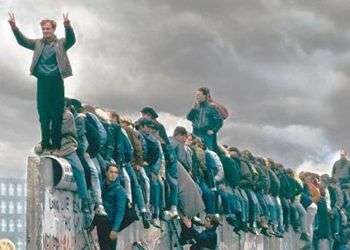
I would guess that he is about 55, maybe 58, but no older…. He needs a few more wrinkles and a few more gaps in his memory to be 60. He tells me that he lived for almost 10 years in Germany, and that he saw the fall of the Berlin Wall with his own eyes. “I might have been one of the first to pick up a piece of the Wall,” he says proudly; or at least, that’s what his expression seems to reflect. For a moment I’m startled when he releases his hands from the steering wheel. They are rough, stiff hands, and he rests them for an instant on his thighs, as if he were feeling that piece of wall in his hands again. “And what were you doing there?” “I was sent to work in Berlin for almost five years as an instructor; I’m an agricultural engineer…. Then I was assigned to the Cuban embassy and another five years went by before I returned to Cuba.” “I meant, what were you doing by the Wall?” “Oh! I was sent from the embassy to attend to the Cubans who lived in Berlin and the rest of the...

MiG-23

I really don’t remember the exact day of this incident—a conversation that ended up with a scar on the head of my friend Carlitos. Lately I’ve been remembering events but not their dates. We were both kids, short in years and height, but we were dreamers. Dreaming was free, it didn’t cost anything like it does now—is anything free these days? Carlitos was the most privileged kid on my block, and on many other blocks. His father was a military officer, and not just any military officer; the insignia on his uniform included more than one star. Back then we all wanted to be soldiers, for well-being and for honor. I do remember clearly that it was raining that day and the air was cold, so cold that it irritated my lungs and caused my bronchial tubes to contract. I remember because that day we both ended up at the clinic: aerosol for me and stitches for Carlitos’ head. The conversation was brief, but the argument lasted longer and turned into a fight with fists and then with sticks (Carlitos was much bigger and stronger). I’m not trying to justify anything, but he hit me first; he was nimbler. Plus...

MiaHavana

A few days ago, while I was reading news about the city where I live and the city where I was fortunately born, an idea came to me that I would make into a reality, if it were up to me. The gesture, one of goodwill and complete common sense, might seem crazy to some, but there are increasingly fewer of those “some,” and the “fewer” group tends to be irrelevant…. I am sure that when the moment arrives, despite the antis (the fewer)—the ones who hold on to obsolete, negative manias—the majority would vote for this idea, both here and there, that is, in Miami and Havana. Here and there seem more alike every day; they seem to be sailing more and more along the same course, and I believe that no bad weather will divert them. Until a few years ago, we were separated not only by geography but also by a universe mined with political and ideological differences, dogmas and slogans, and opposing interests and priorities. Even more unfortunately, we were divided by strong winds of hatred and bitterness that blew in from both shores; it all seemed like an endless nightmare. Now, it’s not so much...

David the Cuban

David is much younger than me, is a better dancer (anybody is a better dancer), and smokes and knows as much or more as I do about Cuban cigars. His Cuban music collection is larger than mine, and it’s not because he is—or thinks he is—more Cuban than me; it’s just that David loves Cuba, and without any exceptions whatsoever, he loves all of its derivatives. They tell me that before he learned how to jump, run or swim, he was dancing to Cuban music, and when he learned to talk the first thing he said was: “And why wasn’t I born in Havana?” Well, if he didn’t say it, he thought it. David is “not” Cuban. Well, espera/hold on; if he is, he isn’t legally so, because he wasn’t born in Cuba (he was born in Miami), and even though his parents are Cuban, Cuba still doesn’t offer citizenship to persons born in the USA to Cuban parents—and there are so many of them! But this doesn’t bother David; it doesn’t torment him, knock him out of kilter or take away from his Cuban-ness. David smells and dresses like Cuba, and when he talks (Spanish-Cuban) he is as much...

Varadero, 1980

I don’t always have a clear idea of what I’m going to say when I sit down to write my editorial. This time, to find a little inspiration I decided to look over the more than 3,000 photographs that I have from Cuba. Images that have accumulated over the years, from before I left until today; images that, scanned all together at top speed like we used to do with our storybooks as children, feel like a silent film that could well reveal a story that is still happening, with an ending impossible to predict. I poke through the photos and find one that I didn’t remember having. It is a Polaroid, one of those instant photos you used to blow on and shake to watch the image appear like magic. It was stuck to the back of another old photo as if it were hiding, so that I wouldn’t be forced to remember. I study it at length and remember the moment clearly. Shirtless and skinny, I’m wearing Speedo swim trunks and my hair is a mess. It was a cloudy day, and the sea seemed to be at rest. I’m sitting on the wall of the Hotel Imperial,...

William and Liz (Princess Liz)

A few days ago I got an unexpected call, one of those that you don’t feel like answering because you sense that what you’re about to hear will affect your state of mind. The caller was so insistent that his number engraved itself on my memory. The person who called was a friend of mine, a bit of a nutcase, who’s hard to shake off; not because I’m party to his craziness, but because he is a good person, and I care about him. “Hugo, buddy, why don’t you answer my call,” he reproached me in an authoritative voice. He knows why I didn’t answer: it’s because he always has some urgent problem to keep his adrenaline going. “You’ve got to help me with this. There’s this gentleman that I know who needs to travel to Cuba. There aren’t any tickets, and the flights are really expensive. Can you help me out?” But, hold on, who is this gentleman and what kind of problem does he have that requires you to ask for my help so desperately? “Just listen to him,” he said. “He’ll tell you.” I agreed to meet with William, the gentleman with the problem, at about 6 p.m. in a park near a house where I usually meet up...

Foto: Adriana Rodríguez

There is only one mother, and that goes for fathers, too

As a child, I used to hear people say, “There are plenty of fathers, but there is only one mother….” I have no idea where this famous saying came from, that is, who came up with the idea of defending, supporting, and reaffirming the sacrifice and effort of mothers and so weakly describing the responsibilities of fathers, although I assume it was a woman, and a mother. It’s embarrassing for me to refute that assertion and I do not dare to speculate on the possible reasons for its taking hold. In fact, during those innocent childhood days—with my hairless chin and orthopedic shoes—I would ask my mother about the meaning of that refrain, which she repeated so often, even though in my case it could have been justified due to my father’s absence. The embarrassment lies more in the fact that I refuse to accept that my duty as a father should be so indiscriminately minimized, or the duties of many others who have assumed the role of mother, or, in fact, are as much a mother as the best of them. Of course “defending” the role of fathers does nothing to diminish the courage, heroism, and unconditional, sacred love...

Forty-five

Anyone who has ever had the pleasure of traveling to Cuba knows that the Miami-to-Havana flight goes by almost like the blink of an eye; it is not just any flight. The abnormal situation begins the moment you decide to travel. That decision brings on a real mixture of feelings, including old resentments that you had forgotten about, or at least preferred not to remember. A sweeping, indiscreet glance is enough to detect uncertainty and anxiety among the passengers. Each has his or her own reasons; each person is a walking history; every boarding pass is a ticket into a time machine. I am sitting in 1D, an aisle seat, on the left side of the plane. I don’t usually take a window seat, and I only scoot over to the window to scan the Cuban coastline. As soon as I can see it, I almost always feel like I can embrace it. But this time that won’t be possible, because I have company. A young woman is seated next to me. She is slender, almost blond, dressed in a sleeveless white blouse, worn-out leather sneakers and simple blue jeans. She seems to be subdued, as if talking would betray...

The disease of “Bureaumania”

When I originally decided to write for this page, conveniently titled Propositions—a responsibility that I took very seriously—the idea was for me to write, or propose, content that was in parallel with and equidistant to what was in the magazine or related cultural activities. It all started out just fine, but soon I reacted and realized that it was not good to be so narrow; ignoring social issues, a human responsibility, was an unfortunate waste of time and paper.

I know one thing: that I know nothing…

I know people who think they know everything…. In the name of knowing everything and defending an opinion, judgment or viewpoint, many errors and even injustices have been committed, some of them irreparable or difficult to amend or compensate…. Acting like you know everything, when everybody or a large majority depends on your decisions, is irresponsible. I admit that in the past, I have been a victim of the “know-it-all” syndrome.

Nein zum Konsumismus und ein riesengroßes Ja zum Glück

Bald schon ist Weihnachten und Neujahr... In wenigen Wochen beginnen im Radio und Fernsehen Weihnachtslieder bis zur Ermüdung zu erklingen, Feliz navidad von Jose Feliciano trällert sogar Chicho, mein Hund ... Ich werde von so vielem Wiederholen, Feliz Navidad y próspero año nuevo, trocken schlucken und keine Tinte und Schmerz im linken Handgelenk vom Unterschreiben der Glückwunschkarten haben.

Die Stadt meiner Liebe

Trotz meiner Geburt in Havanna, der Stadt, in der meine Eltern geboren wurden und lebten, nahmen sie mich in sehr frühem Alter nach Varadero mit. Mein Vater, eifrig in seine Musik vertieft, begann sich mit seinem Quartett Los Zafiros bemerkbar zu machen, und meine Mutter applaudierte sein Bemühen von den Sitzen und Balkonen der renommiertesten Theater und Nachtclubs Havannas aus.

Havana, the city where I was born

Although I was born in Havana, the city where my parents also were born and lived, I was taken to live in Varadero when I was very young. In Havana, my father, immersed in his zeal for music, began to make a name for himself and his quartet, Los Zafiros, and my mother applauded his efforts from the seats and balconies of the city’s most prestigious theaters and nightclubs. My teen years in Varadero were an experience that I would repeat if it were possible to return to that age, when I would leave footprints in the sand and dream about mermaids and starfish. 

Stories of Cubans

How many times have we heard the question, “a Cuban from where?” followed by the comment, “We Cubans are everywhere!” How many times have we been astonished and dumbfounded to find that, wherever we might be, in whatever far-flung corner of the world, a Cuban has come, saw and conquered?

Page 2 of 3 1 2 3